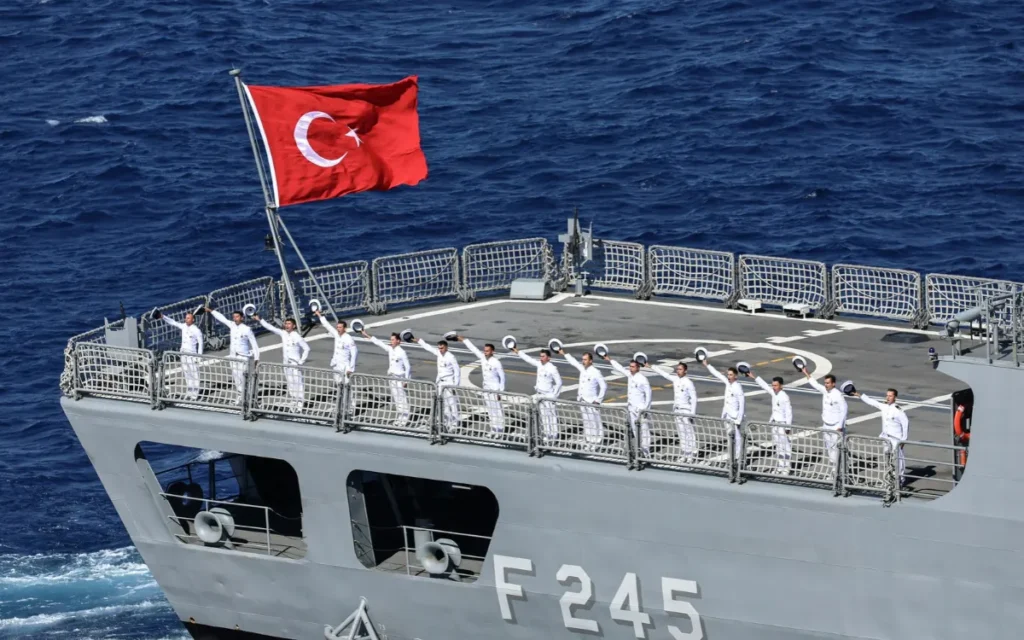

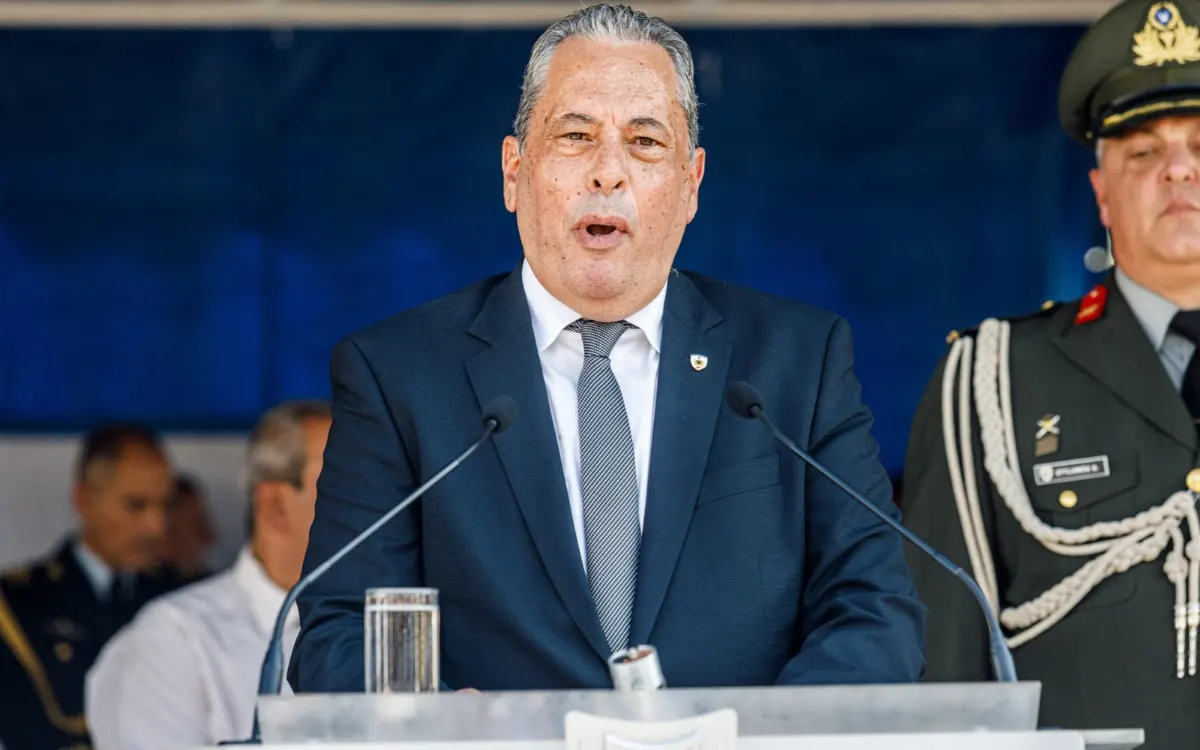
For Cyprus, where the northern part of the island has remained under Turkish occupation for 52 years, taking necessary defense and deterrence measures and regularly updating emergency response plans is “not merely a matter of prudence, but an essential necessity,” Defense Minister Vasilis Palmas said in an exclusive interview with Eagle Intelligence Reports.
Palmas said the continued presence of Turkish forces in the northern part of the island remains an enduring security challenge, shaping the National Guard’s defense planning and priorities. Strengthening Cyprus’s military capabilities, he said, is central to protecting its sovereignty and territorial integrity.
The minister also linked the island’s prolonged division to wider tensions in the Eastern Mediterranean. He stressed, however, that strengthening Cyprus’s defenses does not diminish its commitment to a political settlement. A comprehensive and lasting resolution of the Cyprus problem, in line with United Nations Security Council resolutions, would contribute to peace and stability across the region, he said.
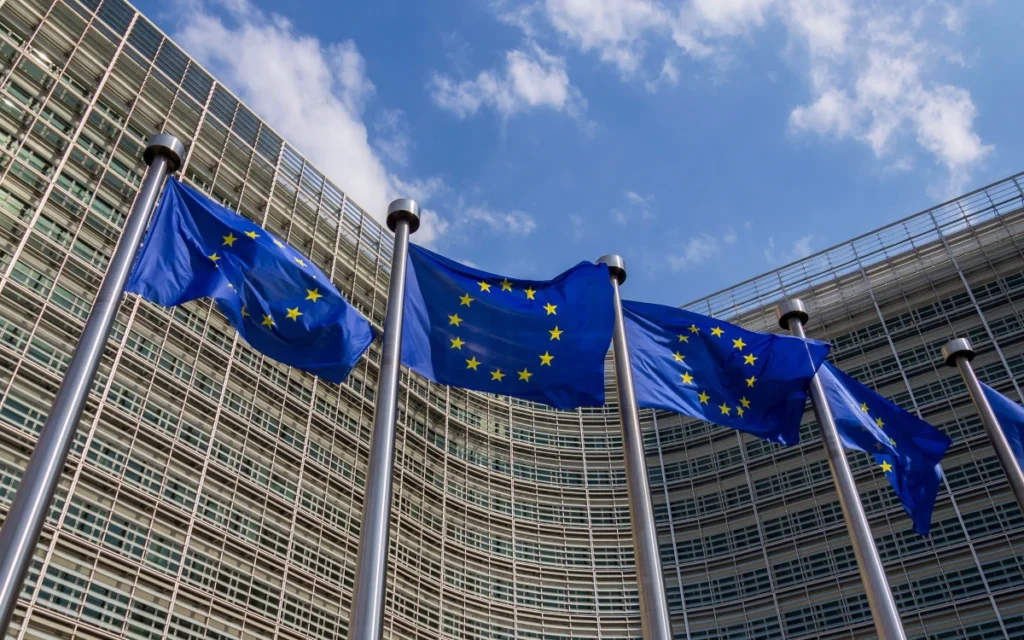
Beyond the enduring security challenge posed by the Turkish military presence, Palmas offered an assessment of Europe’s ability to defend its member states. Despite substantial progress in European defense, he said, the European Union (EU) still needs to develop the political cohesion, operational capability, and institutional preparedness required to respond independently and promptly to a serious security threat against one of its members.
The European Union (EU) still needs to develop the political cohesion, operational capability, and institutional preparedness required to respond independently and promptly to a serious security threat against one of its members
For Cyprus, an EU member that does not belong to NATO, the question carries particular weight. Palmas said efforts to strengthen European defense must be matched by “substantive solidarity and credible mechanisms for response” when a member state faces a threat.
“If the EU aspires to play a meaningful and leading role in the international arena, it must be capable of taking effective action in the fields of defense and security,” he said.
That, he added, requires political will and decisions by member states that turn shared commitments into practical results. He also made clear that stronger European defense should complement NATO rather than compete with it, pointing to the importance of cooperation among the EU, the alliance, and the United States.
Against this backdrop, Cyprus is continuing to modernize its armed forces, with particular attention to air defense. Palmas said recent conflicts have highlighted the need to detect and assess potential threats earlier and respond more effectively. He pointed to the acquisition of the BARAK MX air defense system and a recent agreement with Israel to procure an offshore patrol vessel as examples of efforts to strengthen the National Guard. He declined, however, to discuss specific future purchases, planned investments, or potential defense agreements, citing the need for discretion in military planning.
Cyprus’s defense relationship with Israel has also expanded in recent years. Palmas described cooperation involving exchanges of expertise and opportunities in areas of mutual interest, while highlighting the value of closer coordination and interoperability.
Palmas stressed that cooperation with Israel, Greece, and other regional partners is “not directed against any state,” but is intended to support regional security through mutual respect and shared interests.
Relations with Washington have opened another avenue for military modernization. Palmas said closer cooperation with the United States has improved Cyprus’s access to the American defense market, creating opportunities to upgrade the National Guard’s capabilities.
Palmas said closer cooperation with the United States has improved Cyprus’s access to the American defense market, creating opportunities to upgrade the National Guard’s capabilities
Military training and education are also expanding. The Cyprus National Guard works with the New Jersey Army National Guard through the State Partnership Program and participates in the International Military Education and Training program.
Palmas confirmed that the number of places available to Cypriot cadets at U.S. service academies will rise to three from the next academic year, with one cadet able to attend each of the three academies. He identified defense technology, military education, and operational capabilities as priorities for further cooperation with the United States.
The wider instability in the Middle East remains another concern for Cyprus. Palmas said the government closely monitors developments in the region and assesses their implications for national security, particularly amid the emergence of hybrid and asymmetric threats.
Although he said the Republic of Cyprus had not itself been under threat in the circumstances he described, he emphasized the need for continued vigilance, operational readiness, and coordination among the relevant state authorities.
Yet Palmas drew a clear distinction between expanding Cyprus’s contribution to regional security and seeking to turn the country into a regional military power.
Palmas drew a clear distinction between expanding Cyprus’s contribution to regional security and seeking to turn the country into a regional military power
“Clearly, our ambition is not for Cyprus to become a military power in the region,” he said, describing such an objective as neither consistent with the country’s capabilities nor reflective of its aspirations.
Instead, he said, Cyprus wants to be a reliable regional partner, contributing to security cooperation, crisis response, and humanitarian operations, including civilian evacuations and the delivery of assistance during emergencies.
In this exclusive interview with Eagle Intelligence Reports, conducted by Nicoletta Kouroushi, Palmas discusses the Turkish military presence, Cyprus’s defense priorities, the limits of Europe’s current security capabilities, and the partnerships shaping the island’s role in the Eastern Mediterranean.
– –
Interview Excerpt
Nicoletta Kouroushi: Minister, given the possibility of further military escalation in the Middle East, how seriously does Cyprus assess the risk of regional conflicts affecting its territory, critical infrastructure, or military facilities on the island? Have additional defensive measures or contingency plans been introduced to address such scenarios?
Minister Vasilis Palmas: The Republic of Cyprus closely monitors developments in the Middle East and systematically assesses their potential implications for national security.
Furthermore, the country’s geographical location, coupled with the longstanding instability that characterizes the wider region and the emergence of hybrid and asymmetric threats, necessitates continued vigilance, prudent planning, and a high level of preparedness to address potential threats.
This approach encompasses all dimensions of national security and requires close coordination and cooperation among all relevant state authorities, extending beyond the military sphere.
At the same time, any assessment of the security environment of the Republic of Cyprus must take into account the ongoing Turkish occupation and the continued presence of Turkish troops in the northern part of the island. This situation remains a significant and enduring factor affecting Cyprus’s security environment, with direct implications for the defense planning and priorities of the National Guard.
In these circumstances, although the Republic of Cyprus was never under threat, it continues to closely monitor developments in a responsible manner, maintaining a high level of readiness and adapting its defense capabilities to the evolving security conditions and requirements of the contemporary security environment. The systematic assessment of potential risks and threats, effective coordination among the competent authorities, and the preservation of operational readiness are integral to our efforts to safeguard the sovereignty and territorial integrity of the Republic of Cyprus and ensure the protection of our citizens.
Against this backdrop, drawing on lessons learned from recent conflicts and taking into account the evolving nature of contemporary threats, we are taking steps to strengthen the defensive capabilities of the National Guard, with particular emphasis on enhancing our air defense capabilities.
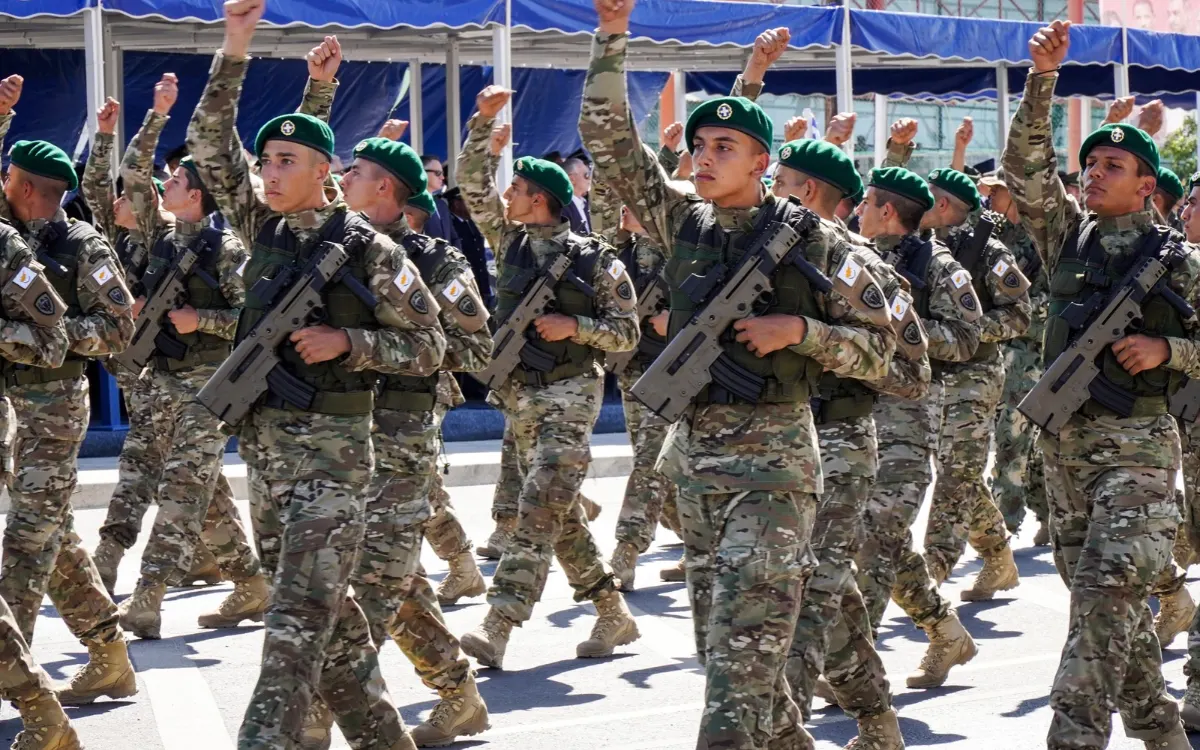
Our overarching objective is to continuously improve our capacity to detect and assess potential threats at an early stage and respond to them effectively, while contributing to the preservation of peace, security, and stability throughout the wider region.
Nicoletta Kouroushi: Is Cyprus preparing significant new investments in its military capabilities, particularly in air defense, unmanned systems, electronic warfare, and maritime security? Are there any forthcoming defense procurement programs, strategic partnerships, or military cooperation agreements that you can disclose?
Minister Vasilis Palmas: First of all, allow me to clarify that I do not consider it appropriate to go into detail regarding specific procurement programs, planned investments, or potential agreements. As you will appreciate, these are matters relating to the defense planning of the Republic of Cyprus and must be handled with the appropriate degree of discretion.
Nevertheless, I can say that, in recent years, the Ministry of Defense has been undertaking efforts to strengthen its military capabilities across all operational domains and dimensions, as any state seeking to safeguard its sovereignty and territorial integrity should do. Notable examples include the acquisition of the BARAK MX air defense system and the recent agreement with Israel for the procurement of an offshore patrol vessel (OPV).
It should also be borne in mind that, for a country that has remained under Turkish occupation for 52 years, taking the necessary deterrence and defense measures, as well as developing and regularly updating emergency response plans, is not merely a matter of prudence, but an essential necessity.
Nicoletta Kouroushi: As Cyprus and Israel continue to develop their defense relationship, could this cooperation evolve towards more integrated air defense arrangements, advanced military technology partnerships, or deeper operational coordination? Are there any new initiatives under consideration that could significantly strengthen this strategic relationship?
Minister Vasilis Palmas: The Republic of Cyprus, as a Member State of the EU and a country in the Eastern Mediterranean, remains committed to peace, stability, security, and cooperation in the wider region, maintaining a consistent position in favor of dialogue and the peaceful settlement of disputes.
In this context, our cooperation with Israel has developed significantly in recent years. The same is, of course, true of our cooperation with other countries in the region. Τhis cooperation encompasses the exchange of expertise, as well as the exploration of opportunities for synergies in areas of mutual interest, in accordance with the needs and priorities of each country.
At the same time, strengthening interoperability and coordination in the field of defense can contribute significantly to addressing common challenges more effectively and enhancing the overall capacity to safeguard regional security.
It should be underscored that this cooperation, like all our partnerships with countries in the region, including Greece, is not directed against any state. Rather, it forms part of our broader commitment to fostering relations based on mutual respect and shared interests, with the overarching objective of contributing to the strengthening of regional security.
Nicoletta Kouroushi: Minister, as the United States and European countries reassess their security priorities in the Mediterranean, do you foresee a more substantial American role in supporting Cyprus’s defense capabilities? Could bilateral defense cooperation develop into broader strategic arrangements, including expanded military training, access to advanced defense technologies, or new security initiatives?
Minister Vasilis Palmas: Through the development of an enhanced cooperation in recent years, the Republic of Cyprus has consolidated its position as a reliable partner of the United States of America in the Eastern Mediterranean. This development has also created new prospects for cooperation in the field of defense, particularly by facilitating access to the United States defense market, thereby enabling the upgrading of the National Guard’s capabilities.
Military education and training also constitute an important dimension of this cooperation. Training activities are already being implemented through the State Partnership Program, under which the Cyprus National Guard cooperates with the New Jersey Army National Guard, as well as through the International Military Education and Training program, which enables personnel of the Cyprus National Guard to participate in military education and training programs in the United States.
Furthermore, during the current academic year, a Cypriot cadet is currently enrolled at the United States Naval Academy. Moreover, following the approval of a proposal submitted by the Ministry of Defense, the number of places available to Cypriot cadets at the United States Service Academies will increase to three from the next academic year, allowing for one Cypriot cadet to be admitted to each of the three Academies.
These initiatives enhance personnel’s knowledge and skills and strengthen operational readiness, while also fostering mutual trust and professional cooperation between the two sides.
The further development of our cooperation with the United States remains a steadfast priority for the Republic of Cyprus. In this regard, we seek to make full use of existing avenues for cooperation and explore additional opportunities in the fields of military education and training, defense technology, and the enhancement of the National Guard’s operational capabilities. This process will be advanced through continued dialogue, guided by our shared principles, values and priorities, and with a view to contributing to regional security and stability.
Nicoletta Kouroushi: Given the continued presence of Turkish military forces in the northern part of Cyprus, how is the Republic of Cyprus adapting its deterrence and defense strategy? Do you believe the existing military balance provides sufficient stability, or are additional defense capabilities and international security arrangements necessary?
Minister Vasilis Palmas: For the past 52 years, the Republic of Cyprus has faced an enduring security challenge as a result of the continued Turkish occupation and the presence of Turkish military forces in the northern part of the island.
At the same time, it is important to recognize that the Cyprus problem is directly linked to the broader security and stability environment in the Eastern Mediterranean, as the prolonged division of Cyprus perpetuates a source of tension in an already complex geopolitical region. Accordingly, a comprehensive and lasting settlement of the Cyprus problem, in line with the relevant United Nations Security Council resolutions would contribute meaningfully to peace, security, and stability throughout the Eastern Mediterranean.
In this context, the continuous reinforcement and upgrading of our defense and deterrence capabilities remains a foremost priority in our efforts to safeguard the territorial integrity and sovereignty of the Republic of Cyprus. This commitment reflects our determination to strengthen its capacity to respond to existing and emerging security challenges.
It is, however, important to underscore that the enhancement of our defense and deterrence capabilities does not in any way diminish or supersede our unwavering commitment to a political settlement of the Cyprus problem. The Republic of Cyprus remains steadfast in its pursuit of a comprehensive and lasting resolution, recognizing that the liberation and reunification of Cyprus is essential to establishing enduring peace, security and stability, for the benefit of all Cypriots.
Nicoletta Kouroushi: As the EU seeks to strengthen its strategic autonomy and defense capabilities, do you believe Europe currently possesses the political will and military capacity to respond effectively to a serious security threat against Cyprus? Given Cyprus’s position outside NATO, how should responsibilities be divided between the EU, NATO, and the United States in ensuring regional security, and should Cyprus seek stronger European security commitments?
Minister Vasilis Palmas: It is our firm belief that strengthening European defense and developing a more coherent common European approach to defense and security issues are key priorities for the EU.
In recent years, substantial progress has been made towards strengthening Europe’s defense capabilities. Nevertheless, I believe that further efforts are required before the EU can attain the degree of political cohesion, operational capability, and institutional preparedness necessary to respond autonomously and in a timely manner to a serious threat to the security of a Member State.
For the Republic of Cyprus, it is of particular importance that the strengthening of European defense cooperation be accompanied by substantive solidarity and credible mechanisms for response in the event of a threat to a Member State.
If the EU aspires to play a meaningful and leading role in the international arena, it must be capable of taking effective action in the fields of defense and security. This requires political will and, above all, the adoption of the necessary decisions by Member States, so that common European commitments can be translated into tangible results.
Recent incidents in our region underscored the importance of addressing security threats in a timely and effective manner, as well as the need to strengthen cooperation and coordination among Member States.
We recognize that the close ties maintained by most EU Member States with NATO constitute an important consideration in the ongoing debate on the further development of the EU’s defense policy. Nevertheless, the strengthening of the EU’s defense capabilities should not be viewed as competing with NATO. On the contrary, the EU and NATO can play complementary roles in strengthening overall European and transatlantic security.
In this context, effective cooperation among the EU, NATO, and the United States can make a decisive contribution to addressing our common challenges.
Nicoletta Kouroushi: Looking ahead, do you envision Cyprus evolving from a strategically located EU member state into a more active regional defense and security partner? What concrete decisions or initiatives could define this transformation over the next five years, and what are the principal practical or institutional limitations that could constrain Cyprus’s ambitions?
Minister Vasilis Palmas: The Republic of Cyprus, by virtue of its strategic location in the Eastern Mediterranean and its status as a Member State of the EU, can make an even more active contribution to the promotion of regional security and stability.
In this regard, I believe that further deepening our bilateral and multilateral partnerships with countries in the region and key international partners will be of particular importance, alongside strengthening our capacity to contribute to joint security initiatives and crisis-response efforts. At the same time, Cyprus continues to make a substantive contribution to the facilitation and support of humanitarian operations, including the evacuation of civilians and the delivery of humanitarian assistance in times of crisis.
Clearly, our ambition is not for Cyprus to become a military power in the region, an objective that would be neither commensurate with our capabilities nor reflective of our aspirations. Rather, we seek to be a reliable and constructive partner that makes a tangible contribution to the preservation of peace, the addressing of shared challenges, and the strengthening of regional cooperation and stability, while contributing meaningfully to both security and humanitarian efforts.