
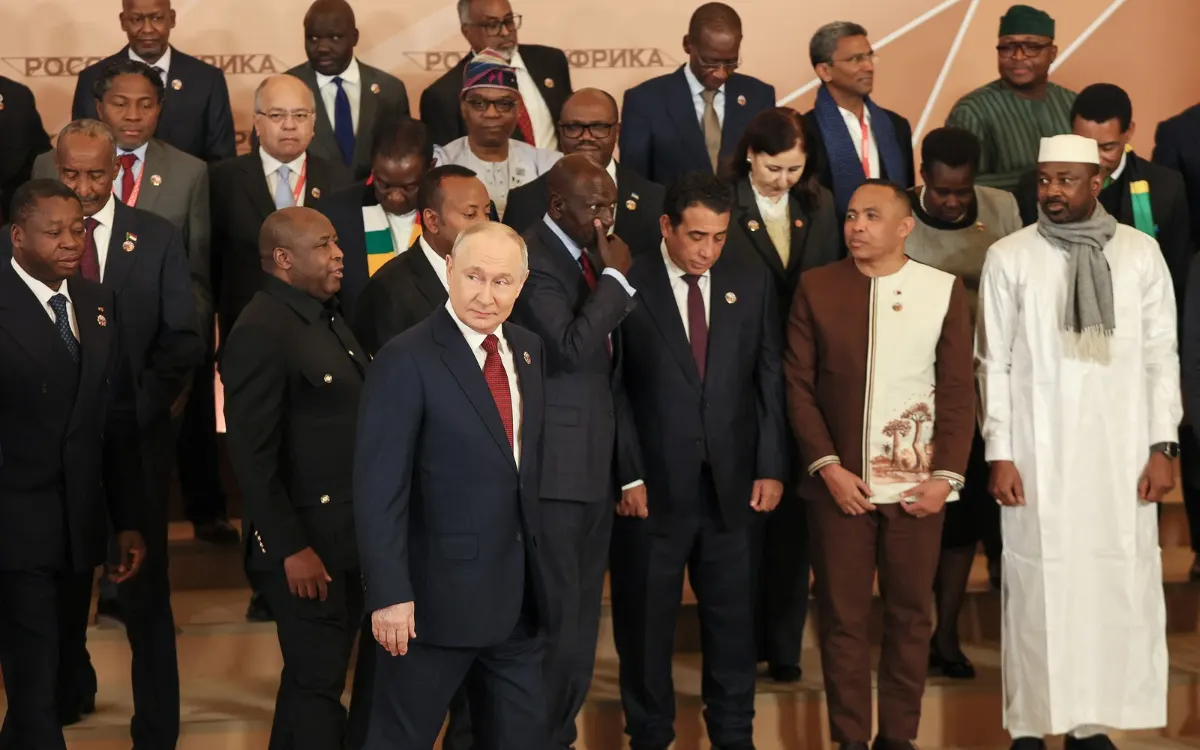
Forty-eight African governments signed up for the Russia–Africa Summit in Moscow in late October, 22 of them at head-of-state level. That same month, Malian and Russian troops re-entered Kidal, a desert town they had abandoned in April. Together, the two events capture Russia’s position on the continent. Moscow can still fill a summit hall and keep embattled governments on its side when its soldiers retreat and its trade targets slip. Its influence rests on usefulness in a crisis, which outlasts its failures but stops well short of a continental realignment.
The summit, held on October 28–29, closed with a final declaration and a 2027–2029 action plan. Moscow presents the relationship as an alternative to unequal Western partnerships. President Vladimir Putin’s appeal focused on technology, local production, and African influence in global financial institutions. Such promises broaden Russia’s proposition beyond military support, but their strategic value depends on implementation.
Why African States Stick with Russia
African governments keep Moscow close not because it consistently delivers on its promises, but because its military assistance, diplomatic backing, and economic partnerships remain useful, and replacing them carries significant costs. A government under armed attack may prioritize equipment, training, and diplomatic backing over long-term investment. An external partner meeting those immediate needs can remain useful despite failing to resolve the country’s broader insecurity.
A government under armed attack may prioritize equipment, training, and diplomatic backing over long-term investment. An external partner meeting those immediate needs can remain useful despite failing to resolve the country’s broader insecurity
Such an approach creates two measures of success. Moscow can preserve access and political relationships while its partners struggle to protect civilians and restore administration. African governments, meanwhile, can maintain Russian cooperation without accepting exclusive alignment.
Not every government weighs Russia the same way. Security-dependent military governments in the Sahel seek protection, while larger economies, such as Egypt, pursue agricultural, energy, or industrial partnerships. Russia’s continental presence comprises separate bargains, each resting on domestic priorities, available alternatives, and the costs of changing partners.
The relevant question is therefore how these bargains withstand disappointment. Mali tests Russia’s security credibility. Economic cooperation tests its capacity to broaden relationships. Recruitment of Africans for the war in Ukraine tests whether their governments can defend their citizens while retaining diplomatic flexibility.
Security Beyond Battlefield Results
Mali illustrates why setbacks require careful interpretation. In April, Africa Corps confirmed its withdrawal from Kidal, the northern town that Malian troops and Russia’s Wagner mercenaries had taken from Tuareg separatists in 2023. The pullout followed coordinated attacks by separatist rebels and an al-Qaeda affiliate. The force, controlled by Russia’s defense ministry, said it withdrew alongside Malian personnel under a joint decision with Mali’s leadership. The episode challenged Moscow’s security credentials.
That account now needs an important qualification: on October 6, Malian troops backed by Africa Corps re-entered Kidal after the separatists withdrew. Treating April’s retreat as the final outcome would misrepresent the military picture. Yet recovering a town does not secure the roads, villages, and desert around it.
Mali therefore exposes two distinct tasks. Protecting the government means keeping the junta in power in Bamako, defending the capital, and retaking symbolic towns. Securing the country means restoring administration in the north, protecting transport routes, and building relationships with local communities. Russian assistance has served the first task better than the second. It can strengthen particular military capabilities without resolving the political grievances and institutional weaknesses that allow armed movements to regenerate.
Russia can strengthen particular military capabilities without resolving the political grievances and institutional weaknesses that allow armed movements to regenerate
The transition from Wagner to Africa Corps in June 2025 also affects accountability. Direct state control makes it harder to separate Russian policy from operational results. Moscow gains clearer authority over its engagement but assumes a more visible share of responsibility when towns such as Kidal are lost.
Continued cooperation need not indicate satisfaction. Replacing a security provider requires alternative equipment, maintenance arrangements, training, and political agreements. Governments confronting active insurgencies cannot necessarily absorb that transition quickly. Dependence can therefore preserve a relationship that would appear unattractive if judged only by whether the state controls its territory and protects its population.
That interpretation should not become an assumption that African leaders lack agency. Governments can bargain over deployments, seek additional suppliers, or limit cooperation to particular tasks. Mali’s junta, for instance, has also bought Turkish combat drones.
Nor do battlefield outcomes alone settle responsibility for insecurity. Malian authorities remain accountable for governance and military decisions. Assessing Russia requires identifying the tasks it undertook and whether its assistance improved those specific capabilities.
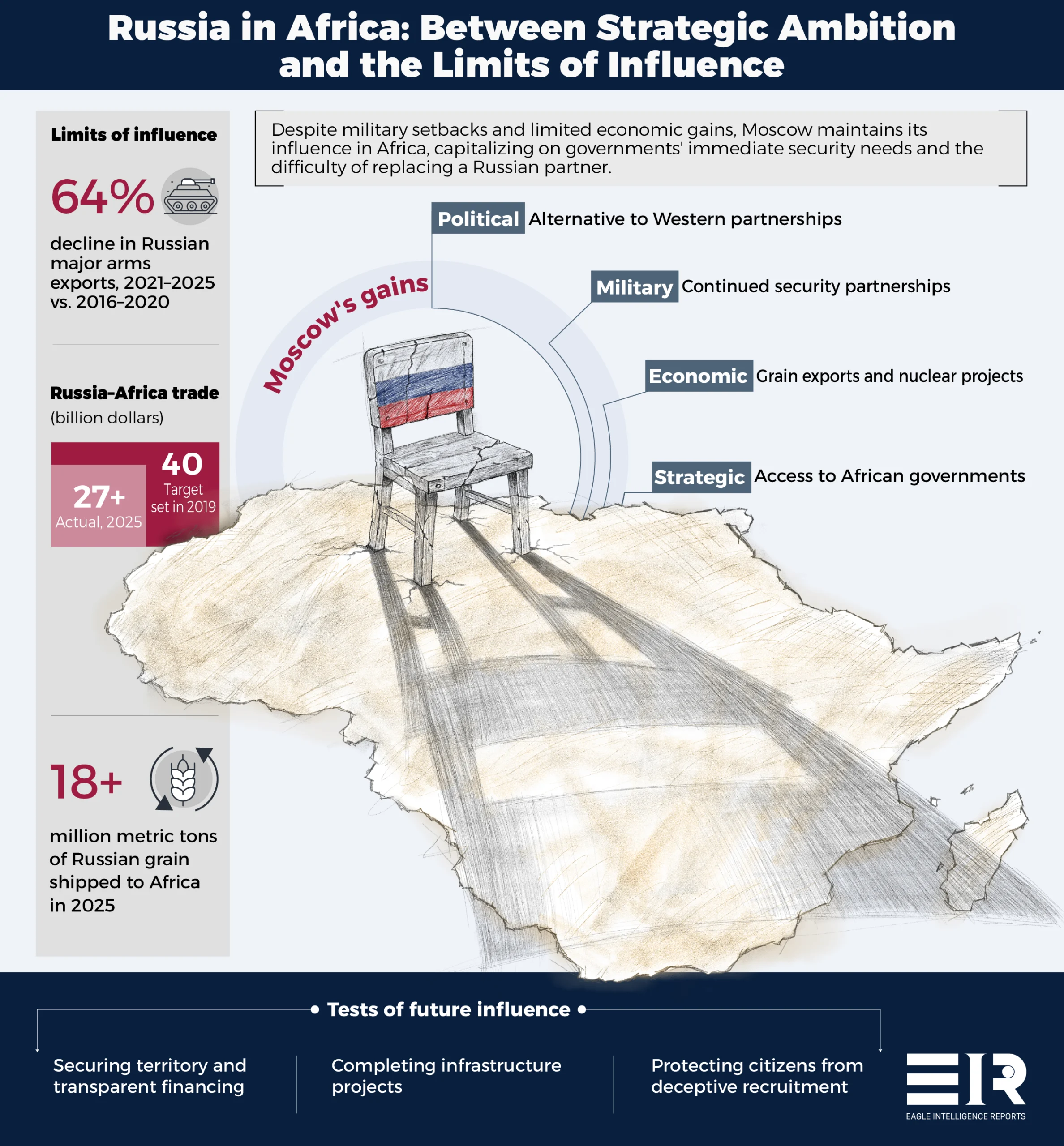
Russia also faces constraints within its strongest sector. The Stockholm International Peace Research Institute records a 64 percent decline in Russian major arms exports between 2016–2020 and 2021–2025. The figure covers major weapons, not training or other security services. Even so, troop deployments should not be mistaken for unlimited capacity to equip partners.
Grain, Reactors, and Missing Investment
Beyond arms, Russia’s commercial relationships provide substance, but insufficient breadth to justify claims of economic transformation. Kremlin aide Yuri Ushakov put trade with Africa above $27 billion in 2025, still well short of the $40 billion target announced at the first summit in 2019. Political attention has exceeded the scale of commercial integration. Rising turnover alone cannot show whether trade builds local production, skills, or infrastructure.
Moscow does offer more than weapons. Ushakov said Russia shipped more than 18 million metric tons of grain to Africa in 2025. In Egypt, Rosatom, Russia’s state nuclear company, is building the El Dabaa nuclear plant. These activities matter to governments managing food supplies and electricity shortages. They also show why Russia’s relevance cannot be judged by its Sahel deployments alone. However, a large project in Egypt does not establish comparable investment capacity across dozens of countries.
Signed agreements are not operating assets. Nuclear cooperation requires financing, regulatory capacity, construction, and skilled personnel before it produces electricity. Diplomatic commitments become strategically durable when governments and populations can identify reliable benefits beyond the signing ceremony. Repayment terms, procurement obligations, and maintenance costs also determine whether an announced project remains affordable throughout its operating life.
Diplomatic commitments become strategically durable when governments and populations can identify reliable benefits beyond the signing ceremony
The war in Ukraine adds another constraint, competing with overseas commitments for equipment, personnel, and political attention. Not every delayed African project results from the war, however; procurement decisions, financing, and domestic conditions also shape delivery.
African governments consequently have reasons to seek selective cooperation rather than comprehensive dependence. Russian fertilizer, grain, or nuclear expertise can complement partnerships with other powers. For Moscow, such an approach preserves commercial opportunities but means individual contracts do not buy exclusive geopolitical loyalty.
Recruitment Tests Political Trust
Recruitment for the war in Ukraine exposes a different vulnerability: cooperation can impose direct human costs on African citizens. In its October 19 report, the UN Commission of Inquiry on Ukraine concluded that Russian authorities, working with recruiting agents, trafficked foreign nationals into military service. Its evidence included deceptive civilian job offers and coerced contracts, and the victims came from 29 countries, 11 of them in Africa.
The finding concerns documented cases, not every foreign soldier serving Russia. Russian authorities have denied illegal recruitment. African governments have tried to protect affected citizens while maintaining relations with Moscow. The dispute challenges Russia’s claim to respect African sovereignty without necessarily producing a diplomatic rupture.
Kenya shows that balance at work. In March, Foreign Minister Musalia Mudavadi announced an agreement against further Kenyan enlistment. His announcement establishes Nairobi’s diplomatic position, not independently verified Russian compliance. It nevertheless shows how an African government can contest harmful conduct without abandoning broader cooperation.
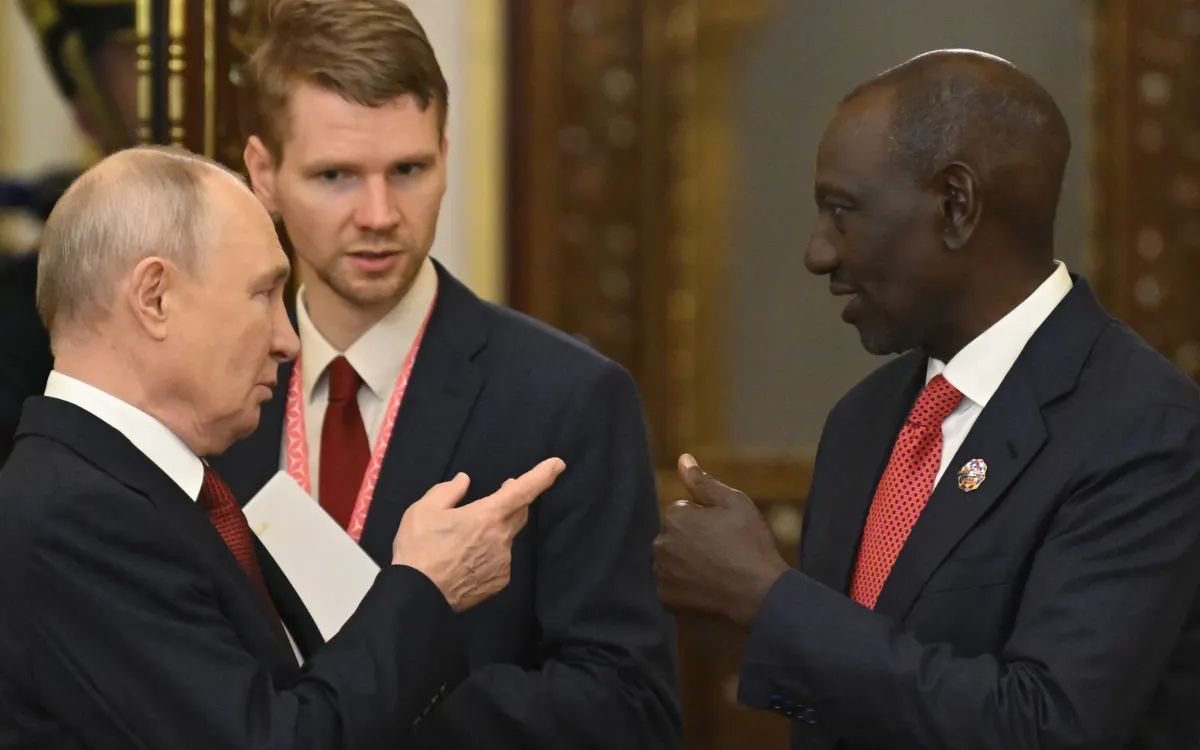
Kenya returned to the issue at the summit. After talks with Putin on October 29, President William Ruto said the Russian leader had confirmed that Kenyans would no longer be enlisted. The two sides also agreed to negotiate a labor agreement and expand scholarships for Kenyan students. These commitments signal continued engagement, but do not guarantee implementation.
Public attitudes further complicate predictions of either Russian dominance or rejection. Afrobarometer’s 2024–2025 surveys across 38 countries found 36 percent viewed Russia’s influence positively, while 42 percent offered no assessment. Among respondents aware of the Ukraine war, 72 percent preferred national neutrality.
These findings neither establish continental hostility nor prove that recruitment has changed opinion. They indicate that diplomatic access and public legitimacy are separate. Moscow cannot assume that supportive governments represent uniform popular approval, particularly when national experiences of Russian engagement differ substantially.
The practical test after the Moscow summit is measurable delivery: secured territory, completed infrastructure, transparent financing, and effective protection against deceptive recruitment. African governments can strengthen their bargaining positions by specifying these conditions and preserving alternative partnerships. Continued engagement should not substitute for assessing results.
Russia will keep its African partners as long as it remains the quickest answer to their most urgent threats. That is a narrow base for a power competing with China, Turkey, the Gulf states, and the West for the same capitals. Kidal shows how fast a town can change hands, and the $40 billion trade target shows how slowly promises become commerce. Moscow has won access to African leaders. Its challenge now is to give their countries reasons to value that access beyond the next crisis.
Russia will keep its African partners as long as it remains the quickest answer to their most urgent threats. That is a narrow base for a power competing with China, Turkey, the Gulf states, and the West for the same capitals