This week the United States acknowledged it used Elon Musk’s AI, Grok, inside a military targeting system that helped U.S. forces deploy more than 2,000 munitions against targets in Iran. A commercial AI model is now embedded in the machinery that helps commanders decide where bombs fall. The detail, buried in a Pentagon court filing, is the sharpest sign yet that artificial intelligence has moved to the center of state power.
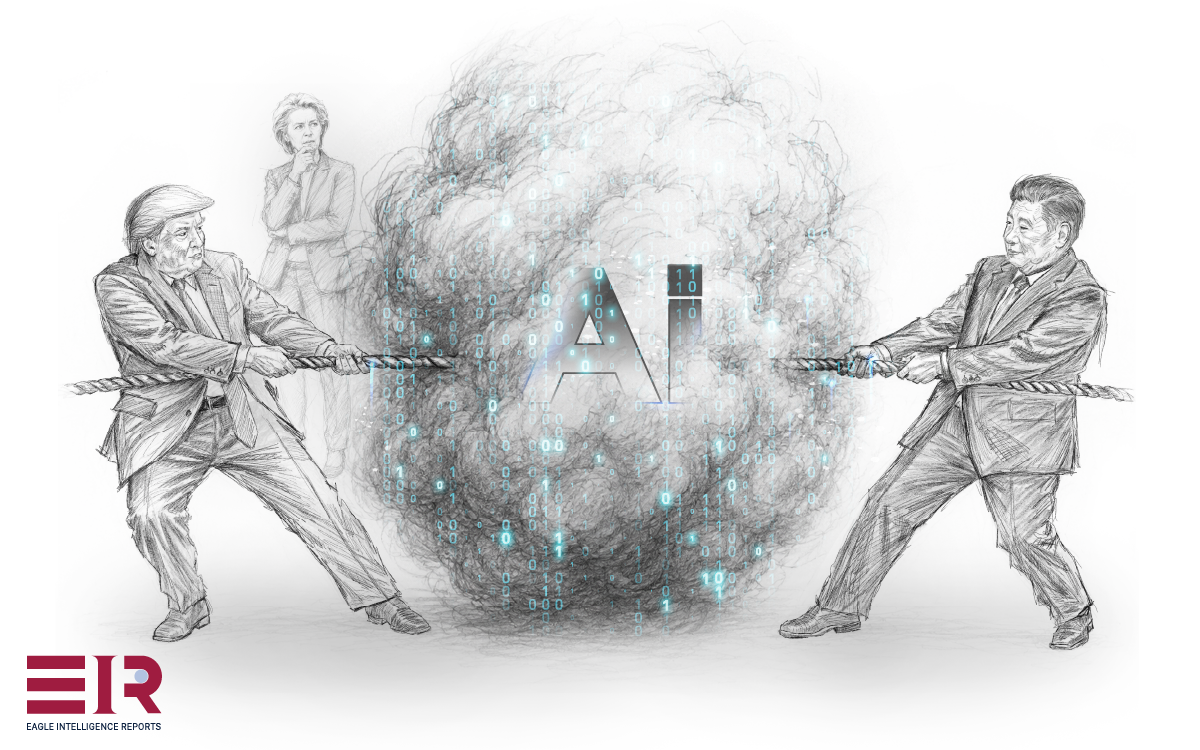
It is also a warning. Frontier AI is redrawing the balance of power between states. More dangerously, it is making that balance harder to see. When no one can measure who holds the advantage, states act on fear rather than fact. The real danger of this race is not simply escalation, but miscalculation—the hazard of an international order locked in a deepening security dilemma.
Frontier AI is redrawing the balance of power between states. More dangerously, it is making that balance harder to see
That is what separates the new AI arms race from the Cold War. Nuclear power could be counted and checked. AI power is harder to count or contain: it spreads in seconds and the same model can attack or defend, so a rival’s true reach is always a guess.
Last month, in a rare public address, the head of British spy agency GCHQ, Anne Keast-Butler, warned that the risk of miscalculation was at its highest in three decades. It was this fog she had in mind.
Locking Up the Most Powerful Model
Start with the model at the center of it all. Anthropic built Mythos as its most powerful system, then decided not to sell it. The company says the model can find thousands of hidden software flaws in weeks. In testing, it found vulnerabilities in every major operating system and browser it tried.
Rather than release the model to the public, Anthropic shared it with a select group under a program called Project Glasswing. The first recipients included Amazon, Apple, Nvidia, the U.S. government, and the EU’s cybersecurity agency. Anthropic has since extended access to over 150 vetted technology and infrastructure organizations in more than 15 countries. The caution is telling. A tool that finds weaknesses at scale can serve attack as well as defense. When a technology makes attacking easier, states grow fearful and begin to race.
A tool that finds weaknesses at scale can serve attack as well as defense. When a technology makes attacking easier, states grow fearful and begin to race
Frontier AI as a Strategic Weapon
The same logic explains what came next. Anthropic recently released a tamer public version, Fable 5, built to refuse the most dangerous requests. It did not last long. After just 72 hours, the U.S. government restricted access to it on national security grounds, blocking foreign users.
It echoes Washington’s earlier clash with Anthropic over whether its models could serve surveillance and autonomous weapons. The administration now treats this technology as a strategic capability to be controlled rather than another business venture. Military and security logic has begun to overtake commercial and ethical concerns.
A financial daily reported this month that Anthropic had placed engineers at the NSA to help it run Mythos. That follows earlier reporting that the NSA was using the model despite a federal ban on Anthropic’s technology. The intelligence agency, it seems, reached for the most powerful tool available even as its own government tried to shut the company out. The NSA would neither confirm nor deny the reports, and Anthropic declined to comment, which only deepens the mystery.
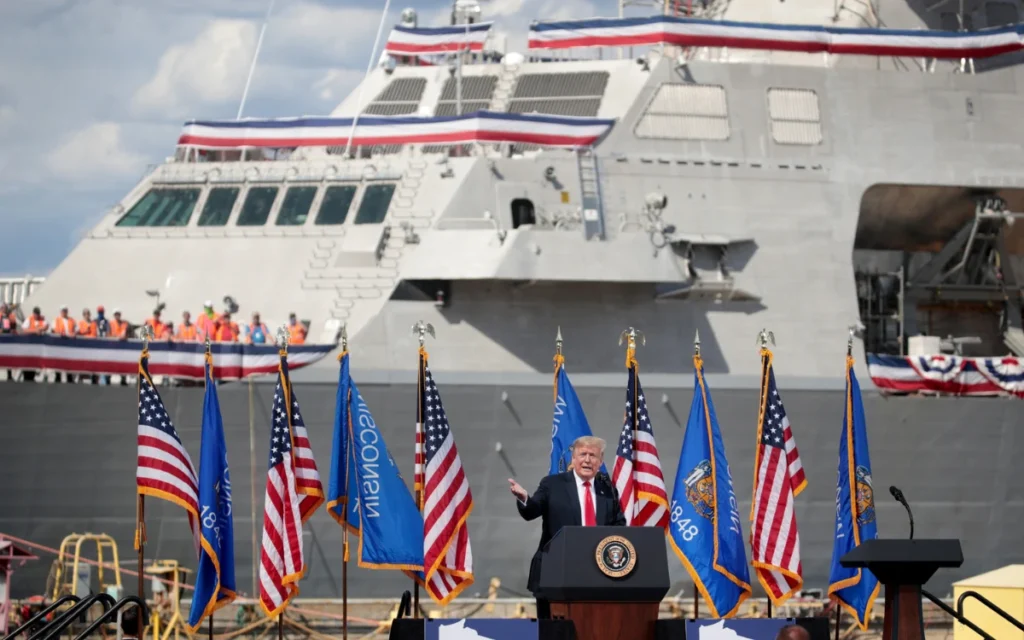
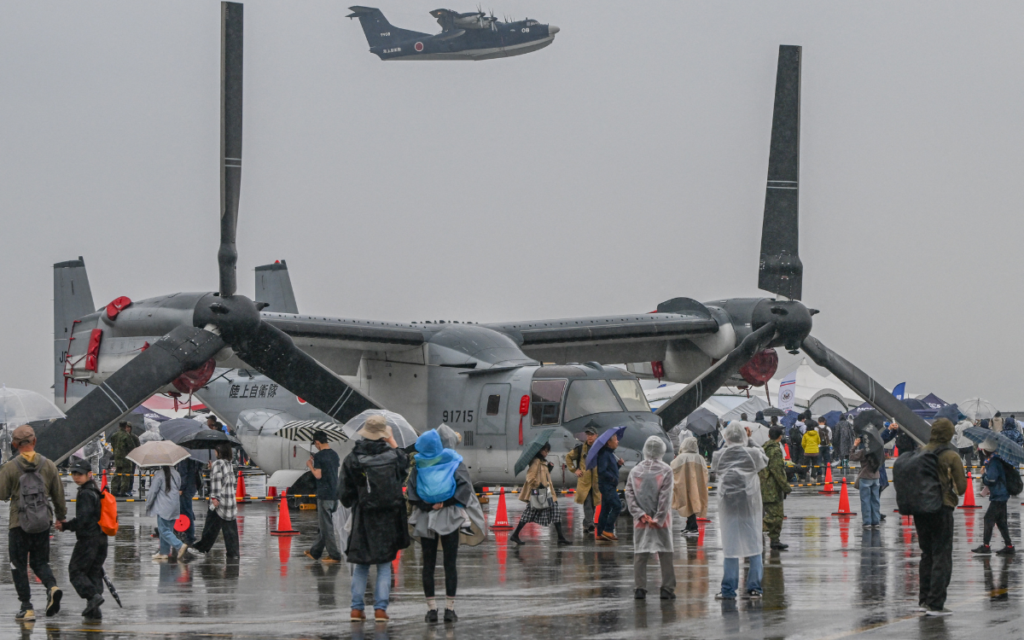
The same drive now reaches the battlefield. Grok, the chatbot from Musk’s company xAI, helped launch more than 2,000 munitions in just four days as part of the U.S. military operation against Iran, Epic Fury. It works within the military’s Maven targeting system, which lays intelligence out for commanders. The system does not choose targets on its own; it flags what looks worth hitting, and people decide.
The Escalating U.S.–China Security Dilemma
Beneath the Fable restriction runs a deeper strategic rivalry. Reporting in Washington suggests the real trigger was not the model’s flaws but a question of access. Anthropic had let Mythos spread more widely than the government allowed, and one recipient was a firm suspected of ties to China. Officials moved fast to claw the technology back. The worry was not that the model would fail, but that a rival would hold it too.
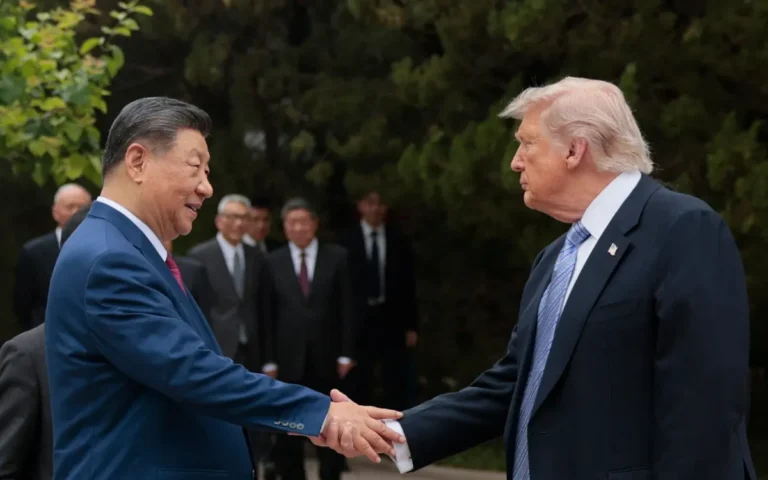
This is a U.S.–China security dilemma in its clearest form: each side racing to deny the other an edge in AI-enabled cyberwarfare, each side assuming the worst. Because neither power can read the true strength of its rival, both act on fear, and fear is what breeds miscalculation. War grows likelier the moment leaders wrongly believe offense has the upper hand. The race itself pushes both powers into preemptive postures that could destabilize global security.
War grows likelier the moment leaders wrongly believe offense has the upper hand. The race itself pushes both the U.S. and China into preemptive postures that could destabilize global security
The Race Leaves Europe Behind
The fog is spreading. Germany’s cyber chief, Claudia Plattner, warned recently that Chinese firms appear to be closing in on a model as powerful as Mythos. Some, she added, have quietly stopped updating their open systems, a sign the work is moving out of sight. If China goes dark, the West loses its clearest view of how far it has come, and the guessing gets worse.
AI cyber capabilities are proliferating rather than concentrating. Russia probes European networks daily, OpenAI has just released a cyber-focused model of its own, and the technology keeps spreading rather than settling in one place. However, Europe is largely outside the Mythos circle and dependent on British and American partners for insight. It is the most exposed because it is the most blind. The U.S. shutdown proved the danger, showing Washington can pull the plug on allies at will and igniting a drive across Europe for what governments now call sovereign AI. “Europe is not at the table,” recently warned a Dutch lawmaker.
A Balance No One Can See
None of this resembles the nuclear standoff of the Cold War, whose balance was comparatively transparent. Mutual visibility helped sustain it because each side could see it had nothing to gain by striking first. The strategic balance in AI is harder to see, and that blindness invites mistakes.
In the AI arms race, the edge will go not to whoever builds the strongest model, but to whoever can determine what the others actually possess. In that sense, the decisive contest may be one of intelligence rather than AI engineering. What matters is not merely power, but the ability to see and measure it.
The decisive contest may be one of intelligence rather than AI engineering. What matters is not merely power, but the ability to see and measure it