
John Bolton has spent the better part of a quarter century arguing over what America should do about Iran. He’s studied the country, debated it, urged American presidents to thwart its nuclear ambitions. When he speaks, he delivers credible, serious analysis. That’s why everyone should give credence to his July 16, 2026, in-depth interview with Eagle Intelligence Reports. It’s also why the neoconservative views he expressed deserve a challenge.
When Bolton is good, he’s trenchant. His experience as President Donald Trump’s national security advisor and as George W. Bush’s arms control chief and UN ambassador shows. He minces no words about Trump’s chaotic Middle East policies: the administration’s failure to capitalize on the Iranian opposition; its shifting objectives; the failure to anticipate Iran’s blockage of the Strait of Hormuz. Perhaps because of his falling out with the President, Bolton is harsh and blunt about the President’s handling of the war. Nevertheless, he’s largely on target.
His argument falls short where the neoconservative view typically breaks down: the gap between diagnosing a problem and providing a prescription for what to do after armed intervention. The weakness of Bolton’s approach is not that it misidentifies the Iranian problem, but that it repeatedly mistakes regime removal for a strategy for political order. In short, he fails to convincingly address the question posed in March 2003 by then Major General U.S. David Petraeus when leading the 101st Airborne during the war in Iraq: “Tell me how this ends.”
The weakness of Bolton’s approach is not that it misidentifies the Iranian problem, but that it repeatedly mistakes regime removal for a strategy for political order
The Endgame Problem
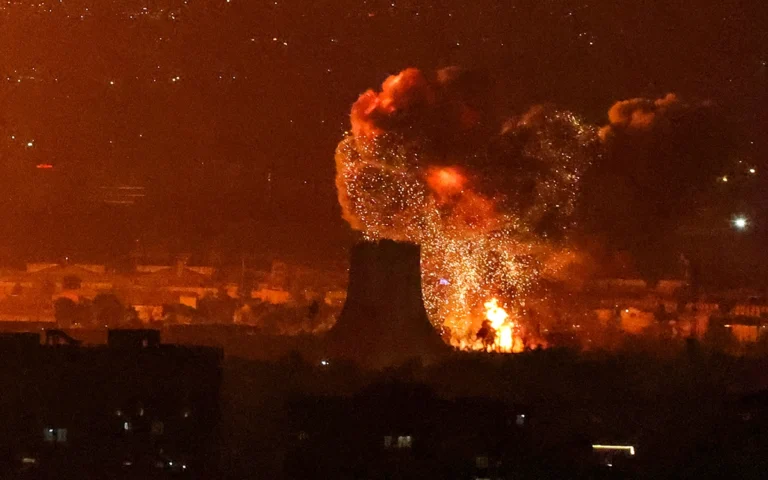
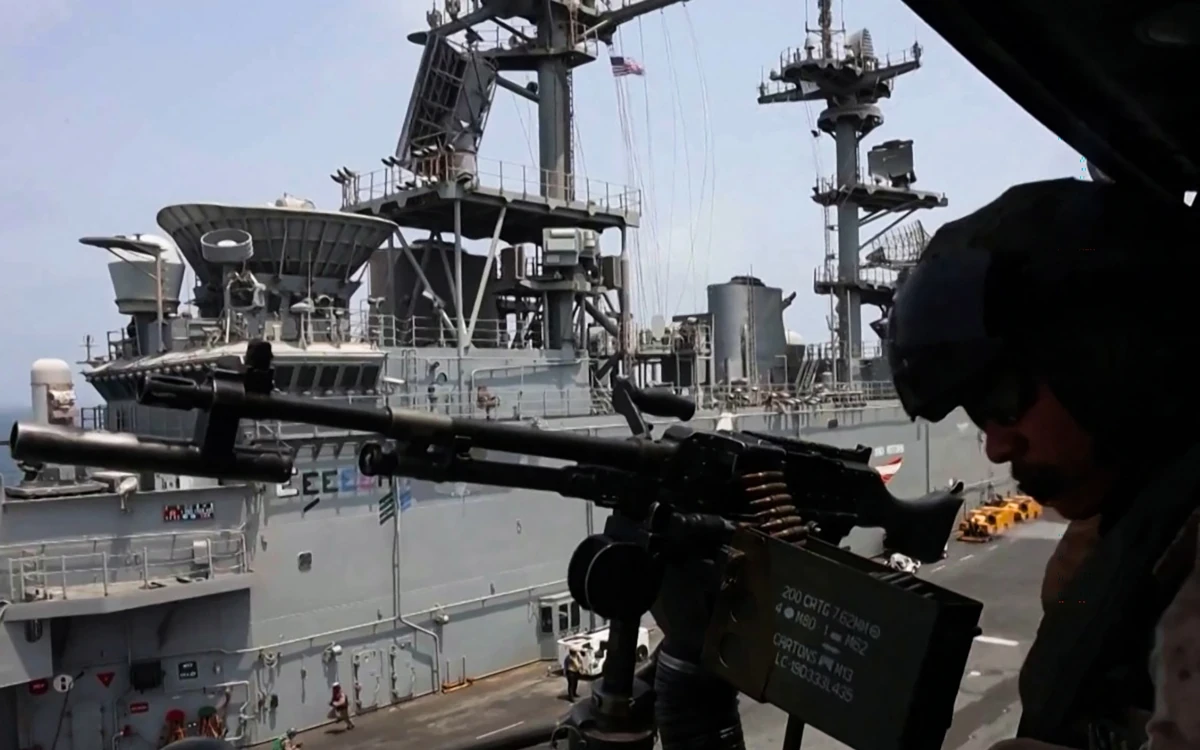
The American and Israeli campaign began with massive targeted strikes on Iran’s nuclear sites. In the process, the coalition killed Iran’s Supreme Leader, Ali Khamenei, leading to his replacement by his son, Mojtaba, who has been in hiding ever since. A June memorandum of understanding meant to end the conflict has not held, and the Strait of Hormuz has now been closed for more than five months. Strait traffic is down to 10 percent of pre-war levels, global oil prices have soared, and neither side is any closer to answering the question posed by Petraeus.
Bolton’s responses are revealing. He lays out an endgame of sorts, correctly labeling the Trump administration’s failure to prepare for regime change a conceptual failure that continues to haunt America’s prosecution of the war. But he doesn’t grapple with the more troubling prospect: the naivety of the concept underlying the entire operation. Can any outside force, regardless of heft and skill, engineer a change of leadership in a country of 90 million with a fractured ethnic landscape and 47 years of institutional entrenchment? Such a transition was always more of a hope than a plan, and the ideas Bolton embraces fall squarely in the hope camp.
Bolton advances a regime change argument long embraced by neoconservative hawks under several presidents. But he discusses it for a country whose Supreme Leader has already been killed, whose successor is in hiding, and where a radical element of Iran’s military has eclipsed the theocratic government. In other words, the decapitation Bolton wanted has already happened, but the vacuum it created has been filled by the Iranian Revolutionary Guard (IRGC), exactly the faction he had hoped would be destroyed.
The decapitation Bolton wanted has already happened, but the vacuum it created has been filled by the Iranian Revolutionary Guard
Let the Artesh Do It
Bolton now describes the “most benign outcome” of the Iran war as a military government headed by the Artesh—Iran’s conventional army—rather than the IRGC. He carefully hedges his idea with a qualifier: “I’m not saying that’s a fountainhead of Jeffersonian democracy. I’m just saying they would have the capability to restore order internally.” But Bolton’s hedge is camouflage for a specious proposal. After a war that has killed thousands and set the Gulf on fire, the best available outcome he can muster is a feckless military junta?
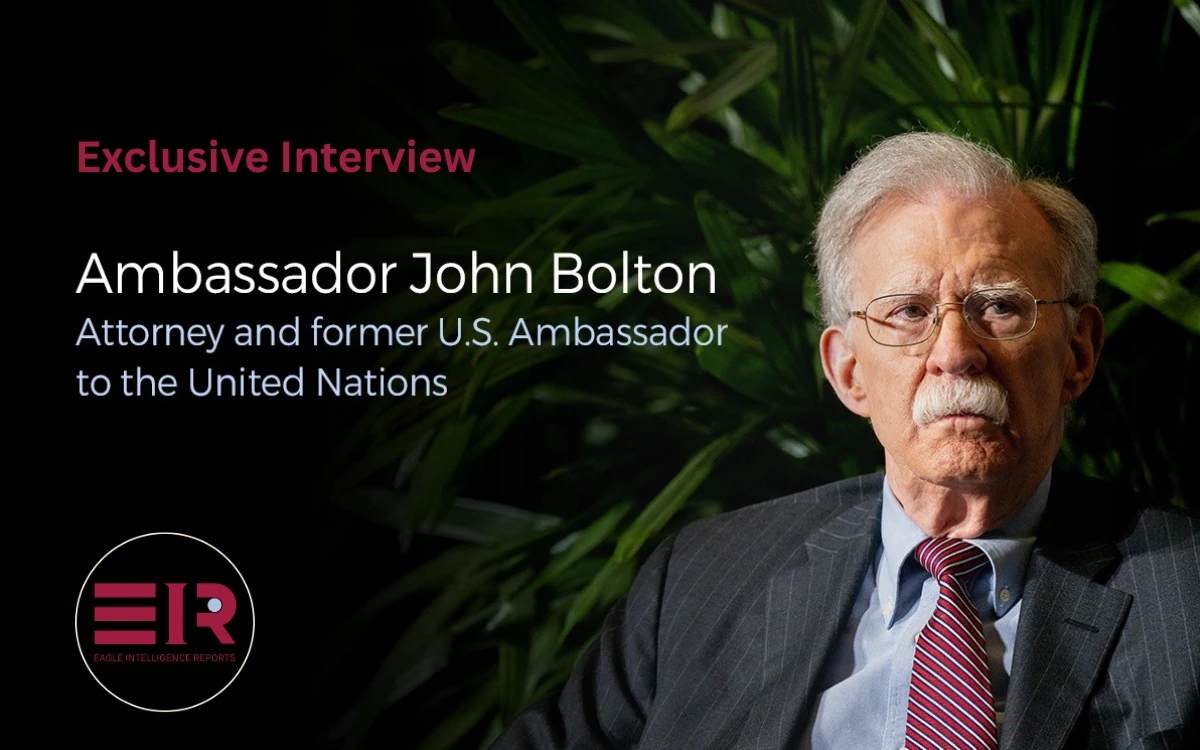
Bolton knows well the imbalance of power between the IRGC and the Artesh. Everything from budgets to the way the country is governed reflects that disparity of power. To put it bluntly, his embrace of the Artesh is effectively an acknowledgement that he has no real answer for the mess in Iran. And that creates a dilemma in Trump’s broader Middle East policy that hardliners like Bolton are simply unable to resolve.
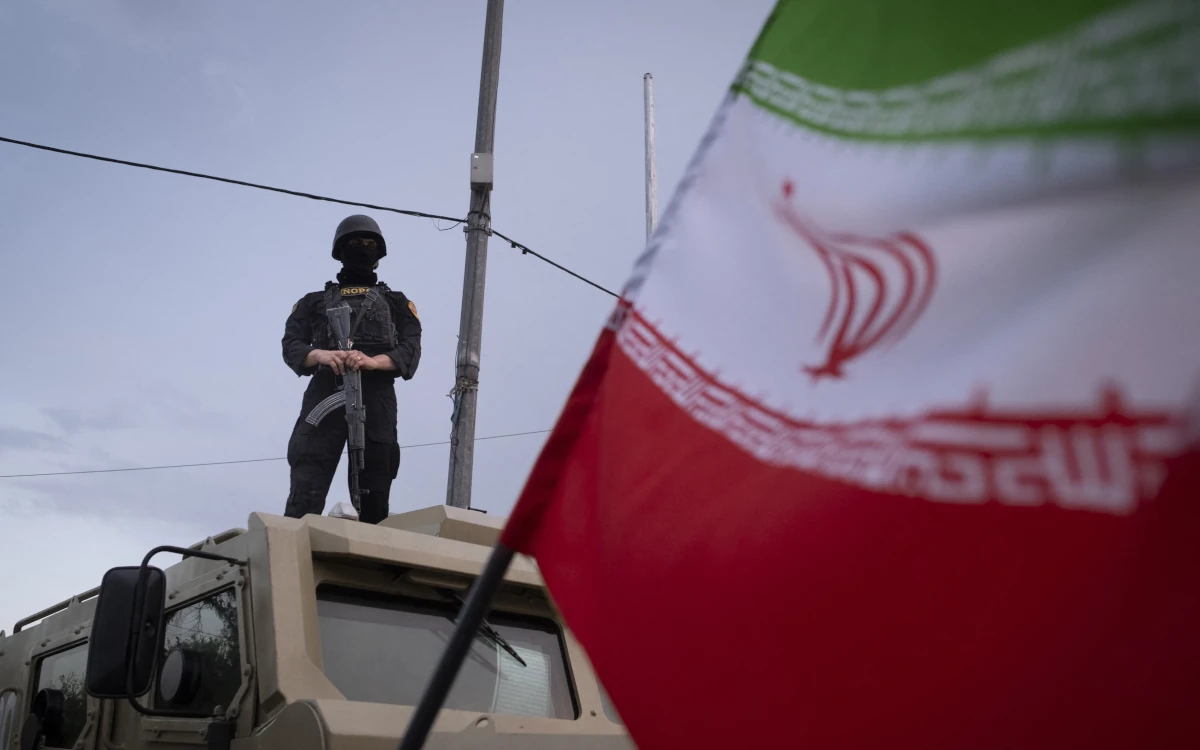
The structure of the Iranian regime amplifies the poor choices embedded in the war plans Bolton embraces. Artesh predates the 1979 Iranian revolution in which the Ayatollah Khomeini overthrew Mohammad Reza Pahlavi, the Shah of Iran. In its day, the Artesh was powerful, the Shah’s imperial army. After 1979, though, it became the anemic cousin of the Iranian IRGC, which secures and reinforces the government that most Iranians dread, one responsible for a reign of terror. The Artesh is less radical than the IRGC. But it is also much weaker. Its constitutional mission, defending Iran’s borders against external attack, contrasts sharply with the IRGC, which coordinates proxy militias like Hezbollah in Lebanon and the Houthi rebels in Yemen. In short, the IRGC is a parallel revolutionary state.
Muscular Revolutionary Guard in Control
The dual military architecture isn’t a historical accident. Khomeini and Iran’s mullahs deliberately designed it to ensure that no single military institution could accumulate enough power to stage a coup. They starved the Artesh of the resources, budget, and political influence needed to challenge its more muscular cousin. The IRGC’s budget is estimated to be $6 billion, about 1.8 times that of the Artesh. The IRGC’s mission is highly ideological: defend the revolution. The Artesh’s is conventional: defend the territorial state.
Moreover, the IRGC answers directly to the Supreme Leader, operates Iran’s ballistic missile arsenal, oversees the Quds Force’s regional proxy network, and enriches itself through illicit commercial and financial operations worth billions. It is, in effect, a state within a state, with ground, naval, aerospace, and intelligence forces that run parallel to the Artesh at every level. Crucially, many IRGC veterans occupy senior government positions, cementing its control over significant portions of the Iranian economy. It enforces, sometimes with puritanical rigidity, ideological conformity inside the country and regional destabilization outside it.
Bolton rightly argues that degrading the IRGC must occur to create any meaningful change. But he glosses over a key question: Can Artesh, an organization deliberately marginalized, underfunded, and politically neutered for 47 years, rise to the challenge? Can it muster the institutional capacity or the popular legitimacy to fill the vacuum? Or will it simply be the next faction to be absorbed, co-opted, or overwhelmed by whatever IRGC commander survives and proves most ruthless in the chaos that follows?
Burn Down the Building, Worry About the People Later
This is not a criticism of Bolton’s honesty. He is more candid than most. It is a criticism of a strategic tradition: one that almost always overestimates its ability to control the forces it sets in motion. The playbook usually reflects wishful thinking: remove the regime, create a vacuum, let the good military fill it—rather than the most ruthless, the most armed, the most regionally connected faction. This game plan has been tested before. It was tested in Iraq. It was tested in Afghanistan. It was tested in Libya. The results were not encouraging, to say the least.
The neocon playbook usually reflects wishful thinking: remove the regime, create a vacuum, let the good military fill it—rather than the most ruthless, the most armed, the most regionally connected faction
Bolton acknowledges an ethnic dimension exists, too. The Kurds. The Baluchis. The risk of fragmentation. Then he effectively sets it aside. “Until you get rid of the regime, there’s no point talking about what the shape of Iran looks like going forward.” That is a sequence, not a strategy. It reflects a mentality of “let’s first burn down the building and worry about the people later.” In practice, those two phases are not separable. The forces that will determine what Iran looks like the morning after the regime falls are now jockeying for power. The military campaign now underway shapes their covert maneuvers. No one gets to call “time out” in the post-conflict competition while you finish the war.
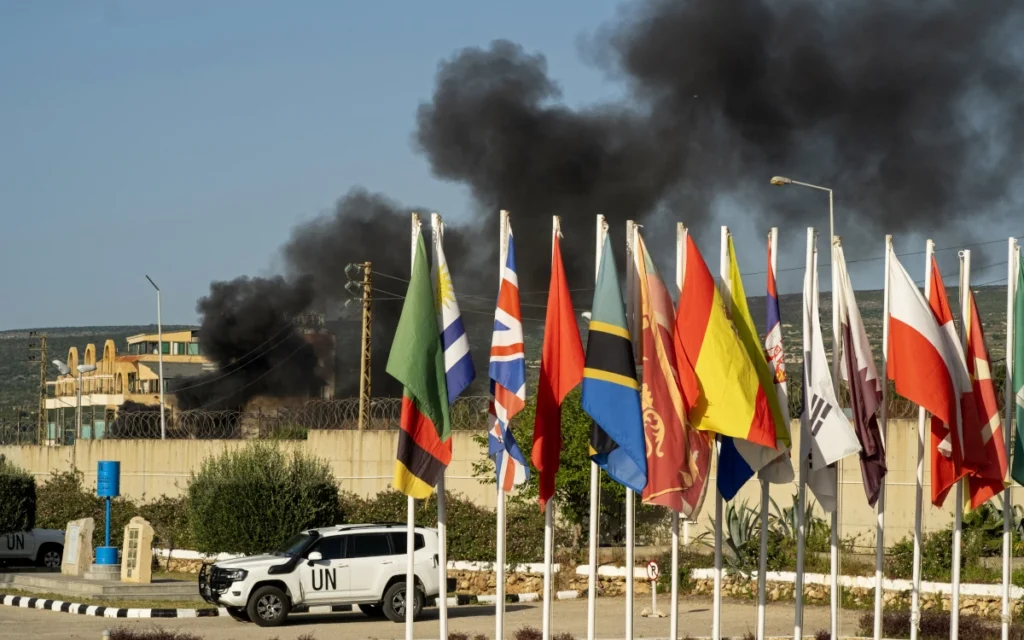
On the Strait of Hormuz, Bolton is at his most pointed. “There is no chance,” he said, “that the Pentagon didn’t tell him [Trump] multiple times that it was possible that Iran would try to close the Strait of Hormuz.” He is almost certainly right. So, too, is his bewilderment that Congress has yet to convene hearings on the decision-making breakdown. Every previous administration has war-gamed the possibility of a Hormuz closure, particularly since Iran attacked Gulf shipping during the Tanker War of the 1980s, when American warships escorted reflagged Kuwaiti tankers past Iranian mines and missile batteries. If the Pentagon was genuinely surprised, something fundamental went wrong in the White House. The American people deserve an explanation. How and why did such a breakdown happen?
How Does It End?
Bolton has a solution to the Hormuz problem, but it carries the same structural fault that runs through the whole of the neoconservative playbook. He proposes suppressing the IRGC with a long-term, sustained NATO naval presence in the Gulf. He said the force couldn’t operate like a United Nations peacekeeping operation authorized to use force only in self-defense. He says stronger rules of engagement would be required.
But the adversary in this case has been degraded, not defeated. That is not a burden most analysts expect European governments to shoulder, particularly since Trump excluded them when he and Israel’s Bibi Netanyahu launched the war. Even Bolton concedes America faces an enormous challenge in dealing with Iran. “We can suppress the threat from the Iranian side,” he told Eagle Intel, “but we can’t eliminate it.” That describes a war strategy that fails to answer General Petraeus’s question, a war without an achievable end, one that has permanent costs in treasure, blood, and strategic attention from the true challenge that Bolton himself mentions only briefly at the end of the interview: China.
Once again, he is clear-eyed about the stakes but vague about the strategy. He correctly warns of Beijing’s ambitions and a potential nuclear buildup with Russia as its partner, identifying the hegemonic combination as a generational challenge. He rejects the idea of resource constraints forcing America to withdraw from other parts of the world to deal with the Chinese threat.
The nation, Bolton argues, must increase defense spending to match Reagan-era defense budgets. As a percentage of the economy, that would be roughly 40 percent higher than the fiscal 2026 defense budget, which tops out at just over $1 trillion. But increases in the nation’s current defense budgets to support the war in Iran are already draining resources the military says it needs. Those strains will intensify if America continues to pursue the Iranian regime-change strategy that Bolton champions. Bolton and his neoconservative allies evade the question of how a Congress struggling with a wide range of spending priorities will view defense budgets of such scale, especially given concerns about a more aggressive China. America’s misadventures in Iraq and Afghanistan didn’t make the United States stronger relative to China. There is little reason to believe this one will either.
America’s misadventures in Iraq and Afghanistan didn’t make the United States stronger relative to China. There is little reason to believe this one will either
Victory Over Iran Impossible to Define
The Bolton interview is valuable. Eagle Intel was right to publish it. It zeroed in on real failures identified by someone who has paid sustained intellectual attention to these questions for decades. But Bolton and the traditional neoconservatives are plagued by a recurring asymmetry: time and again, he clearly describes what has gone wrong, but his arguments about what can be done about it are as thin as gruel.
Bolton laments that Trump’s objectives keep changing, making it impossible to define victory. But the neoconservative world in which he lives has a similar problem: It advocates removal of one regime so a better order can emerge, a force that would stabilize the region and deter the next adversary. The trouble is, as Bolton himself notes, the American and Israeli strikes on Iran decimated the top level of the Iranian government, creating uncertainty about who will survive that the United States can deal with. Indeed, the lack of a realistic plan resembles America’s stated objective in the Middle East for more than two decades. That plan, or lack thereof, has not given us a stable region. Deterrence has rarely held, and a better order has not emerged.
At some point, consistent failure must honestly confront faulty concepts and not just the conditions they create or the way in which they are put into practice. Bolton critiques Trump’s failure to prepare properly. He didn’t consult allies, didn’t do the preliminary work. All true. But America has attempted the preliminary work Bolton has in mind before, in different forms, in different countries. Where did it lead? To consistent failures that never truly organized the opposition, rallied a diaspora, or created a new start.
The Best American Can Do?
The neoconservative tradition is not all wrong. The Iranian regime is a menace to its own people and to the region. But removing the menace doesn’t automatically produce order. Indeed, it often simply creates a different kind of chaos, one that could easily become generalized across the region. The neoconservatives also shouldn’t assume the United States’ domestic political system has the patience and wallet to spend decades managing chaos as they did with the Afghanistan war. The American government faces other daunting challenges, many of them domestic. Trump himself was elected on an anti-war ticket.
Bolton said that Netanyahu, unlike Trump, thinks strategically. He meant it as a compliment. But Netanyahu’s brand of strategic thinking also helped produce a costly war with no clear end in sight. The question is not whether the thinking was rigorous but whether the strategy was wise.
On that question, the answer is clear: the Gulf is on fire; the Strait of Hormuz is in chaos; eighteen Americans are dead and nearly 500 wounded; bombs continue to fall on the region’s energy infrastructure. And the best outcome forwarded by one of the operation’s most sophisticated advocates is that a weak, military government just might eventually allow ordinary Iranians to decide what kind of country they want.
That’s no victory; it’s not even a success. It’s the latest chapter in a story America has been telling itself for twenty years: the next intervention will go better than the last one. This time, we’ll do it right. We’ll prepare better and professionally manage the post-conflict environment.
John Bolton is a serious man. But this war deserves a more serious reckoning than the tradition he represents has been able or willing to make.