
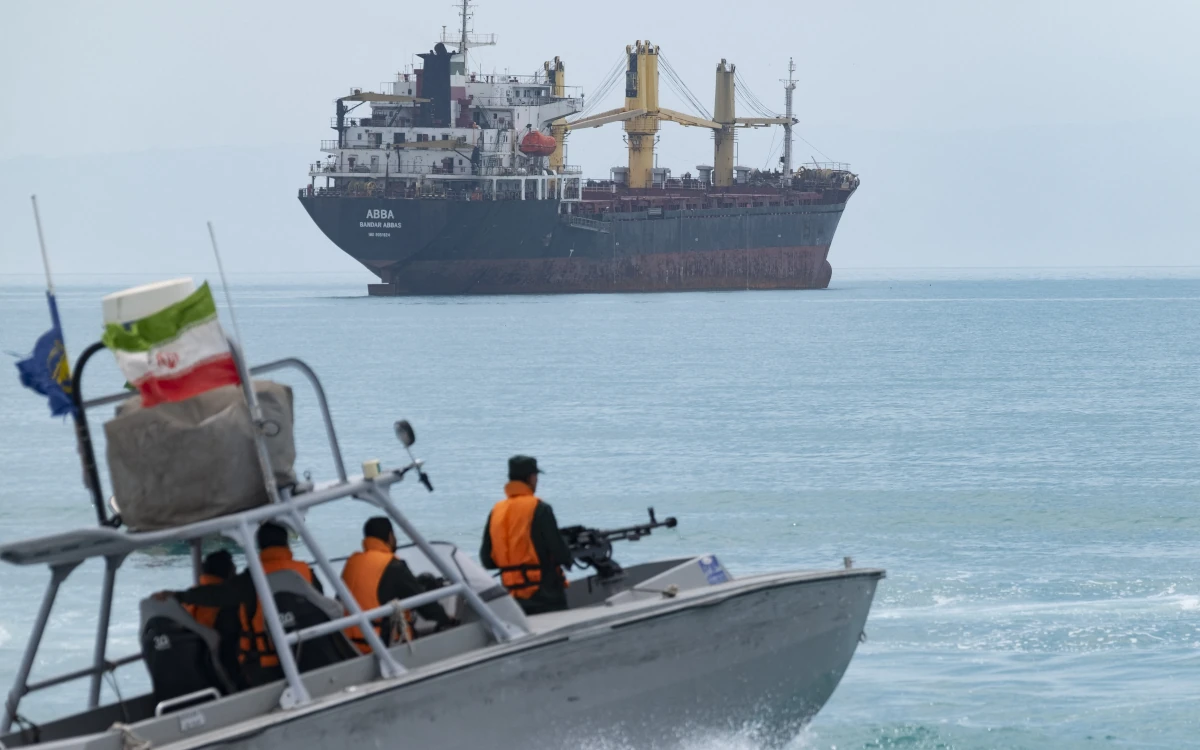
The dual blockade in the Strait of Hormuz reflects more than a regional outbreak. It signals a broader shift in how power is exercised at sea. Geography is reasserting itself as a decisive variable in international affairs. The recent maritime coercion is not merely a series of isolated incidents. Rather, it fits within a structural transformation in which control of strategic chokepoints has become an operational lever of coercion rather than a background constraint. The global market, which relies on the longstanding liberal maritime security regime, no longer operates outside of geopolitical interference.
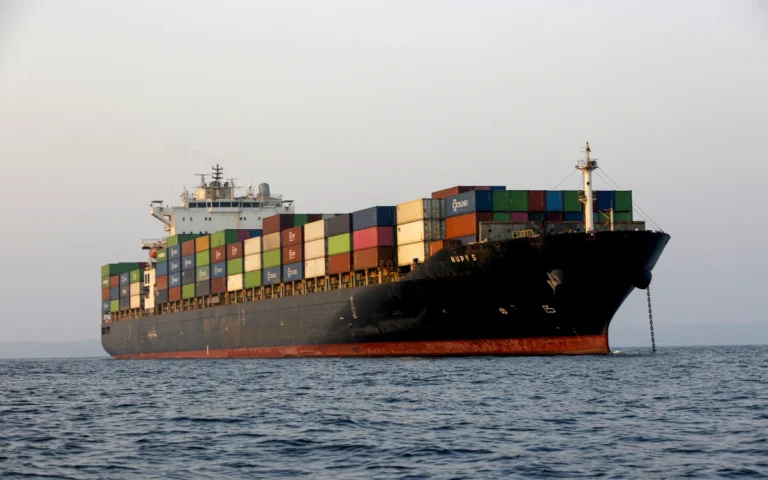
The U.S. blockade of Iranian ports follows the dramatic U.S.–Israeli military campaign that crippled Iranian command structures and drove Tehran to close one of the world’s most important energy arteries. The shock prompted the International Energy Agency to release 400 million barrels from its strategic reserves. Mediation efforts in Pakistan collapsed when Iran’s demands for maritime tolls collided with Washington’s red lines on various items.
The Hormuz precedent is unlikely to remain confined to the Gulf region. It offers an operational blueprint for the Asia-Pacific, where the First Island Chain—the Malacca Strait, the Taiwan Strait, and the South China Sea—has increasingly become the central battleground on which Washington seeks to contain Chinese maritime expansion and challenge its resource security. While these waterways remain open under peacetime conditions, the Hormuz crisis raises questions about how they might be utilized or contested in future crisis scenarios.
The Hormuz precedent is unlikely to remain confined to the Gulf region. It offers an operational blueprint for the Asia-Pacific
The Hormuz Template in East Asia
The Hormuz crisis is reshaping strategic thinking across East Asia. The chokepoint has shifted from a theoretical vulnerability into a subject of active strategic planning. For decades, global trade operated on the assumption that maritime freedom of navigation was an established norm. Yet Washington’s blockade suggests a possible shift toward a more transactional and exclusionary maritime order under conditions of persistent instability. The archipelagos that comprise the First Island Chain are increasingly discussed not merely as defensive perimeters but as maritime gates that could potentially be contested to exert leverage over an adversary’s industrial heartland.
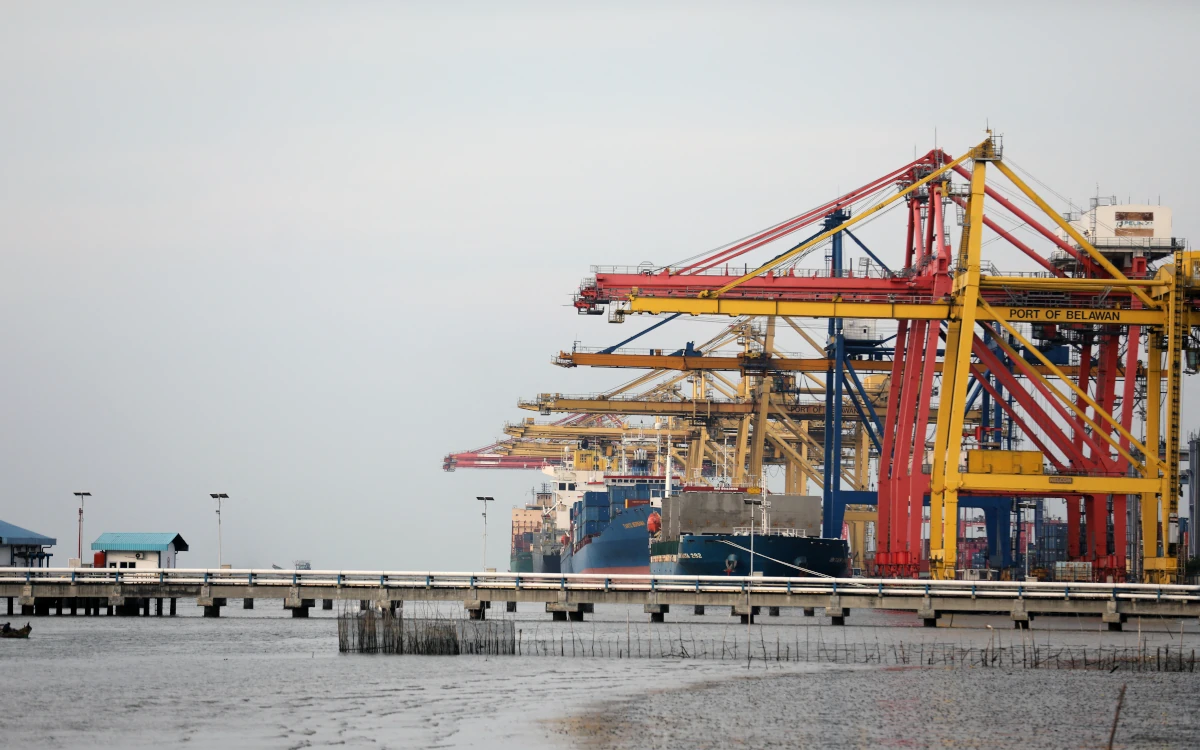
The strategic significance of geography is most visible in how regional powers are recalibrating their naval doctrines in light of the Hormuz confrontation. China has spent two decades attempting to construct an Anti-Access/Area-Denial bubble designed to turn the South China Sea into a contested zone for foreign navies. The Hormuz crisis has demonstrated that even a superior naval force can be temporarily stymied by geography and shore-based precision fires. The lesson is registering across the Asia-Pacific. For example, Japan has accelerated the deployment of long-range strike capabilities along its western coastline and southwestern islands near the East China Sea, positioning itself to contest or enforce similar blockades in its own littoral waters.
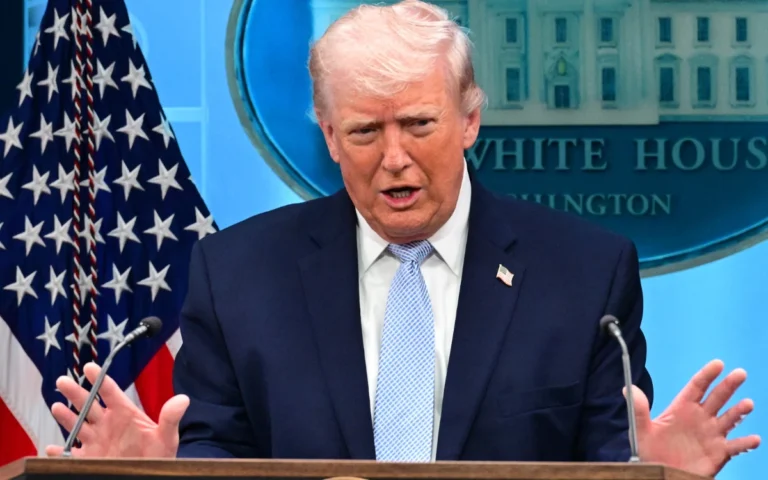
The power-political significance of these waterways is also being reconsidered through the lens of domestic political priorities. For the Trump administration, the blockade of Iran comes in response to Iran’s closure of the Strait. Yet it is also a tool used to force a diplomatic capitulation that sanctions alone could not achieve. In East Asia, the Taiwan Strait occupies a similarly critical position, representing a geographic focal point where regional maritime control and the credibility of the U.S. alliance system could potentially be tested. Beijing has treated Taiwan as part of China to be reunified, by force if necessary, since the founding of the People’s Republic of China nearly eight decades ago. Washington, in turn, has sought to strengthen ties with allies like South Korea and Japan to enhance collective defense postures along the First Island Chain and deter potential challenges to freedom of navigation in the waterway.
The Hormuz crisis suggests that when negotiations fail, as they did in Islamabad, the following move is the physical interdiction of trade. Regional capitals have taken note. The crisis has also revived the concept of geographic fate. Southeast Asian states such as Singapore and Malaysia now find themselves in a position analogous to Oman or the UAE: essential transit hubs whose stability depends on decisions taken in distant capitals. The rules-based order appears to be giving way to a position-based one, in which the capacity to occupy or close a strait is becoming the decisive expression of sovereignty and state power projection.
Singapore and Malaysia now find themselves in a position analogous to Oman or the UAE: essential transit hubs whose stability depends on decisions taken in distant capitals
Waterways as Potential Strategic Levers
The Hormuz blockade offers a test scenario for the so-called “Malacca Dilemma” that has long concerned Chinese strategic planners. China imports approximately 80 percent of its oil and gas via the Strait of Malacca. Yet the U.S. Navy maintains a regular presence there, conducting freedom-of-navigation operations, countering piracy, and asserting the principle of open access. A hypothetical U.S.-led naval blockade at this junction, modeled on its current operations in the Arabian Gulf, would effectively sever China’s energy lifeline. Rerouting via Lombok or Sunda Straits is possible but slower and strategically more costly. Moreover, it would leave Beijing’s energy supplies largely dependent on Indonesian cooperation.
The Taiwan Strait is a second element in this strategic geography. A potential conflict over Taiwan would not be limited to a localized land battle but could involve systematic efforts to control or interdict maritime traffic, as demonstrated by the PLA’s joint exercises to encircle Taiwan. If China imposed a blockade to force reunification, or if the United States moved to block the strait to prevent a PLA crossing, the impact on international trade would be severe. While the Strait of Hormuz carries approximately one-fifth of global oil, the Taiwan Strait serves as a primary corridor for global semiconductor supply chains and handles a significant share of global container shipping.
Any extended closure or militarization of the Taiwan Strait would disrupt fuel supplies to South Korea and Japan—two of Washington’s major Northeast Asian allies and advanced semiconductor manufacturers that receive more than 65 percent of their fuel via routes transiting or adjacent to the Taiwan Strait.
Such a scenario would also disrupt shipping routes to major port cities in Northeast Asia, including Busan, which handles over 76 percent of its container cargo and serves as a central logistics hub linking Asia-Pacific countries with Eurasian routes. A crisis in the Taiwan Strait would move beyond an energy shock toward a broader paralysis of global technology and consumer-goods supply chains.
The South China Sea serves as the connecting waterway between these straits. Its ongoing militarization has produced an environment in which an accidental confrontation could trigger a Hormuz-style shutdown. Chinese maritime forces have constructed artificial islands with potential dual-use military infrastructure to support a persistent presence in the waterway. Moreover, China and the Philippines have had repeated maritime clashes near disputed islands and atolls. The United States, in turn, has conducted Freedom of Navigation Operations and recently expanded joint military exercises with Manila to include Mid-Range Capability missile systems capable of reaching the Chinese mainland. The result is a high-density friction zone in which the risk of miscalculation and unintended escalation has grown markedly.
The South China Sea serves as the connecting waterway between Malacca and Taiwan straits. Its ongoing militarization has produced an environment in which an accidental confrontation could trigger a Hormuz-style shutdown
Evidence of adaptive routing behavior emerged in March 2026, when Chinese cargo vessels began using safe corridors within Iranian waters to bypass the main shipping lanes of the Strait of Hormuz. A comparable move by Beijing to establish exclusion zones or preferential routing arrangements in the South China Sea during a crisis would force global shipping to reroute around the Indonesian archipelago, adding thousands of miles and billions of dollars in costs to supply chains serving East Asian economies.
The question of waterway security has thus become a priority concern for East and Southeast Asian nations, despite their status as open waterways with normal commercial traffic flows in peacetime. Taiwan is the most exposed economy in the region. Liquefied natural gas (LNG) accounted for over 50 percent of the island’s electricity mix in early 2026. A naval blockade would cause domestic power production to drop sharply within weeks. South Korea and Japan face a similar vulnerability. Both import more than 95 percent of their crude oil. Thus the security of the South China Sea has shifted from a distant but disputed issue into a direct domestic concern, given that any disruption would cause significant damage to fuel supply continuity and energy security.
The Hormuz crisis has weakened the assumption that such waterways can be managed primarily via international law. It has shown instead that they may increasingly require physical naval presence and coalition deterrence to remain open.
Within the First Island Chain, a crisis in one location could create cascading effects in the others. A U.S. intervention in a South China Sea confrontation might trigger Chinese counter-blockade measures in the Taiwan Strait or the Bashi Channel or even counter-intervention operations targeting U.S. forces in Guam or Okinawa.
The result is a strategic paradox. The measures taken to secure a waterway, including the deployment of carrier strike groups or land-based anti-ship missiles, could render that waterway unusable for the commercial traffic such deployments are designed to protect. The shift from trade artery to battlefield has become a primary risk factor for the global economy.
Energy, Competition, and China’s Constraints
The strategic significance of these waterways is reinforced by the material realities of U.S.–China competition, particularly in the energy sector. While the importance of geography provides a conceptual framework, the underlying driver is material: states require resources. China’s expanding role in the Middle East—signaled by Premier Li Qiang’s recent meeting with Abu Dhabi’s Crown Prince Sheikh Khaled and Beijing’s reported facilitation of the Islamabad talks—represents an effort to secure energy sources as its maritime supply lines face potential vulnerability in crisis scenarios.
China’s Middle Eastern footprint, however, remains modest compared to the U.S. military reach. Beijing cannot physically protect its energy assets in the Gulf from a U.S. blockade, given its limited presence along Indian Ocean and First Island Chain supply lines. It has only a modest military presence in Djibouti. The result is geopolitical asymmetry: China has the economic weight to serve as a primary consumer and diplomatic partner for major energy exporters in the Global South—the Gulf states in particular—but lacks the naval reach to guarantee the transit of those goods through the Hormuz–Malacca–South China Sea corridor.
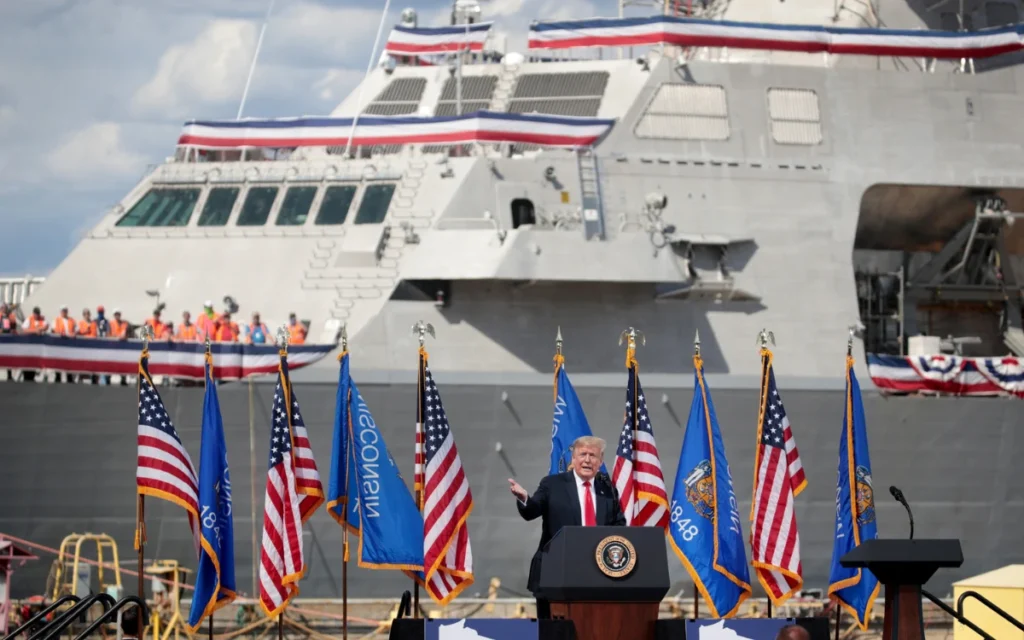
This corridor has witnessed increased attention regarding potential U.S. naval interdiction capabilities, particularly in light of the Trump administration’s more assertive naval posture toward adversaries, as demonstrated in recent operations in the eastern Pacific and the Caribbean against Venezuela, and in the Strait of Hormuz against Iran.
The energy disruptions triggered by the Hormuz blockade are already affecting the broader competitive landscape by accelerating national strategies toward energy sovereignty. China is aggressively expanding its strategic petroleum reserves. Under its latest five-year plan, Beijing is augmenting its estimated stockpile from 900 million to 1.4 billion barrels—covering over 120 days of imports—by building new, largely undisclosed storage sites. It is also investing in overland pipelines through Central Asia and Russia to reduce dependence on maritime routes. The China-Russia east-route natural gas pipeline, dubbed “Power of Siberia,” and the planned “Power of Siberia 2” are set to strengthen long-term energy partnerships, potentially transporting up to 61 billion cubic meters annually.
Washington, by contrast, is leveraging its position as a net energy exporter to reinforce its alliances. It is offering oil and gas to partners such as Taiwan and Japan as a hedge against disruptions originating in China or the Middle East. This energy statecraft has become a core component of great-power competition.
Washington is offering oil and gas to partners as a hedge against disruptions originating in China or the Middle East. This energy statecraft has become a core component of great-power competition
The crisis also underscores the role of naval infrastructure in the contest. China’s investment in a vast merchant fleet, enabled by its massive shipbuilding industrial base and its port-ownership strategy, represents an attempt to create civil-military fusion at sea. By controlling ports along critical waterways, Beijing seeks to build a logistical network capable of absorbing the shock of a potential blockade.
However, this strategy encountered a major setback in early 2026, when Washington used the Monroe Doctrine and national security imperatives to pressure Panama to annul the port concessions of the Hong Kong-based CK Hutchison. In January 2026, the Supreme Court of Panama ruled that the contracts were unconstitutional and returned the canal’s Atlantic and Pacific gateways to non-Chinese commercial control. The episode shows that the United States is prepared to use local legal frameworks to dismantle parts of Beijing’s maritime Silk Road. For the Trump administration, reclaiming such nodes is a prerequisite for regional dominance, signaling that commercial civil-military fusion will be met with state-led strategic foreclosure.
Ultimately, the Hormuz crisis has focused attention on the First Island Chain as a region with significant strategic parallels to the Middle East. The competition is no longer defined primarily by trade deficits or technology transfer, but by the capacity to control the physical flow of global shipping. As China works to close the gap between its economic influence and its military reach, the United States is reinforcing its naval power to ensure that the gates of the First Island Chain remain under its effective control.
Scenario I: The “Great Re-Routing”
The blockade of the Strait of Hormuz persists, with no diplomatic resolution in sight. Energy prices continue to rise, triggering a global recession with GDP contractions across major economies. China and several ASEAN nations (excluding Singapore, which maintains its U.S. alignment) determine that reliance on Western-proximate waterways poses unacceptable economic risk. A diplomatic summit results in the formation of a “Southern Corridor Initiative.” The coalition establishes formalized shipping routes through the Sunda and Lombok straits, protected by a combination of Chinese naval escorts and ASEAN coast guard coordination. New port infrastructure investments in Indonesia are accelerated with Chinese financing.
The refusal of Singapore to participate would limit the efficiency of the alternative route, as it remains the region’s premier transshipment hub with unmatched infrastructure. The Sunda and Lombok straits also lack the depth, width, and supporting port facilities of Malacca, requiring significant capital investment and years of development. Moreover, Indonesia faces internal political pressure from factions opposed to becoming overly dependent on the Chinese naval presence.
Scenario II: The Taiwan Strait “Squeeze”
Emboldened by U.S. military focus on maintaining the Hormuz blockade and preoccupied by Middle Eastern commitments, China initiates a siege operation around Taiwan following a political crisis over the island. The siege escalates when China begins turning away vessels that refuse inspection or are flagged as carrying military-related cargo. Within weeks, commercial shipping companies begin avoiding Taiwanese ports due to insurance concerns and delays. Taiwan’s LNG imports drop by 40 percent, triggering emergency power rationing.
China argues that since the U.S. has employed blockade tactics as a legitimate tool of statecraft in Iran, it possesses equivalent rights to enforce customs and security measures in what it considers its own territorial waters under the One China policy. This legal framing is designed to create international ambiguity and split the international response. China thus establishes inspection zones at each end of the Taiwan Strait.
U.S. naval forces in the region retain the capability to break the siege, but doing so would risk direct military confrontation between peer competitors, potentially including strikes on Chinese mainland facilities supporting the operation. Japan and South Korea would face immediate economic consequences from Taiwan Strait disruption, which may trigger intervention.
Ultimately, the Hormuz crisis suggests that maritime chokepoints are no longer passive features within a liberal global order, but active instruments of strategic competition likely only to grow in importance. In the context of broader U.S.–China competition, this dynamic raises the risk that future crises will not be geographically contained but will escalate across interconnected waterways. The Hormuz crisis may yet be one in a series of episodes that transform the infrastructure of yesterday’s globalization into tomorrow’s battleground.
The Hormuz crisis suggests that maritime chokepoints are no longer passive features within a liberal global order, but active instruments of strategic competition likely only to grow in importance