
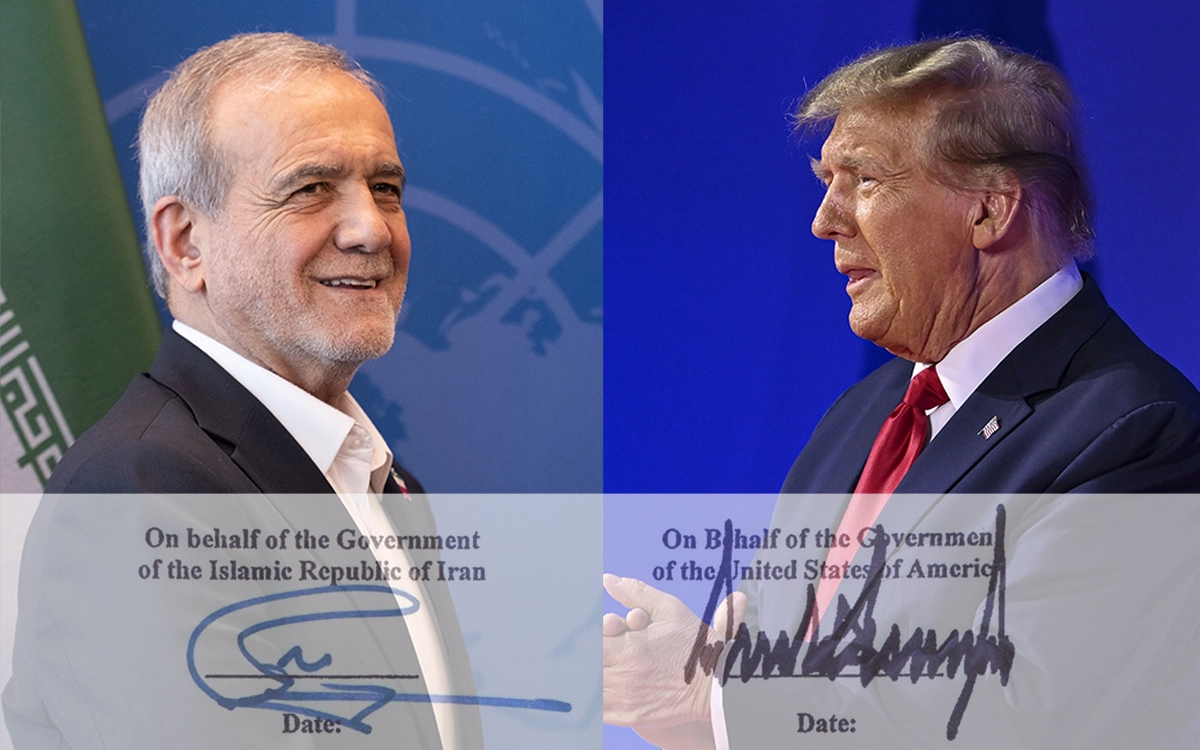
On March 2, just days after the war against Iran began, U.S. President Donald Trump presented the operation not as a limited pressure campaign or a round of military strikes to improve negotiation terms. He framed it instead as a mission to strip Tehran of its essential instruments of power. The operation would destroy Iran’s missile capabilities, degrade its navy, prevent its regime from approaching a nuclear weapon, and end its ability to finance, arm, and coordinate its proxies beyond its borders.
Embedded in these military objectives was a deeper political aim: to weaken the Iranian regime to the point that it would lose the tools of deterrence, bargaining, and even survival.
Today, more than three months later, America and Iran have signed a memorandum to end the war. Yet remarkably, the memorandum reflects few of the original war aims set by Washington. Although the American justification is that subsequent negotiations will address this, it is clear that the memorandum is not a set of terms imposed from a position of power. There is no Iranian pledge to dismantle the missile program, no clear commitment to halt drone production, no binding framework to end proxy support, and no final settlement of the nuclear issue. In fact, there is little evidence that Tehran emerged from the war politically weaker than it entered it.
The memorandum reflects few of the original war aims set by Washington. It is clear that the memorandum is not a set of terms imposed from a position of power. In fact, there is little evidence that Tehran emerged from the war politically weaker than it entered it
When the Exit Becomes the Objective
What has been signed is merely a memorandum of understanding providing for a ceasefire, the opening of the Strait of Hormuz, the lifting of the blockade, exemptions for the export of oil, petroleum products, and their derivatives, and all services connected to that. It also unfreezes Iran’s funds and assets for full use upon the implementation of the memorandum and commits to a fund for Iranian reconstruction. More dangerously, it gives Iran the right to begin a dialogue with the Sultanate of Oman to determine the future management and maritime services in the Strait of Hormuz, in consultation with the other coastal states on the Arabian Gulf.
All of this means that Washington has shifted from declaring war on the sources of Iranian power to managing the consequences produced by the war itself.
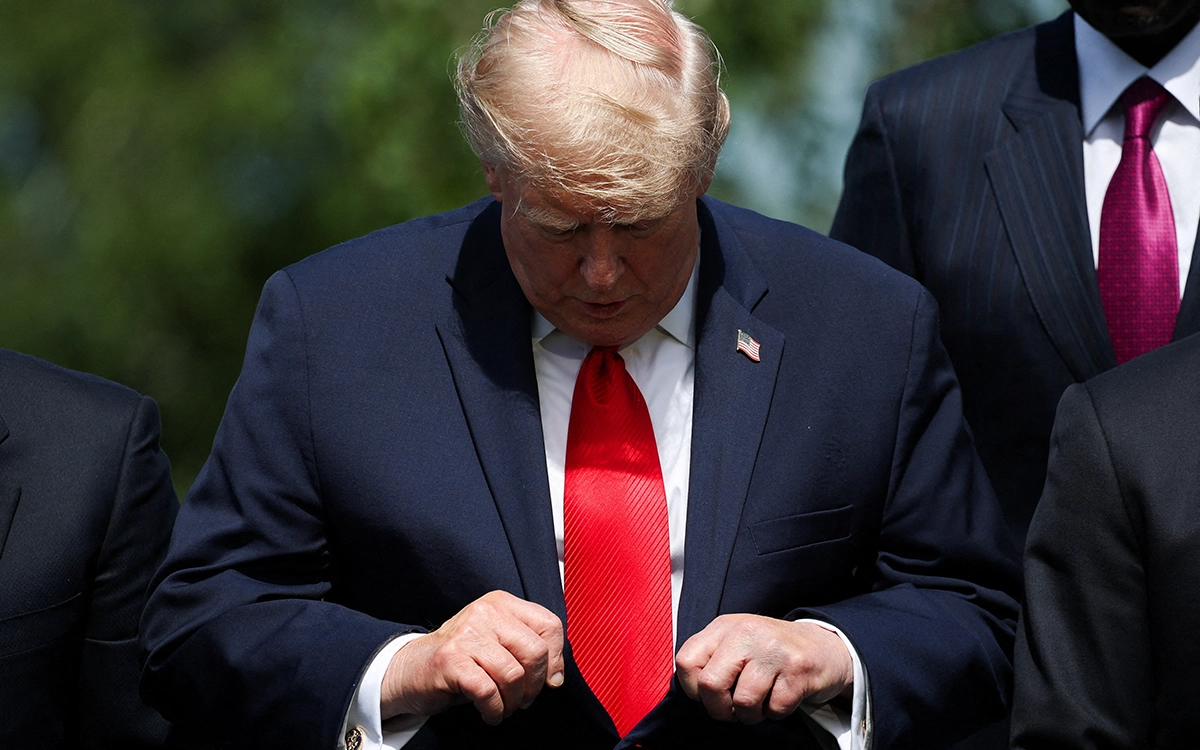
This is the paradox that will haunt the Trump administration. The Strait of Hormuz was not closed before the war. Iran had not turned passage through it into a matter subject to negotiation, whether through direct control or management in one form or another. But the U.S.–Israeli war put the strait at the center of the settlement, transforming a crisis born of escalation into a meager diplomatic prize for the American president.
More complicated still is that Washington is not negotiating with a conventional adversary, but with a regime it routinely describes as the world’s foremost state sponsor of terrorism. This is what makes the unfreezing of Iranian assets and the additional reconstruction fund difficult to reconcile with the war’s stated goals. In Iran’s political economy, where state and security institutions, the Revolutionary Guard, and the economy are deeply intertwined through networks of influence, that money is not a neutral treasury item. Every dollar eases pressure on the regime, expanding its room for maneuver.
For this reason, the memorandum does not look like the end of the war so much as an acknowledgment that the definition of victory has failed.
The war began with sweeping U.S. objectives and is ending—temporarily—with the mere management of its consequences. Iran, meanwhile, has secured what it needs most: time to rebuild, money to ease the pressure, and a narrative of steadfastness that can be readily sold at home and across the region.
Iran has secured what it needs most: time to rebuild, money to ease the pressure, and a narrative of steadfastness that can be readily sold
This is not a marginal issue. When a war begins with objectives tied to dismantling a state’s capacity for deterrence, then ends with an understanding over managing the strait and providing funds, it means the war has moved from an attempt to change the balance of power to an attempt to contain its own results.
The MoU and the Precedent of Hormuz
The memorandum suggests that Iran has retained its principal instruments of influence. It shows that Washington needs an arrangement to prevent them from pushing the region toward a wider explosion. That is the essential difference between a victory that imposes terms and one which attempts to conceal failure by shifting the original war aims. The result is that Trump is announcing a political victory—which is pyrrhic at best—by recasting the ceasefire and a new round of negotiations as an objective in itself.
Ensuring the freedom of navigation through the Strait of Hormuz has become one of the central goals of the memorandum. Securing that objective is being presented as a triumph, even though Washington has effectively solved a problem that did not exist before the war began. Rather than pointing to the dismantling of Iran’s missile, drone, proxy, and nuclear capabilities, Washington will run headlines on a reopened strait, uninterrupted energy flows, and an end to escalation.
The settlement not only shows how wars can generate new objectives instead of achieving their original ones. It also reveals a deeper contradiction. If Tehran can threaten the Strait of Hormuz, then secure an agreement to reopen it, geography itself becomes a permanent negotiating asset to be leveraged. Rather than diminishing Iran’s capacity for coercion, the memorandum risks demonstrating that maritime blackmail can indeed produce political gains. Hormuz becomes an ominous precedent—a template for geoeconomic coercion, battle-tested against the global military hegemon.
If Tehran can threaten the Strait of Hormuz, then secure an agreement to reopen it, geography itself becomes a permanent negotiating asset to be leveraged
Washington Gives Terrorism a Lifeline
The memorandum’s provisions in clauses 4, 10, and 11 will have a profound strategic effect. Money is fungible. Every dollar that relieves pressure on the regime frees another that can be directed to the Revolutionary Guard, military reconstruction, proxy networks, or domestic stabilization. At a moment when Tehran is seeking to repair the damage of war, everything it will receive amounts to a significant financial windfall that provides the regime real breathing room.
This is more than a diplomatic concession; it is a contradiction at the heart of the war’s logic. If the operation was launched to dismantle the machinery of the Iranian threat, then injecting liquidity into the regime simply oils the machinery that operates it. And if Iran is, as the Americans claim, the foremost financier of terrorism, then releasing billions of dollars to it makes Washington look as though it is punishing the regime with one hand and replenishing it with the other.
Ceasefire as a Space for Repair
The more pressing issue is this: why would Iran concede in the next 60 days what it did not concede while under bombardment and blockade? This is the critical weakness in the memorandum’s logic. Tehran did not concede while facing direct military pressure; it has even less reason to do so after receiving a ceasefire, partial economic opening, financial relief, and recognition as an indispensable actor in the security of the Strait of Hormuz. The new incentives do not push it to retreat; they give it an additional reason to endure.
In this context, the ceasefire is not merely a negotiating window, but a space for repair. If reports are accurate that Iran used previous pauses to restore elements of its military infrastructure, resume drone production, and rebuild missile stockpiles, then another 60 days under reduced pressure and with greater resources may be more valuable than any negotiating concession it may secure. What Tehran needs now is not complete military victory, but time. And time is exactly what the memorandum grants.
Washington appears to want Iran to behave like a defeated state. But the memorandum gives it the conditions of a state that survived the war. Rather than creating incentives for compromise, it risks strengthening Iran’s ability to resist one.
Iran Does Not Need to Win in Order to Benefit
In highly ideological systems, victory is not always measured by military gains, but by the ability to turn survival into a political narrative. The Iranian regime does not need to emerge from the war without losses in order to claim success. It only needs to argue that it withstood American and Israeli power, preserved its core capabilities, and ended the conflict not through surrender but through negotiations that arguably improve its strategic position.
This narrative may prove to be the regime’s most important gain. Before the war, Tehran faced economic weakness, social pressure, mass protests, and a general erosion of legitimacy. Today, however, the memorandum allows it to recast the entire scene—not as a besieged regime seeking an exit, but as a state that endured confrontation with superior military powers and remains standing. This narrative will not solve Iran’s problems, but it does strengthen its political cohesion, rendering the opposition less legitimate in the near term.
In the same context, Iran clearly declares that Hezbollah is part of the settlement and places Lebanon as a central axis in the memorandum. Its protection of its partner in Lebanon is clear evidence that Tehran will not abandon its regional proxies. This narrative may be the strongest weapon it can exploit to restore its influence and power in the region.
The effects may extend beyond Iran itself. If Tehran successfully presents the outcome as proof that its steadfastness forced Washington into compromise and negotiation, it reinforces the message sent to allies and proxies across the region: survival is victory. The stronger this narrative becomes, the easier it will be to control the domestic political arena as well, reframing political criticism as a threat to postwar unity.
The Sasanians Have Returned in Force
Iranian Foreign Ministry spokesman Esmail Baghaei’s invocation of Sasanian history during the memorandum negotiations was more than a passing cultural reference or social media post. Recalling the conflict between the Roman Emperor Philip the Arab and Sasanian Persia, he reminded readers that Rome did not achieve victory but returned to negotiate peace. This is as much about ancient history as it is contemporary politics. The message is clear: great powers may strike Iran, but in the end, they return to the table. The memorandum thus turns from a temporary de-escalation document into proof that Western power could not impose surrender.
The historical comparison may look exaggerated from a cold strategic perspective, but it is politically effective inside an ideological system that lives on memory and symbolism. It is more than historical fascination. The Iranian regime seeks not only to manage the military or economic results of the war, but to fix them in political consciousness as a new chapter in a long struggle with external powers. In this context, Baghaei’s post is not a footnote in the narrative of the war, but a window into the regime’s thinking. Tehran is preparing for the next fight after the guns go quiet: the battle over who gets to define the meaning of war.
The Iranian regime seeks not only to manage the military or economic results of the war, but to fix them in political consciousness as a new chapter in a long struggle with external powers
If Washington sells the memorandum as a diplomatic achievement, Iran will sell it as a contemporary version of a new Sasanian peace. The war that was initiated by a stronger adversary ended with a memorandum for negotiation, without the hegemon achieving either surrender or its original war aims.
The effect of the memorandum will not remain inside Iran. Tehran’s allies and proxies in Lebanon, Iraq, Yemen, and elsewhere are likely to interpret the outcome as proof that endurance works. If Iran emerges with its regime intact, its core capabilities preserved, and negotiations underway, the groups will not see defeat but vindication. Washington will have empowered the very forces it sought to degrade and destroy, with tens of billions of dollars spent. Far from breaking Iran’s position at the center of this network, the war’s outcome will likely strengthen its morale and cohesion.
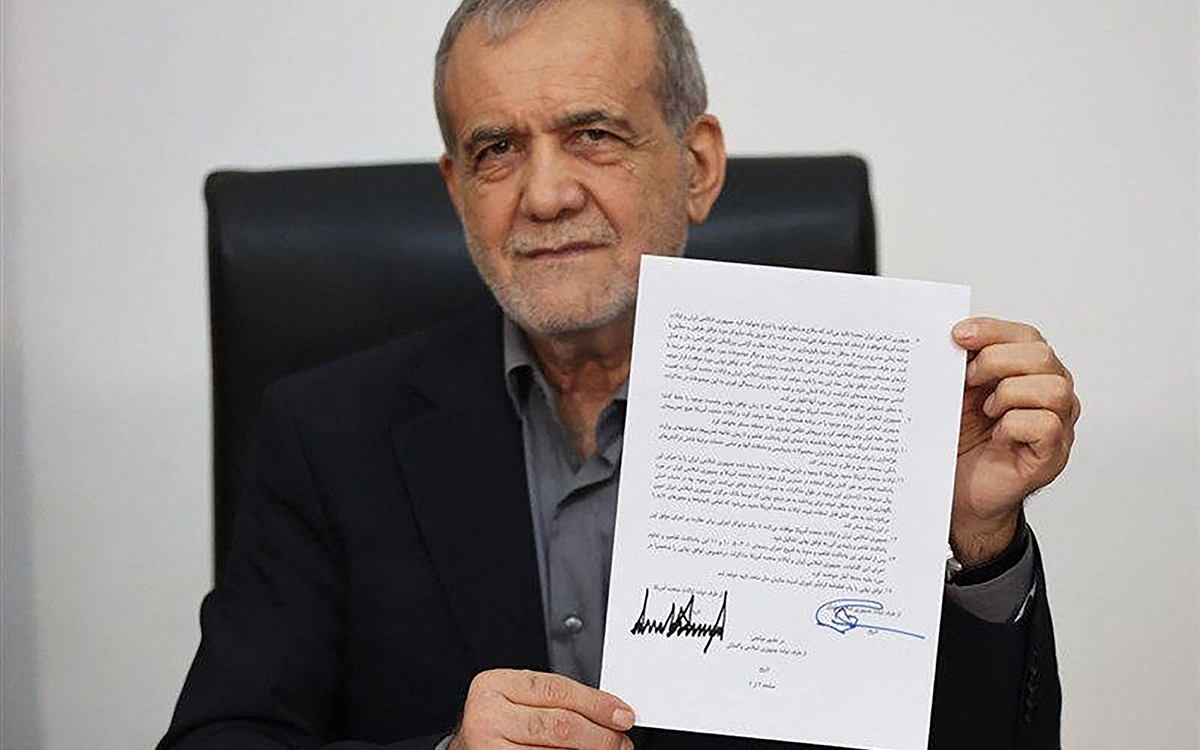
The message will be that Washington and Israel could not break Tehran. Survival itself is a form of strategic deterrence. This is not mere propaganda; it will be central to recruiting followers and justifying the expansion of Tehran-aligned paramilitary resistance groups across the region.
The symbolic victory may lead additional forces in the region—even those not organically tied to Tehran—to understand Iran as the only power able to stand against the United States and Israel and emerge with its regime intact. In regional politics, perception is sometimes more important than the full details. If Iran can sell the memorandum as a victory, its symbolic power and prestige will expand further, even if its material capabilities have been hit.
Gulf Allies Hedge in a Volatile Environment
Trump wants the memorandum to appear as a collaborative effort of regional diplomacy with America’s partners rather than something imposed by circumstance. Yet the situation is more complex than it appears. The Gulf states that will have participated in consultations are not acting only to support a deal, but also to manage the risks produced by the change in the broader American security posture itself. What confirms this is that several of these states had already opened bilateral de-escalation channels with Iran before the American memorandum was reached.
For Gulf states, the issue is not diplomacy itself, but the path by which Trump arrived at it—after months of destructive war. The move from maximal objectives against Iran to an incomplete memorandum of understanding raises serious questions about American reliability. What Washington presents as regional endorsement of the settlement may instead reflect a strategic hedge against American uncertainty, driven by an unpredictable president.
For this reason, Gulf state support for diplomacy should not be treated as authorization for the deal’s results. They are aware that rejecting de-escalation may leave them in a direct confrontation with Iran if Washington changes course and withdraws. They also know that supporting the continuation of the war does not guarantee the continuation of American commitment to it. In that sense, the most rational position is to avoid appearing to push Washington toward escalation, while at the same time retaining deep concerns about a settlement that does not address key issues like missiles, drones, and proxies.
In this light, regional capitals are not necessarily pushing Trump toward the deal so much as hedging against the cost of his volatility. They do not want to bear responsibility for the war’s continuation if Trump suddenly withdraws, and they do not want to appear as obstructing diplomacy if the White House chooses to market the memorandum as an achievement.
But that does not mean they see the deal as a sufficient security guarantee, or that they trust that opening the Strait of Hormuz, lifting the blockade, and releasing funds will address the core of the Iranian threat.
Regional support for the memorandum, therefore, at its core, is better characterized as an American attempt to broaden political cover for its own decision rather than construct a deal based on real strategic consensus.
The Gulf’s Repriced Risk
The Gulf remains the arena most exposed to any settlement that leaves the instruments of Iranian power intact. Ballistic missiles, drones, and proxy networks are not theoretical issues for the Gulf states. They are direct tools of pressure on energy infrastructure, ports, cities, investment flows, insurance markets, and trade routes. If these issues remain outside a binding framework, the threat does not disappear; it is merely repriced.
The risk is not simply military. A settlement that leaves Tehran’s coercive capacity intact may reinforce the perception that navigation, energy infrastructure, and regional commerce remain vulnerable to future rounds of escalation. If Iran emerges from the war politically emboldened and financially strengthened, the Gulf states will face an adversary that is less restrained, not more. In this context, geography itself becomes a source of enduring leverage for long-term negotiation or economic blackmail.
Here, security ceases to be merely a military question and becomes a financial one. If investors, insurance companies, and energy markets believe that the Gulf can be shaken by every round of escalation between Washington and Tehran, the cost of capital will increase and risk calculations will change. This does not mean the collapse of the Gulf economic model, but it does mean that the image of permanent stability on which Gulf capitals’ attractiveness depends will face a far more difficult test.
The Settlement Resolves Nothing
The memorandum and the negotiations that follow temporarily freeze the conflict, but they do not resolve it. It does not dismantle the underlying conditions that made the war possible: missiles, drones, proxies, the nuclear issue, and Iran’s position in the Gulf. In other words, it postpones resolution at a much higher cost. A war that redraws balances of power does not end merely by opening a strait or releasing funds.
Perhaps Trump can sell the memorandum as a diplomatic achievement. Perhaps Iran can sell it as a political victory. Perhaps regional capitals can accept it as a temporary necessity to avoid a wider war. But none of those interpretations change the underlying reality. The central question remains the same as it was on February 28, 2026: who sets the rules of power in the Gulf, who possesses the right of deterrence, and who pays the price for American hesitation?
Perhaps Trump can sell the memorandum as a diplomatic achievement. Perhaps Iran can sell it as a political victory. Perhaps regional capitals can accept it as a temporary necessity to avoid a wider war. But none of those interpretations change the underlying reality
If these questions are not settled in the coming 60 days, they will return later under less favorable conditions. They will return with Iran more prepared, proxies more confident, Gulf states more anxious, Israel more willing to exploit the vacuum, and Washington less able to persuade its allies that it knows how to end what it starts.
The danger is not that the war ends without a victor. It is that it ends without resolving the strategic problem that produced it in the first place. Or worse, it strengthens the Iranian hand by giving it what it lacked before the war: money, time, and a compelling narrative.