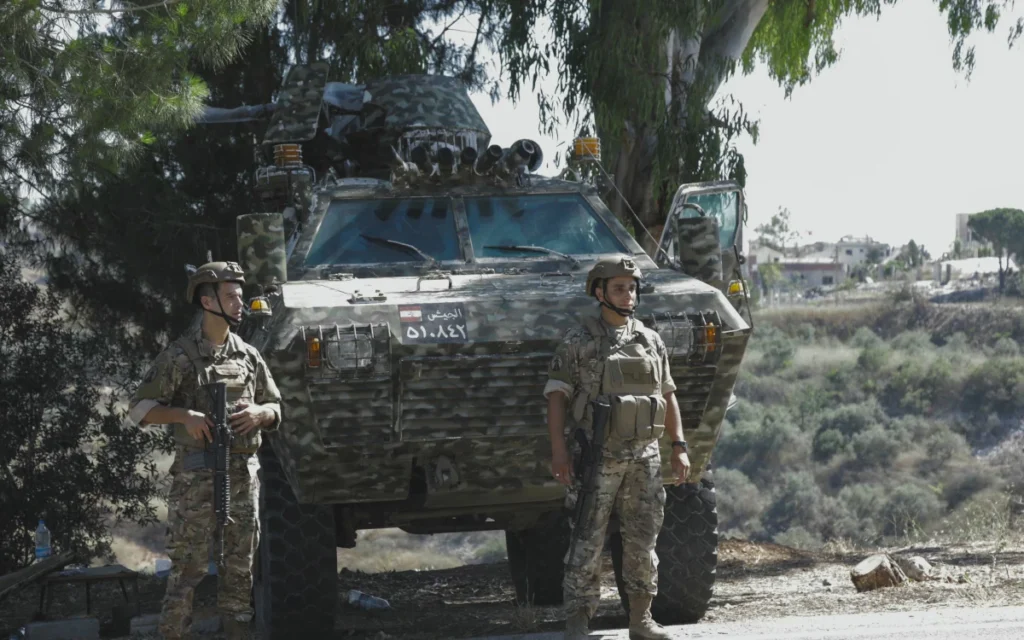

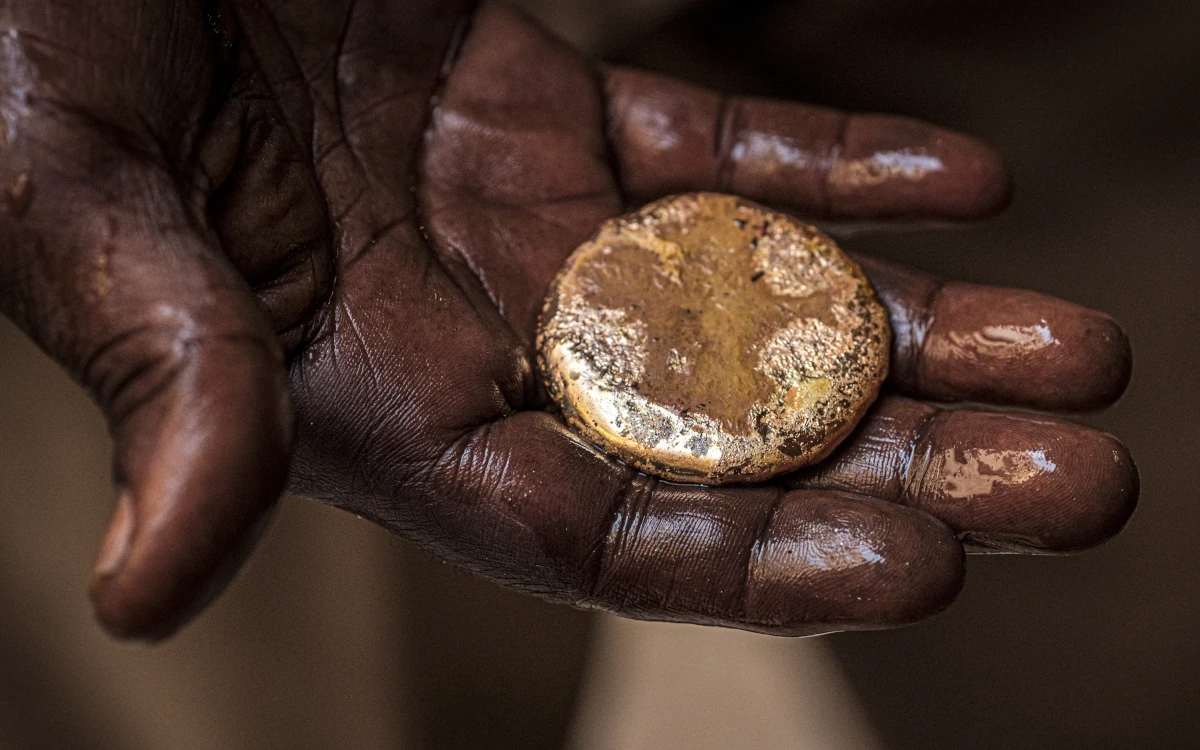
Sudan’s war is often portrayed as a struggle over gold and a contest among the economic interests of regional powers. Yet this interpretation risks reducing one of Africa’s longest crises of statehood to a competition over natural resources.
The scale of civilian suffering, mass displacement, famine, and widespread abuses demands greater humanitarian assistance, sustained diplomatic engagement, and accountability for those responsible. But responding effectively to this catastrophe also requires understanding why Sudan descended into war.
Sudan did not become a battlefield because it possesses gold. Gold became important because the Sudanese state had already failed. Long before gold emerged as a strategic economic asset, Sudan had experienced decades of military coups, civil wars, constitutional breakdowns, and competing centers of armed power. The country’s tragedy lies not primarily in external greed, but in the chronic failure to construct a stable and inclusive national state.
Sudan did not become a battlefield because it possesses gold. Gold became important because the Sudanese state had already failed
External actors have undoubtedly influenced the course of the conflict, as they do in many civil wars. But foreign intervention did not create the structural crisis of the Sudanese state.
Understanding this distinction is not merely an academic exercise. If the diagnosis is wrong, the remedy will be wrong as well.
Sudan has experienced manifestations of state failure almost continuously since gaining independence in 1956. Its instability preceded the current competition over gold and other strategic resources by decades.
The historical record reveals the depth of this crisis. General Ibrahim Abboud seized power in a military coup in 1958. Jaafar Nimeiri overthrew the government in another military coup in 1969. Omar al-Bashir came to power through an Islamist-backed coup in 1989. The military seized power again in October 2021, derailing the country’s democratic transition. The current war between the Sudanese Armed Forces and the Rapid Support Forces, which began in April 2023, is the latest chapter in this long history of coups and institutional collapse.
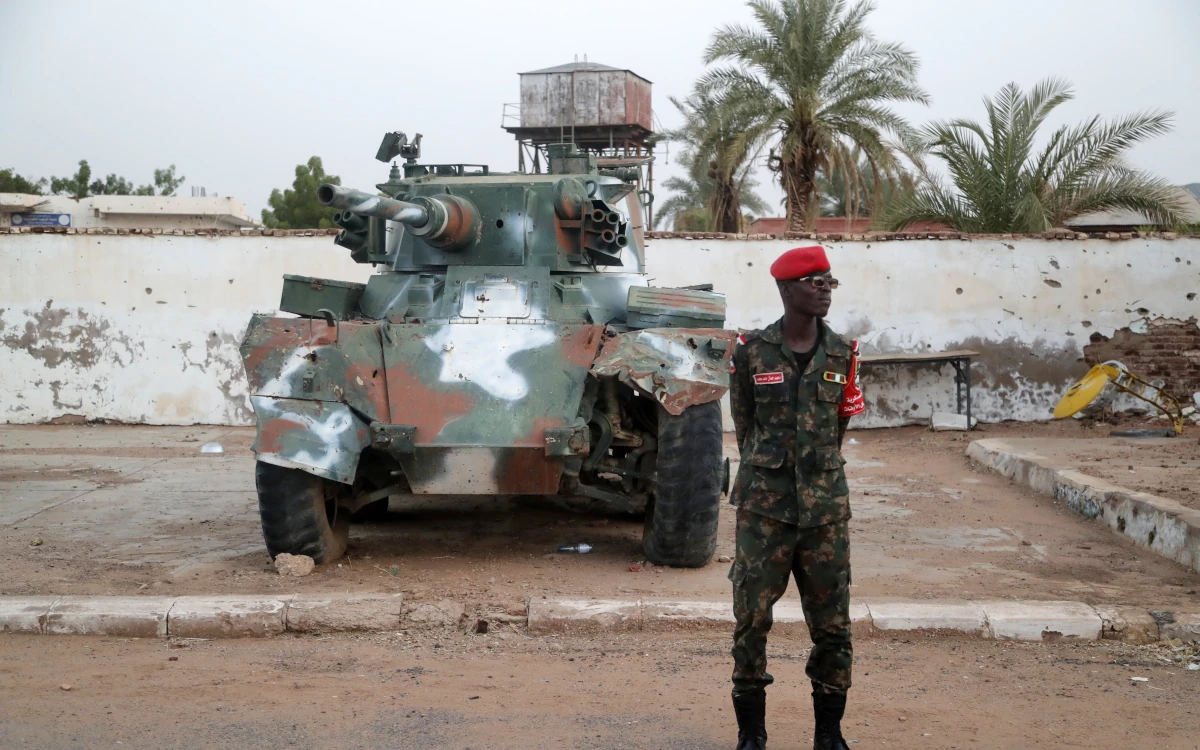
Nearly seven decades of recurring coups and civil wars cannot logically be explained by foreign competition over Sudanese gold. The structural problem has always been domestic: the absence of a state capable of monopolizing the legitimate use of force, building accountable institutions, and managing political competition through constitutional means rather than military violence.
The crisis has also been shaped by the historical division between the center and the periphery, and by deep ethnic, regional, and political tensions between the state’s traditionally dominant center and communities in Sudan’s western, southern, eastern, and other marginalized regions. Successive governments failed to build an inclusive political order capable of accommodating Sudan’s ethnic, cultural, religious, and regional diversity.
The civil wars that ultimately resulted in South Sudan’s independence demonstrated that Sudan’s crisis extended far beyond disputes over natural resources or competition among military leaders. At its core, the crisis involved unresolved questions of national identity, political representation, equal citizenship, and the distribution of power and wealth within the state.
The crisis involved unresolved questions of national identity, political representation, equal citizenship, and the distribution of power and wealth within the state
These structural divisions repeatedly generated demands among Sudanese political, intellectual, and civil-society actors for a new constitutional settlement based on democratic government, decentralization, equal citizenship, and the separation of state institutions from ideological and factional control. For many Sudanese, such a settlement remained essential to ending recurring wars and preventing the continued domination of the state by military and sectarian forces.
The current war illustrates this reality. It did not begin as a proxy war between regional powers, but as a struggle for power within Sudan’s own security establishment. Both the Sudanese Armed Forces and the Rapid Support Forces are products of the Sudanese state. The RSF developed from the Janjaweed militias used by successive governments during the Darfur conflict before being transformed into a formal state force. The SAF, within which networks associated with the former Islamist establishment retained significant influence, remained the country’s regular military institution.
The immediate trigger of the war was the collapse of negotiations over the integration of the RSF into the national army and disagreements concerning security-sector reform during the political transition that followed Omar al-Bashir’s fall. Regional actors later became involved, as often occurs in prolonged civil wars. But the roots of the conflict were unmistakably Sudanese.
This internal struggle cannot be understood without confronting another uncomfortable reality: the continuing influence of the Islamist movement entrenched under Bashir.
The 1989 coup was not simply a military seizure of power. It reshaped the Sudanese state. Over three decades, Bashir’s government embedded Islamist networks within the military, intelligence services, civil administration, and public institutions. Political loyalty frequently became more important than institutional competence and professional standards.
Bashir’s removal in 2019 did not dismantle this system. Elements of the former regime retained considerable influence within parts of the military, security establishment, and state bureaucracy. Their political networks did not disappear with the fall of the president.
For this reason, many Sudanese observers view the present conflict not merely as a confrontation between two military organizations, but also as a struggle over the future of the political order created after 1989. A number of influential figures associated with the former Islamist establishment aligned themselves with the Sudanese Armed Forces and consistently opposed political arrangements and peace negotiations that might restore a civilian-led transition and restrict military domination of the state. Whether one agrees with every aspect of this assessment or not, it is impossible to understand Sudan’s present crisis without acknowledging the continuing influence of networks that survived Bashir’s fall.
Nor does the economic evidence support a simple “war for gold” narrative. Sudanese gold is undeniably important to the country’s economy. Yet its importance within Sudan should not automatically be confused with its relative weight in the broader economic and strategic calculations of larger regional states.
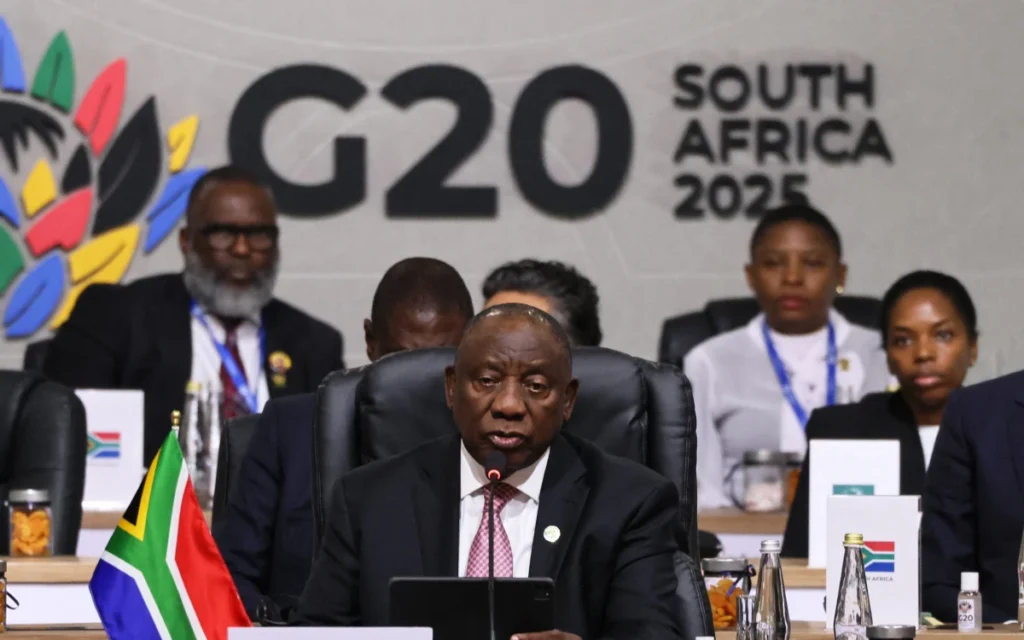
This distinction becomes clearer when the scale of Sudan’s gold trade is placed alongside the UAE’s wider commercial relationships. The UAE’s non-oil trade with South Africa alone reached approximately US$8.5 billion—several times the reported value of Sudan’s annual gold exports. The significance of this comparison lies not in suggesting that Sudanese gold is irrelevant, but in demonstrating that the UAE’s economic interests are far broader and more diversified than a single commodity or market.
Gold may therefore constitute one commercial consideration among several. But the disparity in scale cautions against treating access to Sudanese gold as a sufficient, stand-alone explanation for the strategic foreign policy of a state whose trade with a single African partner substantially exceeds the total value of Sudan’s gold exports.
Gold is therefore better understood as a resource that helps sustain the conflict rather than as its fundamental cause, as it does not explain Sudan’s long history of coups, civil wars, ideological struggles, regional grievances, and failed constitutional transitions.
The broader tendency to explain Sudan’s war primarily through foreign commercial interests reflects a decline in some aspects of the international foreign-policy debate. Complex crises are increasingly reduced to simplified moral narratives centered on a single external actor, while institutional failure, ideological conflict, historical grievances, and the decisions of local armed groups recede into the background.
The broader tendency to explain Sudan’s war primarily through foreign commercial interests reflects a decline in some aspects of the international foreign-policy debate
Sudan then becomes less an object of serious analysis and more a stage for political struggles originating elsewhere.
External actors should not be exempt from scrutiny. But that scrutiny must be based on evidence, proportionality, motive, and strategic context. No credible analysis can ignore the possible role of foreign support, commercial networks, or regional competition. At the same time, allegations concerning external actors should not be permitted to replace an examination of Sudan’s political history or the responsibility of its military and political elites.
Public debate has increasingly focused on competing allegations of external military, financial, and political support for the parties to the conflict. Whatever the merits of individual claims, they should not become a substitute for understanding the deeper causes of Sudan’s collapse.
Nor should the international debate become so preoccupied with accusations against regional powers that it overlooks the primary responsibility of Sudan’s own armed factions for the destruction of their country.
It is also important to remember that the external actors dominating today’s debate were not the same actors at the center of earlier periods of Sudan’s international isolation. They were not the principal drivers of the international response to the Darfur conflict, which resulted in United Nations action, international investigations, and extensive sanctions following allegations of grave abuses, including genocide and the alleged use of prohibited weapons.
Nor were the present regional actors responsible for the United States’ decision to designate Sudan a state sponsor of terrorism in 1993, a designation imposed during a period when Khartoum hosted Osama bin Laden and maintained relations with extremist organizations.
These events occurred under different geopolitical conditions, involved different external actors, and preceded the present regional alignments by many years.
The changing identity of the foreign actors associated with successive Sudanese crises reinforces a central point: Sudan’s instability has persisted across different international systems, changing regional coalitions, different governments, and multiple strategic conflicts. The form of external involvement changed over time, but the underlying crisis of the Sudanese state remained.
The United Nations and other independent international organizations have documented serious violations of international humanitarian law committed by multiple parties against civilians. The suffering of the Sudanese people cannot be understood solely through the lens of regional competition. It must also be understood as the consequence of decisions made by Sudanese leaders who repeatedly chose military confrontation over political compromise.
Ultimately, Sudan’s political elites were the first to fail Sudan. For decades, successive governments failed to construct inclusive national institutions. Military organizations, political parties, ideological movements, tribal loyalties, and armed groups became substitutes for the state rather than instruments serving it.
Sudan’s political elites were the first to fail Sudan. For decades, successive governments failed to construct inclusive national institutions
Every cycle of conflict weakened public institutions, deepened political division, and increased the likelihood that disputes would be resolved by force rather than democratic politics.
External actors have certainly influenced Sudan’s trajectory and, in some instances, contributed to the escalation of the conflict. They deserve scrutiny and criticism whenever the evidence justifies it. But they did not create the conditions that made Sudan vulnerable to collapse.
Those conditions were produced over decades by Sudanese elites that repeatedly placed power above state-building.
These conditions also cannot be separated from the unresolved relationship between Sudan’s center and its marginalized regions. The persistent concentration of political authority, state resources, and military capacity in the center generated rebellion, exclusion, and repeated conflict in the south, Darfur, the east, the Nuba Mountains, and Blue Nile.
Sudan’s wars were therefore not isolated security crises. They were manifestations of a deeper failure to agree on the nature of the state and on who possessed the right to govern it.
Sudan’s humanitarian catastrophe deserves the world’s full attention. But attention alone is insufficient. If the international community wishes to help Sudan achieve lasting peace, it must first understand the nature of the crisis.
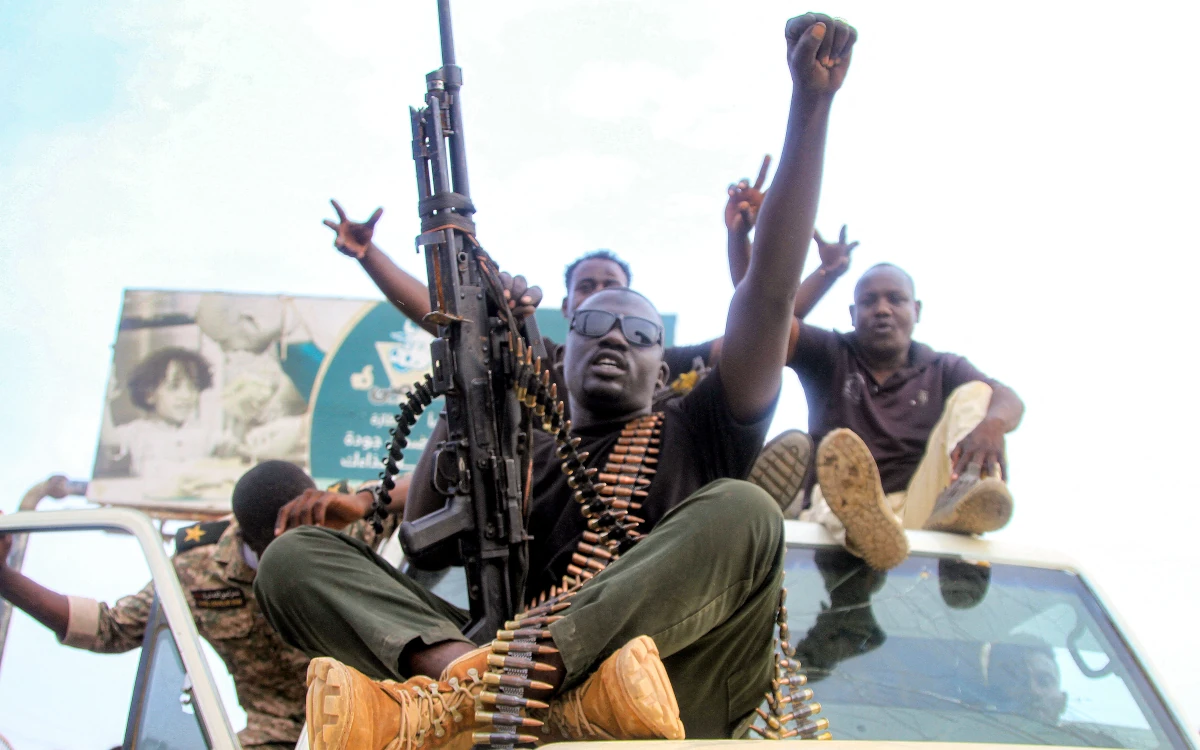
Sudan is not at war primarily because of gold. It is suffering from a crisis of state formation, institutional collapse, regional and ethnic exclusion, and multiple centers of armed power. Gold has financed parts of the conflict, and external powers have influenced its trajectory, but neither explains why Sudan has experienced nearly seven decades of coups, civil wars, and failed transitions.
A durable settlement will therefore require more than a ceasefire, the disruption of illicit financial networks, or a temporary redistribution of power among armed factions. It will require a new constitutional compact capable of rebuilding the legitimacy of the state, addressing deep-rooted regional and ethnic grievances, guaranteeing equal citizenship, and establishing democratic civilian rule through institutions loyal to the nation rather than to factions.
Such a settlement must also address the relationship between the center and the periphery, the role of religion and ideology in the state, the distribution of national wealth, and the subordination of all armed formations to a single, professional military institution under elected civilian authority.
Without such a political and constitutional transformation, Sudan may reproduce the same cycle of coups, civil wars, and fragile transitions that has defined most of its history since independence.
Peace will not be achieved merely by disrupting illicit financial networks or assigning complete responsibility to external actors. It will be achieved only when Sudan succeeds in building a state stronger than its armies, more legitimate than its factions, more inclusive of its regions and communities, and capable of placing the rule of law above the rule of the gun.
That is the lesson of Sudan’s modern history. It is also the lesson the international community must understand if it genuinely wishes to help the Sudanese people build a lasting peace.
Peace will not be achieved merely by disrupting illicit financial networks or assigning complete responsibility to external actors. It will be achieved only when Sudan succeeds in building a state stronger than its armies, more legitimate than its factions