
The United States and Russia run two of the world’s most seasoned intelligence establishments. Yet both powers are now stuck in wars their leaders expected to be short, and both are losing ground to states that did not fight. The explanation lies not in the quality of the intelligence, nor necessarily in the kind of political system. It comes down to what happens when an assessment reaches a leader who has already chosen his war. That is where both of these wars were lost, and where the balance among major powers is now being redrawn.
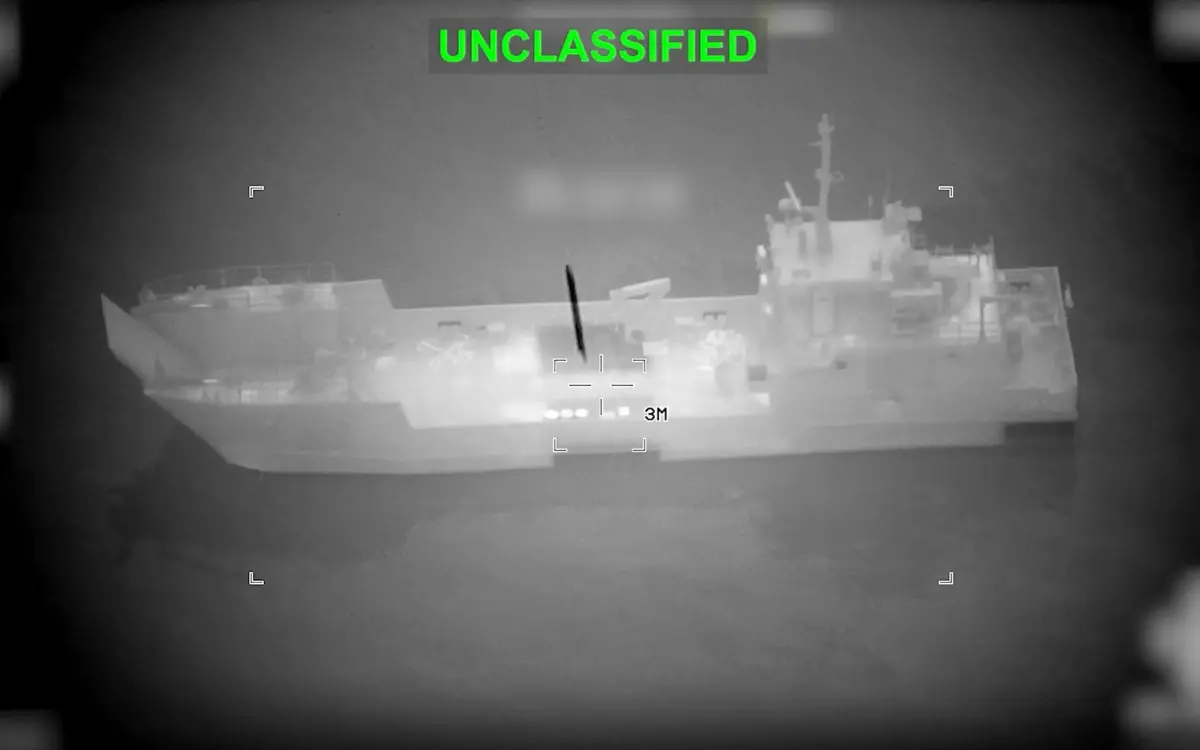
Operation Epic Fury began on February 28 with the declared aim of bringing down the Iranian regime. Half a year later that regime is still in place, and harder than the one Washington set out to remove. The Strait of Hormuz is now largely closed, a scenario American war games had rehearsed for years, and the campaign went ahead regardless.
Moscow’s failure happened one step earlier in the process. In Washington, an assessment existed and was pushed aside; in Moscow, it appears never to have been written. Russian services had agents inside Ukraine and polling showing a population prepared to fight, and none of it reached Putin as an honest estimate. In a system that rewards pleasing the leader over informing him, telling power what it does not want to hear reads as disloyalty. Putin’s army now leans on North Korean infantry and Iranian drones, which pushes the great-power rank Moscow has pursued since 1991 further out of reach.
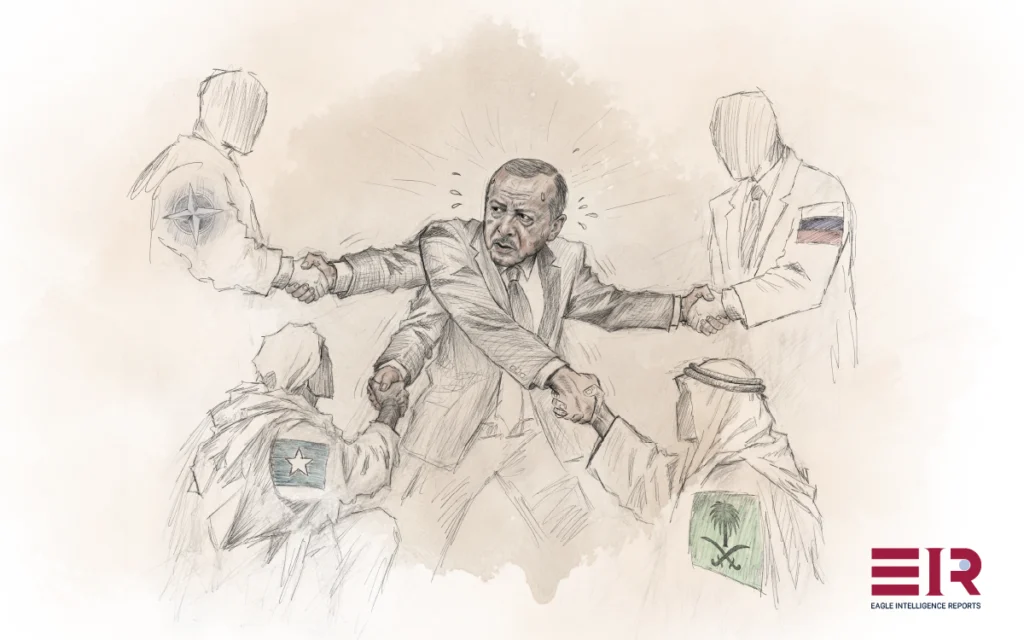
Both wars were launched for the same political end—regime change in Tehran and in Kyiv—and neither achieved it. One government answers to voters and courts, the other to a narrow circle of security officials. In both, the break came in the same place, where assessment turns into decision. Between major powers, a breakdown does more than embarrass an agency; it moves the balance of power. Strategic failures invite rivals and partners alike to reassess old assumptions, and realignment follows. That is what the 2026 Mecca Agreement shows: Saudi Arabia and Turkey, long at odds, signing a three-way defense pact with Pakistan that Washington did not broker.
Wars Without Victories
Wars are fought for political ends. The political object governs everything else, and when it is vague, the fighting has nothing to serve. Neither government matched its declared aim to the war it was prepared to fight. Each was built around an opening blow, with no endgame written before it began. That is how a war of choice begins to turn into a forever war.
The wars in Iran and Ukraine were each built around an opening blow, with no endgame written before the fighting began. That is how a war of choice turns into a forever war.
Moscow’s stated aims were expansive: a friendly government in Kyiv, a limit on NATO’s enlargement, and a Ukraine pulled back into Russia’s orbit. Measured against those aims, the war has run close to the opposite. Ukraine is more anti-Russian than at any point since independence, bound to Europe, and armed as never before. Finland and Sweden abandoned generations of neutrality and sought NATO membership within months of the invasion. Europe is rearming on a scale unseen since the Cold War, with the European Union’s SAFE facility financing joint procurement. The alliance Moscow set out to check is larger, its border with Russia longer, and the balance in Europe has moved against it.
Washington’s stated aims were equally clear, yet they too remain unmet. The administration set out to topple the Iranian regime, end its nuclear program, break Iran’s missiles and proxies, and keep the Gulf open. But the strike that killed the supreme leader appears to have cleared the way for a harder faction. The nuclear file remains open, and Iran has turned the Strait of Hormuz into a strategic lever, with tolls floated on the traffic it lets through. Its missiles and drones hit American partners from Bahrain and Kuwait to Qatar and Jordan, the states Washington had promised to defend.
What followed in Washington was a cycle of escalation with no theory of how it would end. American aims moved from regime change to demands for capitulation, then to a bombing campaign, then to a memorandum that collapsed within weeks. A superpower that set out to dictate terms is now bargaining over a chokepoint that gave it no trouble in February. The American tests for using force, drawn from the Powell Doctrine, exist to make leaders confront essential questions before the war begins. They ask whether the objective is attainable, whether force is genuinely the last option, and how the war is meant to end. Epic Fury answered none of them.
Intelligence Informs, Leaders Decide
The reflex after a fiasco is to blame the intelligence agencies. Richard Betts, drawing on cases from Pearl Harbor to Vietnam, put the decisive errors further up the chain. Failure, on his evidence, sits more often with the officials who receive an estimate than with those who write it. An intelligence failure and a policy failure, in this light, are inseparable, the same event seen from two sides. Analysis and decision form a single loop rather than a tidy sequence. A leader can hear a correct estimate and still wave it away.
Failure sits more often with the officials who receive an estimate than with those who write it. An intelligence failure and a policy failure are inseparable, the same event seen from two sides.
That is why an accurate estimate can change very little. Political leaders read intelligence through their ambitions and their public commitments. A leader who has promised a quick win has more to lose by admitting the war is failing. The pattern also inverts once the shooting starts, as fragmentary good news begins to override the cautious estimate.
After that, strategic inertia does the rest. Reversing course once the troops have moved costs more politically than continuing, so the plan outlives the evidence against it. The window for settling a war also narrows as it runs. One study covering conflicts from 1945 to 1989 measured the cost of delay. Mediation begun within three months of the first shots worked in 37 percent of those wars, against 19 percent later.
Robert McNamara, the American defense secretary who built the Vietnam war effort, had privately concluded by 1967 that it could not be won. He put the case to the president in writing, and the war ran on for eight more years. Forever wars are built this way—by pushing the reckoning into the next year, and then the next. Strategic intelligence can price a war in advance. It cannot force a leader to accept the costs, and the bill often arrives later as diminished credibility and strategic influence.
Iran: The Strategic Surprise That Wasn’t
The prewar record on Iran is consistent. Agencies in Washington and allied capitals were reported to have judged that Iran could shut the Strait of Hormuz. They expected its government would harden under bombardment and that Tehran would strike Gulf states hosting American forces. Defense intelligence reportedly put an Iranian missile able to reach American soil a decade off. None of this was novel or contested.
Iranian drones and missiles then struck American bases and killed American soldiers, and the administration described itself as shocked. A strategic surprise is something nobody foresaw. This looks instead like something the leadership was told and chose to treat as unthinkable.
A strategic surprise is something nobody foresaw. Iran’s strikes on American bases were something the leadership was told to expect and chose to treat as unthinkable.
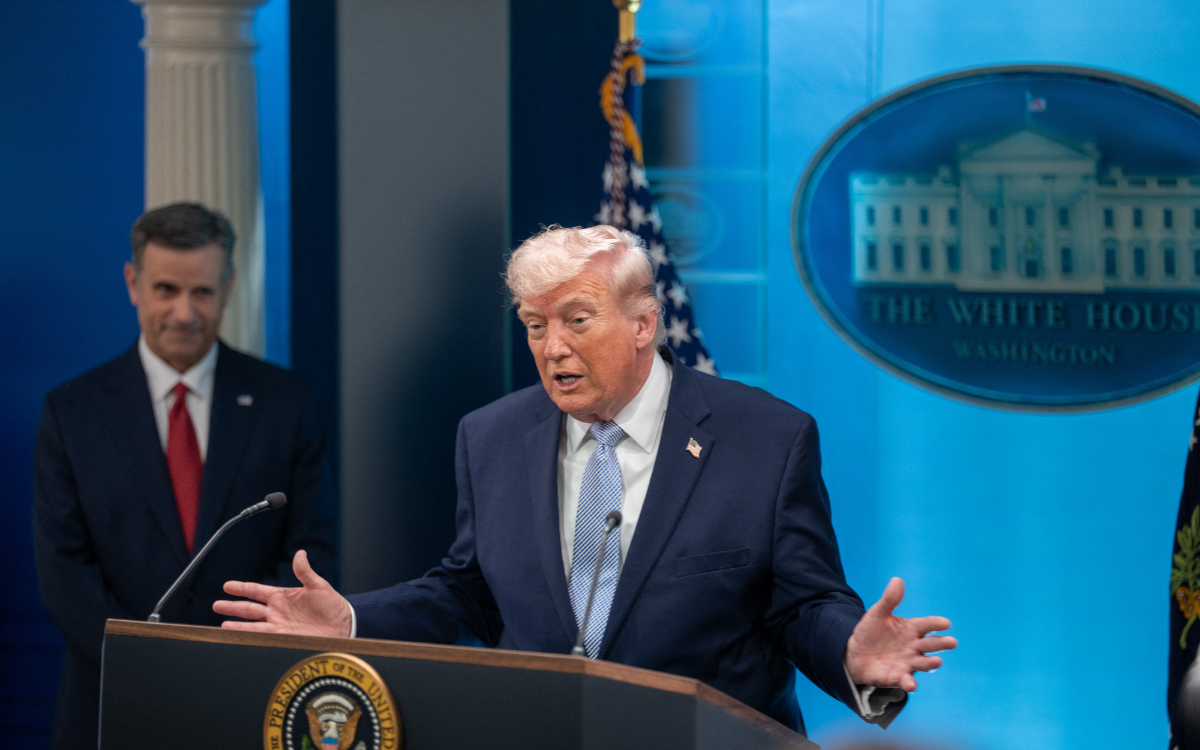
The gap was not in the reporting, nor in the willingness to object. Briefing the president on the agencies’ assessment, CIA Director John Ratcliffe dismissed the regime-change scenarios as “farcical,” and Secretary of State Marco Rubio agreed. War is unpredictable, Ratcliffe added, so the regime might yet fall, but that was not something anyone could plan to achieve. Joe Kent, the president’s nominee to lead the National Counterterrorism Center, resigned rather than take part, writing that Iran “posed no imminent threat.” Officials close to the planning have since described repeated Pentagon warnings that Iran could close the strait.
Yet the decision ran ahead of all of it. The war went forward on the promise of a short, clean operation, and the awkward estimates were set aside. An administration elected on a promise of no new wars has spent lives and money on one of choice. The return so far is a chokepoint Tehran controls, and a Gulf that no longer assumes American protection is worth its price. In grand-strategic terms, the cost for Washington is the regional order it had underwritten since 1991.
The strait has produced a smaller disaster than the forecasts implied, though not an insignificant one. More than 130 ships a day made the transit before the war; recent counts put the figure near 14. Brent crude has nonetheless averaged near $100 a barrel rather than the $200 that some analysts expected. Saudi and Emirati pipelines built years earlier have carried oil around the chokepoint, and consuming states have released emergency stocks. China has cut purchases while drawing on its own inventories. Those cushions existed because governments took the same warnings seriously and prepared, sparing Washington from the full consequences of risks it chose to ignore.
Ukraine: The Warning Never Written
The Russian record is thinner because closed systems bury their mistakes. What evidence there is points to a warning that was never honestly written and, on some accounts, never requested. Recent research on Russian intelligence traces this to a Soviet-era culture that Putin has preserved. Loyalty counts for more than candor, the siege mentality is permanent, and honest assessment is always somebody else’s job.
In Russia’s intelligence culture, loyalty counts for more than candor, the siege mentality is permanent, and honest assessment is always somebody else’s job.
The services themselves are not weak, and inside Ukraine, the FSB had both the networks and polling to know better. Russian intelligence is built for espionage, and officers rise by stealing secrets rather than by explaining what they mean. Little of what they held appears to have reached the top as honest judgment. Western services are meant to treat that as the analyst’s job, though politicization has bent the norm there too. In Moscow, it reads as disloyalty outright, and silence is the safer career move.
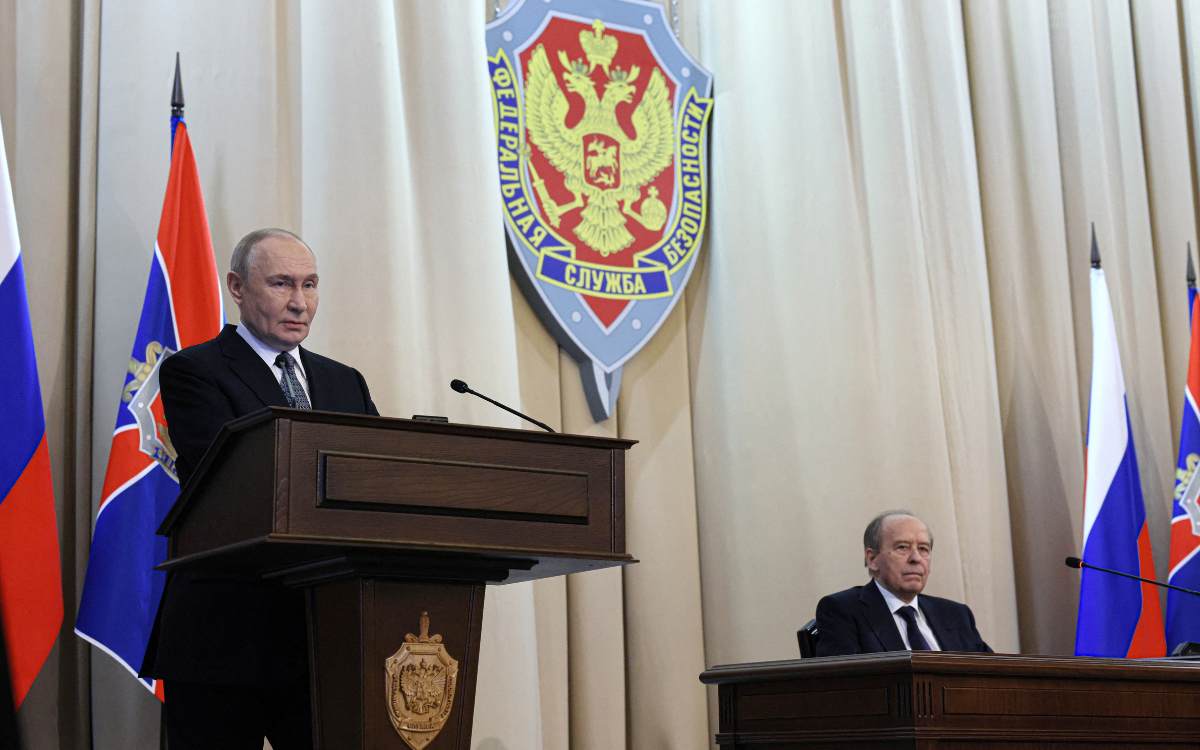
Days before the invasion, Sergei Naryshkin stumbled through his lines at a televised meeting of the Security Council. Putin corrected the head of the foreign intelligence service on camera. Every official watching understood what the moment was meant to teach: in Moscow, the service exists to confirm the leader’s judgment rather than to caution him. The 40-mile armored column stalled on the road to Kyiv was the visible consequence of an invisible failure of judgment.
Good strategic intelligence puts friction into a plan by insisting that the adversary gets a vote. In Moscow, that friction was engineered out, and the estimate that might have given Putin pause was never on his desk. Russian casualties, on Western estimates, now approach a million, and the ground bought with them is measured in villages.
Not Only Autocracies Are Bad at Strategic Intelligence
It is tempting to read these as opposite cases. The closed system cannot hear the truth; the open one hears it and proceeds anyway. The West built what Russia did not: independent analysts, competing agencies, oversight, and a norm of telling leaders what they would rather not know. That machinery lets an open system recover from an error of this kind, but it did not prevent one. In June, the House and Senate each voted to end the war, the first time since 1973, and yet the fighting has continued.
The distinction between the two systems may explain less than it appears to. Both are modern states with large and coercive services, differing in wealth and in the bloc each anchors. The protections that separate them are a slope rather than a wall, and a determined leader can still move down that slope. Where the two failures differ is where the warning stopped. Iran resembles Iraq in 2003 in one respect officials have been unwilling to concede: the certainty offered in public outran the estimates behind it. The origins differ, but the strategic bill, so far, has been much the same.
The label on the system explains less than the distance between what a government knows and what its leader will hear. In a calmer era, such a fracture might cost little. In a world of great-power competition, it helps decide a great deal. Intelligence has never been a sharper weapon, yet its value depends entirely on whether and how decision-makers will use it. Middle powers have drawn the obvious conclusion: they now treat dependence on Washington or Moscow as a risk to be hedged.
China Collects What the Others Spend
None of this is new in the recent record of either government. The Iraq War was both kinds of failure at once. Postwar inspectors found no stockpiles, and the case built on the estimate had been shaped to fit a decision already taken. The pattern returns because its source is human rather than bureaucratic. If there is a cure, it is not structural. It is a habit of leadership, welcoming dissent and shielding the analysts who supply it, even when their estimates spoil the plan.
Washington’s advantage over Moscow is real, but it is conditional. An estimate that gets written can still be read later, while one that was never written protects nobody. Both capitals are spending down that advantage, and the cost shows up as lost position in the global balance of power. The war has weakened Russia’s claim to major-power status by exposing the limits of its military and political influence. America’s partners, meanwhile, have begun to reassess the reliability of American protection. Both losses were self-inflicted at the point where assessment met decision.
The power that has gained the most has fought nobody: China avoided the wars of choice that have consumed the United States and Russia. Its position in the Gulf and in Europe has improved without a shot fired. It also holds the largest oil stockpiles in the world, which gives Beijing leverage in the next supply crisis. Whether Beijing has solved this problem or merely postponed it is another question. The temptation to hear only what confirms the plan is not confined to Moscow or Washington. In the contest among major powers, the greatest strategic advantage may not belong to the state that knows the most, but to the one whose leaders are most willing to hear it, and act on it.
The power that has gained the most has fought nobody: China avoided the wars of choice that have consumed the United States and Russia.