
Since 1959, every American president has wanted, in one way or another, to undo the communist revolution that put Cuba’s Fidel Castro in power. Yet for 67 years, each one quietly tolerated the governments that followed the bearded dictator. Until now. President Donald Trump is trying a new, simple, and devastating way to break the current regime: he is turning the lights off in Havana.
What is happening 90 miles off Key West is one of the most sweeping pressure campaigns that Washington has ever mounted against the small island nation. On January 29, Trump declared a national emergency over Cuba and threatened tariffs on any country that ships oil there. The move builds on the earlier reclassification of Cuba as a state sponsor of terrorism, reversing a last-minute decision by President Biden to take it off the list.
What is happening 90 miles off Key West is one of the most sweeping pressure campaigns that Washington has ever mounted against Cuba and builds on the earlier reclassification of Cuba as a state sponsor of terrorism
It’s the same strategy Trump used on Venezuela, now aimed north. U.S. forces seized Nicolas Maduro in Caracas and whisked him to a jail cell in Brooklyn. Weeks later, the administration severed the flow of Venezuelan oil that had powered Cuba’s electric grid, one of the most oil-dependent in the hemisphere. It then moved to choke off any oil that might take its place.
“Absolutely No Fuel”
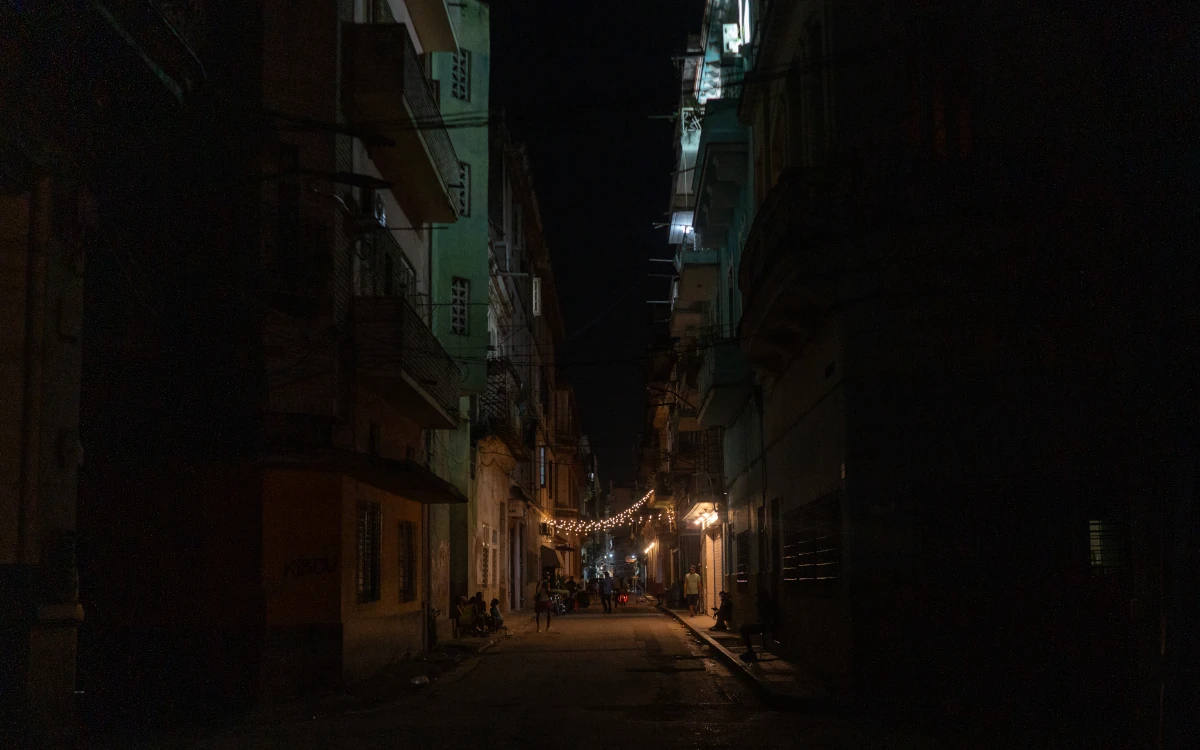
By late spring, on-the-ground reports from Havana and the state electric grid operator, Unión Eléctrica de Cuba, reflect dire conditions: blackouts 20 to 22 hours a day. In May, the energy minister told state television what people on the streets already knew: the country had “absolutely no fuel.” Diesel and fuel oil reserves were exhausted.
For more than four months, save for a single Russian tanker whose cargo was spent by April, no oil had reached the island, spawning a humanitarian crisis that worsens by the day. Hospitals run on generators or not at all. Cold storage sputters and then thaws. Trash piles up in Havana’s streets because garbage trucks are out of gas. Officials postponed the premium cigar fair, hurting tourism, the last source of hard currency, which has also collapsed. The United Nations, rarely quick to sound the alarm, warned of humanitarian crises in food, medicine, and emigration. By any measure, Cuba now suffers the worst crisis since the collapse of the Soviet Union triggered the so-called “Special Period,” a hardship that defined a generation. This time, Washington is engineering the crisis and not pretending otherwise.
Considered in isolation, the Maduro raid could be seen as the counternarcotics operation portrayed by the administration. Viewed as an element of a broader campaign, it is clearly part of a coherent doctrine. The same administration that plucked a sitting head of state out of his capital says Cuba represents an “unusual and extraordinary threat.”
The same U.S. administration that plucked a sitting head of state out of his capital says Cuba represents an “unusual and extraordinary threat”
U.S. Unveils “Donroe Doctrine”
America’s posture toward the two nations should come as no surprise to anyone who has read its November 2025 National Security Strategy. In it, the administration laid out plans to dominate the Western Hemisphere through a revised and enhanced corollary to the 1823 Monroe Doctrine, later nicknamed the “Donroe Doctrine.”
The doctrine’s facetious name obscures the lethal planning it reserves for Cuba. In January, it warned that any country selling oil to Cuba would face tariffs. The warning worked. Venezuela and Mexico, the island’s oil lifelines, cut shipments. But the U.S. Supreme Court later ruled the President lacked the authority to impose the tariffs. So, the administration pivoted and, on May 1, issued an escalation: Executive Order 14404.
Strip away its dry legal language, and it is a significant escalation against Cuba. Grounded in the International Emergency Economic Powers Act, 14404 authorizes sanctions against any foreign person operating in Cuba’s energy, defense, mining, financial services, and security. It further targets any foreign bank found processing consequential transactions on their behalf. A bank in any foreign country that clears a Cuban energy payment can lose its correspondent accounts on Wall Street.
In practice, the order forces banks to choose between a nation of 11 million impoverished people or access to the dollar system. It’s no choice. Within a week, the State Department gave foreign firms a June 5 deadline to wind down dealings with the military-controlled conglomerate that runs the Cuban economy. The same logic that isolated Iran’s oil and Russia‘s reserves now falls on a Caribbean nation that can’t adequately generate its own electricity. You don’t have to bomb a country when you can turn off its lights from a bank in another hemisphere.
You don’t have to bomb a country when you can turn off its lights from a bank in another hemisphere
The administration compounded its economic firepower with a series of high-level visits, each one symbolizing America’s resolve, adding heft to its message. On May 14, CIA Director John Ratcliffe flew to Havana, marking only the second time the head of U.S. intelligence had visited the island since the 1959 revolution. He didn’t travel there to gather intelligence but to deliver an ultimatum: America would only engage with Cuba’s government if it guaranteed fundamental change. Ratcliffe met with the head of Cuban intelligence and Raúl Castro’s grandson, “Raulito,” the man with whom Secretary of State Marco Rubio‘s team has reportedly been meeting. The intelligence chief brought the demand while the defense secretary asserted the readiness.
About four weeks later, Hegseth showed up at Guantanamo, the American enclave on Cuban soil, and told roughly 3,000 American troops there that the United States was “taking back our hemisphere.” He said his “War Department” was ready for “any possible contingency.” The staging carried a clear message to anyone who watched the prelude in Caracas.
United States Indicts Aged Raúl Castro
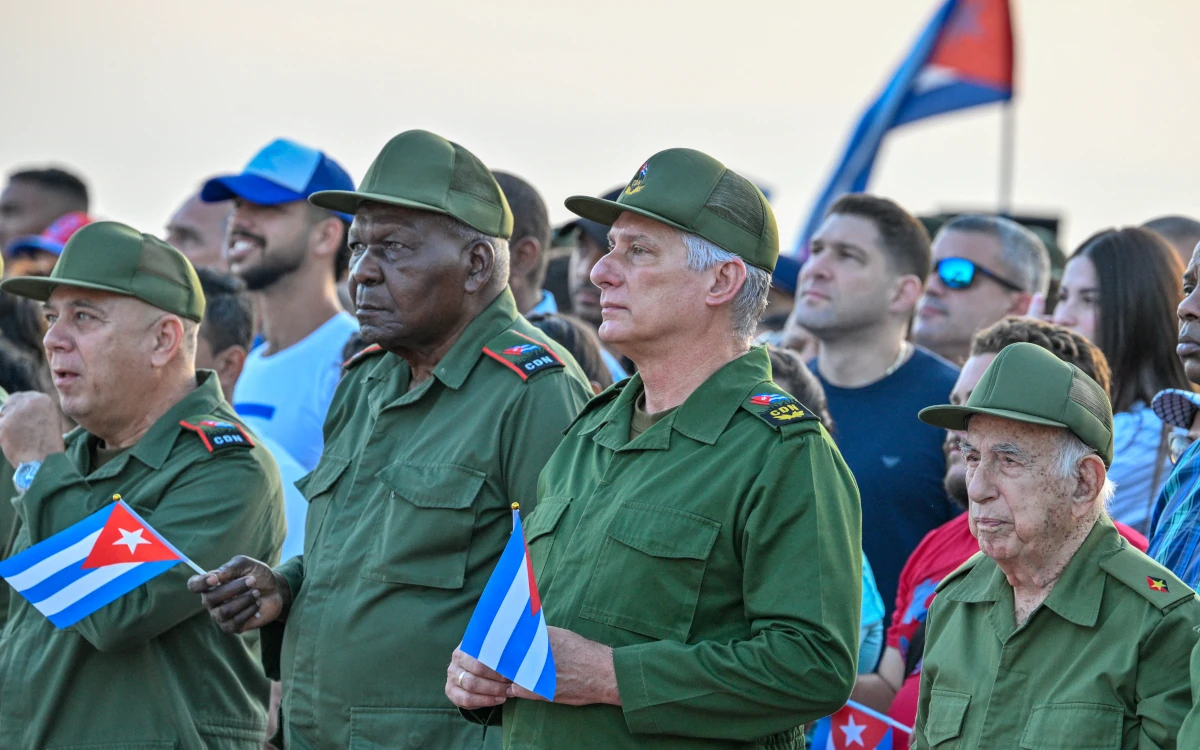
If the visits supplied the choreography, the Justice Department supplied the script. On May 20, at Miami’s Freedom Tower—the Cold War refuge for the Cuban diaspora—Acting Attorney General Todd Blanche unsealed a federal indictment charging Raúl Castro, 94, with conspiracy to kill U.S. nationals, four counts of murder, and two counts of destroying aircraft. The charges reach back to February 24, 1996, when Cuban MiGs shot down two unarmed civilian planes flown by the exile group Brothers to the Rescue over international waters, killing four men—three of them American citizens. Castro was Cuba’s defense minister at the time, and prosecutors allege he gave the order. A Miami grand jury had returned the indictment weeks earlier, but the administration waited to unseal it until May 20—the date Cuban exiles celebrate as the island’s Independence Day.
The case itself is older than the campaign it now serves. Federal prosecutors in Miami first drafted charges against Castro in the 1990s, in the wake of the Panamanian dictator Manuel Noriega’s conviction, then let them sit for three decades. What changed is not the evidence but its purpose: a legal instrument now doing strategic work. It does to Castro on paper what the Caracas raid did to Maduro in the flesh. It turns the head of a regime into a fugitive subject to capture. An administration that has already carried off one capital’s leader now holds the legal pretext for doing the same in Havana.
United States Sets Pretext for Cuba Attack
Does this sequence indicate a credible threat of military action? Will the Cuban regime have to go to get the lights back on? Not necessarily.
There’s a gap between what the administration’s strategy is designed to do and what it can realistically achieve. On the one hand, a military strike against the island is more credible than at any point in living memory. U.S. officials mulling over a pretext for an attack have told the press that Cuba has acquired more than 300 Russian and Iranian drones. Cuban officers, they say, have discussed using them against Guantanamo, American naval vessels, or even Key West. When a nation tells reporters that its own threat assessment might justify an attack, it is rehearsing a rationale, not sounding a warning.
When a nation tells reporters that its own threat assessment might justify an attack, it is rehearsing a rationale, not sounding a warning
Indeed, the deeper question is whether fuel deprivation can produce the political outcome Washington seeks. The success of regime change assumes that power shortages will generate enough anger for the Cuban population to turn on their government, creating the conditions for collapse. This is a durable American fantasy that has proven wrong every time for well over a half century. Cuba has suffered food shortages, blackouts, and far worse without public revolt. Scarcity is not a systematic failure but an expected condition, amplified by three hardened generations who see struggle as proof of sovereignty rather than evidence of misrule. During the Special Period in the 1990s, Soviet support vanished almost overnight, and Cuba’s economy contracted by a third. Yet the government endured.
Over decades, the Cuban power structure has insulated the government officials Washington wants to pressure. The Grupo de Administración Empresarial S.A. (GAESA), the government conglomerate that controls much of the Cuban economy, is not a ministry that can be sanctioned into reform. It is the economic core of the military. The population suffers the blackouts; the conglomerate keeps its generators. Coercion that misses its target but crushes everyone else produces no leverage, only catastrophe—a far cry from the tidy transition that American policy envisions.
United States Rejects Cuba Reforms as “Smoke Screen”
In mid-June, the regime offered its own answer to the squeeze. Cuba’s National Assembly unanimously approved 176 free-market reforms—the largest economic overhaul since the 1959 revolution—in an emergency bid to end the crisis. The measures allow private firms to hire more than 100 workers and entrepreneurs to own several businesses while also ending the requirement that foreign investors partner with the state and authorizing private banks and foreign-currency accounts. On paper, it was a sharp turn away from the economy Castro built. In practice, it was a government reaching for capital wherever it could find it. Notably, the opening ran through the civilian economy while leaving GAESA, the military conglomerate at the center of the system, untouched.
Washington was unimpressed. The State Department dismissed the package as “superficial smoke signals,” with its spokesperson calling the reforms late, limited, and a page from the “dictatorship’s handbook.” The administration wants far bigger political and economic change before it considers the island investable. Trump and Rubio reaffirmed maximum pressure, giving no reward for the reform. The exchange laid bare the asymmetry at the heart of the campaign: Cuba was offering to open its economy; Washington was demanding it surrender its government.
Trump and Rubio reaffirmed maximum pressure, giving no reward for the reform
The strategic question is not how to win but what happens if the Cuban power structure loses control. Start with migration. Cubans under stress have fled toward America in every crisis, most recently the post-2021 exodus driven in part by the same failing grid. A breakdown now would push migrants toward Florida, which has an influential Cuban American community, in the middle of a presidency that has staked its identity on stopping migration. The contradiction is evident: the maximum pressure campaign pulls in the opposite direction of the border crackdown.
The administration could inadvertently create a failed state just 90 miles from Florida, which could become a haven for drug runners and despots—the very people Washington is trying to expel. The Maduro precedent looms here as well. Venezuela has seen no democratic transition since the United States jailed Maduro. Its patron has changed, and its oil spigot now answers to American interests. But most of the people who ran Venezuela under Maduro remain in power under Delcy Rodriguez, the de facto head of state. Having shown it will reach into a sovereign state and extract a leader, the administration has lowered the bar for the next intervention. Regional instability is not collateral damage from a Cuban collapse. It is the central consequence, set in motion by Washington’s own policy.
China Turns on the Sun
The Trump administration’s focus on the Western Hemisphere suggests the President prefers the mantle of regional power rather than that of a global hegemon. But that doesn’t mean America’s global adversaries are sitting still. While Washington has been turning off the lights, China has been turning on the sun.
While Washington has been turning off the lights, China has been turning on the sun
The most reliable measure of China’s role does not come from Havana, which has every reason to exaggerate, but from customs reports across the Pacific. The energy think tank, Ember, which tracks Chinese solar exports by destination, found that China shipped around $3 million in solar panels to Cuba in 2023. By 2025, that number had reached $117 million. Beijing supplied roughly a gigawatt of photovoltaic panels to the island in a single year. That is enough to place Cuba ahead of most countries, including the United States, in the share of electricity it draws from the sun.
None of this keeps the lights on after dark in Havana. Solar floods the grid at midday and vanishes around 7 p.m., when demand peaks, and Cuba has failed to install the battery storage needed to bridge the gap. Of the dozens of solar parks built in 2025, Cuban state news reports that only four are equipped with massive 50-megawatt storage systems. That’s why a record solar afternoon and a 20-hour blackout can occur simultaneously. For Cuba, solar panels don’t yet provide a reliable power supply.
The number that should discomfort Washington is not the megawatt total or the storage shortfall. It is the date stamp. The U.S. pressure campaign was designed to deny Cuba a commodity—oil—that moves by tanker and can be interdicted, sanctioned, and tracked. No one designed the campaign for a world in which the relevant commodity is a photovoltaic panel. It costs a fraction of oil, arrives faster than the sanctions can be drafted, and turns a one-year chokehold into a problem of storage chemistry that China is also racing to solve. When Cuba’s foreign minister wanted to be seen with a great-power patron, he met Wang Yi—China’s top diplomat—not in Beijing, but in New York. They met on the margins of the United Nations, where China pledged to keep speaking up for Cuba against “external interference.”
If Cuba can reach its 2028 target of 92 functioning solar parks financed by China, the oil blockade—America’s primary economic weapon—will become less relevant. The Chinese are playing a major role in building a workaround to the American pressure campaign, using their capital and global heft to build goodwill across Latin America.
If Cuba can reach its 2028 target of 92 functioning solar parks financed by China, the oil blockade will become less relevant
Washington’s gamble is that strangulation forces capitulation before any alternative arrives. China bets it can keep Cuba’s lights flickering long enough for the sun to do the rest. One of those bets is running against the clock; the other, against controls.
Rubio Sets the Stage for Showdown
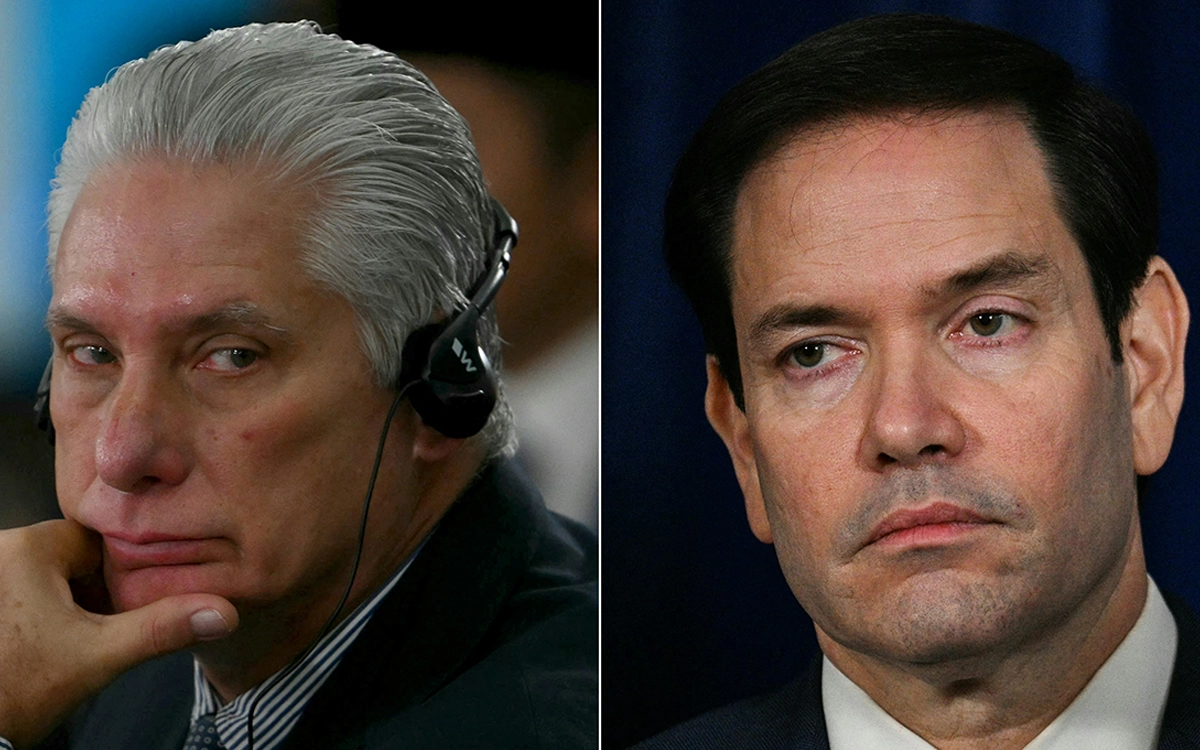
Cold calculation drives much of America’s policy. But there’s a personal element at play, too. Marco Rubio stands at the center of the Cuba campaign, as secretary of state and acting national security adviser—a combination not seen since Henry Kissinger. Rubio grew up in Miami in the exile community that for the most part viscerally hates any mention of the Castros in Cuba. He wrote a memoir about a boyhood in which he imagined leading an army of exiles to overthrow Fidel Castro. He is now the public face of the most aggressive hemispheric policy in two generations, openly discussed by Trump as a potential 2028 presidential heir.
The community that shaped him is not a monolith, but its most uncompromising faction judges by a single test: opposition to the communist regime. A negotiation like Venezuela’s that leaves elements of the regime in power—particularly a party involving a Castro—is a bitter pill that the Miami faction has refused to swallow. Yet American policy now has a chief architect for whom Cuba is a defining cause and whose presidential ambitions hinge on how it ends. Such political dynamics reward the dramatic gesture over a durable settlement. A deal that quietly stabilizes the island without planting an American flag, ceding control to Castro’s grandson, is an option Rubio has reportedly not foreclosed. It would be hard, but not impossible, for the chief Cuba architect to swallow.
The stage has been set for a showdown. The economic machine has been built and globalized, and the military choreography is in place. The intelligence pretext for an invasion is being rehearsed in the press. The political incentive points toward escalation rather than settlement. Every piece that a great power needs to break a smaller one is assembled and pointed 90 miles south. And the island, which has spent 67 years learning to live in the dark, has found a patron willing to hand it the sun.
Washington may yet get its blackout. It is less likely to get its revolution, and it may discover that the campaign meant to reclaim the hemisphere will instead invite in its rivals. The empire that wanted to switch off Cuba forgot to check who had the batteries.
The empire that wanted to switch off Cuba forgot to check who had the batteries