
The European Union projects power without projecting force. Its sharpest geopolitical instrument is the promise of membership. For more than three decades, that promise reshaped the strategic map of the continent, pulling former Communist states out of Moscow’s orbit and into a Western order.
Enlargement is the closest thing the EU has to a grand strategy. Brussels works by attraction, offering the states on its periphery a path into the world’s largest market in return for reform and strategic alignment. That instrument now faces a harder test.
Drained by national vetoes, stalled talks, and democratic backsliding inside the Union itself, enlargement is now losing its force of attraction for outsiders. Russia’s war in Ukraine, China’s expansion into the continent, and growing doubt about the American commitment have turned a bureaucratic process into a contest for strategic ground. Whether the EU still counts as a geopolitical power on its own continent now turns on whether it can still deliver durable political convergence, economic integration, and lasting strategic alignment.
Russia’s war in Ukraine, China’s expansion into the continent, and growing doubt about the American commitment have turned a bureaucratic process into a contest for strategic ground
Enlargement Was Always Geopolitical
Enlargement was never a purely technical exercise in adopting rules, but statecraft. The eastern enlargements of 2004 and 2007 sought to consolidate democratic institutions across post-Communist Europe by embedding new member states within the EU’s political and legal framework. The prospect of membership provided powerful incentives for reform in areas previously existing in strategic gray zones. This offered the opportunity for new member states to join the Union’s economic order while reducing the risk of inter-state conflict.
Expansion served the project of shoring up European stability and integrating historically tumultuous regions into a single unit. The success of this project is evident in the transformation of countries such as Slovakia, Romania, and Bulgaria. This transformation had beneficial effects in terms of political convergence and stability. Where NATO extended military deterrence, the Union exported a model of governance, binding new members into an interdependence that made war among them almost unthinkable.
That logic worked because the West faced little competition for the ground it absorbed. The post-Cold War order was uncontested, and integration ran in one direction. What has changed since is not the logic of enlargement but the strategic environment in which it operates. Today’s accession also unfolds amid doubt about the reliability of the American security relationship and speculation about Europe’s role as one pole in a multipolar future.
The Changing Environment of Enlargement
Enlargement now advances into contested ground. The return of great-power rivalry has stripped away the permissive conditions of the 1990s. Along its eastern and southeastern flank, the Union competes for influence with Russia, China, and an assertive Turkey.
Russia’s invasion of Ukraine destroyed the comfortable assumption that countries could sit indefinitely in a gray zone, drifting toward Europe at their leisure. Security itself has widened to take in energy, supply chains, critical infrastructure, and technology, and enlargement runs straight through all of them. A candidate’s alignment now bears directly on the Union’s own resilience, which makes each accession a question of European power rather than European values.
A candidate’s alignment now bears directly on the Union’s own resilience, which makes each accession a question of European power rather than European values
Economic competition has intensified even within the EU’s own neighborhood. The impact of Chinese investment in Central and Eastern Europe lies not in its scale, but in its potential viability as an alternative. Between 2012 and 2022, Chinese investment reached €14 billion. Although this is modest compared to the EU’s own economic footprint, the financial and economic alternatives it introduces still dilute the credibility of EU conditionality.
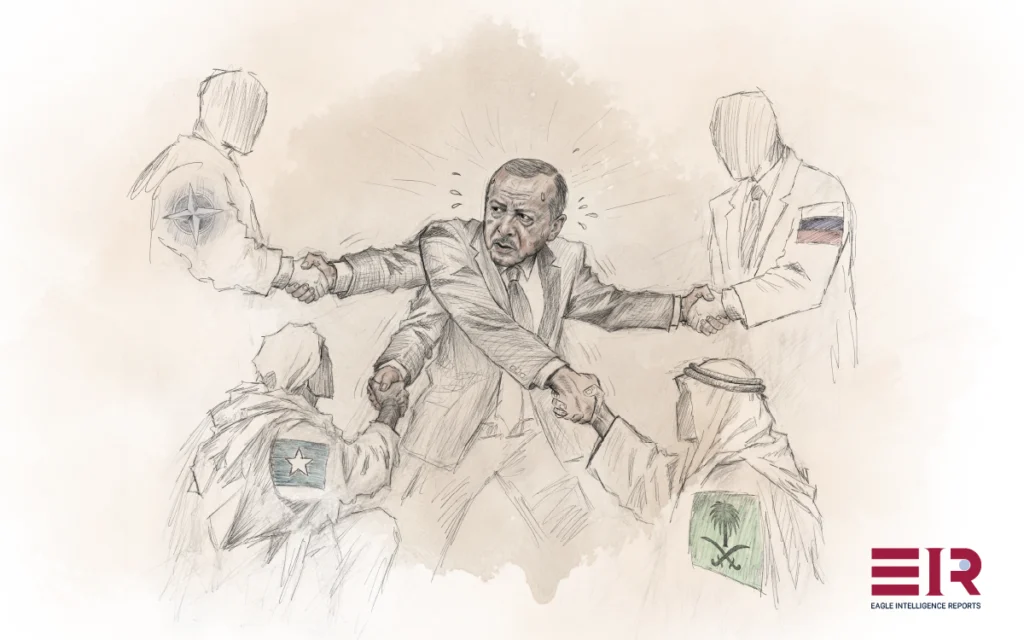
Meanwhile, Russia keeps its leverage in Moldova and Serbia, and Turkey has widened its reach across the Balkans. Enlargement is no longer an uncontested gift. All these changes have forced Brussels to reimagine enlargement as a tool for strategic competition, aiming not simply at integrating neighboring states, but at competing for their long-term strategic orientation.
Retooling Enlargement
Brussels has answered by redesigning the instrument itself. The old model ran close to binary: a state stayed outside the Union or, after years of negotiation, joined it in full. In practice, the line was always softer, running through the European Neighbourhood Policy, Association Agreements, and the Stabilisation and Association Process. What is new is that the Union now formalizes and accelerates those halfway arrangements and moves them to the center of its strategy.
Initiatives such as the Growth Plan for the Western Balkans, proposals for phased integration, and gradual access to the single market share a single aim. They let Brussels project influence before membership rather than only through it. The strategy solves two problems at once: it denies rival powers the vacuum they covet in the Balkans, and it tries to rebuild the credibility of an accession process worn thin by years of stalled talks.
The repeated vetoes of North Macedonia and Albania, first by France, then by Bulgaria, have also corroded trust in the process, fueling accession fatigue among candidate countries. Overall, this process has weakened the general power of EU conditionality. When enlargement becomes unpredictable or subject to vetoes, its transformative leverage is diminished by the Union’s own members. Enlargement is becoming less of a single accession event and more of a continuous geopolitical process.
The Limits of the Geopolitical Enlargement Narrative
The EU’s own narrative of enlargement warrants critical scrutiny. The record reveals persistent limits to what Brussels can achieve through accession alone. Proponents in Brussels often cast enlargement as a strategic instrument capable of stabilizing neighboring regions and reinforcing European convergence.
Yet membership has not necessarily produced lasting political convergence. Several member states that joined after 2004 have experienced democratic backsliding, disputes over the rule of law, and growing tensions with Brussels. For example, the Varieties of Democracy (V-Dem) Institute’s Liberal Democracy Index shows significant declines in Hungary and Poland since 2010. Both countries now score lower on judicial independence and media freedom.
In this context, Euroskeptic, nationalist, and sovereigntist political movements have gained momentum. Hungary represents the clearest example, but concerns have also emerged elsewhere in Central and Eastern Europe. Enlargement has not eliminated Euroscepticism. Parties such as Fidesz in Hungary and AUR in Romania have harnessed grievances over migration, sovereignty, rising costs of living, and economic disparities to win elections. This raises questions about the EU’s ability to foster political convergence and long-term alignment.
The Western Balkans present additional challenges. In Serbia, candidate status has not prevented Belgrade from maintaining strategic partnerships with rival powers, suggesting that accession alone is insufficient to guarantee long-term geopolitical alignment. Montenegro, by contrast, demonstrates that sustained political commitment and credible accession incentives can still produce convergence. The problem lies less with enlargement itself than with its increasingly uneven implementation.
More broadly, persistently low public support for the EU and mounting reform fatigue signal that Brussels’ power of attraction must now compete with alternative models of influence. According to the 2024 Balkan Barometer, only 34 percent of Serbians view EU membership favorably. Freedom House’s Nations in Transit 2024 report downgraded Hungary’s democracy score to 3.5/7, the lowest in the EU. In this context, EU enlargement appears less able to automatically produce geopolitical alignment through democratic transformation and political reform.
Why Enlargement Is Indispensable to the EU’s Strategy
The limits are real. But they are failures of implementation, not of the instrument itself. The gap between Serbia and Montenegro shows as much: enlargement still has the power to transform, but only where the promise of membership stays credible and consistent.
Enlargement occupies a unique place in the EU’s geopolitical strategy. But this reliance reflects a crucial reality: unlike NATO, which wields military force to deter threats, the EU lacks comparable hard-power capabilities. Instead, it must turn to other instruments such as sanctions, regulation, trade, and, above all, enlargement. Each of these tools serves a strategic purpose. Only enlargement offers deep and enduring alignment with the Union, an alignment that is hard to reverse even if never truly irreversible.
The limits of EU enlargement are real. But they are failures of implementation, not of the instrument itself
NATO remains the guarantor of collective defense. The EU’s influence rests on something no rival can offer: a credible pathway to integration into the world’s largest political and economic union. Enlargement matters because it is the only tool that can reorder the strategic orientation of entire states. It anchors them to the Union and reduces the appeal of external competitors.
The phased integration framework for the Western Balkans and Association Agreements with Ukraine and Moldova are attempts to maximize influence under conditions of strategic vulnerability. Yet membership has proved durable rather than truly irreversible. Since 2004, 13 countries have joined the EU, and only one—the United Kingdom—has since left, a reminder that even deep integration can be undone. The EU’s statecraft is a product of its weakness as much as its strength. Brussels reaches for enlargement because it has little else that binds others to it. That is exactly why allowing the instrument to decay would rank as a strategic error.
The Future of Enlargement and EU Credibility
Overall, the changing nature of enlargement reveals as much about the EU’s evolving identity as the aspirations of those seeking membership. It reflects a recognition that the assumptions underpinning the post-Cold War European order, in particular the sufficiency of integration to guarantee stability, no longer hold. The EU now seeks to proactively shape its neighborhood, using enlargement to project power and secure influence over states such as Ukraine, Moldova, Montenegro, and Serbia.
At the same time, the Union’s ambitions continue to encounter significant constraints. Enlargement remains a slow, politically contested process whose outcomes cannot be taken for granted. Domestic political developments, uneven economic convergence, democratic backsliding, uneven benefits across the Union, and competing external influences all complicate the geopolitical narrative promoted by Brussels.
Enlargement, in the end, is not a reward Brussels hands out but a lever it pulls. Its power rests on the credibility of the offer, and that credibility is now Europe’s to keep or to squander. The rivals gathering at the Union’s edge are real, but they will not decide the outcome. Vetoes cast in European capitals and backsliding tolerated inside the club blunt the instrument more than anything settled in Moscow or Beijing.
Enlargement, in the end, is not a reward Brussels hands out but a lever it pulls. Its power rests on the credibility of the offer, and that credibility is now Europe’s to keep or to squander
The stakes reach well past the Balkans and the borderlands of the former Soviet Union. Enlargement has become the test of whether the EU can still act as a strategic power in its neighborhood or merely manage its decline as others set the terms. If Brussels restores the credibility, consistency, and leverage that once made accession its most successful foreign policy, the Union keeps its strongest tool of influence. Should Brussels let it lapse, Europe will watch its most effective instrument fail at the most perilous moment in its modern history.