
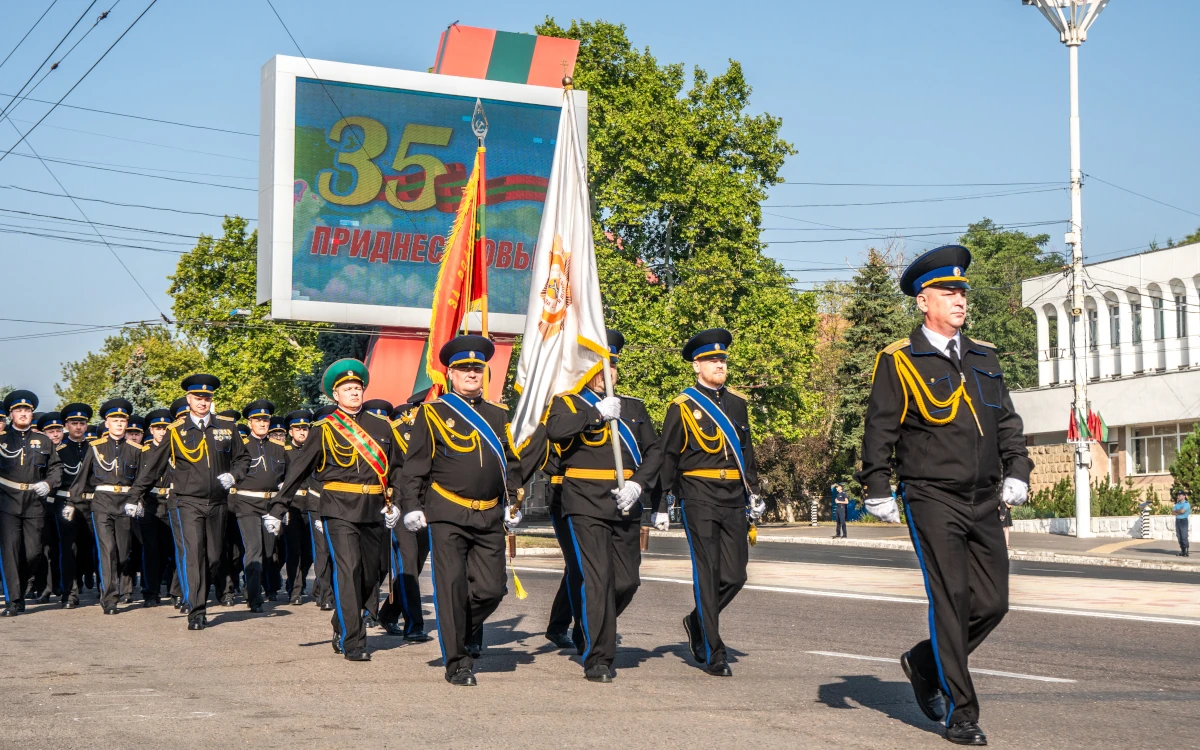
On September 1, Moldova began levying value-added tax and excise duties on selected goods imported by companies registered in Transnistria, the unrecognized breakaway state on the east bank of the Dniester River. Less than three weeks later, Russia opened polling stations there for its State Duma election, despite Chisinau’s formal protest. The two episodes capture the conflict’s changing character. Moldova is steadily drawing the breakaway region into its legal and economic order without resolving its political status, while Russia continues to bind the territory to itself through citizenship, political ties, and a military presence.
That leaves Transnistria, the narrow strip of territory that declared independence in 1990 and has survived since the 1992 war under Russian protection, in an increasingly ambiguous position. For three decades, reintegration was assumed to require a political settlement first. Chisinau is now increasingly reversing that sequence. Moldovan officials refer to Transnistria simply as “the left bank” and to the rest of the country as the right bank. The government is drawing the left bank’s economy into Moldova’s tax, customs, and energy systems while leaving the constitutional question for later.
The wager is that control over the conditions of economic life will gradually weaken the practical foundations of separatism. Yet the same policy could also produce something less conclusive. Chisinau may gain greater influence over how the region trades, pays taxes, imports energy, and accesses public services, without controlling its security institutions or displacing the military presence. That would leave the region neither genuinely separate nor reintegrated, in a half-integration that could prove remarkably durable.
Chisinau may gain greater influence over how the region trades, pays taxes, imports energy, and accesses public services, without controlling its security institutions or displacing the military presence
Jurisdiction First
The tax measures build on a process that began in January 2024, when Transnistrian companies were brought under Moldova’s general customs regime. In 2025 alone, they paid about 166.7 million lei in customs duties. The new taxes are being introduced in stages. Luxury and non-essential goods came first in September. Petroleum products, base metals, and other industrial inputs follow in January 2027, and gas and electricity in April 2027. By January 1, 2030, the government intends to have a single tax space.
The policy will test how much regulation the region’s economy can absorb without provoking an economic collapse for which Moldova itself would ultimately bear much of the cost. More importantly, the policy shifts the dispute onto terrain where formal recognition matters less than practical compliance. Firms do not have to recognize Moldovan sovereignty in principle to obey Moldovan rules in practice.
That logic also underpins the unofficial reintegration paper prepared by Moldovan officials. Rather than negotiating a special political status before anything else changes, the approach envisages extending common fiscal, customs, trade, and legal rules through ordinary Moldovan legislation while maintaining direct contacts with Tiraspol.
Rather than negotiating a special political status before anything else changes, the approach envisages extending common fiscal, customs, trade, and legal rules through ordinary Moldovan legislation while maintaining direct contacts with Tiraspol
This became possible largely because of the Russo-Ukrainian war. Since February 2022, Ukraine has kept its border with Transnistria closed. The region’s external trade therefore depends overwhelmingly on Moldovan paperwork and Moldovan-regulated channels. Part of Chisinau’s leverage is consequently borrowed from Kyiv. Were Ukraine to reopen the border under different political circumstances, some of that leverage would diminish.
For now, the economic geography is clear. In the first half of 2026, 76.9 percent of goods exports by companies registered in Transnistria went to EU member states. Access to that market requires Moldovan documentation and compliance with rules increasingly aligned with the EU. But this should not be confused with political reintegration. Transnistrian businesses have traded with the EU for years without weakening the local security apparatus. Economic dependence can make separatism more expensive without making separatist institutions disappear.
When Dependence Becomes Leverage
The foundations of Transnistria’s old political economy have nevertheless changed dramatically. For decades, Russian gas did more than keep homes warm and factories running. It underwrote the de facto state. Gas supplied without effective payment allowed households and enterprises to pay subsidized prices while the revenue stayed inside the region—some $500–700 million per year. Cheap fuel also powered the Cuciurgan electricity plant, whose sales to the right bank generated additional income.
That model broke down at the beginning of 2025, when Russian gas deliveries through the old route ceased after Ukrainian transit ended. Cuciurgan stopped supplying the right bank, industrial production contracted, and Tiraspol lost a large part of the financial base on which its institutions depended. The economy contracted sharply, factories suspended production, and authorities resorted to emergency measures.
Gas has since returned through a more precarious arrangement involving Moldovagaz and intermediaries. Tiraspol says the purchases are financed by a Russian loan whose terms have not been disclosed. But the political meaning of the supply has changed. Moscow can no longer simply subsidize Tiraspol through an infrastructure that effectively bypasses Chisinau; Moldovan regulators now play a role in the chain.
Moldovan policy has deepened the pressure. Moldova has not returned to Cuciurgan’s electricity, while the new taxes further narrow the advantages once offered by a separate fiscal regime. Firms remaining registered on the left bank may eventually find that compliance with both Moldovan and Transnistrian requirements makes registration on the right bank more attractive.
Public data do not yet show whether that shift is occurring at scale. If it is, it would be one of the clearest signs that Moldovan rules are beginning to reach the revenue base on which the separatist administration depends. That gives Moldova leverage, but it also creates liabilities for Chisinau. An economic collapse in Transnistria would mean unemployment, further emigration, pressure on Moldova’s welfare system, and deterioration of assets that Chisinau ultimately hopes to reintegrate.
An economic collapse in Transnistria would mean unemployment, further emigration, pressure on Moldova’s welfare system, and deterioration of assets that Chisinau ultimately hopes to reintegrate
Signs of growing dependence are already visible. In the first half of 2026, over 23,000 residents of Transnistria were formally employed on the right bank. By the end of June, over 82,000 residents were enrolled in Moldova’s health-insurance system, nearly three times the number recorded a year earlier. More than 68,000 of those were insured by the state, primarily children and pensioners.
What Tiraspol Still Controls
Yet economic integration has clear limits. Tiraspol still controls its own security service, armed formations, courts, property registration, schools, and much of the local information environment. Sheriff, the conglomerate that dominates large parts of the regional economy, remains deeply intertwined with the political establishment.
When the de facto administration ran short of money this year, commercially exposed actors did not abandon it. Sheriff contributed to an emergency fund supporting pensions and public-sector wages. Businesses most dependent on external markets have so far chosen to help preserve the existing political order rather than use their economic position to dismantle it.
Tiraspol’s political response has also remained consistent. It portrays Moldovan fiscal and customs measures as an economic blockade, appeals to the OSCE, and seeks to raise the international political cost of each additional Moldovan step. None of these efforts, however, have reversed Chisinau’s measures.
The negotiating process itself reflects the changing balance. The old 5+2 format, involving Moldova and Transnistria alongside Russia, Ukraine, and the OSCE—with the EU and the United States as observers—has effectively ceased to function. Direct contacts now concentrate increasingly on practical questions rather than a comprehensive status settlement. This emerging arrangement is therefore less a negotiated reintegration than a managed coexistence between two administrative systems, one of which is steadily extending the practical reach of its rules.
Moscow’s Cheaper Veto
For Russia, the most important change is the declining cost of preserving the status quo. The old model was expensive and required subsidized energy and an industrial economy sufficiently solvent to finance functioning de facto institutions. Preventing full reintegration requires much less. Moscow needs only enough military and political leverage to prevent Moldova from converting economic dependence into effective sovereign authority.
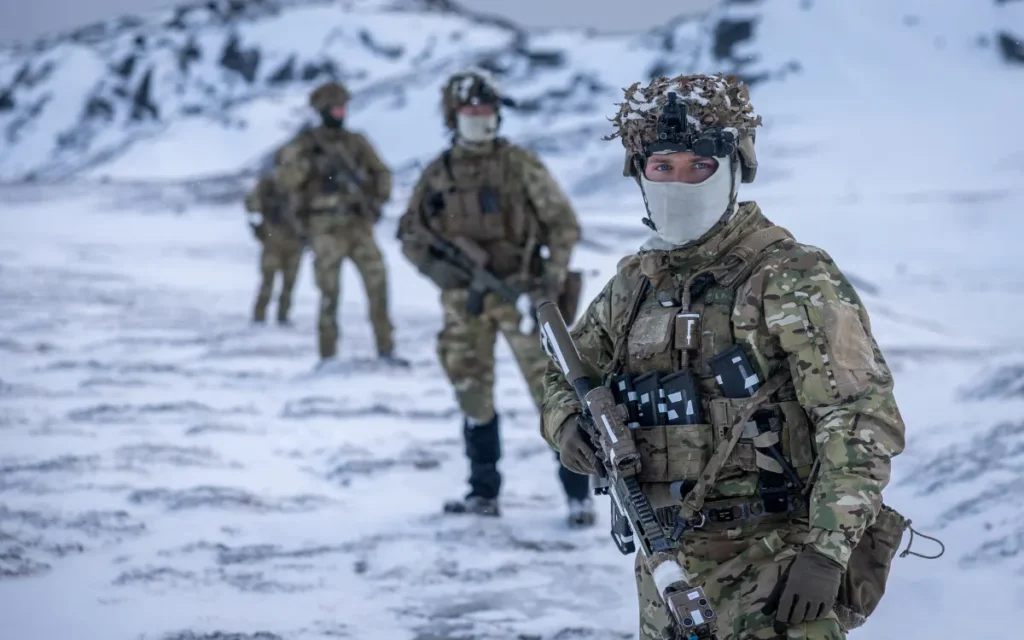
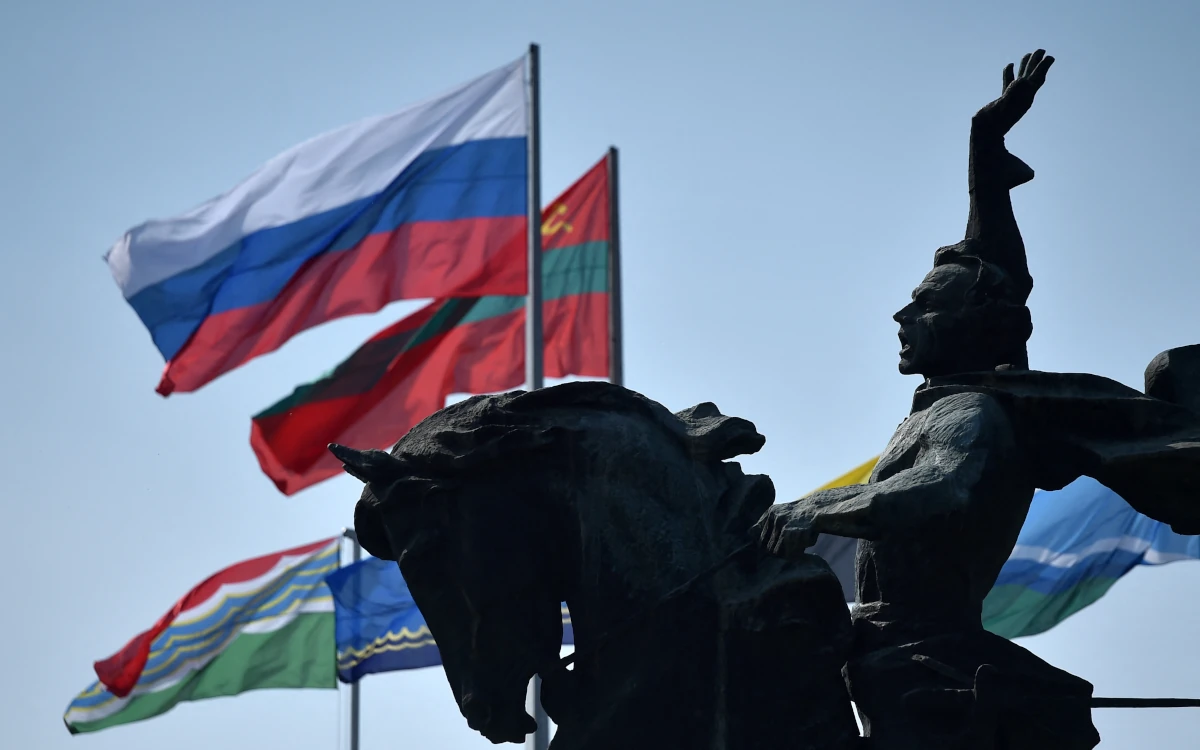
Russia’s ability to sustain Transnistria has weakened since 2022. The closure of Ukraine’s border cut physical access from the east, and economic support now depends on far more cumbersome arrangements. But weakening Russian control is not the same thing as removing Russia’s veto—that is, its capacity to obstruct reintegration. The most visible instrument remains the military presence. According to the Moldovan foreign ministry, the Russian contingent numbers some 1,200 to 1,500 on paper, though only a minority are actual Russian soldiers and most are locally recruited. The contingent has not been rotated normally for years.
But weakening Russian control is not the same thing as removing Russia’s veto—that is, its capacity to obstruct reintegration. The most visible instrument remains the military presence
Its military value should not be exaggerated, but its political significance is considerable. As long as armed structures protected by Moscow remain outside Chisinau’s authority, regulatory integration reaches a natural limit. Russia retains other instruments as well. Russian citizenship keeps part of the population formally connected to Moscow. Russian-controlled commercial assets remain unresolved, and Moscow also retains significant capacity to interfere in Moldovan politics beyond Transnistria itself, potentially giving it greater leverage over the process than anything it can do inside the region.
That matters because Moldova’s strategy depends on successive governments continuing to withdraw exemptions and extend national rules through 2030. A future Moldovan government willing to slow the process, restore exemptions, or trade economic pressure for a broader accommodation could achieve much of what Moscow wants at far lower cost than rebuilding Transnistria’s former economic model.
The War as Hinge
The Russo-Ukrainian war created most of the conditions that made Moldova’s current strategy possible. Its eventual course will therefore help determine whether economic integration advances beyond its present limits. If the war remains prolonged, the current asymmetry is likely to endure. The Ukrainian border would remain closed, Russian physical access to the region would stay constrained, and Chisinau would gain more time to deepen regulatory control.
A ceasefire could alter the balance. It could reopen questions of Russian transit and supply, make renewed subsidies easier, and draw the Transnistria issue into wider negotiations over European security. Moscow could then seek to use the status of its military contingent as leverage in a broader settlement. In fact, the EU has already begun positioning itself for that possibility. During her May visit to Chisinau, European Commission Vice President Kaja Kallas said the EU would demand the withdrawal of Russian troops from Transnistria in any talks with Moscow about lifting sanctions.
Much would also depend on Kyiv. Ukraine has its own security interest in removing a Russian military foothold close to Odesa, but it also controls the border whose closure has made Moldova indispensable to Transnistria’s economy. Any Ukrainian decision to reopen those crossings would therefore have consequences far beyond local trade. The question matters well beyond Moldova as well. Transnistria hosts Russia’s only military presence on Ukraine’s southwestern flank, close to Odesa and not far from Romania, a NATO and EU member.
The key warning indicators are consequently straightforward: references to Transnistria in ceasefire negotiations, discussion of access to or rotation of the Russian contingent, changes in Ukrainian border policy, and any renewed Russian attempt to finance the region on a scale comparable with the pre-2022 system.
The European Clock
Moldova’s EU accession has changed the incentives surrounding the conflict in another way. Accession negotiations formally began in 2024, and EU officials have stated that Transnistria will not necessarily prevent Moldova from advancing toward membership. If Chisinau can move toward the EU without first regaining effective control over the breakaway region, it has less reason to pay a high political price simply to conclude an early status agreement.
The obvious precedent is Cyprus, where EU law remains suspended in the northern part of the island. Moldova is not Cyprus, and member states may be reluctant to import another unresolved territorial conflict into the Union. But the precedent demonstrates that territorial division is not necessarily an absolute legal barrier to membership.
The timelines are also beginning to overlap. Moldova hopes to be ready for membership around the end of the decade, while its transitional fiscal exemptions for Transnistrian businesses are also intended to disappear by 2030. The two processes are formally separate but nonetheless move on the same political clock. For the EU, this means that its funding for Moldova’s energy security and its attention to the integrity of Moldova’s next elections, due in 2028 and 2029, may shape the outcome in Transnistria more than any position it takes on the region’s status.
The Comfort of Half Measures
The separatist order rested on three advantages: Russian military protection, subsidized energy, and preferential economic arrangements that allowed Transnistrian businesses to benefit from access to Moldovan and European markets without fully entering Moldova’s fiscal system. Two of those pillars have been badly weakened. Only Russian military protection remains substantially beyond Chisinau’s control, and that may still be enough.
Economic dependence could eventually turn into institutional authority. A future political settlement might simply formalize changes already made on the ground. But the opposite sequence is equally plausible. Moldova could assume ever more responsibility for the region’s economy and population while Tiraspol retains its coercive institutions and Moscow preserves enough military and political leverage to block full reintegration.
Indeed, excessive economic pressure could weaken precisely those actors with the strongest interest in Moldovan and European markets while leaving the security apparatus comparatively intact. The result could be what the analyst Evgeny Cheban has described as a depopulated, subsidized military enclave—poorer than today’s Transnistria and harder rather than easier for Moldova to absorb.
For now, the incentives point toward neither renewed separation nor full reintegration. Sheriff and other established interests have so far helped keep Tiraspol afloat rather than force a political bargain. Tiraspol can play for time. Moscow can preserve a veto at a fraction of the former cost. And the EU’s willingness to let Moldova’s accession proceed without first settling the conflict removes one of the deadlines that might otherwise have forced a comprehensive agreement.
Tiraspol can play for time. Moscow can preserve a veto at a fraction of the former cost. And the EU’s willingness to let Moldova’s accession proceed without first settling the conflict removes one of the deadlines that might otherwise have forced a comprehensive agreement
That is why half-integration may prove more durable than it first appears. Chisinau is steadily extending Moldovan law across the Dniester without extending Moldovan government with it. The arrangement could endure well beyond 2030 precisely because it relieves the immediate pressure on both banks to reach a settlement while leaving the underlying conflict unresolved.