
Europe’s next critical infrastructure test may come beneath the waves. The cables running across the seabed carry data on which its economies and security systems depend, yet they remain physically exposed and difficult to defend. That vulnerability poses a problem that conventional infrastructure protection cannot solve.
Europe cannot prevent every attack. The more important question, however, is whether it can deny an adversary the strategic benefits of disruption by detecting damage early, absorbing its effects, and restoring connectivity quickly. EU cable policy is beginning to move in this direction, with greater emphasis on network resilience, surveillance, redundancy, and repair capacity.
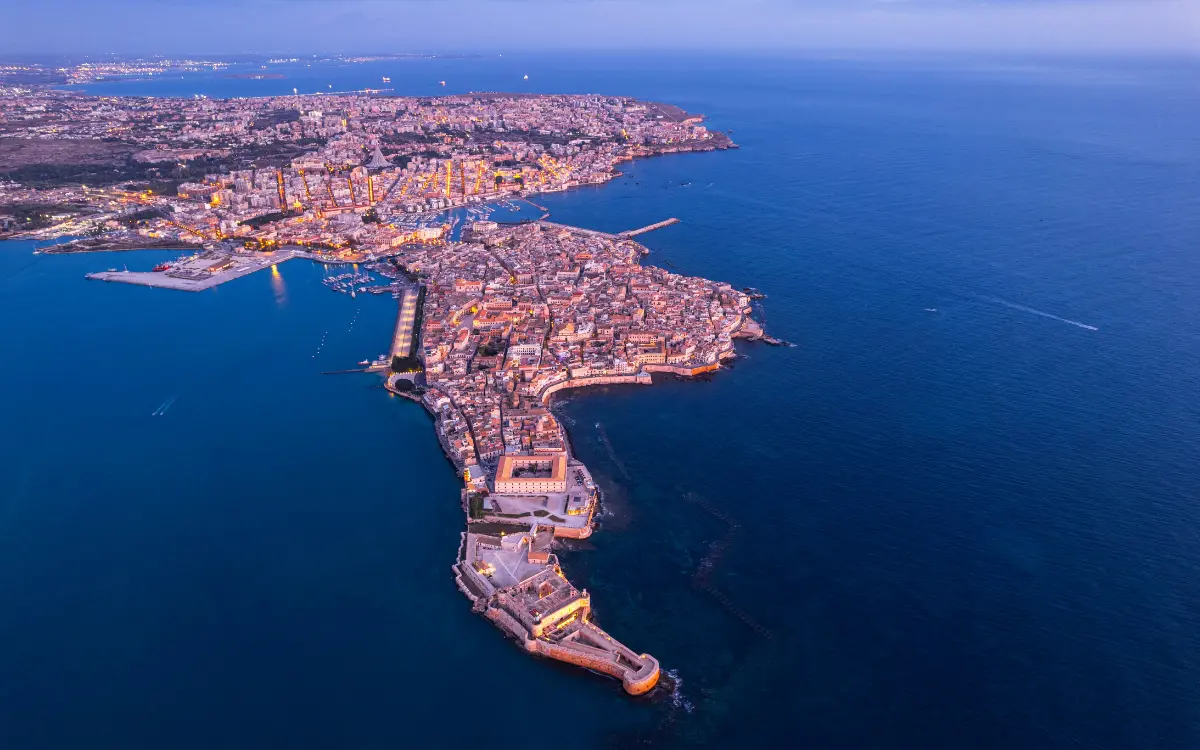
The Mediterranean will show how far this approach can work in practice. Major cable routes converge there as they connect Europe with Africa, the Middle East, and Asia. That convergence concentrates critical infrastructure in a confined and politically fragmented maritime space and turns the region into one of Europe’s principal digital chokepoints. Sicily lies at the center of that network, making the Central Mediterranean both a hub of European connectivity and a point of concentrated risk.
That convergence of major cable routes concentrates critical infrastructure in a confined and politically fragmented maritime space and turns the region into one of Europe’s principal digital chokepoints.
Europe already has many of the capabilities needed to respond, from naval deployments and established cable operators to expanding mechanisms for cross-border coordination. If these cannot contain disruption in the Mediterranean, doing so in more dispersed or politically hostile environments will be harder still. Both the advantages and the risks begin with geography.
The Mediterranean’s Vulnerable Front
Beneath the Mediterranean lies a dense network of submarine cables connecting more than 20 coastal states. Many of Europe’s major international cable routes converge within this relatively confined space, carrying data that supports financial transactions, cloud services, commerce, and government communications.
Their strategic importance is matched by their physical exposure. Cables run across vast areas of seabed that cannot be continuously guarded, while narrow maritime corridors and a limited number of landing points concentrate risk. A disruption at one critical node can consequently affect connections far beyond the immediate point of damage.
Cable routes connecting Southern Europe with North Africa and the Eastern Mediterranean cross national boundaries, making their protection dependent on cooperation between different states and authorities. In the Eastern Mediterranean, competing Greek and Turkish maritime claims can further complicate where infrastructure is surveyed and laid. Medusa, for example, is being deployed to connect Southern Europe with North Africa, while the BlueMed system connects Italy and Greece along a route extending eastward across the region.
This creates a basic security problem, as the cable network operates across borders while responsibility for protecting it remains divided. Disruption can therefore require several governments, operators, and authorities to coordinate at speed, making an effective cross-border response harder to organize.
The strategic challenge is not simply to protect individual cables, but to prevent their concentration from becoming a source of leverage. The faster Europe can reroute traffic, coordinate its response, and repair damaged infrastructure, the harder it becomes for an adversary to turn physical disruption into lasting strategic advantage.
Strategic Competition Beneath the Surface
Competition around Mediterranean cable infrastructure takes several forms. Russia, China, and Turkey each test a different dimension of Europe’s resilience: detection, ownership, and access to the seabed itself.
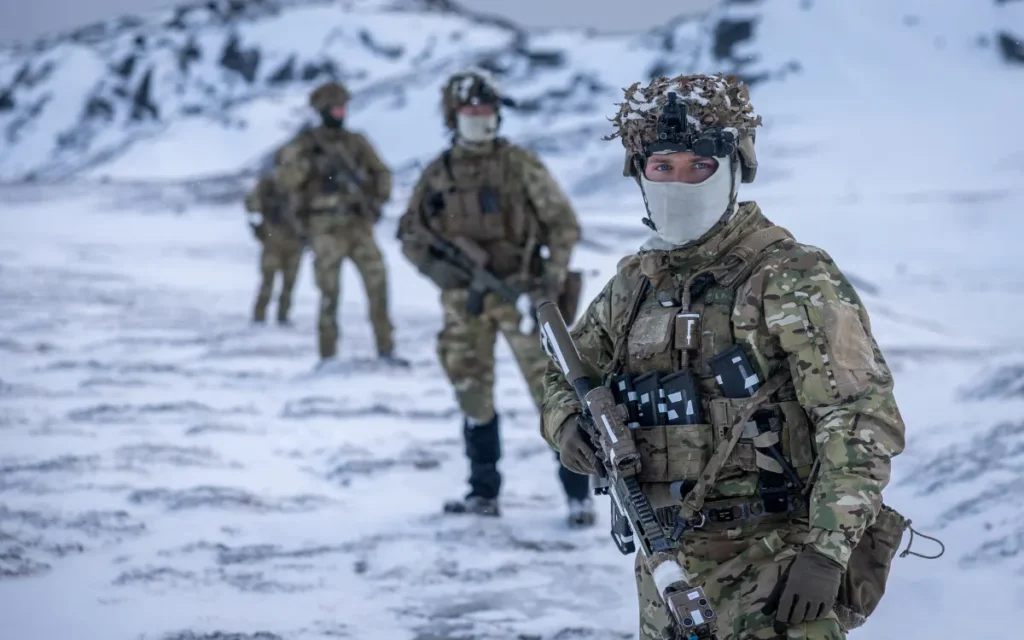
The Russian challenge is primarily physical. Russian vessels and naval assets have reportedly operated near sensitive cable routes, raising concerns about seabed intelligence-gathering and potential interference. NATO has responded by strengthening situational awareness and coordination. It established a Critical Undersea Infrastructure Coordination Cell in February 2023, followed by a Maritime Centre for the Security of Critical Undersea Infrastructure that reached initial capability in May 2024.
Following repeated incidents in the Baltic, NATO launched Baltic Sentry in January 2025, deploying frigates, maritime patrol aircraft, and uncrewed systems while integrating national surveillance capabilities. Under the associated Task Force X-Baltic, allies deployed more than 70 uncrewed air, surface, and subsurface systems in a demonstration in June 2025. The change is important because it moves the response closer to continuous monitoring and early detection rather than investigation after damage has occurred.
China presents a different problem because the potential vulnerability is built into the supply chain itself. HMN Technologies, formerly Huawei Marine Networks, was sold to China’s Hengtong Optic-Electric and renamed in 2020. A 2022 study for the European Parliament found that it had built or repaired almost 100 of the world’s roughly 400 submarine cables. The same study warned that cable owners can insert backdoors or monitor cables and landing stations. Builders, in turn, can compromise infrastructure on the seabed. Europe, therefore, has to consider who builds, maintains, and potentially gains access to the infrastructure.
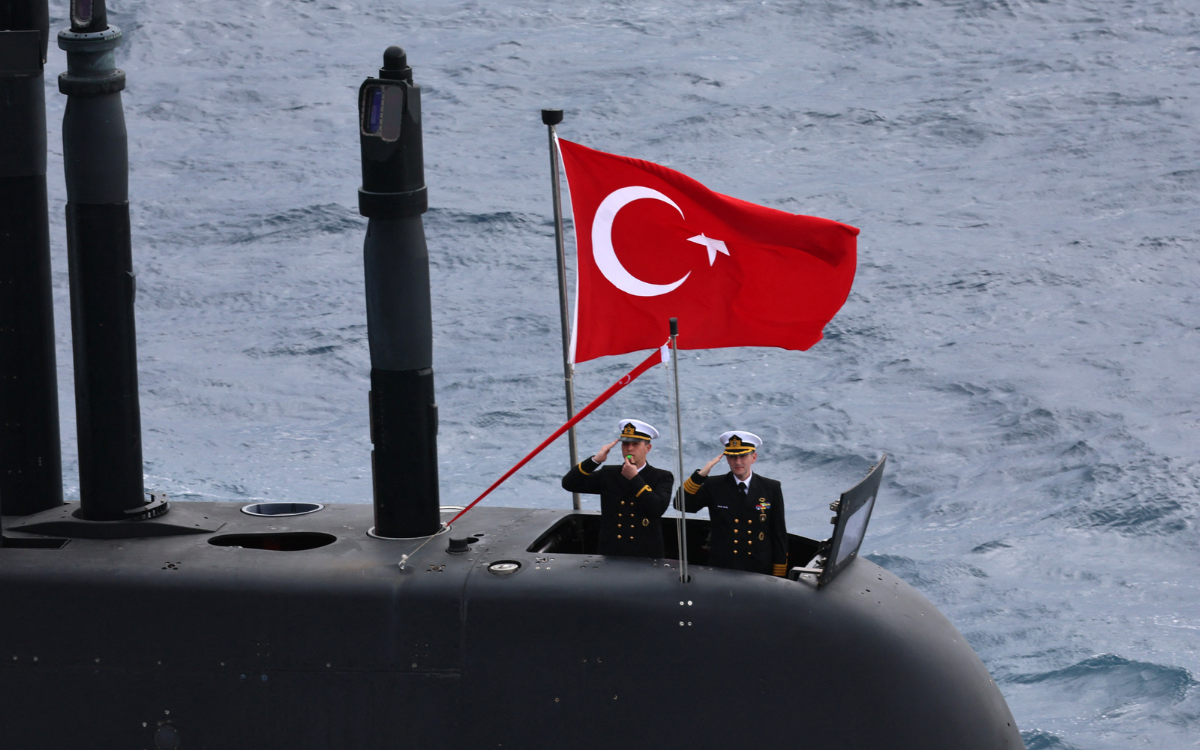
Turkey brings cable security directly into the Mediterranean’s unresolved maritime disputes. In August 2025, Ankara issued a formal maritime warning declaring the seabed part of its continental shelf. The Fugro Gauss, a survey vessel working on the East to Med Data Corridor, withdrew after Turkish naval and air units deployed. On May 13, 2026, a Turkish naval vessel challenged the cable ship Ocean Link near Astypalaia, where it was laying an EU-funded link to the Aegean islands. The Greek frigate Adrias responded by radio that the area lay outside Turkish jurisdiction, and the work continued.
Both incidents show that cable security can become a problem before physical protection even begins. Disputes over maritime jurisdiction can determine where infrastructure can be surveyed, laid, maintained, and protected. Turkey also complicates the regional response, because it is both a NATO ally and a major Mediterranean power. Its maritime claims periodically conflict with the jurisdictional and infrastructure interests of EU member states such as Greece and Cyprus. Europe is consequently dealing not only with the risk of interference, but with disagreements over who has the authority to lay and protect infrastructure in the first place.
Europe’s Cable Security Strategy
None of these risks can be eliminated through prevention alone. Europe must be able not only to protect cables, but also to absorb disruption and restore connectivity when protection fails.
Risks cannot be eliminated through prevention alone. Europe must be able not only to protect cables, but also to absorb disruption and restore connectivity when protection fails.
The EU Action Plan on Cable Security, published in February 2025, puts this approach into practice. Its measures are organized around four priorities: prevent, detect, respond and repair, and deter. They combine stronger monitoring and threat detection with greater redundancy, faster repair capacity, and closer coordination between national authorities and cable operators. A Cable Security Toolbox followed a year later, setting out mitigating measures member states are encouraged to adopt.
Repair capacity becomes critical once disruption occurs, since surveillance can identify damage and redundancy can redirect traffic, but neither can restore a severed cable. Europe currently has limited capacity to do so quickly. A 2022 study for the European Parliament’s security and defense subcommittee counted only three cable-repair vessels permanently stationed in the EU. In June 2026, the Commission opened a €40 million call for containerized repair modules that can be fitted to commercial vessels. The aim is to narrow that gap without waiting years to build ships.
The Regional Cable Hubs address the cross-border dimension of the problem by improving information exchange, threat detection, and coordination between participating states. Cable Projects of European Interest identify strategically important routes where new or upgraded connections can strengthen the resilience and redundancy of the wider network. These measures show how EU policy is moving from protecting individual cables toward maintaining connectivity when disruption occurs. In the Mediterranean, the geography of the network makes Italy central to whether this approach can work.
Italy: Europe’s Digital Center of Gravity
Europe’s digital center of gravity is Italy, and in maritime terms it sits around Sicily. Several international cable routes converge there, placing the island on connections linking Europe with Africa, the Middle East, and Asia. Sparkle’s Sicily Hub in Palermo serves 18 international cables and is connected to the island’s cable landing stations. BlueMed has added further connectivity through Palermo. The new GreenMed system, contracted in February 2026 for service from late 2028, is being developed to strengthen routes across the Central and Eastern Mediterranean.
This concentration creates a practical trade-off. Multiple routes give operators more options to redirect traffic when disruption occurs, but dependence on the same geographic area also concentrates risk. Much as Rotterdam serves as a central node for European maritime logistics, Sicily plays a similar role in digital connectivity. Disruption around the island could consequently affect traffic across routes serving a much wider area.
Italy’s leadership of the Mediterranean Regional Cable Hub reflects this role in the network. Announced in June 2026, the €3.3 million hub is built with Greece, Cyprus, and Malta. It is designed to move information between the four states quickly, flag anomalies, and coordinate responses across borders. For Sicily, the question is whether better monitoring and coordination can offset the risks created by having so much infrastructure concentrated in the same area.
The Mediterranean Regional Cable Hub is designed to move information between the four states quickly, flag anomalies, and coordinate responses across borders.
Grey-Zone Tactics and the Legal Gap
Better monitoring and coordination can reduce the risks created by concentrated infrastructure. They cannot solve another problem. Europe may know that a cable has been damaged long before it can establish who was responsible. Damage can occur in an instant, while attribution may take much longer, creating room for grey-zone activity.
International law provides rules for the protection of submarine cables, but it does not remove the difficulties of establishing responsibility. The United Nations Convention on the Law of the Sea protects the freedom to lay them. Under Article 113, it requires states to criminalize the willful or culpably negligent breaking of high-seas cables by ships flying their flag. Responsibility remains difficult to establish when infrastructure serves several states, the suspect vessel sails under another state’s flag, and ownership is divided among commercial entities.
Establishing likely responsibility does not necessarily resolve the attribution problem. Governments may reach an intelligence assessment before they have evidence they can disclose publicly or use to justify legal or coercive action. Economic and security effects can therefore begin before governments are in a position to respond politically.
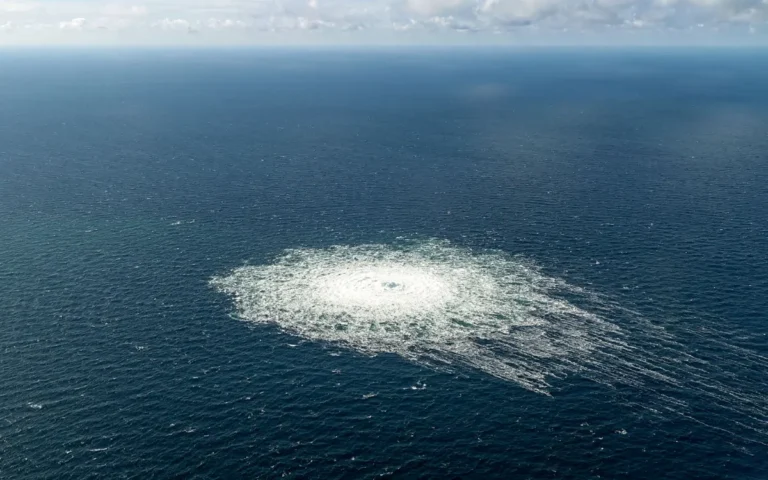
Nord Stream shows how long that process can run, and how political it becomes. In June, nearly four years after the explosions, German prosecutors indicted a group of Ukrainians they say acted on the orders of state authorities in Ukraine in order to deprive Russia of the gas revenue funding its war. Croatia arrested a suspect in August, and Kyiv again denied any official involvement. Poland had outright refused to extradite the suspect, with Prime Minister Donald Tusk saying that those who built the pipelines—not those who disabled them—should be ashamed.
Resilience allows Europe to respond without waiting for that process to be completed. Information sharing, redundancy, traffic rerouting, and rapid repair can contain disruption while attribution continues. Europe still needs to identify and impose costs on those responsible, but it does not need to wait for attribution before limiting the damage.
Tools of Resilience
Limiting the effects of disruption requires different actors to work together. Most submarine cables are commercially owned, giving private operators control over much of the infrastructure, technical expertise, operational data, and repair capacity. The EU provides regulatory, financial, and infrastructure-policy tools, while NATO contributes military surveillance, intelligence-sharing, maritime capabilities, and deterrence.
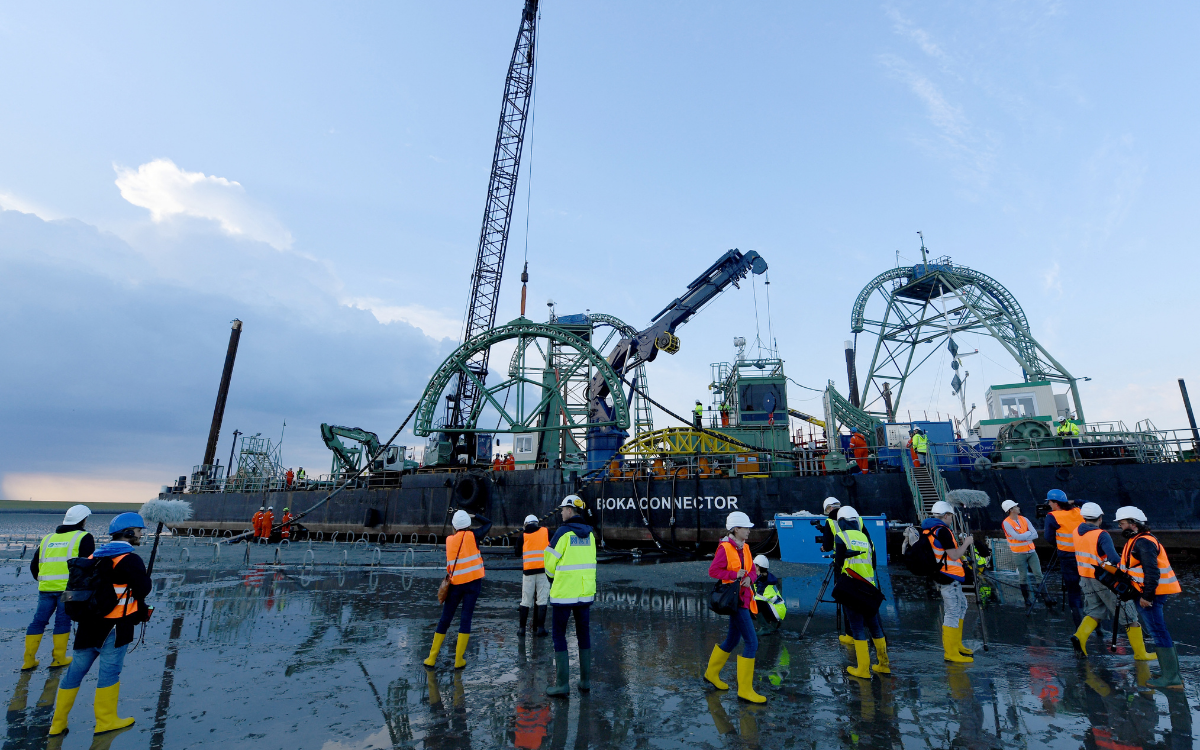
These capabilities become useful at different stages of an incident. Operators play a central role in detecting connectivity losses and redirecting traffic. Governments and security authorities need to assess the wider threat, share information across borders, and coordinate the response. Specialist repair vessels are then needed to restore the damaged infrastructure. Seabed monitoring, autonomous underwater systems, and artificial intelligence can support detection and surveillance throughout this process.
The Mediterranean makes this coordination particularly difficult. Its cable network crosses multiple jurisdictions and comprises commercially owned infrastructure in a region that includes EU and NATO members, non-EU states, and unresolved maritime disputes. The main question is whether these actors can move from detecting an incident to rerouting traffic, assessing the threat, and beginning repairs quickly enough to contain its effects.
If the Cables Go Dark
A simultaneous disruption across several important Mediterranean routes would show how well Europe’s resilience measures work in practice. The effects could extend beyond telecommunications to financial transactions, cloud services, government communications, commercial activity, and elements of crisis response.
Redundancy could absorb part of the shock by redirecting traffic through alternative routes, but simultaneous failures around shared chokepoints would test its limits. The first hours would show whether operators could reroute enough traffic, governments could establish a shared picture of the disruption, and specialist repair vessels could respond quickly enough.
Political decisions could prove just as important as technical capacity. Authorities might need to coordinate a response before responsibility or intent could be established with confidence. An adversary would not need to keep Europe disconnected for weeks. Even a shorter disruption could have strategic value if it generated economic uncertainty, impaired government coordination, or exposed weaknesses in critical infrastructure.
Even a shorter disruption could have strategic value if it generated economic uncertainty, impaired government coordination, or exposed weaknesses in critical infrastructure.
A rapidly contained disruption changes the calculation. If traffic is rerouted and damaged infrastructure repaired before wider effects emerge, the strategic return falls sharply. Europe, therefore, does not have to make its cables impossible to attack. It has to make attacking them insufficiently rewarding.
Europe’s Test on the Invisible Front
Europe’s ability to contain disruption in the Mediterranean has implications well beyond cable security. The region brings together many of the capabilities needed to respond. EU member states control key coastlines and landing points, NATO maintains substantial maritime capabilities, private operators provide technical expertise, and new routes increase redundancy. At the same time, cable chokepoints, multiple jurisdictions, commercial ownership, maritime disputes, and difficulties with attribution complicate the response.
If Europe cannot make resilience work in a largely semi-enclosed sea where it already has a substantial presence, protecting infrastructure elsewhere will be harder still. The Mediterranean therefore provides an important test. The question is whether Europe can bring governments, EU institutions, NATO, and private operators together quickly enough to protect the infrastructure on which its wider security ambitions depend.
Invulnerability is not a realistic objective because no combination of ships, sensors, repair vessels, institutions, or legal rules can protect every cable at all times. The aim is to reduce what an adversary can gain from disruption by detecting damage earlier, absorbing more of its effects, and restoring connectivity faster. Success would make resilience a credible instrument of deterrence by denial. Failure would expose a wider problem: Europe’s security ambitions may be advancing faster than its ability to protect the infrastructure on which they depend.
Failure to build resilience would expose a wider problem: Europe’s security ambitions may be advancing faster than its ability to protect the infrastructure on which they depend.