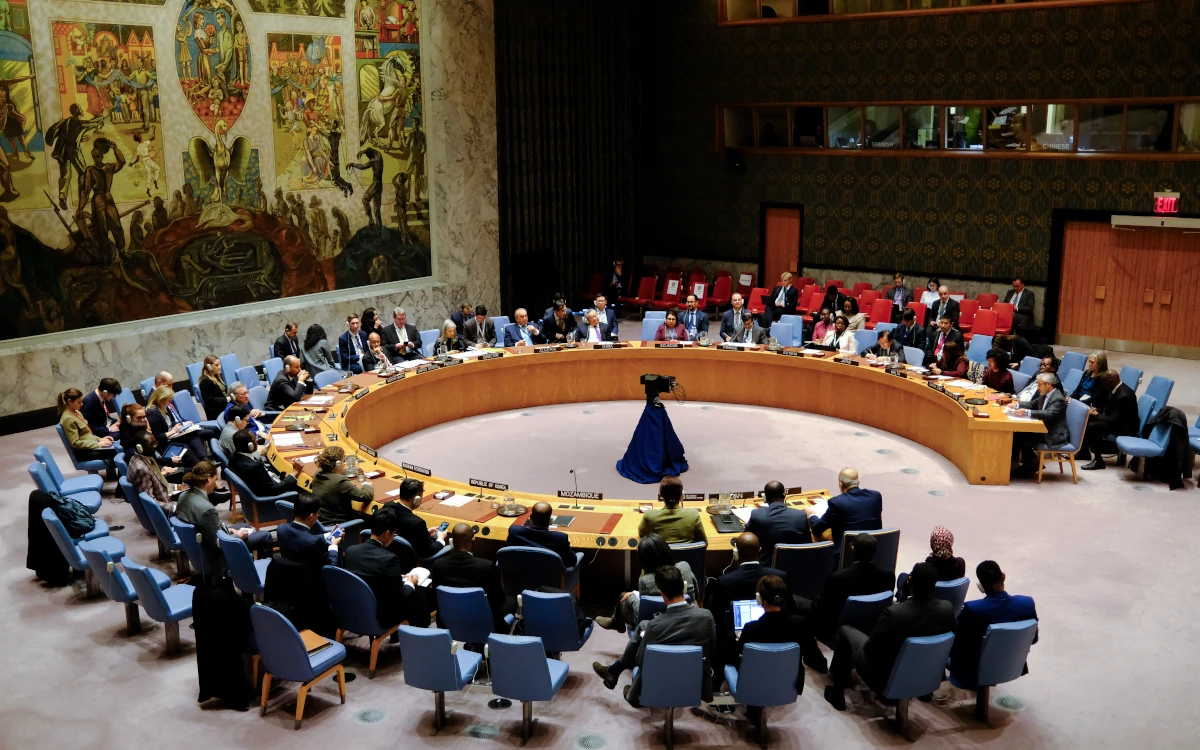
The forthcoming report of the United Nations Security Council’s Group of Experts on Sudan will be one of the most closely scrutinized assessments of the conflict since Sudan’s civil war began in April 2023. Its findings influence sanctions policy, shape diplomatic discussions, inform humanitarian planning, and contribute to the record on which future accountability efforts may depend. Governments, international organizations, researchers, and the media routinely rely on such reports when assessing complex and rapidly evolving conflicts where information is scarce.
For that reason, the report should be judged not only by the conclusions it reaches, but by whether those conclusions can be shown to arise from a transparent, consistent, and professionally applied investigative methodology. It is not only the conclusions themselves that matter, but the process by which they are reached.
The forthcoming Sudan report should be judged not only by the conclusions it reaches, but by whether those conclusions arise from a transparent, consistent, and professionally applied investigative methodology
Although no single UN manual codifies a universal investigative methodology for all Panels of Experts, a broadly consistent framework has emerged through Security Council guidance, the mandates establishing individual Panels, and the investigative practice reflected in successive Panel reports. It is against those established standards, not assumptions and subjective expectations based on political interest, that the forthcoming Sudan report should ultimately be assessed.
The Sudan Report in Context
Recent Reuters reporting on portions of the Expert Group’s unpublished draft has described investigators examining alleged external support to the Rapid Support Forces (RSF), including aircraft allegedly used to transport weapons, drones, and foreign fighters, as well as the recruitment of mercenaries. Because the report has not yet been published, its full scope remains unknown. It would therefore be premature to draw conclusions about what it ultimately contains. That uncertainty makes this an appropriate moment to consider not what the report should conclude, but the investigative standards by which its conclusions ought to be assessed.
Those standards matter because the Expert Group has been operating within an environment already saturated with competing claims and extensive public reporting. Over the past two years, a substantial body of public reporting has documented allegations of external military support to multiple parties in Sudan’s conflict. Investigations by The New York Times and Reuters in February 2026, for example, relied on satellite imagery, flight records, interviews, and other open-source evidence to describe alleged external support for the Sudanese Armed Forces (SAF), including the reported deployment of Turkish-made drones operating from Egyptian territory. Other governments, research organizations, and monitoring groups have likewise published analyses describing cross-border supply networks and foreign military assistance involving different actors.
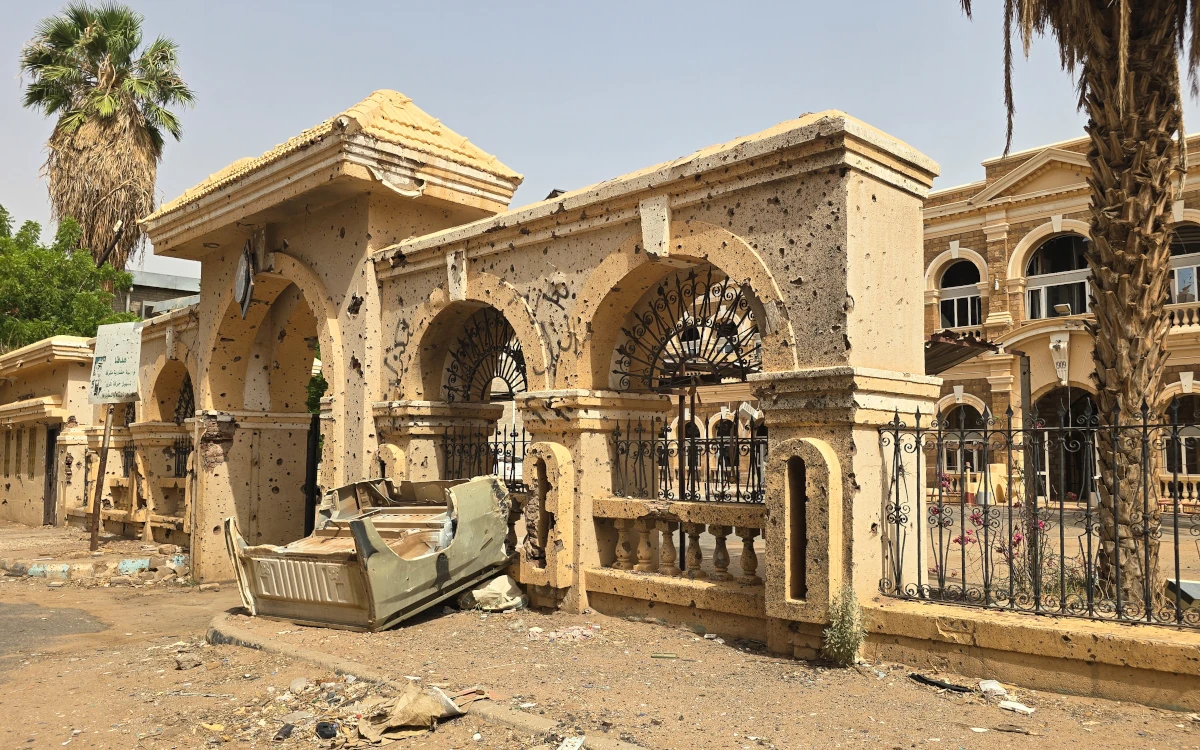
Strikingly, none of the evidence-based findings uncovered by investigations from The New York Times and Reuters appear to be documented in the leaked report of the UN Security Council’s Expert Group on Sudan.
These reports do not establish the facts before the UN Panel of Experts. Nor should they dictate its conclusions. The Panel operates under its own Security Council mandate, applies its own evidentiary standards, and often has access to information unavailable to journalists or independent researchers.
UN guidance and the established practice of successive Panels of Experts reflect a broadly consistent investigative methodology designed to ensure that findings rest on independently assessed and corroborated evidence rather than advocacy, political preference, or untested allegations. Although each Panel operates under a mandate tailored to a particular sanctions regime, the underlying investigative principles reflected in UN guidance and longstanding Panel practice remain broadly consistent.
UN Investigative Methodology
The investigative methodology reflected in UN guidance begins with corroboration. Significant allegations are expected to be tested, wherever possible, against multiple genuinely independent sources rather than resting upon a single witness, document, or narrative. Established UN investigative practice also requires investigators to assess the reliability, credibility, and potential interests of witnesses and information providers. That process must recognize that participants in armed conflicts may have political, military, institutional, or personal incentives that affect the information they provide. Those factors too must be assessed. Documentary, digital, and open-source material should likewise be authenticated and corroborated before being relied upon in reaching findings.
An equally important element of the methodology is analytical discipline. Rather than accepting one account because it appears plausible or is widely repeated, UN Panels of Experts are expected to test competing explanations against the available evidence. Apparent corroboration may be illusory where multiple accounts ultimately derive from the same underlying source through circular sourcing. The methodology further requires investigators to distinguish carefully between verified facts established by the available evidence, reasonable inferences drawn from that evidence, hearsay, allegations that remain under examination, and claims that cannot be independently substantiated. Such distinctions enable readers to understand not only what the Panel believes may have occurred, but what it concludes can be established on the available evidence.
Apparent corroboration may be illusory where multiple accounts ultimately derive from the same underlying source through circular sourcing
UN investigative methodology also emphasizes procedural fairness. Established Panel practice provides, wherever appropriate, meaningful opportunities for concerned states and other implicated parties to respond to significant allegations before findings are finalized. Such responses do not determine the outcome of an investigation, but they may provide additional evidence, identify factual inaccuracies, or expose weaknesses in information already obtained. Similarly, fairness mechanisms should be explained. Investigators should provide clear and transparent illustrations of the evidentiary threshold that is applied, together with the principal limitations affecting an investigation—including restrictions on access, unavailable witnesses, security conditions, or limitations in the available evidence. This allows readers to understand both the strengths and the limitations of the Panel’s conclusions.
Why UN Standards Matter
These investigative standards exist for a reason. As reflected in UN guidance and longstanding Panel practice, they are intended to minimize confirmation bias, prevent circular sourcing, reduce the risk of selective investigation, and ensure that identical evidentiary standards are applied regardless of the identity of those under examination. They also help ensure that repeated allegations are not mistaken for independently corroborated evidence and that findings are reached through disciplined analysis rather than the cumulative weight of unverified claims. Applying the same methodology consistently to every party protects both the integrity of the investigation and the credibility of its conclusions.
Different allegations may properly lead to different conclusions because the available evidence differs in quality, quantity, or reliability. Investigations conducted in active conflict zones rarely benefit from complete information. Investigators often confront inaccessible territory, inconsistent witness testimony, incomplete documentary records, security constraints, and the inability to publicly reference classified intelligence that may inform their assessments. The absence of a definitive finding therefore does not necessarily mean that alleged conduct did not occur. It may instead reflect the Panel’s assessment that the available evidence did not satisfy the evidentiary threshold necessary to support an independent finding. Explaining how those judgments were reached strengthens rather than weakens confidence in the Panel’s work.
Different allegations may properly lead to different conclusions because the available evidence differs in quality, quantity, or reliability
The authority of any sanctions-monitoring mechanism depends not only on the accuracy of its findings but also on confidence that this investigative methodology has been applied consistently to every allegation, irrespective of who may ultimately be implicated. Consistency does not require every allegation to produce the same conclusion. Rather, it requires every allegation to be examined according to the same standards of corroboration, the same assessment of witness reliability, the same authentication of documentary, digital, and open-source evidence, the same consideration of competing explanations, and the same evidentiary threshold. Only through the consistent application of these investigative standards can confidence be maintained that conclusions reflect the evidence rather than the interests of concerned parties.

Credibility and Accountability
These principles are particularly important in Sudan, where competing narratives increasingly seek international legitimacy. Belligerents and their external supporters routinely seek to reinforce their own accounts while discrediting those of their opponents. In such an environment, reports that clearly explain not only their findings but also the investigative methodology by which those findings were reached are less vulnerable to accusations of selective treatment or political bias. Transparency therefore serves a practical purpose: it demonstrates that conclusions arise from the consistent application of the investigative standards reflected in UN guidance and Panel practice, rather than from political preference or institutional predisposition.
The Security Council established the Panel of Experts to provide independent, evidence-based assessments—not to validate the claims of any party to the conflict. Its effectiveness therefore ultimately rests not only on rigorous investigation but also on public confidence that all credible allegations falling within its mandate have been examined according to the investigative methodology reflected in UN guidance and longstanding Panel practice. That confidence is central to maintaining the legitimacy of the sanctions process itself.
When the Expert Group’s Sudan report is released, the international community will naturally focus on its substantive findings. It should pay equal attention to the investigative methodology behind those findings. In an era when information has itself become a contested domain of conflict, methodology is no longer merely a technical matter. It is fundamental to the credibility of international accountability. Only by demonstrating that conclusions have been reached through the consistent application of the investigative standards reflected in UN guidance and Expert Group practice can maintain the confidence upon which their authority ultimately depends.
In an era when information has itself become a contested domain of conflict, methodology is no longer merely a technical matter. It is fundamental to the credibility of international accountability