
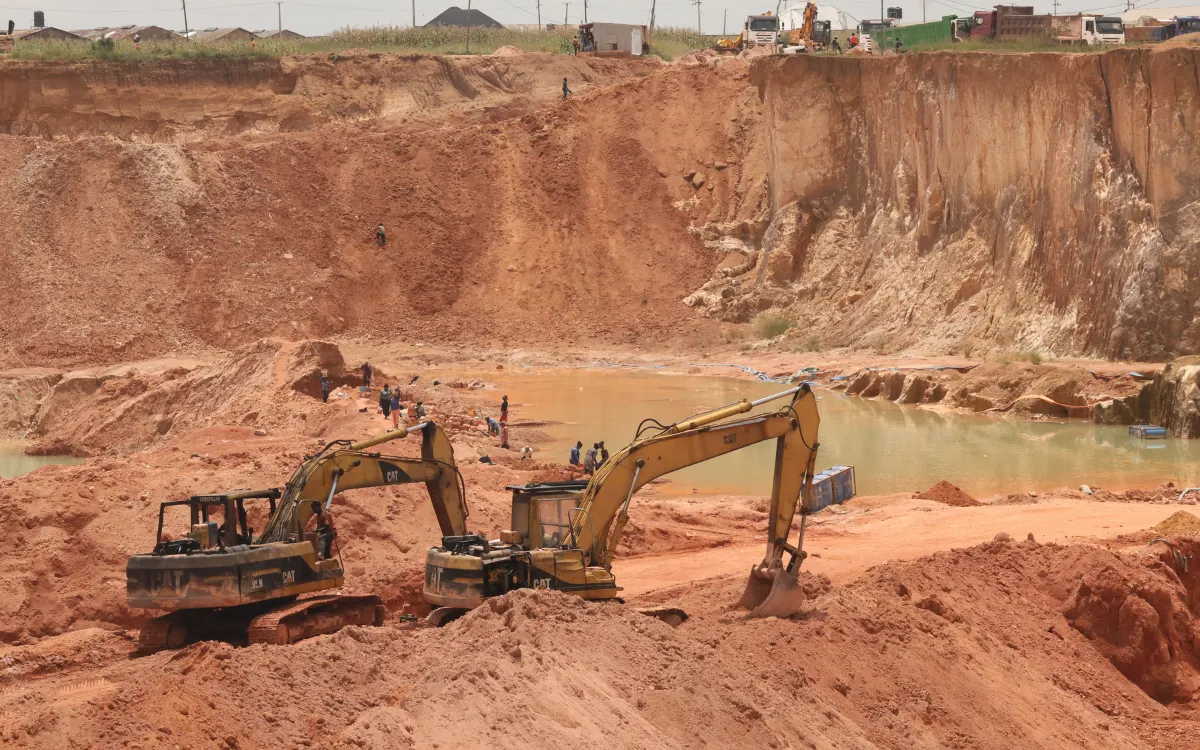
When Beijing restricted rare earth exports in April 2025, automakers outside China were forced to cut production. Washington has since searched for critical minerals far beyond its traditional partners, and in September 2026 that search reached Nigeria. The United States has secured a diplomatic opening into Nigeria’s mineral sector, but access to deposits does not by itself produce secure supply chains. Washington must still finance extraction, build processing capacity, and protect investments in a region where Chinese capital arrived first.
The framework was signed in New York on September 23 by Nigeria’s Solid Minerals Development Minister Dele Alake and U.S. Deputy Secretary of State Christopher Landau. It establishes cooperation in geological exploration, mineral processing, infrastructure, and technical capacity. It seeks to facilitate private-sector investment rather than announce a completed mining transaction.
The frequently cited $700 billion figure represents an official estimate of Nigeria’s mineral resources, not the agreement’s financial value. The government’s announcement disclosed no investment commitment. The estimate itself should not be confused with independently certified, commercially recoverable reserves.
The distinction exposes the agreement’s central strategic challenge. Washington wants alternative sources of critical minerals, while Abuja seeks domestic processing, employment, and industrial development. Their interests overlap, but their commercial priorities and preferred investment structures may not always coincide. The agreement’s importance therefore lies in whether both governments can transform diplomatic cooperation into economically sustainable projects without reproducing the supply-chain vulnerabilities Washington hopes to escape.
The importance of the U.S.–Nigeria minerals agreement lies in whether both governments can transform diplomatic cooperation into economically sustainable projects without reproducing the supply-chain vulnerabilities Washington hopes to escape
The Limits of Mineral Access
China’s strategic advantage extends beyond control of mineral deposits. It rests on processing infrastructure, technical expertise, industrial integration, and established relationships between miners, refiners, and manufacturers.
According to the International Energy Agency’s Global Critical Minerals Outlook 2026, China remains the leading refining country for most major energy-related minerals. Refining concentration increased further over the past two years, despite efforts by competing economies to diversify supplies. The IEA estimates that China’s broader rare earth controls, announced in October 2025 and suspended, could put $6.5 trillion of annual production outside China at risk if fully enforced. The April 2025 episode demonstrated how control over processing and specialized materials can translate into economic influence without ownership of every upstream mine.
Nigeria’s geological potential could help diversify mineral sourcing. However, extracting Nigerian lithium and shipping it to Chinese-controlled processing facilities would do little to resolve America’s underlying dependency.
Chinese capital is already established in Nigeria’s lithium sector. Jiuling Lithium and Canmax Technologies, both Chinese companies, built a $250 million lithium processing plant in Nasarawa State that opened in July 2026. Elsewhere in West Africa, China’s Ganfeng operates Mali’s Goulamina lithium mine, in which it holds a 65 percent stake. Any American-backed processing venture would compete with Chinese plants already operating in Nigeria.
Meaningful diversification requires investments across several stages: reliable geological assessments, commercially viable mines, processing plants, specialized equipment, technical expertise, and dependable buyers. Each introduces financial and operational risks that a diplomatic framework cannot resolve. These difficulties matter because mineral markets do not face uniform shortages. The IEA’s 2025 assessment documented a fall of more than 80 percent in lithium prices since 2023, after a wave of new supply. The agency’s 2026 outlook recorded a rebound in critical mineral prices during 2025 and early 2026. Such volatility complicates investment decisions for expensive facilities with long development periods.

American investors consequently face a commercial dilemma. Projects that serve Washington’s supply-security objectives may not deliver attractive returns without government financing, guarantees, or long-term purchasing commitments. The U.S. International Development Finance Corporation’s expanding African critical minerals portfolio, now above $3 billion, illustrates one possible response. However, its broader investment ambitions do not establish that specific Nigerian projects have secured financing. The critical test will be whether Washington can support projects that private investors might otherwise consider too risky, without creating permanent dependence on public subsidies.
The critical test will be whether Washington can support projects that private investors might otherwise consider too risky, without creating permanent dependence on public subsidies
Nigeria’s Negotiating Position
Nigeria enters these negotiations with interests extending beyond the supply requirements of American manufacturers. Its principal objective is to capture greater economic value from mineral development through processing, industrial employment, and technical capacity.
Alake emphasized this ambition at the signing ceremony, declaring that Nigeria did not intend to remain merely a source of raw materials for value created elsewhere. His official statement identified local processing and opportunities for Nigerian businesses as central objectives.
This position gives Abuja a basis for negotiating investment conditions. The government already holds one formal lever: in July 2024, President Bola Tinubu directed that new mining licenses be issued only when tied to local value addition. Nigeria could seek commitments involving processing facilities, workforce training, geological information sharing, infrastructure development, and participation by domestic enterprises.
However, bargaining power depends on credible alternatives. Mineral deposits alone do not guarantee that international investors will accept costly localization requirements, particularly where infrastructure and operating risks remain substantial.
Mineral deposits alone do not guarantee that international investors will accept costly localization requirements, particularly where infrastructure and operating risks remain substantial
One option for Abuja is to distinguish between minerals suitable for immediate commercial extraction and those requiring longer-term processing investments. Phased industrial commitments could align domestic development ambitions with realistic project economics.
Nigeria can maintain commercial relationships with Chinese investors while seeking American capital and technology. Such arrangements need not constitute exclusive geopolitical alignment. Nevertheless, diversified partnerships do not automatically produce diversified supply chains. Ownership structures, processing destinations, technology licensing, and purchasing agreements determine which actors exercise commercial influence.
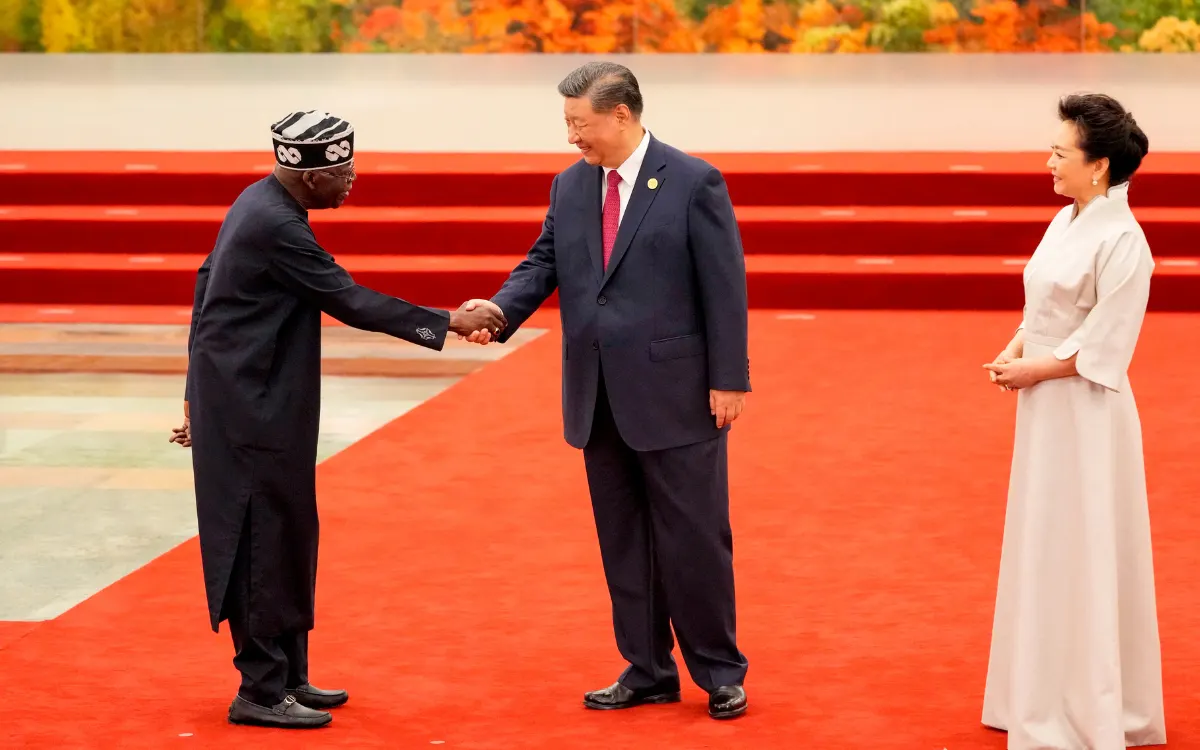
The recent U.S.–Zambia minerals negotiations illustrate another dimension of African bargaining power. Lusaka separated critical minerals talks from a $1.5 billion health financing agreement, which it signed in October 2026 while the minerals deal remained under negotiation. The move showed the importance governments attach to negotiating distinct national interests on their own terms.
For Nigeria, the central opportunity therefore lies in converting competing external interest into enforceable commercial arrangements that strengthen domestic industrial capabilities while preserving investment competitiveness.
For Nigeria, the central opportunity therefore lies in converting competing external interest into enforceable commercial arrangements that strengthen domestic industrial capabilities while preserving investment competitiveness
Security as an Investment Constraint
Security presents a potentially greater obstacle than geological uncertainty. Nigeria’s mining regions face overlapping challenges involving illegal extraction, criminal violence, disputed access, and weak enforcement.
In February 2026, the Federal Ministry of Solid Minerals Development reported that a civil defense officer had been killed during a patrol against suspected mineral smugglers in Niger State. The incident demonstrated the risks facing authorities attempting to regulate extraction.
The government’s response includes specialized mining marshals drawn from the Nigeria Security and Civil Defence Corps. Officials reported recovering mining sites and arresting suspected illegal operators, although enforcement successes do not necessarily establish lasting territorial security. In September, 37 suspected illegal miners died in the custody of the same corps in Minna, the Niger State capital. The deaths triggered protests and allegations of mistreatment, and both the corps and the state police opened investigations.
For foreign investors, insecurity increases operating costs through additional protection, insurance, transport arrangements, and potential production interruptions. It can also complicate access to financing where lenders demand credible environmental, social, and security safeguards.
Private surveillance technologies and commercial security contractors may help protect individual facilities. However, such arrangements cannot substitute for functioning public institutions, legitimate mining rights, and stable relationships with surrounding communities.
The mineral framework does not itself establish an expanded American military presence. U.S. military trainers deployed to Nigeria in February 2026 in a non-combat role, at Abuja’s request and outside the minerals agreement. Commercial security expenditure, Nigerian government enforcement, and direct U.S. security deployments are distinct arrangements requiring separate evidence and authorization.
The deeper danger is that isolated, heavily protected mining operations could remain commercially functional without improving wider regional stability. Such an outcome would limit Nigeria’s industrial benefits while exposing American investments to persistent political and reputational risks.
The deeper danger is that isolated, heavily protected mining operations could remain commercially functional without improving wider regional stability
From Agreement to Strategic Influence
The agreement’s eventual significance will depend on developments that remain unresolved: identifiable projects, committed financing, processing locations, security arrangements, and binding commercial contracts. For Washington, success would mean obtaining reliable mineral supplies through processing networks less vulnerable to Chinese restrictions. For Abuja, success would require demonstrable gains in domestic industrial capacity rather than merely increased mineral exports.
These objectives are compatible but not identical. Their reconciliation will determine whether the partnership creates lasting strategic value or remains another diplomatic framework awaiting commercial implementation. The estimated value of Nigeria’s mineral deposits will matter less than whether investors can establish secure, competitive, and technologically capable operations that both countries have economic incentives to sustain.
Until those conditions emerge, the agreement represents an opportunity to diversify strategic relationships, not proof that American dependence on Chinese mineral supply chains has meaningfully diminished.