
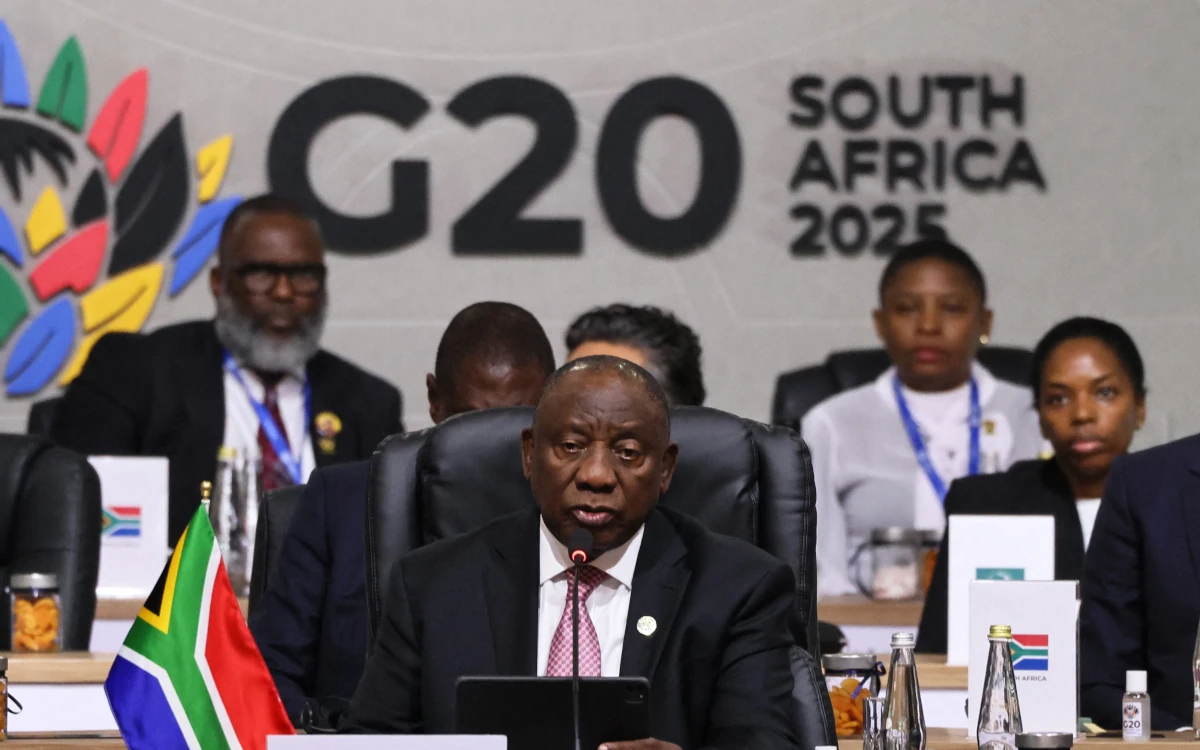
South Africa has spent decades building its standing as a global power. It is a member of BRICS and the G20, and it has long campaigned for a permanent seat on the UN Security Council. Anti-migrant violence at home now threatens the very foundation of those ambitions.
The unrest exposes a growing contradiction between domestic politics and continental ambition. Each of those goals depends on the support of other governments on the continent, and that support rests on legitimacy rather than economic weight. When mobs attack foreign nationals, they damage the very asset that gives Pretoria influence abroad.
That backing shapes South Africa’s positions in multilateral forums and its claim to speak for the developing world. Ghana has already postponed high-level meetings and repatriated hundreds of its citizens, while Nigeria has warned that attacks on its nationals could damage relations.
The stakes extend well beyond any single dispute. Pretoria leads by presenting itself as a defender of African interests and a model of rights-based governance. Popular hostility toward other Africans undercuts that claim and converts a domestic failure into a diplomatic liability. As long as the contradiction persists, each new outbreak will erode the trust that underwrites South Africa’s standing, both on the continent and across the Global South.
Popular hostility toward other Africans undercuts Pretoria’s claim to speak for the developing world and converts a domestic failure into a diplomatic liability
Structural Drivers of Xenophobia
Anti-migrant movements draw strength from real economic hardship. South Africa’s official unemployment rate rose to 32.7 percent in the first quarter of 2026. Among people aged between 15 and 34, 4.7 million were unemployed and another 10.6 million were outside the labor force, according to Statistics South Africa.
The longer-term picture is equally difficult. The World Bank says economic growth remains too weak to produce a substantial improvement in employment and poverty, while income per person remains below its 2007 level. Nearly 60 percent of South Africans are estimated to live below the upper-middle-income poverty line.
These conditions make claims that foreigners are taking jobs, committing crime or overburdening public services politically effective. Migrants are visible in informal retail, domestic work, farming, construction and transport, often in communities where unemployment, poor housing, and unreliable public services are concentrated. Blaming them offers a simple explanation for failures that are otherwise difficult to reduce to a single cause.
Yet the available evidence does not support the idea that immigration is the primary driver of South Africa’s unemployment crisis. A World Bank study found that immigrants had a positive effect on employment and wages among South Africans between 1996 and 2011, largely because foreign-born workers often established businesses. An OECD–International Labour Organization assessment estimated immigrants’ contributions to be about nine percent of South Africa’s gross domestic product.
South Africa’s labor-market problems instead reflect slow growth, weak labor demand, spatial exclusion, inadequate education, infrastructure constraints, and uneven municipal performance. The political appeal of xenophobia lies precisely in its ability to redirect anger away from these structural problems. Removing a Malawian laborer or closing a Somali-owned shop produces a visible action, even if it does not repair schools, create industrial employment, or improve municipal services.
The political appeal of xenophobia lies precisely in its ability to redirect anger away from these structural problems
This helps explain why anti-migrant mobilization persists despite repeated government condemnations. Xenophobia does not arise automatically from poverty, but economic insecurity creates an audience for political actors willing to blame foreign nationals for wider social decline. When migration enforcement is weak, inequalities are high, and public confidence in government is low, vigilante groups can also present themselves as performing duties that the state has neglected.
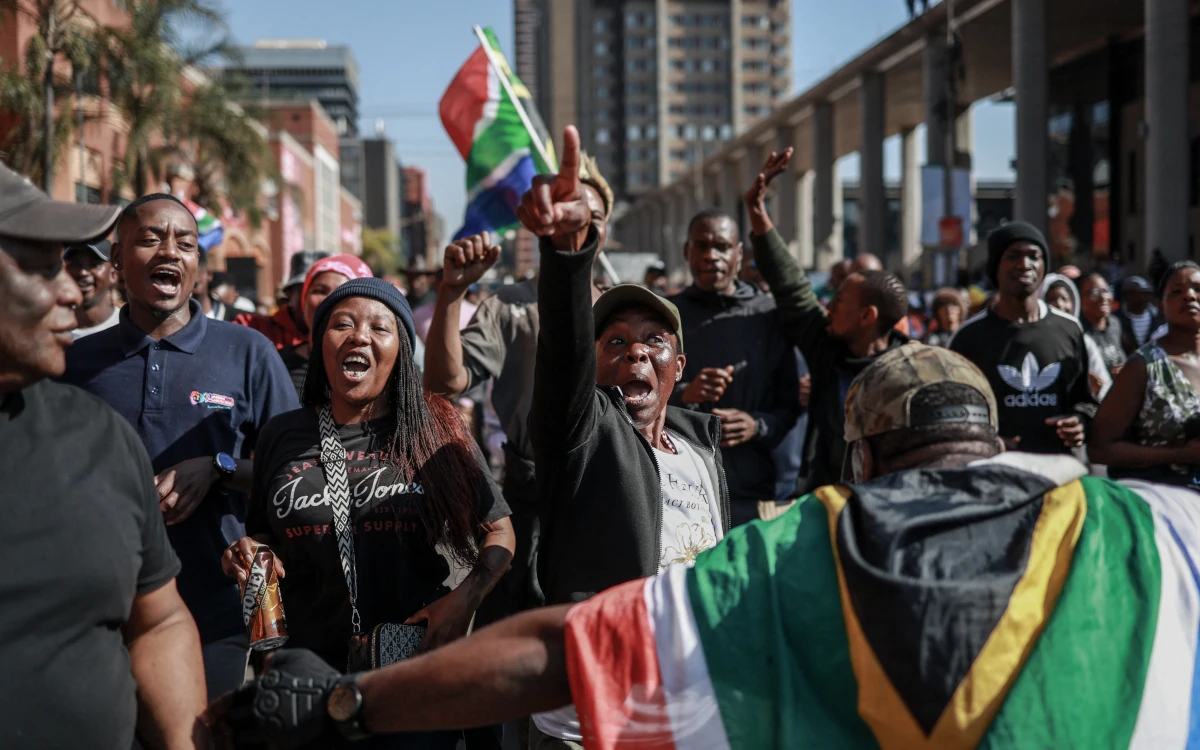
The recent protests show this shift from spontaneous violence toward organized enforcement. Anti-migrant activists have held coordinated marches, issued deadlines for undocumented foreigners to leave, and conducted unauthorized checks on suspected migrants. In Johannesburg, protesters went from house to house and removed people they believed were in the country illegally.
This creates a state-capacity problem as much as a human-rights crisis. Immigration enforcement depends on legal processes for determining nationality, documentation, and residency status. When private groups assume that authority, legal distinctions between refugees, documented migrants, undocumented migrants, and South African citizens become secondary to public suspicion. Because South Africa presents itself abroad as a model of rights-based governance, hostility at home carries a strategic cost that purely domestic tensions would not.
Migration Enforcement Without Xenophobia
President Cyril Ramaphosa has attempted to separate legitimate migration enforcement from anti-foreigner mobilization. In an address on June 7, 2026, he defended the right to regulate migration but said private citizens could not stop people in the streets to demand proof of nationality. He later acknowledged that unemployment, poverty, crime, and public-service pressures were driving concern about migration, while denying that illegal immigration caused the country’s economic difficulties.
This distinction is necessary but difficult to maintain politically. A government that appears indifferent to irregular migration risks strengthening movements that promise more aggressive action. Yet a crackdown presented without care may reinforce the broader assumption that African migrants, rather than weak administration, are responsible for insecurity and economic decline.
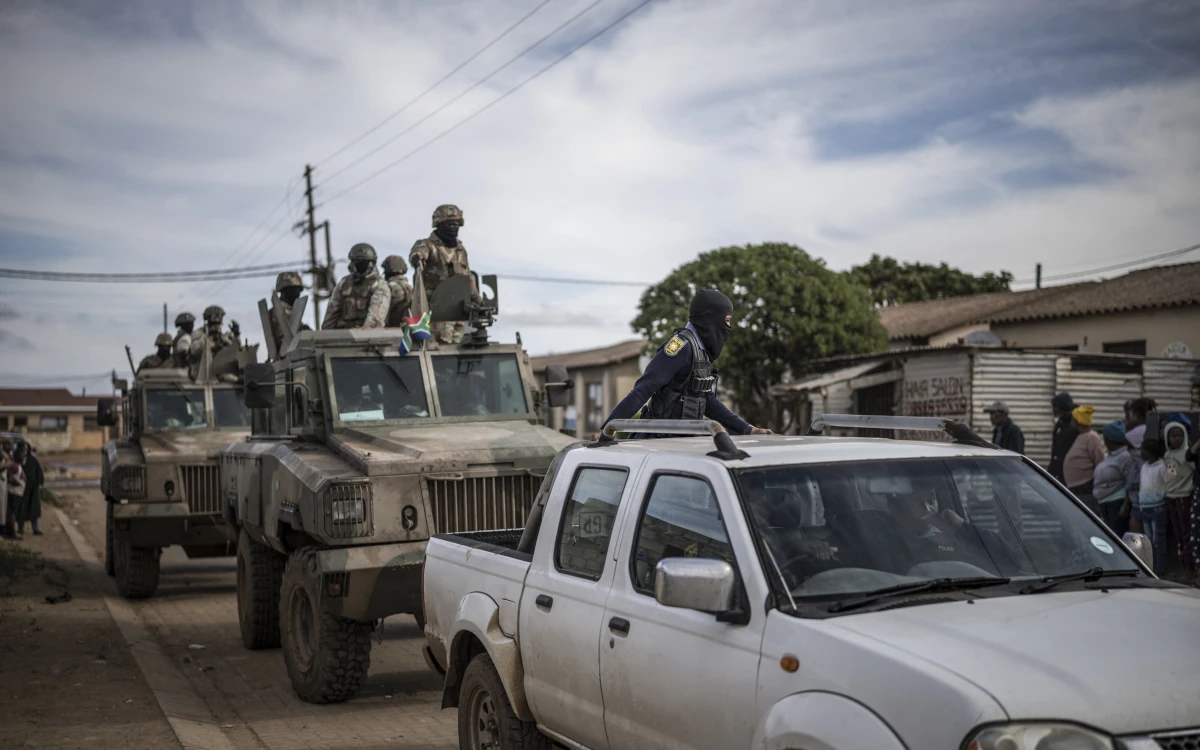
The state has increased deportations and border enforcement. By mid-July, more than 53,000 migrants had reportedly been deported or repatriated during a government-led campaign, with Malawians accounting for most of those returned. Some left voluntarily amid threats and uncertainty, while others were removed for lacking valid documentation.
Enforcement may reduce the number of undocumented migrants, but it cannot by itself address xenophobia. The targets of street-level hostility are not selected through formal immigration procedures. Legal migrants, refugees, asylum seekers, and even South Africans believed to be foreign can be caught in the same mobilization.
The government must therefore perform two tasks at once: restore confidence in immigration administration and prevent political movements from turning nationality into a license for private coercion. Failure on the first strengthens the claim that citizens must enforce the law themselves. Failure on the second normalizes collective punishment and weakens the authority of the state.
The government must therefore perform two tasks at once: restore confidence in immigration administration and prevent political movements from turning nationality into a license for private coercion
The African Commission on Human and Peoples’ Rights warned in April that intimidation and vigilante activity were targeting nationals of other African countries. Similar warnings were issued after earlier waves of violence, including the killing of Zimbabwean national Elvis Nyathi in 2022. The recurrence of the same pattern makes it harder for the government to describe each outbreak as an isolated breakdown. How Pretoria handles this dilemma is read across the continent as a measure of how South Africa treats other Africans, which gives a domestic choice direct diplomatic weight.
Domestic Unrest and Diplomatic Friction
Xenophobia begins to constrain South Africa’s leadership when it imposes political costs on other African governments. Leaders in Accra, Abuja, Maputo, or Lilongwe may value strong relations with Pretoria, but they must also respond when their citizens report being attacked, displaced, or forced to abandon businesses.
Ghana’s decision to postpone high-level bilateral meetings demonstrates this mechanism clearly. The meetings were intended to advance cooperation between two of Africa’s more influential economies. Instead, anti-migrant violence became the dominant issue, making a presidential-level engagement politically difficult for Accra.
Nigeria’s response produced a similar problem, although the circumstances surrounding reported Nigerian deaths required caution. Nigerian officials linked the deaths of two citizens to the hostile climate in South Africa and warned that further incidents could affect relations. South African police disputed the claim that one death was related to anti-migrant violence and said the man died during a police operation that remained under investigation.
The dispute illustrates how quickly trust deteriorates during a xenophobic crisis. Even where facts remain contested, previous attacks shape how governments interpret new incidents. South African explanations are assessed against a history of recurring violence, while foreign governments face public pressure to treat each death or disappearance as part of a wider pattern.
This reduces Pretoria’s diplomatic flexibility. South Africa regularly seeks African support to reform the United Nations Security Council, climate finance, global financial governance, and the representation of developing economies. It also uses its positions in the G20 and BRICS to present itself as an advocate of wider African interests.
Such coalition-building does not require every African government to approve of South Africa’s domestic policies. It does, however, require a minimum level of confidence that Pretoria understands the interests and sensitivities of its partners. Repeated attacks on their citizens weaken that confidence and give critics a direct argument against aligning with South African initiatives.
The damage is cumulative. A disagreement with one country can be contained through bilateral diplomacy. Similar grievances among Nigeria, Ghana, Zimbabwe, Malawi, Mozambique, Ethiopia, and Somalia can form a broader perception that South Africa benefits from continental cooperation while failing to protect Africans at home.
This does not eliminate South Africa’s influence. But it does increase the effort required to secure cooperation, as Pretoria must spend political capital repairing relationships that domestic unrest has damaged.
Xenophobia does not eliminate South Africa’s influence. But it does increase the effort required to secure cooperation, as Pretoria must spend political capital repairing relationships that domestic unrest has damaged
Commercial Power as a Strategic Vulnerability
South Africa’s continental position is also sustained by its companies. Its telecommunications firms, retailers, banks, mining interests, and media businesses have built recognizable brands across African markets. That commercial reach creates influence, but it also gives other societies visible targets during periods of diplomatic tension. Earlier xenophobic attacks produced demonstrations and calls for retaliation against South African companies, particularly in Nigeria. The targeted companies became proxies for anger directed at South Africa as a whole.
The same risk remains. A local attack on a migrant-owned shop can trigger boycotts or protests against a South African brand thousands of kilometers away. Governments under domestic pressure may also face demands for investigations, tighter regulation, or limits on South African commercial activity.
The domestic economy may also bear direct costs. Media reported that migrants fill important roles across construction, retail, and transport. Removing them does not automatically transfer jobs to unemployed South Africans. Instead, large-scale departures can disrupt production, reduce remittance flows to neighboring countries, and strain regional labor markets. Commercial exposure compounds the reputational problem because firms lose the goodwill that protects them abroad if the government’s standing erodes at home.
The Trade Credibility Gap
The strongest test of South Africa’s continental role may be the African Continental Free Trade Area (AfCFTA). Pretoria supports the AfCFTA because a larger, common African market offers opportunities for its manufacturers, financial institutions, and service companies. The agreement is one of the flagship projects of the African Union’s Agenda 2063.
Continental trade cannot, however, be separated entirely from the movement of people. The AfCFTA’s founding agreement itself situates the continental market within a wider aspiration for the movement of people, goods, services, and capital. The African Union also identifies an African passport and freer movement as central parts of its integration program.
Xenophobic mobilization raises the cost of that movement. A Ghanaian entrepreneur considering South Africa must account not only for regulation and market access but also for personal security. A Nigerian company deciding where to place staff must assess whether political tension could expose them to intimidation.
Africa’s limited progress on free movement already reflects political caution. An AU implementation report found that only four states had ratified the Free Movement Protocol, although 15 ratifications are required for it to enter into force. Governments generally remain more willing to liberalize trade in goods than to accept wider rights of entry, residence, and business establishment.
South Africa’s experience reinforces those fears. It suggests that continental mobility can become a domestic political liability when labor markets are weak and migration systems are poorly managed. Other governments may consequently become more reluctant to support integration measures that could expose them to similar pressures.
The Limits of Mandela’s Legacy
South Africa will retain the outward markers of a leading power. It boasts the continent’s most industrialized economy, a seat in the G20, and a central place in the councils of the Global South. What xenophobia erodes is the legitimacy that gives those assets meaning and the trust that allows South Africa to speak for others. A domestic security problem has become a strategic one.
This is where Nelson Mandela’s legacy becomes a strategic matter. South Africa’s post-apartheid authority rested on the claim that it had overcome division and would champion the dignity of all Africans. Each wave of anti-migrant violence waters down that inheritance, giving rivals and skeptics a ready argument against South African leadership.
The broader lesson concerns how a middle power sustains influence it cannot impose. Economic size and institutional seats can be acquired, but the standing to lead the Global South must be continually earned through conduct. If Pretoria cannot protect the Africans within its borders, its claim to speak for the entire continent—and for the developing world—will steadily lose force.
If Pretoria cannot protect the Africans within its borders, its claim to speak for the entire continent—and for the developing world—will steadily lose force