
When Margaret Thatcher privatized British Aerospace in 1985, the government sold all its shares in the company except one. Numerically, the transaction left the UK holding a single share valued at one British pound in a company considered crucial to the nation’s defense. Practically, this gave the “Iron Lady” what she wanted: control over the aerospace firm’s fate. The share she kept—known as “the golden share”—endowed the government with extraordinary power: a veto over foreign control of the company. British Aerospace would be private, but it would never fall into the wrong hands.
Four decades later, free-market governments on both sides of the Atlantic are using similar tactics to compete with the surging power of state-capitalist economies, mainly China. For years, the free-market model worked well, particularly for America. It could be relied on to allocate the nation’s capital efficiently, in large part because no rival could match the American economy. That world is gone. Now, the United States competes with nations like China that use industrial policy to concentrate national power by design, creating structural disadvantages for market-led competitors.
The United States is one of many places where market dynamics are in flux. A country that once criticized China as a clumsy bureaucracy compared to its efficient financial markets is now singing from a different hymnal. The new China rivalry requires Western governments to adapt to a strategic environment in which instruments such as the golden share are increasingly viewed as indispensable tools of modern statecraft. As China narrows the economic gap with the United States, great-power competition is redefining the relationship between markets and national power, eroding the post-Cold War free-market orthodoxy along the way.
As China narrows the economic gap with the United States, great-power competition is redefining the relationship between markets and national power, eroding the post-Cold War free-market orthodoxy along the way
The Rise of American State Capitalism
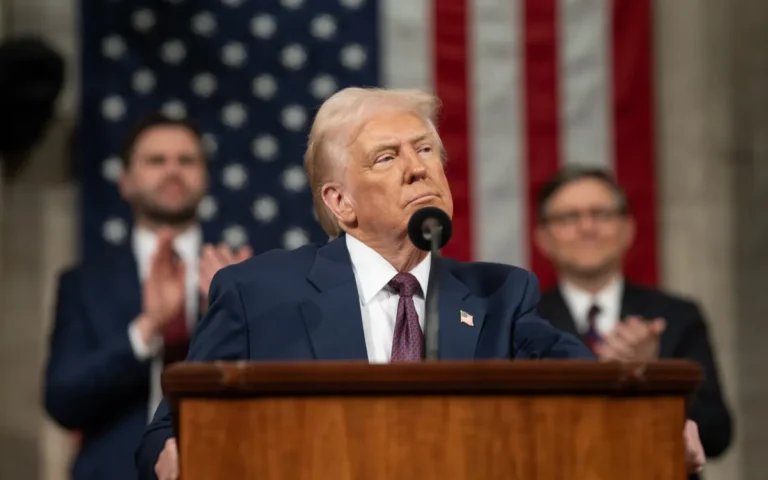
The Council on Foreign Relations (CFR) reports that the Trump administration has taken equity stakes in roughly 30 private deals since January 2025. It has committed $26.7 billion to companies it considers strategic, including those in critical minerals, energy, semiconductors, and infrastructure.
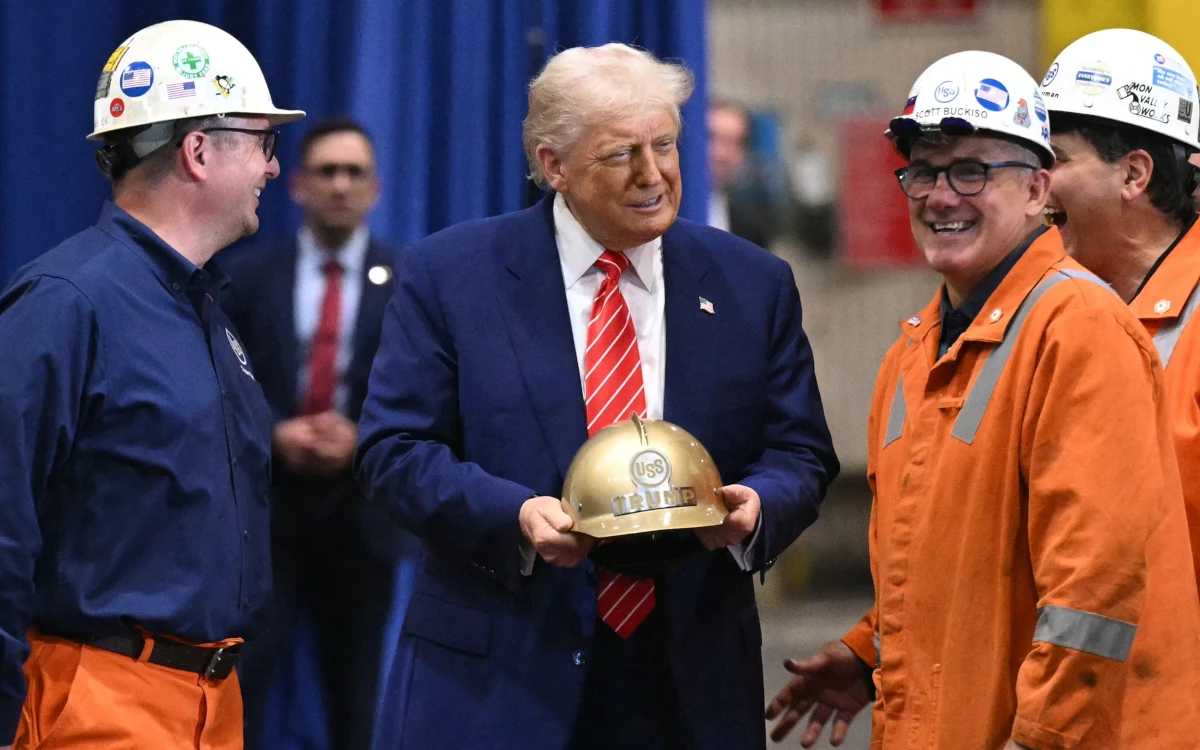
At one iconic American company, U.S. Steel, the government put up no money but received a single share of Class G preferred stock—”G” for gold—in exchange for approving the company’s sale to Japan’s Nippon Steel. An SEC filing revealed that the G share carries veto power over fundamental decisions, including moving the company’s headquarters, shifting production overseas, changing its name, closing plants through 2035, and cutting employee base salaries through 2030. At Intel, the chip maker in which the government acquired a 10 percent stake, the deal included a deterrent warrant exercisable at a bargain price if the company ever sells or spins off control of its manufacturing arm—a strategic objective long favored by Wall Street. In financial market lingo, it’s like a poison pill created by a board of directors to fend off unwanted suitors.
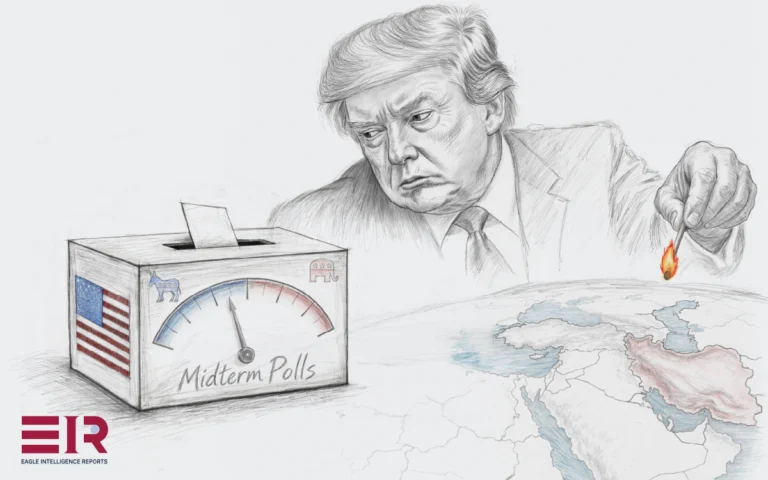
Measured against China’s state-owned industries, the American portfolio, which also includes stakes in MP Materials and Lithium Americas, rare earth and lithium producers, appears modest. Its significance, however, lies in the pace and scale of the acquisitions. Before 2025, the government had not accumulated multiple targeted equity stakes and actively influenced their value since the Great Depression and World War II. After decades of lecturing others about the ills of picking corporate winners and losers, America has joined the sweepstakes, intervening in the private economy in unprecedented ways that differ from past emergency bailouts.
“The President is personally brokering deals to shape where companies and countries allocate capital,” the CFR report says, noting that the U.S. government now wields powerful instruments such as export controls and tariffs to extract concessions from and shape investment decisions at private firms, including giants Apple and Nvidia. The administration, the report concludes, is acting like a hedge fund that intervenes where it sees fit. Taken together, the CFR argues, these actions presage a new chapter for the world’s largest economy: American state capitalism.

Europe Following Washington’s Lead
The United States has plenty of company. Over the same period, the EU adopted an economic security framework that subordinates market efficiency to strategic control in equally unprecedented ways. Under the EU’s Economic Security Strategy, member states are told to treat supplier dependencies and single points of failure in strategic supply chains as national security risks. The EU also overhauled its foreign investment screening rules. In March 2026, the European Commission proposed an Industrial Accelerator Act that would require prior approval for major foreign investments in batteries, electric vehicles, solar technology, and crucial raw materials. Approval would hinge on factors such as European equity participation, technology transfers, and local sourcing. The restrictions apply only to investors from countries representing more than 40 percent of global manufacturing capacity in the relevant sectors. In other words, China. Brussels is also in the final stages of capitalizing a Scaleup Europe Fund to enable direct investments in strategic sectors.
The United States has plenty of company. Over the same period, the EU adopted an economic security framework that subordinates market efficiency to strategic control in equally unprecedented ways
The new EU policies mirror developments within member states confronting similar strategic pressures. Germany nationalized Uniper, its largest gas importer, after Russian supply cuts triggered by the war in Ukraine threatened its survival. France reacquired full ownership of EDF, the country’s electric power company that operates its 56 nuclear reactors. Like Uniper, the French company was hurt by the war in Ukraine. Already partially privatized, with public investors and employees owning about 16 percent of its shares, the company was forced to sell electricity at a loss after an extensive maintenance program temporarily shut down about half its reactors. The government ultimately renationalized EDF by buying back the remaining stock it did not already own.
Italy has steadily expanded its “Golden Power” regime, allowing Rome to veto or attach strings to deals in sectors it considers strategic, including defense and banking. In Britain, the birthplace of the golden share, the government seized operational control of British Steel’s Scunthorpe works after the company’s Chinese owner announced plans to close its two blast furnaces due to losses totaling £700,000 per day. The government is now nationalizing the facility, while Jingye Group, which acquired British Steel in 2020, is negotiating compensation with British authorities. Ironically, Beijing’s Commerce Ministry is now lecturing London about “market principles” and the rules-based international order.
Private Companies Face Systemic Threat
Although the tensions between market-driven economies and state-capitalist systems may appear to be isolated incidents, they are not. The governments involved have different constitutions, political traditions, and relationships with their own industrial bases. Yet they are responding to the same strategic pressures at the same time. When countries with different institutions converge on similar policies, the cause is usually systemic rather than a set of trouble spots in Paris, Berlin, Rome, or London.
The free market consensus in the United States was never timeless. High protective tariffs and federal railroad subsidies were central to 19th-century expansion, and government intervention in the economy expanded dramatically during the Depression and World War II. The free-market consensus emerged only later, under conditions of unrivaled American power. Free-market pieties emerged precisely because the United States could afford to let markets allocate capital, in large part because no plausible rival could match its heft. The collapse of the Soviet Union in 1991 seemed to settle the argument for good. Central planning lost, free markets won, and the victors tossed the debate over state ownership into history’s dustbin.
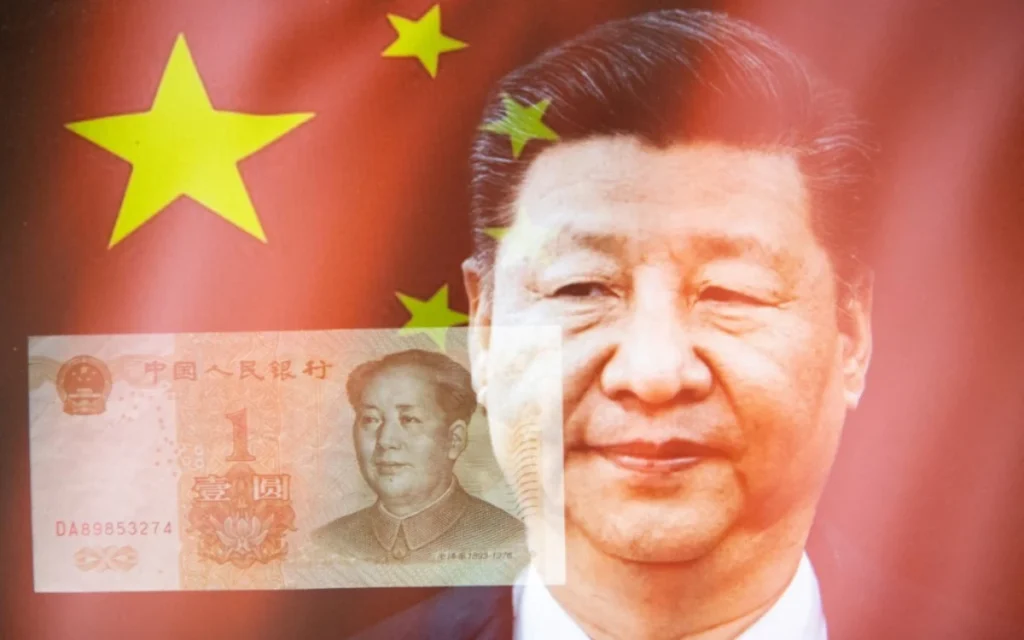
China scooped up the ashes, though. Beginning with Zhu Rongji, the premier from 1998 to 2003, China restructured its economy to concentrate power into fewer and larger state-owned enterprises. Embracing the motto of “grasp the large, release the small,” China shed millions of jobs while consolidating what was left into the giant state champions that prevail today. Zhu built a system that directed credit, created decades-long industrial plans, and merged commercial and military development. The results have transformed the global competitive landscape. A Chinese juggernaut evolved, cornering the market on rare earth minerals. China built the world’s shipyards, its solar supply chain, its battery industry. It now leads the world in sales of electric vehicles, an idea pioneered in America. Today, under increasingly muscular leadership, China has also demonstrated a willingness to weaponize that industrial dominance when it serves its strategic interests.
Today, under increasingly muscular leadership, China has also demonstrated a willingness to weaponize that industrial dominance when it serves its strategic interests
Institutionalizing the New Statecraft
Liberal free marketers soon began asking what happens when markets, left to their own devices, serve up their supply chains to a strategic rival. In no time, they saw trouble on the horizon: tariffs no longer worked, subsidies didn’t buy allegiance, and export controls governed only what left a country, not what remained. That left equity—once an instrument reserved for crises—as a tool that free-market democracies are now embracing.
Not everyone sees the government’s buying spree as a bad idea. Even the CFR, whose report sounds alarms, says many of the Trump administration’s goals are laudable: national security, job creation, and domestic reindustrialization. Its novel methods could make the nation more competitive against nonmarket adversaries. Treasury Secretary Scott Bessent, himself a former hedge fund executive, says the state seeks to create publicly held “assets for the American people rather than debt,” referring to budget deficits piled onto the economy by both parties. Nor is it the first time Washington has intervened directly and at great scale in the economy. President George W. Bush created the Troubled Asset Relief Program in 2008, and the Obama administration used it to rescue Chrysler and General Motors the following year.
The difference is that Trump’s interventions are not emergency responses to problems that threaten to send the economy into a tailspin. They have no sunset clauses, no defined exit strategies, and no expectation that the government will eventually divest its holdings. Nor has Congress approved any of this. In fact, the administration has assembled its growing portfolio by stretching the CHIPS Act and the Defense Production Act well beyond their legislative parameters. Instead of moving to stop the acquisitions, lawmakers are moving to institutionalize it. The Senate’s draft defense authorization would establish a $500 million Defense Equity Investment Account, creating a permanent statutory pathway for a Pentagon stock portfolio, according to the Cato Institute.
Trump’s interventions are not emergency responses to problems that threaten to send the economy into a tailspin. They have no sunset clauses, no defined exit strategies, and no expectation that the government will eventually divest its holdings
The courts may weigh in on the legality of the government’s buying spree. In February, the Supreme Court ruled that the International Emergency Economic Powers Act, which authorizes import controls during a national emergency, doesn’t permit the president to impose tariffs without congressional approval. The ruling didn’t address the issues involved in the acquisition of equity stakes, but it may be a shot across the bow to a president who ignored Congress when he embarked on his current path.
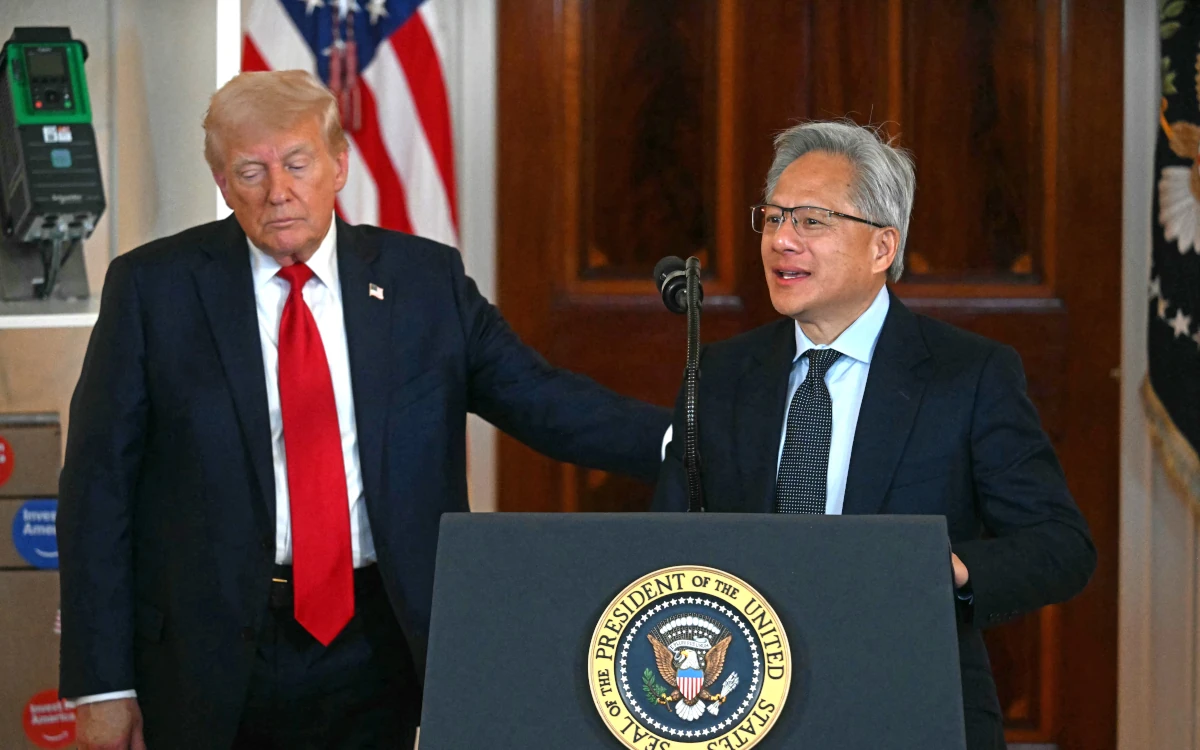
The administration’s purchases have even prompted the CFR to create a “deal tracker” that catalogs acquisitions. The larger question, however, is not the size of the portfolio but what it represents. Is the tracker recording a temporary adaptation to extraordinary circumstances, akin to the wartime equity holdings of the 1940s, or the emergence of a lasting structural transformation in international political economy?
Judging from the congressional reaction to these developments, the evidence suggests that we are approaching a new normal. Temporary maneuvers rarely receive standing appropriations. Emergency powers typically come with sunset clauses. The wartime portfolio was dismantled because the war ended. The competition with China offers no endpoint. It has no armistice, no natural end, no obvious moment when governments will conclude that markets can once again be left to themselves.
The Dangers of the New Political Economy
Real dangers arise when a government builds a portfolio of corporate winners and losers. Human nature suggests that a government that owns a stake in Intel will be tempted, sooner or later, to use it. A steward who isn’t fully accountable with government assets could be tempted to withhold critical output from rivals, dictate commercial terms, or reward friends, donors, or favored industries. Every abuse also hands a rival country a precedent for treating American assets on their soil the same way.
A world in which every state holds a golden share is a world in which retaliatory nationalization becomes ordinary statecraft, threatening the open investment order that enriched the West for two generations. The Europeans, at least, are having this argument openly, debating where strategic protection ends and protectionism begins. Washington is barely having the debate at all. For decades, few in government doubted that globalization would produce efficient markets, greater prosperity, and ultimately greater security. Today, governments leverage globalization and interdependence for geopolitical positioning. Markets are valued less for efficiency than for the national power they generate.
Margaret Thatcher kept one share of British Aerospace. She understood it as an exception that proved the rule, a narrow carve-out embedded in a system that otherwise trusted markets. The governments assembling equity portfolios on both sides of the Atlantic have inverted her logic. The question is no longer whether liberal market economies will hold golden shares but whether, a decade from now, anyone will remember why they once thought they shouldn’t.
The question is no longer whether liberal market economies will hold golden shares but whether, a decade from now, anyone will remember why they once thought they shouldn’t