
The decisive question in Europe’s next security crisis may not be whether NATO can deter an external adversary, but whether the European Union can defend a member state when the crisis itself involves a NATO ally.
Amid Russia’s war in Ukraine, conflict in the Middle East, and uncertainty surrounding long-term U.S. commitments, a quiet crisis is deepening in Europe. The contradictions within its security architecture are no longer merely theoretical; they increasingly reflect a widening gap between Europe’s political commitments and its actual operational preparedness.
This is the core of the renewed debate over Article 42(7) of the Treaty on European Union, which commits member states to provide aid and assistance if one of them is attacked. The debate has exposed vulnerabilities in Europe’s security posture, reinforcing the argument that European strategic autonomy is no longer a distant ambition, but an urgent strategic necessity. Europe has developed political commitments to mutual defense more rapidly than the mechanisms needed to implement them in a real crisis. In this context, the Eastern Mediterranean has emerged as the arena where these pressures converge most visibly.
European strategic autonomy is no longer a distant ambition, but an urgent strategic necessity. Europe has developed political commitments to mutual defense more rapidly than the mechanisms needed to implement them in a real crisis
Turkey Between NATO and the EU
The issue came to the forefront during Cyprus’s EU Council Presidency, which moved the discussion from treaty language to practical implementation. President Nikos Christodoulides called for a closer examination of how exactly Article 42(7) would operate, forcing EU officials to consider questions of crisis coordination, military support, and escalation management.
This intensification of institutional debate comes amid profound recent changes in Europe’s security environment. Russia’s 2022 invasion of Ukraine revived concerns about Europe’s dependence on U.S. security guarantees and the strategic consequences of earlier reliance on Russian energy. Israel’s wars in Gaza and Lebanon and the U.S.–Israeli war against Iran that followed have increased fears about spillover from the Middle East into the Eastern Mediterranean. Missile attacks, drone activity, and maritime route disruption have exposed Europe’s southern flank to growing instability.
European officials are now considering scenarios in which NATO may be unable to respond cohesively due to allied divisions and uncertainty about U.S. leadership. This has reinforced the EU’s pursuit of strategic autonomy, a concept elevated by the 2016 EU Global Strategy into an explicit objective. The concept outlines the EU’s plan to reduce dependence on external actors and strengthen its ability to act in a contested international environment. In defense terms, this means coordinating crisis response and mutual support even when NATO cohesion or U.S. leadership is uncertain.
In this context, Article 42(7) is central to the dilemma. Yet debate about the clause has exposed a structural contradiction within Europe’s security architecture: the EU’s mutual defense commitment may become most relevant precisely in a crisis where NATO itself is politically constrained. That contradiction is particularly evident in the Eastern Mediterranean, where Turkey is both a NATO ally and a direct rival of EU member states Greece and Cyprus.
This raises a broader strategic dilemma. Could EU states coordinate collective action during a crisis involving a NATO member without undermining alliance cohesion or escalating tensions in the Eastern Mediterranean? More fundamentally, does Article 42(7) function as a genuine operational mechanism for crisis response, or does it remain primarily a political commitment?
Could EU states coordinate collective action during a crisis involving a NATO member without undermining alliance cohesion or escalating tensions in the Eastern Mediterranean
Political Commitment or Operational Mechanism?
Debate over Article 42(7) increasingly centers on implementation. The clause obliges EU member states to provide “aid and assistance by all the means in their power” if another member is attacked. Unlike NATO’s Article 5, however, it does not establish an integrated command structure, a standing force, a predefined operational plan, or an escalation-management framework.
In practice, an operational mechanism would require more than treaty language. It would involve pre-planned coordination procedures, crisis command structures, intelligence-sharing arrangements, logistics, and practical systems for military and political response.
These gaps became central during discussions initiated by Cyprus at the EU’s informal meeting of heads of state and government last April. Officials reportedly examined implementation procedures, including coordination mechanisms, scenario planning, and simulation exercises. The discussion reflected a broader shift from rhetorical references to solidarity toward questions about how assistance would actually function during a crisis.
Parallel discussions surrounding alternative European defense formats highlight the same challenge. The Joint Expeditionary Force (JEF), established in 2014 and led by the UK, illustrates how some European states are building faster-response structures outside NATO’s unanimity-based decision-making system. Its communications infrastructure and relative independence from direct U.S. command structures make it relevant to contingency planning.
At the same time, the JEF also demonstrates the limits of fragmented European defense formats. It focuses mainly on Northern Europe and excludes major powers such as France, Germany, and Poland. While it offers speed and flexibility among participating states, it cannot provide an EU-wide mutual defense mechanism or resolve the institutional overlap between NATO and the EU. Article 42(7) therefore remains legally significant but operationally incomplete. The clause creates a formal obligation of assistance among member states, yet the EU still lacks the procedures needed to translate that obligation into coordinated action during a major regional crisis.
Article 42(7) remains legally significant but operationally incomplete. The clause creates a formal obligation of assistance among member states, yet the EU still lacks the procedures needed to translate that obligation into coordinated action during a major regional crisis
This gap becomes particularly evident in the Eastern Mediterranean. A confrontation involving Turkey, Greece, or Cyprus would immediately raise questions the treaty itself does not answer. Would assistance involve naval deployments, intelligence-sharing, cyber defense, logistics, or direct military coordination? Which states would lead the response? Would NATO structures remain central if the crisis itself involved tensions with a NATO member?
These unresolved questions expose the limits of current European strategic autonomy. The EU has developed political commitments to mutual defense more rapidly than the institutional and military structures needed to implement them during a politically fragmented alliance crisis.
The problem is not only institutional but also political. EU member states do not share identical threat perceptions. Cyprus and Greece, for example, would likely view an Eastern Mediterranean crisis through the lens of territorial security and EU solidarity, while other EU governments might prioritize NATO cohesion, de-escalation with Turkey, or avoiding direct military involvement. Such divergences would complicate the operationalization of Article 42(7) before questions of command, logistics, or military capability even arise.
This is why Turkey serves as the central test case. More than just another regional actor, its position most clearly exposes the contradiction between EU solidarity and NATO cohesion.
Turkey as the Structural Test Case
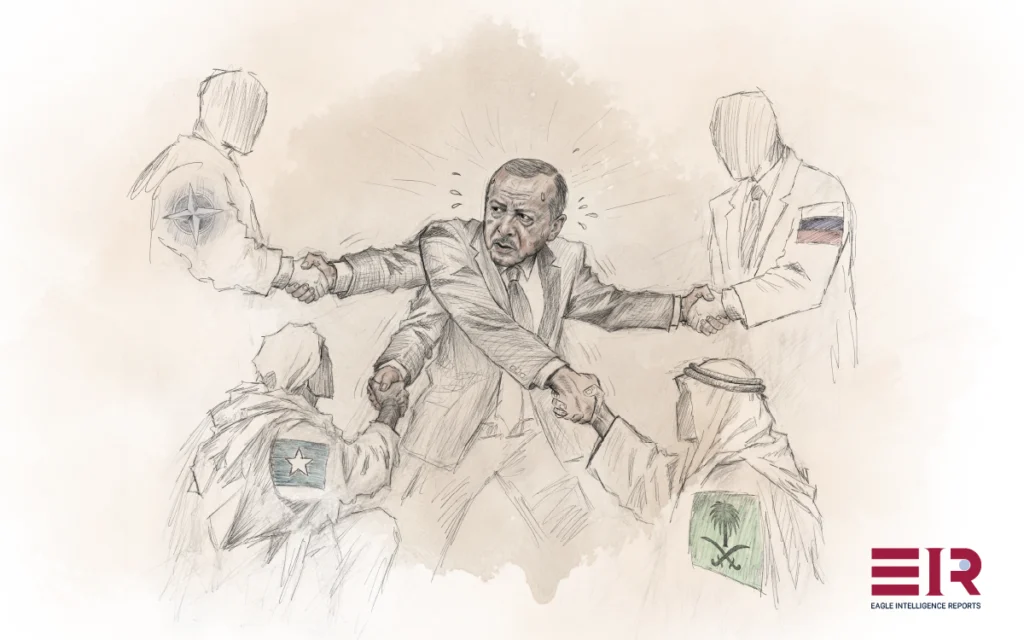
As a NATO member and major regional military power, Turkey participates in the Western security system despite maintaining long-standing disputes with EU member states. Its posture in the Eastern Mediterranean is shaped by a wider strategic vision articulated through milestones such as “Türkiye Yüzyılı” (“Century of Turkey”), the “Türk Dünyası 2040 Vizyonu,” 2053, and 2071. Together, these frameworks reflect Ankara’s ambition to position Turkey as an autonomous regional and geopolitical center of power: an enhanced and strategically independent “third pole” between the Sino–Russian bloc and the Western alliance.
This approach combines regional assertiveness, nationalism, selective ideological framing, and pragmatic power balancing. In the Eastern Mediterranean, it translates into efforts to expand maritime influence, prevent exclusion from regional energy arrangements, and reinforce Turkey’s role as a decisive regional actor.
Turkey’s strategy converts unresolved disputes into recurring points of pressure. Turkish drilling near areas licensed by the Republic of Cyprus, disputes over Exclusive Economic Zones, military activity around Kastellorizo, and repeated Greek–Turkish air and naval encounters in the Aegean show how Ankara’s regional posture can contribute to conditions for escalation.
Turkish drilling near the Republic of Cyprus, disputes over Exclusive Economic Zones, military activity and repeated Greek–Turkish encounters in the Aegean show how Ankara’s regional posture can contribute to conditions for escalation
Recent developments have kept these disputes active. In 2025, Greece again linked Turkey’s access to EU defense instruments to the removal of Ankara’s long-standing casus belli threat over any Greek extension of territorial waters in the Aegean. The same year, Turkey objected to the Lebanon–Cyprus maritime demarcation agreement, arguing that it ignored Turkish Cypriot rights and undermined Ankara’s interests in the Eastern Mediterranean.
These disputes span maritime boundaries, energy exploration, airspace, EU defense cooperation, and the unresolved Cyprus question. Ankara’s “Blue Homeland” (Mavi Vatan) doctrine reinforces this posture by treating maritime jurisdiction, naval power, and control over surrounding seas as central components of Turkish strategic influence. The doctrine frames the Eastern Mediterranean, Aegean, and Black Sea as critical spaces for protecting Turkey’s security, energy interests, and geopolitical autonomy.
In this context, Article 42(7) becomes most relevant precisely where NATO is politically constrained. That dilemma is sharpened by the operational geography of the Eastern Mediterranean, making the region a practical arena for testing whether EU solidarity can translate into coordinated action.
Operational Realities in the Eastern Mediterranean
The Eastern Mediterranean increasingly functions as a geopolitical compression zone where regional conflicts, alliance tensions, energy competition, and European security interests intersect.
Military infrastructure across the region reinforces this point. British sovereign bases at Akrotiri and Dhekelia remain central to surveillance, logistics, and regional operations linked to the Middle East. France has significantly expanded naval deployments and defense coordination with Greece and Cyprus, while the United States maintains a significant operational presence through regional facilities and naval activity.
Cyprus has also become more important in regional crisis management. Since the beginning of Israel’s wars on Gaza and Lebanon and the U.S.–Israeli operation against Iran, the island has functioned as a hub for logistics, humanitarian assistance, and evacuations. This increased Cyprus’s strategic value while exposing it more directly to regional instability.
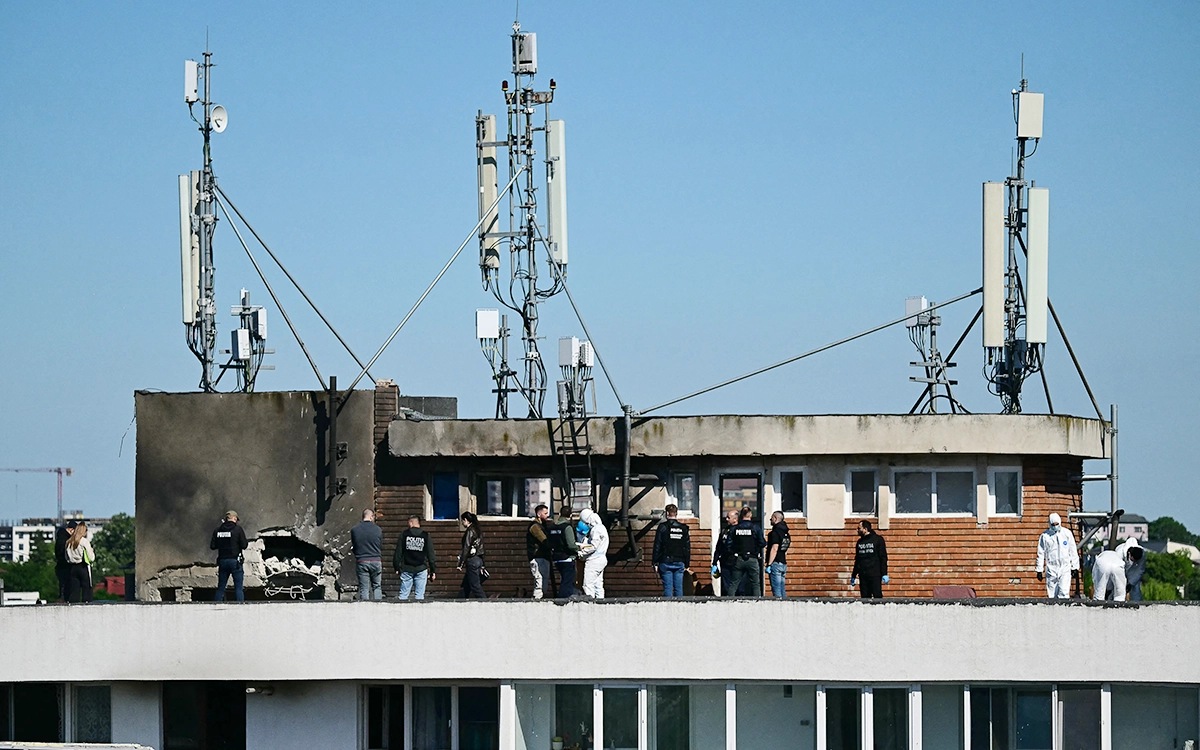
Drone incidents also illustrate how quickly Middle Eastern escalation can reach the Eastern Mediterranean. In March 2026, a suspected Iranian-backed drone crashed near RAF Akrotiri in Cyprus, raising concerns about the vulnerability of critical infrastructure and the proximity of regional conflict to EU territory.
Escalation need not begin with a conventional military clash. A maritime incident, drone strike, airspace violation, cyberattack, or infrastructure-related crisis could involve EU member states, NATO actors, and regional powers at the same time. Ambiguous attribution and the use of unmanned systems further complicate response coordination.
The region combines unresolved maritime disputes, naval deployments, energy infrastructure, military bases, and conflict spillover from the Middle East. A localized incident could therefore relatively easily transform into an alliance-management crisis involving both NATO and the EU.
Escalation Risks and Strategic Contradictions
Escalation in the Eastern Mediterranean need not begin with a direct Greek-Turkish confrontation. The May 2026 Lefkada incident off Greece’s western coast showed a different kind of risk. Greek authorities discovered an unmanned surface vessel near Lefkada, reportedly carrying explosives and resembling the Magura-type drones used by Ukrainian forces in the Black Sea. The incident raised concerns in Athens not because it involved Turkey, but because it suggested that the drone warfare associated with the Russia–Ukraine war could drift into Mediterranean maritime space and threaten civilian shipping or energy routes.
Indeed, the Eastern Mediterranean is not vulnerable only because of Turkish-Greek tensions, but because several conflict systems now intersect there. The confrontation between Iran and the U.S.–Israeli coalition, the Russia–Ukraine war, maritime energy competition, NATO infrastructure, British sovereign bases, and unresolved disputes involving Turkey, Greece, and Cyprus all complicate the environment.
In this context, a collision between Greek and Turkish vessels, interference with offshore energy activity, or an airspace encounter in the Aegean could create a different kind of crisis. The EU’s mutual defense commitment could collide directly with NATO’s need to preserve alliance cohesion.
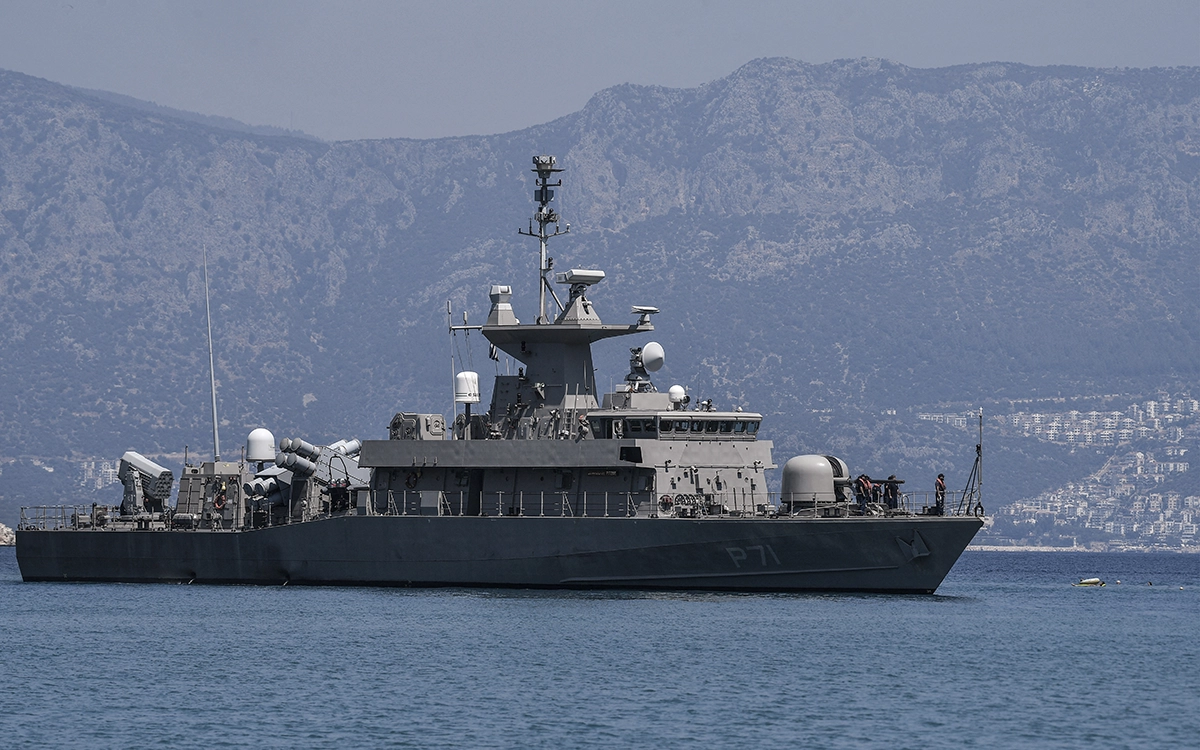
Thus, Article 42(7) raises a concrete question: can Europe resolve the contradiction between EU mutual defense and NATO cohesion? Does it have the coordination capacity and operational clarity needed to respond collectively when a crisis involves both? Article 42(7) does not resolve that contradiction. It exposes it.
The Limits of European Strategic Autonomy
Together, these pressures reveal the growing strain on Europe’s collective defense posture. Europe’s post-Cold War defense architecture developed under assumptions of stable U.S. leadership, reliable NATO cohesion, and manageable intra-alliance disputes. Today, those assumptions are being challenged.
Europe’s post-Cold War defense architecture developed under assumptions of stable U.S. leadership, reliable NATO cohesion, and manageable intra-alliance disputes
Cyprus’s initiative during its EU Council Presidency helped shift debate over Article 42(7) from symbolic solidarity toward implementation. The central question is no longer simply what the clause promises, but how assistance would be coordinated, commanded, and sustained during a crisis. A crisis involving Turkey would test not only whether EU member states are willing to support one another, but whether they can do so without fragmenting the NATO alliance itself.
Article 42(7) therefore remains politically significant but operationally incomplete. If the EU wants the clause to function beyond a mere statement of symbolic commitment, it will require clearer crisis procedures, contingency planning, coordination mechanisms, and frameworks capable of operating when alliance cohesion itself becomes part of the problem.
An Eastern Mediterranean crisis would likely force these questions out of the realm of theory. Whether such a contingency would lead to a narrowing of the institutional gap between NATO readiness and EU solidarity or further expose the contradictions within Europe’s security architecture is a question that European governments can no longer afford to ignore. If mutual defense and EU solidarity are to remain credible, they must move beyond political commitment and acquire operational meaning.
Whether such a contingency would lead to a narrowing of the institutional gap between NATO readiness and EU solidarity or further expose the contradictions within Europe’s security architecture is a question that European governments can no longer afford to ignore