
Keir Starmer’s defense spending plan is at war with his own vision. He had called drones and autonomous systems the “defining technology of modern warfare.” Yet, under his plan, those devices receive far less funding than the flagship program, a crewed stealth fighter due for service in the late 2030s.
That investment gap is the plan’s central tension. Starmer described a threat that is immediate, cheap, and unmanned, then funded a capability that is distant, expensive, and crewed. The choice reflects a trade-off built into the defense spending strategy: responding to the threat a country faces while sustaining the industries and alliances it cannot afford to lose. In the air domain, industrial priorities prevailed.
The Numbers Behind the Rhetoric
The Defense Investment Plan (DIP) lifts annual defense spending sharply and commits Britain to NATO’s rising GDP targets through the 2030s. NATO Secretary General Mark Rutte welcomed it, while pressing allies to avoid loading the heaviest increases into the next decade. The money is less settled than the announcement suggested. Roughly a third of the uplift carries no funding source and awaits the autumn Budget, a decision left to Starmer’s successor. The offsets carry their own politics, as they are drawn from cuts to other departments and to transport and energy projects. A plan sold as certainty for industry rests partly on choices nobody has yet made.
The money is less settled than the DIP announcement suggested. Roughly a third of the uplift carries no funding source and awaits the autumn Budget, a decision left to Starmer’s successor
Within the near-£300 billion four-year settlement, t¬he Global Combat Air Programme (GCAP)—the crewed sixth-generation fighter developed with Italy and Japan to replace the Typhoon—receives £8.6 billion. The drones and autonomous systems, which Starmer called the “defining technology of modern war,” receive just over £5 billion between them. The crewed program thus receives substantially more funding than the uncrewed effort. Other DIP investments, from munitions to naval infrastructure, are excluded. So is the renewal of the nuclear deterrent, whose strategic purpose separates it from conventional force investments.
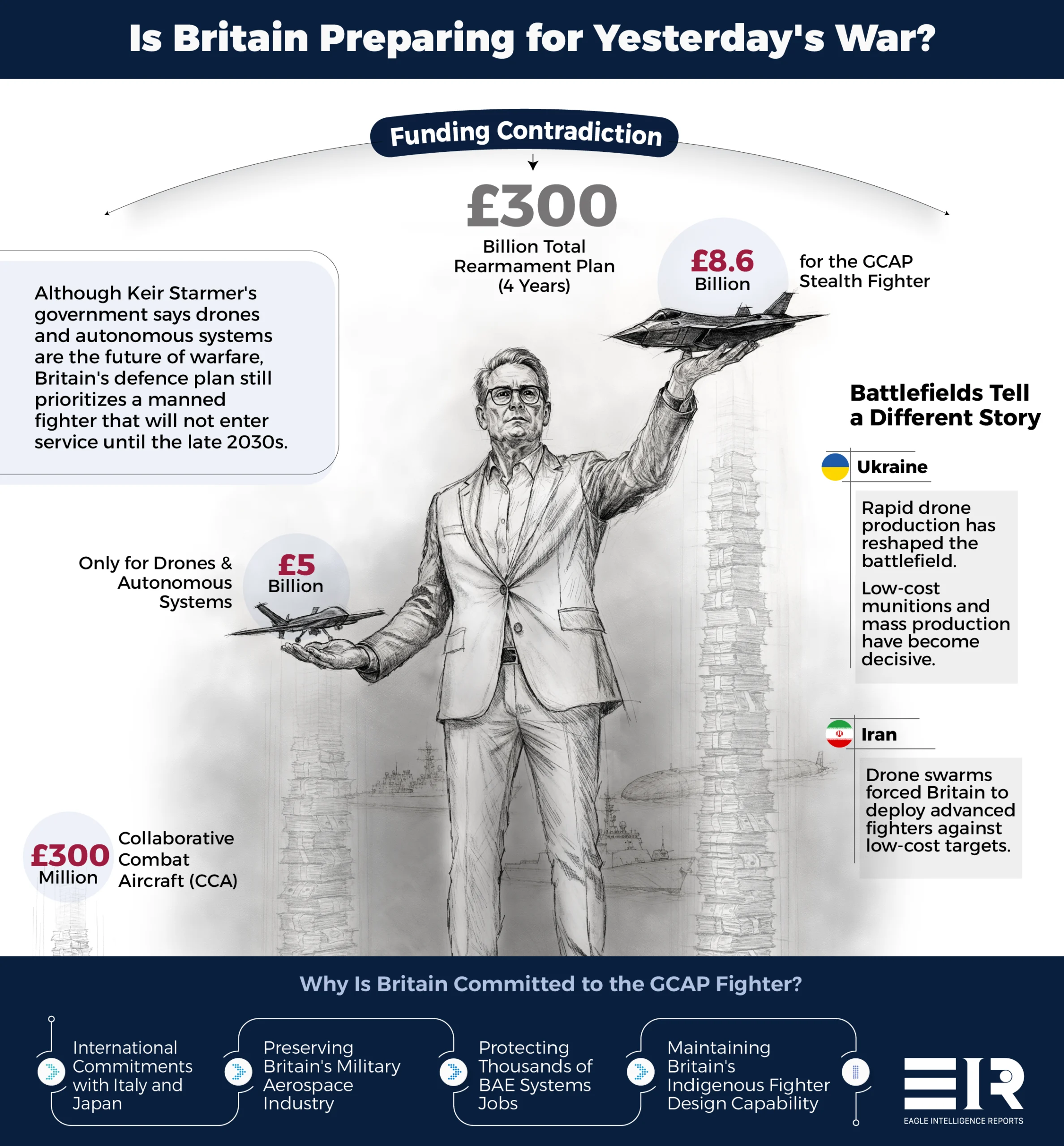
Not every line ignores the battlefield evidence. The munitions budget answers Ukraine’s clearest lesson: that stockpiles decide endurance. But the air budget is where doctrine and money part company. The starkest ratio sits inside that budget. The Ministry of Defense presents GCAP as one node in a wider system, flying alongside autonomous Collaborative Combat Aircraft. The plan gives those aircraft £300 million against GCAP’s £8.6 billion. The system-of-systems argument rests on a nearly 30-to-1 imbalance within the system itself.
The munitions budget answers Ukraine’s clearest lesson: that stockpiles decide endurance. The air budget is where doctrine and money part company
A Threat Picture Undercutting Itself
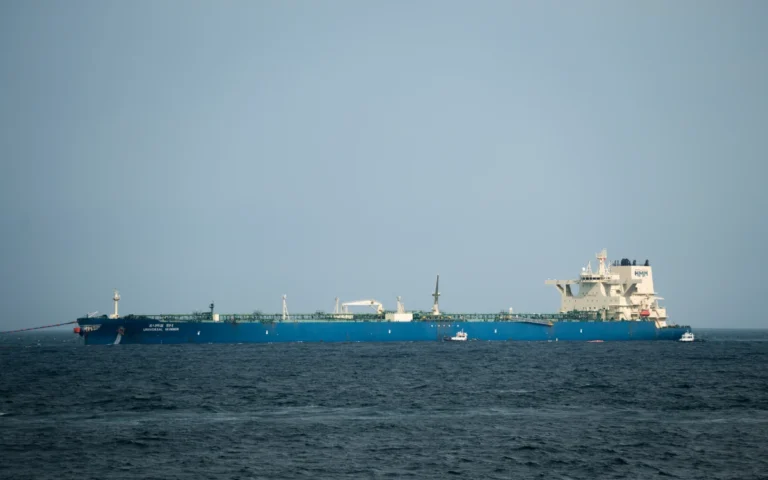
Starmer’s own examples argue against a crewed centerpiece. Royal Marines boarded the shadow-fleet tanker Smyrtos in the Channel two weeks before the speech, an operation of boarding teams and support vessels. In April, frigates including HMS St Albans, Merlin helicopters, and P-8 Poseidon aircraft tracked a covert Russian submarine operation near cable routes north of Britain. Neither task required a fighter.
Two live conflicts point the same way. Ukraine blunted a far larger Russian military through drone integration and production speed. The plan itself concedes that mass-produced, precise systems now dominate combat. Britain supplies Kyiv with large numbers of drones, a pledge ministers cite as proof of their own conversion.
The war against Iran has sharpened the economics. Tehran has launched swarms of drones and ballistic missiles across the region, including a strike on RAF Akrotiri. The barrage forced the RAF to arm Typhoons with APKWS, a cheap laser-guided rocket, against targets that previously drew six-figure missiles. A British F-35B scored the type’s first operational kill over Jordan, downing a drone with a missile designed for enemy fighters. An RAF Typhoon flying with the joint UK–Qatar 12 Squadron destroyed another drone aimed at Qatar. The most advanced aircraft in British service earned its combat debut swatting the cheapest weapon in Iran’s arsenal.
The most advanced aircraft in British service earned its combat debut swatting the cheapest weapon in Iran’s arsenal
Doubt about the plan’s balance reaches inside government. Armed Forces Minister Al Carns and Defense Secretary John Healey resigned in early June over the settlement behind it. Carns argued that most of the budget funds legacy platforms a decade from delivery. Healey’s resignation letter warned against loading the increases into the 2030s. The plan then adopted that trajectory, holding spending flat until late in the decade and concentrating the steepest rises in the distant years.
Shadow Defense Secretary James Cartlidge attacked from the opposite flank, noting the plan delivers barely half of the £28 billion that Chief of the Defense Staff Sir Rich Knighton reportedly sought. One critique concerns composition, the other quantity. Their convergence marks the imbalance as structural rather than partisan.
A Partial Exception at Sea
The Royal Navy shows the pattern breaking. Ministers scrapped the planned Type 83 destroyer in favor of Common Combat Vessels, adaptable hubs commanding uncrewed craft above and below the surface. Starmer called the result a hybrid navy: crewed frigates intercepting a Russian vessel with uncrewed outriders around them. New anti-submarine frigates, built with Norway, will hunt Russian boats in shared northern waters.
The plan’s clearest match of threat to money is at sea. Atlantic Bastion, launched in December 2025, responds directly to the Yantar spy ship and Russia’s covert GUGI flotilla. The sea domain could move because nothing held it in place. Type 83 existed only on paper and bound no allies; cancelling it cost nothing abroad and little at home. The air domain offers no such freedom, and that difference explains most of the plan’s apparent incoherence.
Why Legacy Platforms Endure
Structural and contingent factors together explain why high-end programs outlive the threats that justified them. The structural ones are binding treaties, industrial dependencies, and sovereign-capability claims that outlast any government. The contingent ones, in this case, were a weakened Prime Minister and a summit deadline.
Structural and contingent factors together explain why high-end programs outlive the threats that justified them
GCAP embodies the structural bind. The treaty ties Britain to Italy and Japan, which need the aircraft by the mid-2030s and would read British delay as betrayal. The program sustains thousands of skilled jobs and the country’s last claim to sovereign combat-aircraft design. Abandoning it would hand that capability to allies for good.
Defenders of crewed air power hold one genuinely military card. No autonomous system yet penetrates defended airspace against a peer air force. Deterring Russia into the 2040s may demand precisely that. Even granting the argument, though, the sequencing fails. The threat Starmer described now operates below any threshold that a fighter arriving after 2035 can address. Grey-zone coercion does not wait for stealth. History counsels doubt about the timeline as well. The Typhoon’s demonstrator flew in 1986, but the aircraft entered service in 2003. GCAP risks the same multi-decade drift between the threat that justified it and the capability that was finally delivered.
Contingency then sealed the settlement. Starmer needed the plan signed before the NATO summit opening in Ankara on July 7, 2026, a deadline that favored protecting commitments over reopening them. The entire air budget survived intact. The Shadow R1 surveillance aircraft and older Chinook helicopters face early retirement, with their intelligence work handed to drones. The plan accepts autonomy for reconnaissance, even as it protects a crewed fighter for air combat.
Contingency then sealed the settlement. Starmer needed the plan signed before the NATO summit opening in Ankara on July 7, 2026, a deadline that favored protecting commitments over reopening them
The plan protects tomorrow’s platforms partly by cannibalizing today’s force. Ben Wallace, the former Defense Secretary, predicted this shape before publication. The Treasury, he argued, cannot fund submarines, a new fighter, and the Army at once. The likely outcome was thus gradual hollowing presented as strategy. The early retirements suggest his forecast landed close. The same pattern reaches deep strike, where the plan retires the legacy Storm Shadow cruise missile, turning to cheaper, high-mass precision strike. Its successor, the MBDA Stratus family, stays under review until September.
The Ajax Warning
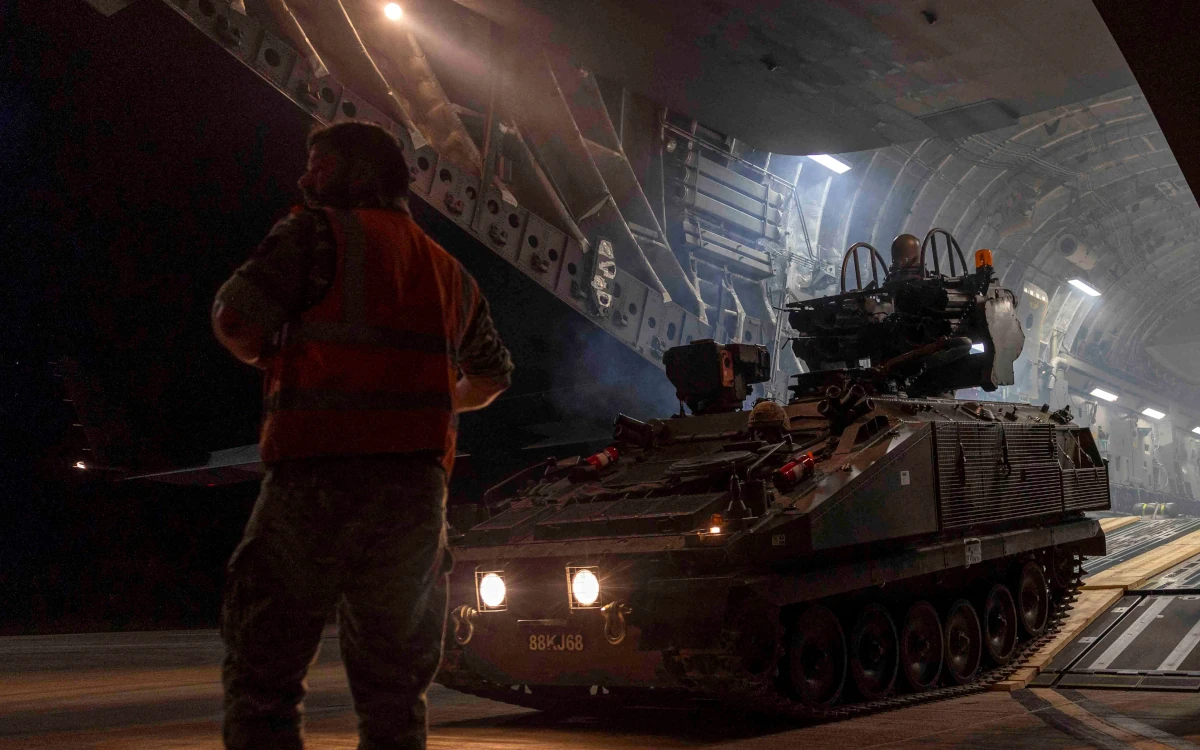
Ajax, the Army’s troubled reconnaissance vehicle, completes the cautionary picture. General Dynamics won the contract in 2010 for delivery from 2017, but noise and vibration injured crews across a decade of trials. The Army declared initial operating capability in November 2025, then paused the fleet within weeks after soldiers reported symptoms on exercise.
Carns told Parliament before resigning that Ajax had overspent, then corrected the record days later: the program had not overspent; its requirements had merely been over-specified. He added that Ukraine shows modern war involves far more than armor. Cancellation recovers little once contracts commit the money, so institutional optimism becomes policy and troubled programs roll forward. The National Audit Office and two Commons committees documented the pattern for years without altering it.
Germany’s Rheinmetall Parallel
Britain is not alone. BAE Systems’ position mirrors Rheinmetall’s in Germany: a prime contractor whose order book rests on multi-decade programs surviving successive governments. There, the same contest between incumbents and challengers runs in cruder form.
BAE Systems’ position mirrors Rheinmetall’s in Germany: a prime contractor whose order book rests on multi-decade programs surviving successive governments
Berlin’s procurement record shows what entrenchment buys. In late 2025, the Bundeswehr split a major loitering-munitions order between Rheinmetall and two startups: Helsing and Stark Defence. Field trials then embarrassed all three. Stark’s Virtus missed its targets in Kenya and near Munster, one drone crashing and another catching fire. Helsing’s newer design fared better but still fell short.
Rheinmetall had reportedly produced no working demonstrator by January 2026. The contracts proceeded regardless, worth substantial sums to the two startups. Position, not performance, allocated the money. Rheinmetall’s weight in Berlin extends beyond contracts. Defense Minister Boris Pistorius depends on the firm for his drive to make the Bundeswehr war-ready. Its supply chain now draws directly on the shrinking car industry, with a large share of its German suppliers coming from automotive firms.
Lawmakers have since roughly halved a longer-term strike-drone framework, wary of open-ended commitments. Rheinmetall, sitting on a vast order backlog, now itself expands into drones to defend its territory. The dispute reaches London through the plan itself, which commits Britain to joint precision-strike development with Germany and thus imports Berlin’s industrial politics into British procurement.

The Great-Power Benchmark
The scale of American and Chinese investments makes European debates look tentative by comparison. The Pentagon is pouring tens of billions of dollars into autonomous warfare and drones, aimed explicitly at saturating a Taiwan Strait contingency with autonomous mass. Ukraine plans to build drones this year on a scale no European state approaches. Washington escapes the European trade-off through fiscal scale alone, its budget funding exquisite platforms and cheap mass at once.
Even Berlin, for all its procurement quarrels, plans to outspend Britain as a share of its economy. But the sums each commits to drones—described at home as historic—measure recovery from past underfunding rather than the pace their rivals set. Britain’s new export-finance facility and its stake in a Multilateral Defense Mechanism show London grasps the industrial contest, even as the capability balance lags.
A Bet Placed on the 2030s
The plan’s implicit wager is that Britain will still need a crewed, stealthy, sixth-generation fighter when the GCAP arrives in the late 2030s. If autonomy keeps advancing at its current pace, Britain risks buying a platform tuned to an earlier phase of war. Ukraine’s producers iterate drone designs in months but Whitehall reviews capability in half-decades. That mismatch between the pace of innovation and procurement, more than any single program choice, is the structural problem the plan leaves unsolved.
If autonomy keeps advancing at its current pace, Britain risks buying a platform tuned to an earlier phase of war
Starmer frames the settlement as a floor for his successor, expected to be Andy Burnham within weeks. Burnham inherits the unfunded third of the uplift, the Ajax verdict, and a party divided over the plan’s scale. Each spending review will likely reopen the gap between the threat described and the capability bought. Any rebalancing would meet the resistance that shaped this plan: Italy and Japan defending the treaty, BAE defending its order book.
Britain has committed nearly £300 billion to rearmament. Whether it has struck the right balance is a question the next decade will answer—if the next war does not answer it first.