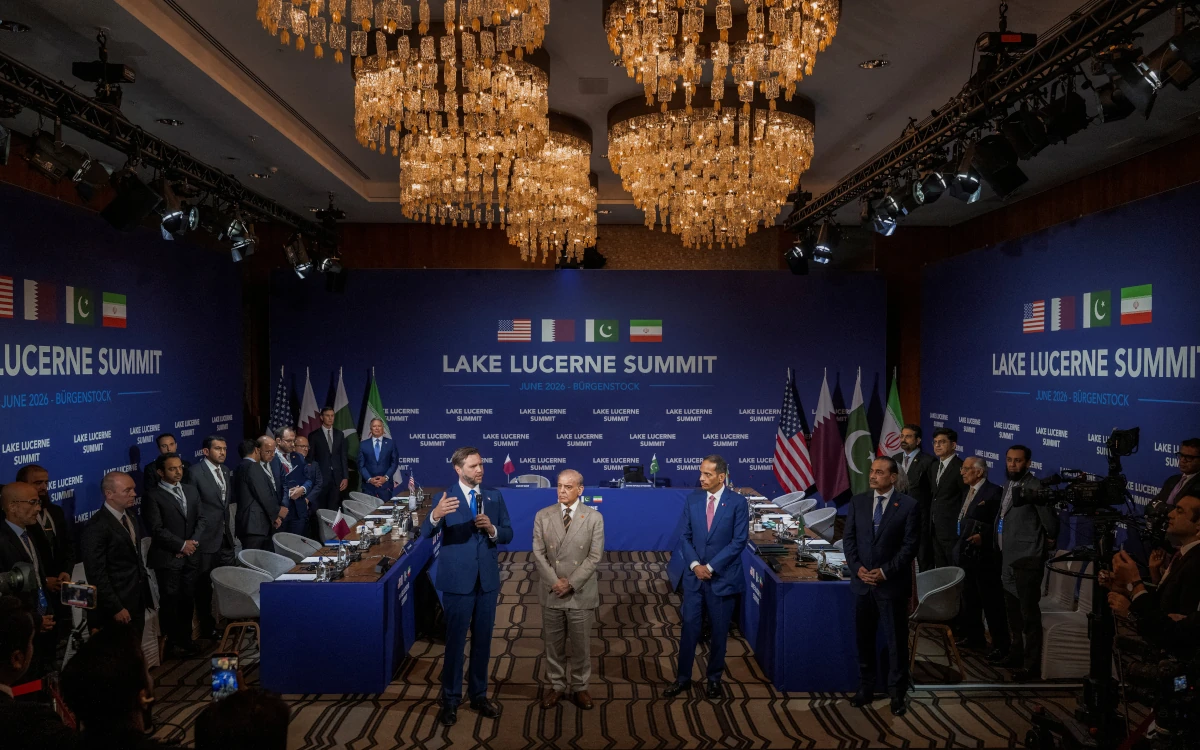
The United States may soon face an awkward reality of its own making: to end the war with Iran, it may have to make peace with a state it still officially designates as a sponsor of terrorism. That contradiction is not merely rhetorical. It may prove to be the central obstacle to turning the current ceasefire into an enduring peace.
But the episode exposes a deeper issue. State Sponsor of Terrorism (SST) designations were created to isolate and coerce adversaries by leveraging America’s central position within the international system. Now that architecture is being tested by the very diplomacy Washington needs. As the world becomes more multipolar and adversarial states more resilient and geographically important, traditional mechanisms of U.S. pressure are losing their ability to compel strategic outcomes. The negotiations with Iran are a case in point.
The U.S.–Iranian MoU effectively ends hostilities and opens a 60-day window for comprehensive negotiations. Yet even if the negotiations succeed, there is no indication that Iran’s designation as an SST—a status it has held since 1984—will be revoked. Washington therefore may find itself concluding a peace agreement with a sponsor of terrorism.
The U.S.–Iranian MoU effectively ends hostilities. Yet even if the negotiations succeed, there is no indication that Iran’s designation as an SST will be revoked. Washington may find itself concluding a peace agreement with a state it still officially designates as a sponsor of terrorism
Implications of Negotiating with an SST
There is no mention made of Iran’s terrorism designation in the MoU, and it does not seem to be part of Iranian demands in the negotiations. But the designation remains a potential barrier to the MoU’s most generous provisions for Iranian compliance, namely sanctions relief and the return of frozen Iranian assets. While there is nothing technically blocking the United States from signing a peace deal with an SST, the designation creates a host of complications. The often overlooked terrorism factor presents several potential legal, strategic, and political complications.
First, Donald Trump faces huge domestic political backlash if he appears to award an SST in his desperation to end the war. Second, if the United States incentivizes Iranian participation in the negotiations through promises of investment, not only U.S. sanctions but also wider international sanctions will hinder implementation. Third, there is every chance that the IRGC–Hezbollah–Israel triangle may trip the terrorism wire once more, potentially collapsing the negotiations. These complications may undermine and even fully scupper a U.S.–Iranian deal.
U.S. Political Backlash for Rewarding Iran
The United States can and does enter into agreements with countries it designates as SSTs. The U.S. State Department maintains this classification under various statutes like the Arms Export Control Act, and it can trigger severe financial and trade restrictions. But it is a policy designation, not a firm legal barrier to diplomacy. Politics, however, is not only a matter of legal finesse but also of historical memory and of interest groups.
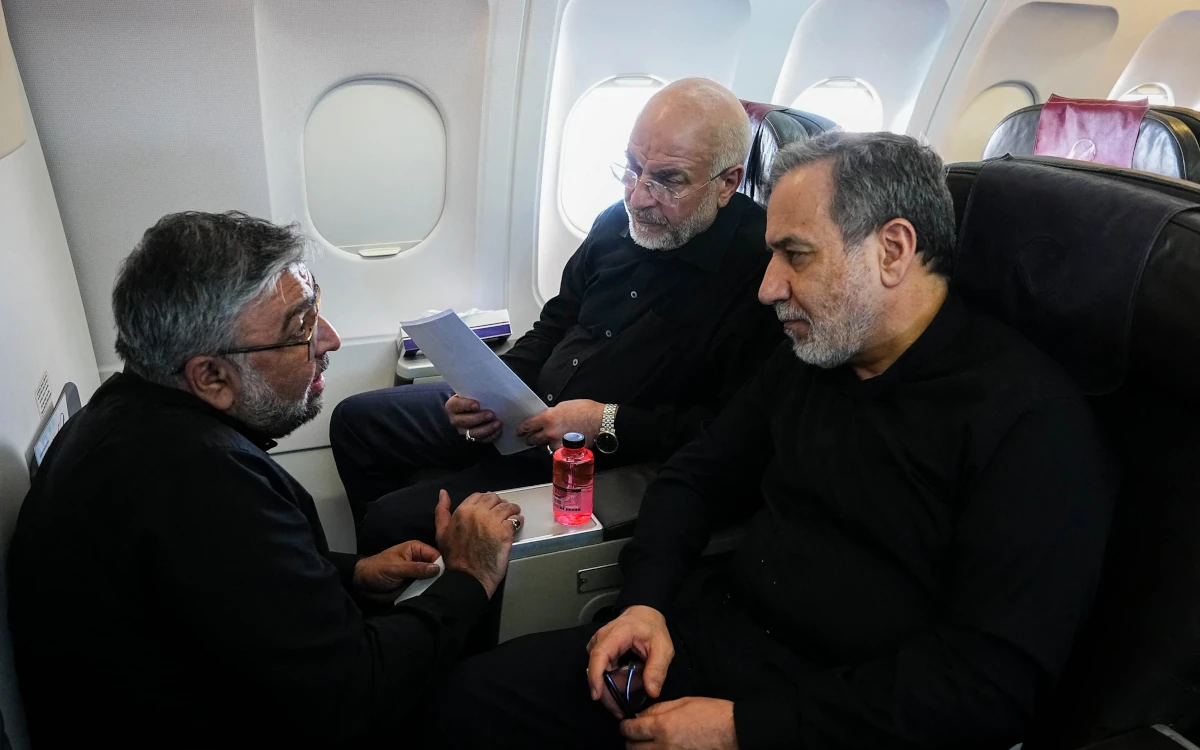
Trump’s critics, both inside and outside of MAGA, are already lambasting his administration for agreeing to an MoU that financially incentivizes Iran to end the war. The reality is that Trump had little choice, since defeating Iran by conventional means has proven nearly impossible. Trump’s critics say that, if his government is effectively paying Iran to end the war, then it is turning a blind eye to some very painful past terrorist attacks.
Hezbollah, Iran’s Lebanon-based proxy, staged the devastating 1983 bombings of international forces in Beirut, which killed 241 U.S. troops and 58 French troops. This was a rare example of a terrorist attack that managed to directly coerce its target—President Ronald Reagan withdrew U.S. forces from Lebanon just four months later. Nor is this exclusively a historical matter. More recently, in 2012, a suicide bomber attacked a bus carrying Israeli tourists at Burgas Airport in Bulgaria, killing five Israelis and a Bulgarian bus driver and injuring dozens more. Bulgarian investigators found evidence linking the attack to Hezbollah.
Despite coming under attack from Israeli and U.S. forces, neither Iran nor Hezbollah have yet resorted to terrorism as part of their defense. Any such attempt would likely have been thwarted, and Iran has instead focused efforts on cyber-attacks and information operations to accompany its conventional military response to the U.S.-led coalition in the Gulf.
There are enough living relatives of victims of past Iranian or Iranian-proxy terrorist attacks to make this a very emotive debate in the United States. Not only does Trump face accusations of a “bad deal” with Iran; he also faces accusations that any such final deal is, on a certain level, fundamentally immoral. These complications will become more apparent as the practicalities of implementing a deal are considered.
Not only does Trump face accusations of a “bad deal” with Iran; he also faces accusations that any such final deal is fundamentally immoral
Iran Remains Unchanged Despite Sanctions
The U.S. government’s begrudging turn to mediated talks comes after the failure of Operation Epic Fury—alongside Israel’s Operation Lion’s Roar—to bring down Iran’s theocratic regime. The attack provoked Iran’s retaliatory attacks on ships in the Strait of Hormuz and on the Gulf states. Yet after months of war and despite the deaths of senior Iranian leaders, the Islamic Republic remains intact. President Trump has been loath to admit that his initial military aim of regime change—as he declared in his speech at Mar-a-Lago on February 28—remains unfulfilled.
Since U.S. and Israeli airstrikes that killed Iran’s Supreme Leader Ayatollah Ali Khamenei and other senior military and political figures failed to produce regime change, Trump has changed the narrative. He has claimed repeatedly that wiping out several ranks of Iran’s top leaders equates to “regime change,” since different Iranians are now in charge. Yet the regime’s hold on power appears not weakened but perhaps strengthened.
The United States may be dealing with new Iranians, but they are cut from the same cloth as their predecessors. Mohammad-Bagher Ghalibaf, Speaker of Iran’s Parliament, is a veteran of the Iranian Revolutionary Guard (IRGC). Its current leader is a founding member from 1979. These are not peripheral actors.
During Trump’s first term in office, the United States designated the IRGC as a Foreign Terrorist Organization (FTO). Other Western states followed suit: Canada in 2024 and the EU in 2026. The UK government is also considering new powers to ban state-backed terror groups, likely including the IRGC. Moreover, Hezbollah—directly sponsored by Iran—is designated as a FTO by the United States, Canada, the UK, Australia, the Arab League, and the Gulf Cooperation Council, whereas the EU and New Zealand designate only its military wing as a terrorist entity.
In international eyes—and certainly those of U.S. allies—the IRGC and Hezbollah are considered pariahs. And while treating Hezbollah as a separate entity from Iran may work for the purposes of the current negotiations, this will not be possible with the IRGC. The result is a peace process built on strategic ambiguity. Washington seeks an agreement with Iran while leaving intact the legal and political framework that defines Iran’s institutions as part of the problem the war is meant to solve.
Doing Deals with Sanctioned Entities
What, then, are the emerging implications for doing a deal with an SST, given that the IRGC remains not only at the core of the Iranian state but also clearly emboldened by having gone toe-to-toe with the U.S. and Israeli militaries? How will the United States manage Iran’s vigorous demand that Lebanon be factored into the current peace talks, as it refuses to sever its links to Hezbollah?
The contradiction does not end with diplomacy. It extends into the practical implementation of any agreement. Trump’s team has approached the negotiations as a business deal, much as they have in diplomatic efforts to end the Russia–Ukraine and Israel–Gaza wars. The MoU has confirmed earlier reports that the Trump administration has agreed to a range of economic incentives. In addition to sanctions relief and the release of Iran’s frozen assets, this also includes supporting a $300 billion private fund designed to facilitate investment into Iran. Yet foreign policy is not a business deal. These incentives collide with the legal architecture that Washington itself spent decades constructing.
Foreign policy is not a business deal. U.S. economic incentives for Iran collide with the legal architecture that Washington itself spent decades constructing
Two complications arise immediately. First, there will be problems around ensuring that private investors are not in breach of sanctions or SST restrictions as they start to do business with Iran. Even if the fund proves to be a private investment vehicle rather than a government grant or a reparations program, private entities still face legal hurdles in rewarding an SST. Second, while the United States may agree to release Iranian funds and revoke its own sanctions, it cannot suddenly demand the same from other states, nor from the EU or the UN. Certainly, it cannot cajole other entities into doing so quickly, given the complexity of removing international sanctions on individuals and entities.
Yet the problem runs deeper still. The cold truth of the matter is that as money flows into Iran, the IRGC and the Iranian armed forces will benefit. To assume that will not trigger various international legal tripwires is naive. It certainly will, since several decades of sanctions and efforts to economically isolate Iran cannot be wished away suddenly.
Thus, Washington’s effort to end the war exposes the limits of the pressure architecture on which it has historically relied. The United States must not only lift its own sanctions but persuade its allies to do so as well. It must also persuade investors to back the provision of financial incentives to a state that its own sanctions regime was designed to isolate—all of this just to get the Iranians to consider making a deal.
Terrorism Could Restart the War
Yet the greatest danger may not be the failure of talks but their collapse through events outside the negotiation room. This brings us to the IRGC–Hezbollah–Israel triangle, which is prone to return to war at any time. There is ample scope for hardliners—and there will be many hardliners, given the bitter fighting of the last few months—to try to spoil any emerging U.S.–Iran deal.
Terrorism, whether by genuine strategic intent or engineered as a false flag incident, is one very real way of achieving this. A major attack would expose the contradictions of negotiating with an SST more clearly than any diplomatic dispute.
Yet there is precedent for U.S. negotiations with terrorist groups. In Trump’s first term, the United States sought to end its then-18-year military occupation of Afghanistan. Qatar mediated negotiations between Washington and the Taliban, signing a peace accord in Doha. The U.S. government first sanctioned the Taliban in 1999 and did so more stringently after 9/11, declaring it a “Specially Designated Global Terrorist (SDGT).” This designation remains in place.
There is precedent for U.S. negotiations with terrorist groups. In Trump’s first term, the United States sought to end its military occupation of Afghanistan. Qatar mediated negotiations between Washington and the Taliban
Moreover, Iran’s SST status did not prevent Barack Obama’s team from signing the Joint Comprehensive Plan of Action (JCPOA) in 2015. The international negotiators of the JCPOA—the “P5+1” states (China, France, Russia, the UK, the United States plus Germany)—avoided the problem of terrorism status by compartmentalizing the issues. Whereas the JCPOA focused on freezing and limiting Iran’s nuclear program, it did not address terrorism-related issues around the IRGC or Iranian proxy groups.
No such luxury of separation of issues presents itself this time. In the wake of a war that Trump belatedly says was all about stopping Iran from acquiring a nuclear weapon, the reality is very different. The war has heavily involved Hezbollah, and it has seen the IRGC marshal the defense of Iran to an extent it has not done since the Iran–Iraq war in the 1980s.
Issues that could once be compartmentalized can no longer be separated so easily. Regional power dynamics have shifted, and the architecture of U.S. coercion is struggling to keep pace.
Trust, Terrorism, and the Prospects for Peace
It is hard to envisage the United States revoking Iran’s SST designation, even if the current negotiations succeed. It is equally difficult to imagine other Western governments rapidly dismantling the web of sanctions, restrictions, and terrorism-related designations—let alone slow-moving international bodies like the EU or the UN doing so. The result is that any future agreement will likely have to work within a framework that was designed to isolate Iran rather than integrate it.
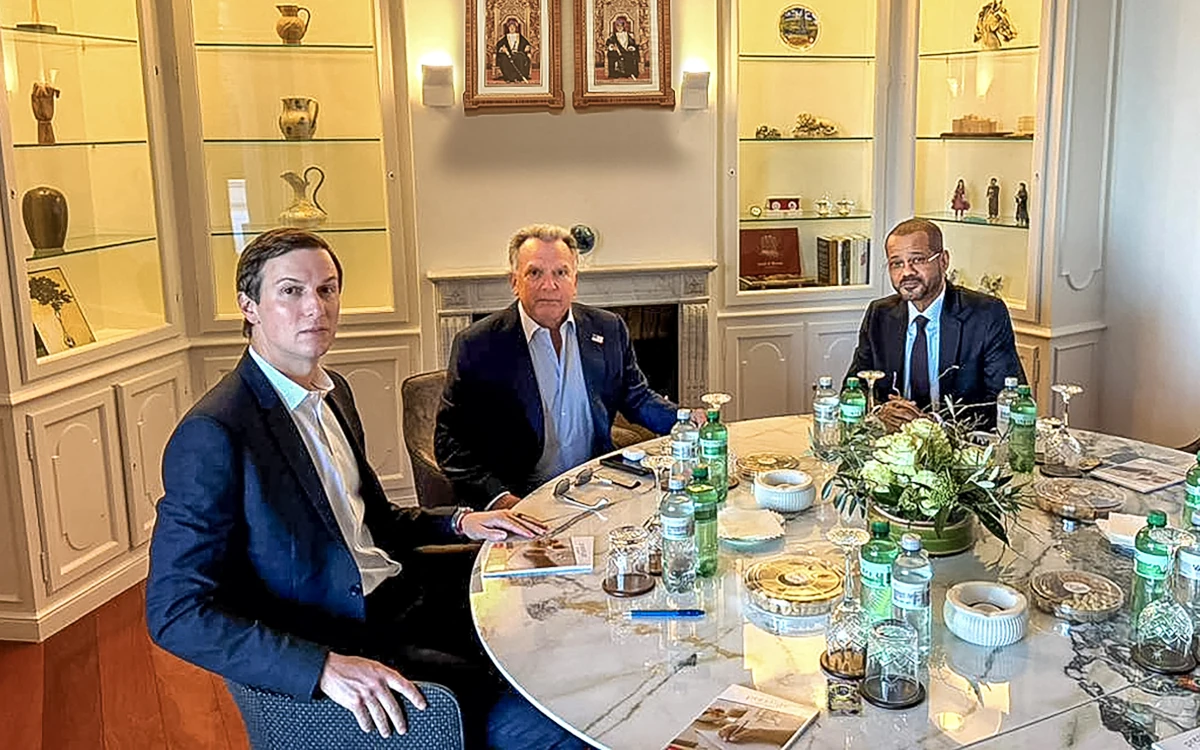
This creates a deeper problem. Any deal along such lines is certain to provoke serious domestic political backlash against the Trump administration for financially rewarding Iran for resisting American power. Moreover, Israel’s government will likely see this as an opportunity to further undermine any deal that is seen to reward Iran, mobilizing its lobbying power in the United States.
If the United States grants sanctions relief, unfreezes assets, or sets up an international fund to incentivize compliance, it could even lead to court action by parties intent on scuppering the deal. They need not necessarily be aimed at the U.S. government, as private entities will be involved in doing business with Iran as well.
Trump’s Suez Moment?
The comparison is not literal, but the similarities are revealing. In 2023, Qatar hosted secret negotiations between the United States and Venezuela to temporarily ease sanctions. The outcome of these negotiations is moot, given that Trump ordered the military raid to capture Venezuelan President Nicolás Maduro. The Iran quagmire will have no such clean ending, despite Trump’s attempts to rhetorically connect the two. Its regional connections are too strong, and its strategic positioning is far more capable of imposing costs for the United States.
The war has already exposed the limits of American military power to achieve its grandiose objectives in Iran. Diplomacy has fared little better, failing to translate battlefield pressure into a durable political outcome. Yet the negotiations reveal something deeper still: the hard limits of the financial and sanctions architecture Washington has relied on for decades to isolate and coerce its adversaries.
If concluding a peace with Iran requires compromising on that very framework, it will spell more than a foreign-policy embarrassment for Trump. It will be the clearest sign yet that the United States can no longer engineer political outcomes by leveraging its economic and diplomatic position. In an increasingly multipolar world, the traditional tools of American coercion are running up against their limits.
In an increasingly multipolar world, the traditional tools of American coercion are running up against their limits