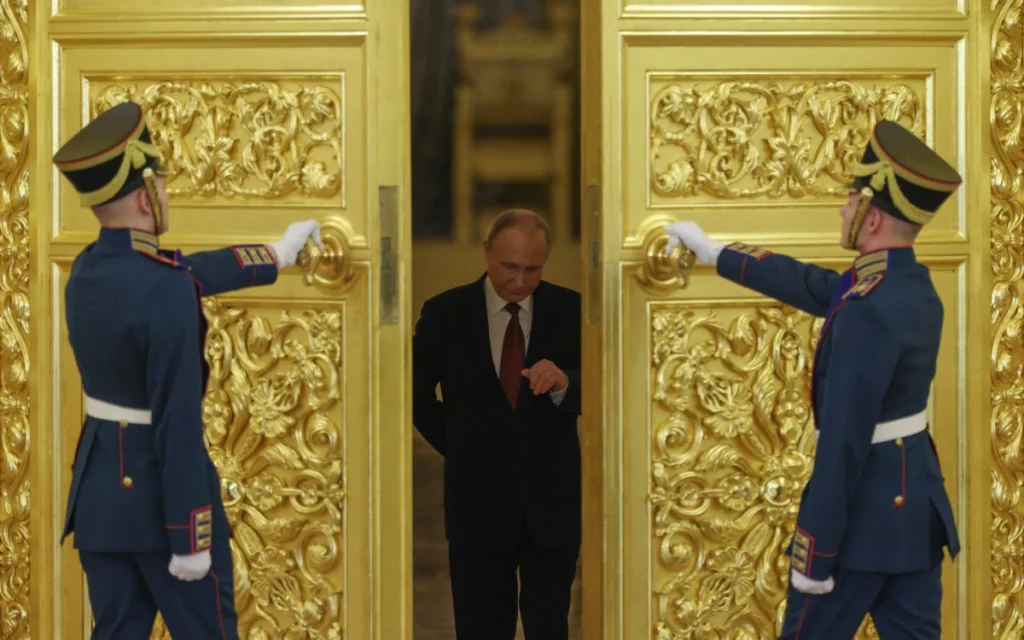
Russian President Vladimir Putin enters the Kremlin Palace. AFP
Share:
Putin’s inner circle has always run on loyalty. War is adding a second test: usefulness. The longer the fighting lasts, the more influence passes to the officials who keep Russia’s war economy running.
Nikolai Patrushev was supposed to be finished. When Vladimir Putin removed his long-serving Security-Council secretary in May 2024 and assigned him responsibility for shipbuilding, the move was widely interpreted in Moscow as retirement with honors. Patrushev remained close enough to the president to avoid humiliation but appeared to have been moved away from the institutions that mattered most. Two years later, he was the official explaining why a Russian frigate had escorted sanctioned oil tankers through the English Channel.
In April 2026, the Admiral Grigorovich accompanied the Russian-flagged Universal and the Cameroon-flagged Enigma, both under British sanctions. Patrushev confirmed the operation and warned that Russia could take further measures to protect maritime trade. The mission was more than an improvised naval gesture. It placed military force behind the commercial infrastructure that continues to convert Russian oil into state revenue.
Within months, Patrushev’s apparent demotion had acquired an institution of its own. The Maritime Collegium, created under his chairmanship, coordinates naval development, shipbuilding, Arctic policy, and the protection of Russia’s maritime interests. It brings together federal authorities, regional governments, and commercial organizations under a body answerable to the president. Patrushev also retained his seat as a permanent member of the Security Council.
The episode does not demonstrate that Patrushev suddenly became a more capable administrator. It demonstrates that the war changed the value of his assignment. Shipbuilding, tanker movements, and access to international shipping routes are no longer secondary economic matters. They now sit at the intersection of sanctions policy, military power, and war finance.
A broader reordering is taking place across the Russian state. Personal loyalty to Putin continues to determine entry into the ruling circle. Within that circle, however, the capacity to maintain production, recruitment, transport, revenue and strategic infrastructure is acquiring greater weight. This does not represent a transition from patronage to meritocracy. Rather, it is a wartime adaptation within a system that remains personalist, opaque, and politically closed.
Personal loyalty to Putin continues to determine entry into the ruling circle. A wartime adaptation within a system that remains personalist, opaque, and politically closed
The Wartime Hierarchy
Andrei Belousov’s appointment as defense minister in May 2024 offered the clearest early indication of this reordering. A civilian economist and industrial planner replaced Sergei Shoigu at a moment when military expenditure, procurement, and the defense-industrial base had become central to the management of the Russian economy.
Putin linked the appointment directly to the scale of defense spending and Belousov’s ability to integrate the security sector’s economic activity into the national economy. Belousov described his mandate in similar terms. The task was no longer simply to administer the armed forces. It was to align military demand with industrial capacity, technological development, labor supply, and public finance.
Belousov’s rise should not be read as evidence that competence has displaced personal trust. He was a loyal technocrat whose economic views were compatible with Putin’s preference for a directive state. What had changed was the type of competence the Kremlin valued most in a loyal official.
Shoigu illustrates the other side of this logic. His loyalty preserved his place in the leadership after he lost the Defense Ministry. He became secretary of the Security Council and continued to hold senior responsibilities. Yet he no longer controlled the institution at the center of military procurement and expenditure. Loyalty prevented exclusion and free fall, but it did not preserve the same operational remit.
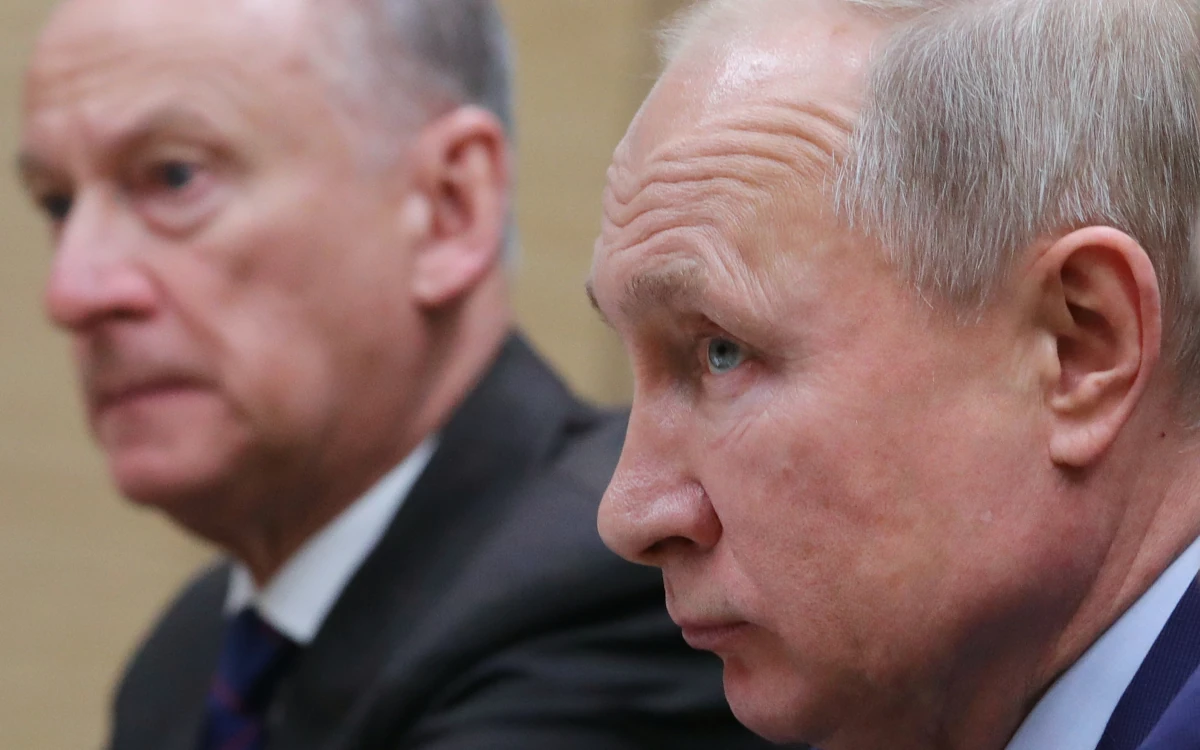
Putin, accompanied by Russian Security Council Secretary Nikolai Patrushev, attends a meeting. AFP
Dmitry Kozak marks the opposite boundary. For years, he was regarded as one of Putin’s most capable troubleshooters and negotiators in the post-Soviet space. The full-scale war made the approach and expertise associated with him increasingly irrelevant to the Kremlin’s chosen course. He resigned from the presidential administration in September 2025 after losing influence over Ukraine policy. Operational ability could not compensate for political divergence from the mission assigned by the president.
Loyalty remains indispensable. Loyal officials whose skills align with wartime priorities receive larger or more strategically valuable assignments. Competence offers little protection once an official’s political position conflicts with the direction set from above.
The war has intensified this selection process because it has imposed pressures that Russia’s prewar system was not designed to manage indefinitely.
Competence offers little protection once an official’s political position conflicts with the direction set from above
Wartime Governance
Fiscal pressures illustrate the process most clearly. Russia weathered the initial sanctions shock better than many governments expected, but the costs of a prolonged war are becoming harder to conceal or postpone. The federal budget recorded a deficit of 5.6 trillion rubles in 2025, equivalent to 2.6 percent of gross domestic product. Oil and gas revenues fell by 24 percent, while expenditure exceeded the original plan. The government raised value-added tax in an attempt to contain the subsequent deficit.
These figures do not, by themselves, point to systemic collapse. The Russian state can raise taxes, channel credit, reduce civilian investment, and distribute losses across companies, regions, and households. Such measures nevertheless increase the political value of officials who can decide where shortages will be absorbed and which sectors will remain protected.
Sanctions have also generated creative pressure, turning improvised methods of circumvention into strategic infrastructure. The shadow fleet, alternative payment channels, reflagging operations, and indirect procurement networks began as ways to bypass Western restrictions.
The resulting division of labor is characteristic of the Russian response. Commercial intermediaries, security agencies, diplomats, shipbuilders, and naval commanders are drawn into the same task without being placed under a single formal command. Officials able to coordinate these networks acquire greater influence because the networks themselves have become indispensable.
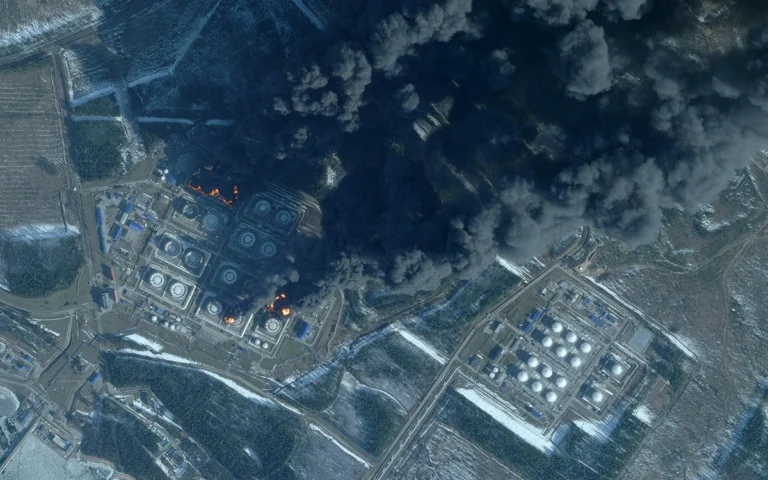
Ukraine’s campaign against Russian energy and transport infrastructure has extended the same logic inside the country. By early July 2026, repeated strikes on refineries had reduced Russian gasoline production to roughly 65 percent of seasonal demand. Moscow responded by rerouting fuel from Siberia, increasing imports, and giving priority to politically sensitive markets.
Infrastructure defense is no longer solely a military responsibility. Companies must finance physical barriers, electronic defenses, backup capacity, and repairs. Regional officials manage local shortages and public frustration. Economic ministries intervene in supply chains. The conflict is being administered through refineries, railways, ports, and balance sheets as much as through military units.
Mobilization creates another distinct pressure. Russia has avoided another nationwide call-up on the scale of September 2022 by relying heavily on paid contract recruitment. That policy has transferred much of the administrative and financial burden to governors, municipalities, and employers.
Regional authorities receive recruitment targets, offer escalating signing bonuses and finance payments to soldiers and their families. Some companies have been assigned quotas for recruiting employees. By April 2026, the Finance Ministry expected the combined deficit of regional budgets to increase by 27 percent to 1.9 trillion rubles, with war-related payments among the principal sources of strain.
Mobilization is therefore no longer simply about how many men the army can enlist. It has become a governance system of its own. Governors are judged partly by recruitment results. Regional budgets absorb personnel costs. Firms lose workers to the military while being pressed to help find replacements for the front. Officials must also manage the families of the dead, the wounded, and the eventual return of veterans.
Mobilization is no longer simply about how many men the army can enlist. It has become a governance system of its own
The Kremlin‘s Time of Heroes program reveals how it intends to manage the political consequences. By May 2026, 70 of the first cohort’s 82 graduates had received appointments in government, municipal bodies, state companies, or development institutions. Veterans are being incorporated individually through positions allocated from above. Their service can be converted into status, but only through channels controlled by the presidential system. This approach replenishes the bureaucracy while making it harder for veterans to emerge as an autonomous political constituency.
Power Without Autonomy
The institutional setting in which these pressures operate predates the invasion.
Alexandra Prokopenko, Senior Fellow at the Carnegie Russia Eurasia Center, has described Russia‘s ruling stratum as a community of managers who possess many outward attributes of power but lack the agency to alter the system’s objectives. They can adapt to circumstances, find technical solutions, and manage crises. They cannot legitimately question the ends those solutions are meant to serve. Russia’s technocrats proved effective after February 2022 partly because the system had spent years rewarding adaptation while eliminating independent political action.
The war is not the original cause of this loss of agency. It is changing the hierarchy inside the dependent elite that resulted from it. The war is now determining which members of that dependent elite become indispensable.
Political autonomy, in this context, means the capacity to define objectives, reject assignments, or deploy institutional resources in pursuit of a political agenda not authorized by the presidential center. Operational discretion is different. Officials can therefore receive broader mandates without becoming independent political actors. Indeed, the growing importance of an assignment often leads to more presidential supervision, competing lines of authority, and closer personal monitoring. The Kremlin rarely allows an indispensable function to become the basis of an autonomous institution.
The Central Bank retains room to choose the instruments for controlling inflation and financial instability. It has no authority to reconsider the war spending that generates much of that instability. The Finance Ministry can bargain over taxation and the timing of expenditure but cannot redefine the state’s priorities. Defense companies can negotiate prices and production schedules while remaining subject to political instructions that override commercial considerations.
This system has several ways of correcting visible failure. Putin can replace an official, split a portfolio, establish a new coordinating body, or give the same task to competing actors. These interventions provide flexibility and reduce the risk that any single institution acquires a monopoly over information.
They are less effective at correcting the assumptions behind policy. Officials have strong incentives to report that assigned tasks are under control. Data have become less transparent, responsibilities overlap, and adverse consequences can be shifted to regions, firms, or households before they become visible at the center. The system adapts repeatedly, but its feedback remains politically filtered.
Strong for War, Weak for Succession
In the short term, the reordering strengthens the state’s capacity to sustain the war.
Technocrats stabilized the financial system after the invasion. Trade and payment routes were redirected. Military production expanded. Governors converted federal recruitment requirements into regional incentives. The energy sector developed ways to manage repeated physical attacks. Naval assets now protect sanctioned commercial traffic.
Predictions of an imminent systemic collapse have repeatedly underestimated this administrative capacity. The Kremlin does not require every institution to perform equally well. It needs to keep a narrower set of functions operating: revenue, coercion, military production, transport, recruitment, and basic social stability.
The Kremlin does not require every institution to perform equally well. It needs to keep a narrower set of functions operating
The costs are accumulating elsewhere. Regions are taking on debt. Civilian investment is declining. Companies finance security measures while competing with the military for workers. Consumers encounter shortages and higher taxation. The state continues solving immediate problems while degrading some of the conditions needed for longer-term institutional performance.
The very same structure, however, creates a problem for succession. The networks responsible for security, military production, energy exports, logistics, and financial stabilization will enter any post-Putin settlement with more resources and more strategically important functions than they possessed before 2022. Yet control of resources is not the same as the ability to build a political coalition.
Most of the officials who have advanced under Putin were selected to administer decisions made elsewhere. They have limited experience in openly negotiating political objectives, creating collective rules, or legitimizing a transfer of supreme authority. The system has made them operationally capable while keeping them politically dependent.
If a successor can reproduce Putin’s position as arbiter, the wartime hierarchy may be incorporated into another centralized presidential arrangement. If no such figure emerges, the more likely result is bargaining among networks controlling different pieces of the state’s coercive and economic machinery.
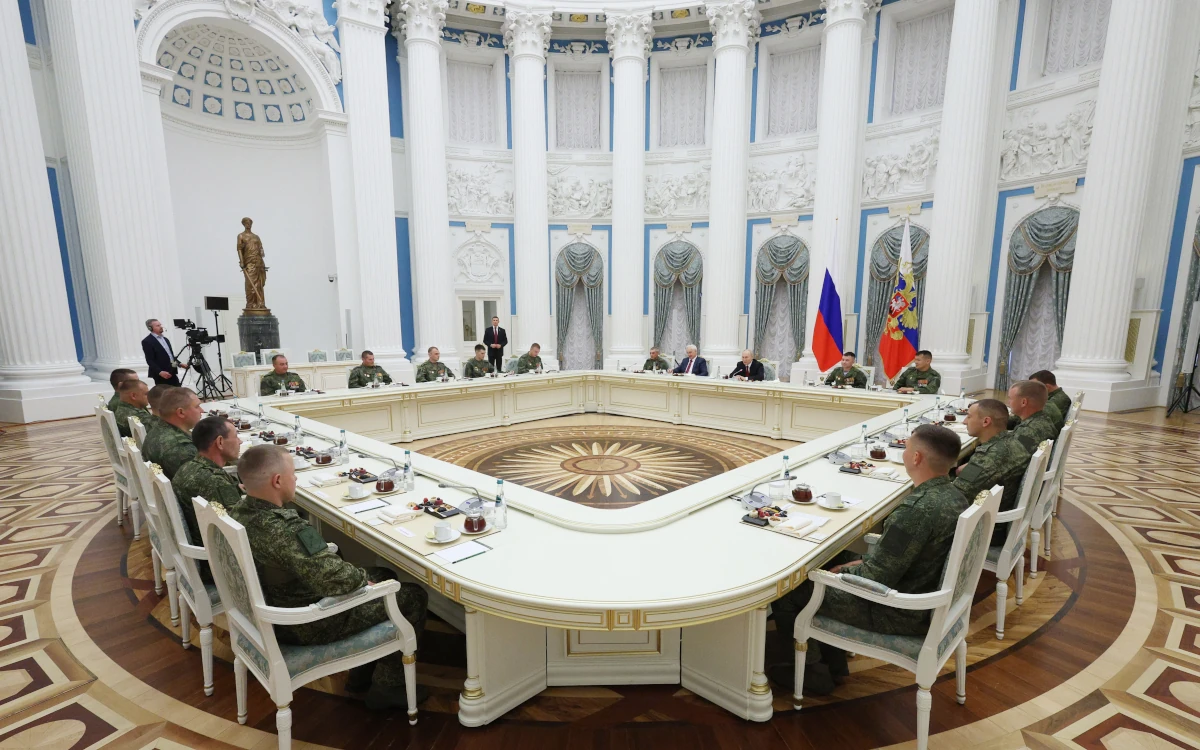
Putin attends a meeting with Russian commanders involved in the Ukraine war. AFP
The principal succession risk may therefore not be an organized revolt by empowered subordinates. Rather, it is that actors with substantial administrative resources may lack both an accepted procedure and sufficient mutual trust to coordinate once the individual who assigned their relative positions is gone.
This differs from the Soviet wartime model. After the German invasion in 1941, the USSR created the State Defense Committee, concentrating authority over military and economic mobilization within a single institution that stood above the ordinary machinery of government. Putin’s Russia has instead distributed wartime functions across ministries, regional governments, corporations, and presidential bodies while keeping political authority concentrated in the Kremlin.
That difference reflects the nature of contemporary attritional warfare. The relevant systems are dispersed. Refineries, shipping registries, insurers, electronics supply chains, banks, telecommunications networks, and commercial ports have become integral to military endurance. Officials responsible for sustaining these systems may now be as important to the war effort as those commanding forces at the front.
The Politics of Demobilization
The eventual end of large-scale fighting would not simply reverse this process.
The actors who have acquired influence through the war do not form a unified constituency with identical interests. Defense manufacturers benefit from state orders. Security institutions defend expanded responsibilities. Financial technocrats spend much of their effort containing damage and may prefer greater economic normalization. Energy companies need access to markets but have also invested in sanctions-resistant logistics.
What the war is creating is institutional inertia. Ministries have enlarged their mandates. New coordinating bodies have been established. Companies have reorganized around state contracts and security requirements. Careers have been built on administering sanctions evasion, mobilization and emergency allocation. These structures will seek new tasks and resources even if the intensity of the fighting declines.
Demobilization would also require the state to resolve questions the war has allowed it to postpone. Which industries should lose military orders? Who will finance the reintegration of veterans? How should regions be compensated for debt and labor losses? What happens to the commercial networks that grew around sanctions evasion? Which security responsibilities should return from companies to the state?
The same elite that proved capable of improvising under emergency conditions would have to dismantle arrangements from which its members derive budgets, access and relevance. Yet it would have to do so without the independent political authority to negotiate a new settlement.
Prolonged war is increasing the relative weight of officials who maintain the systems on which Russia’s military endurance depends, without giving them greater authority over the purposes those systems serve. Ending large-scale fighting would remove some of the pressures that produced this hierarchy, but it would not create the institutions needed to dismantle it.
Russia may ultimately prove better equipped to continue the war than to unwind the political and administrative machinery built to sustain it. That paradox should temper expectations abroad. The strain now visible in Kremlin‘s budgets is real, but a system built to absorb shortages and push them onto regions, firms, and households does not fracture easily. Nor would the end of the fighting hand the West a weakened, more flexible Moscow; it would more likely keep it organized around a war it no longer wages. The question Putin’s state now faces is not whether it can keep fighting, but whether it can ever stop.
The question Putin’s state now faces is not whether it can keep fighting, but whether it can ever stop
Dr. Alexander Dubowy is a Vienna-based analyst specializing in geopolitical risk and security in Eastern Europe, Russia, and the post-Soviet space. With over 20 years in research, consulting, and policy analysis, he works with leading international research institutes and think tanks. Dubowy brings rigorous geopolitical and legal insight, regional fluency, and practical perspectives to his commentary.
Get access to in-depth analysis, exclusive intelligence, and expert reports designed to keep you
informed and ahead of the curve on the most important global developments.
Get access to in-depth analysis, exclusive intelligence, and expert reports designed to keep you
informed and ahead of the curve on the most important global developments.