
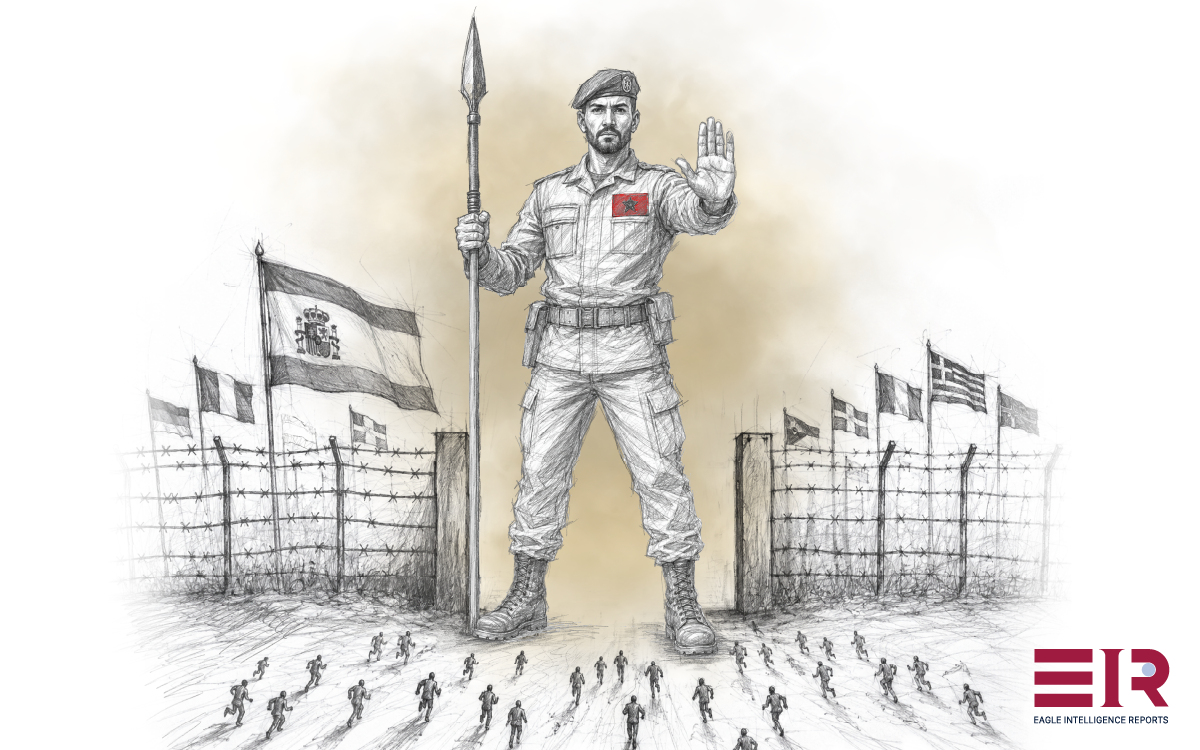
Europe has made Morocco the guard of its southern border. It funds Moroccan border control and relies on Rabat to stop migrants before they reach Spain. Yet Europe also keeps pulling Morocco closer, buying more than half of its exports and hiring its workers to fill European jobs. The more Europe leans on Morocco, the more Rabat can ask in return.
These two aims sit awkwardly together. The same integration Europe promotes can increase both the capacity to migrate and the economic incentives for doing so. Morocco is not just a source of migrants on Europe’s edge. It is one of Europe’s factories, an important labor pool, and its border guard at once.
That points to a harder conclusion than the usual worry that development has failed to keep people home. Development and integration are turning migration into a lasting feature of Morocco’s relationship with Europe, and a source of leverage within it. The scale is already striking. Moroccans hold more European residence permits than any other non-EU nationality, roughly 2.2 million. As incomes, education, and information rise, more people gain the means and the ambition to move faster than domestic jobs appear. A wealthier Europe next door, short of workers, gives them a place to go.
Development and integration are turning migration into a lasting feature of Morocco’s relationship with Europe, and a source of leverage within it.
This is the contradiction Europe has not resolved. It cannot deepen trade, recruit workers, and widen connectivity while expecting development to hold migration down. And the more it relies on Morocco to guard the border, the more leverage Rabat gains over questions well beyond migration. Spain saw this after the 2021 crisis at Ceuta, which preceded its reversal on Western Sahara. Morocco has become a test of whether Europe can manage migration through development and border deals when both increasingly bind the two together.
Development Creates New Mobility
Morocco’s economic transformation is real, but its employment structure has not evolved at the same pace. The World Bank estimates that Morocco’s economy grew by 4.9 percent in 2025, its strongest performance in a decade, driven largely by public investment and an improving agricultural sector. Yet broader labor underutilization reached 22.5 percent, illustrating the distance between aggregate economic performance and the effective use of the country’s workforce. The International Monetary Fund has similarly identified sustainable job creation as a pressing priority, calling for a more dynamic private sector and labor-market reforms. Its assessment is important because Morocco’s challenge is not simply whether the economy is growing, but whether growth generates enough productive employment for a young population.
This is where the migration “hump” becomes analytically useful. Development can increase migration during its earlier stages because higher incomes, education, information, and social networks give more people both the means and the desire to move. Migration can therefore rise before domestic economic conditions become sufficiently attractive to reduce the incentive to leave.
Morocco’s proximity to Europe intensifies that mechanism. Development is simultaneously expanding the capabilities of Moroccan workers and connecting them to a labor market where wages, employment opportunities, and demographic conditions differ sharply from those at home. The important point is therefore not that Moroccan growth is failing. It is that growth is producing greater mobility before it has produced sufficient domestic employment to absorb all of the aspirations that growth generates.
Europe Pulls While Morocco Pushes
European integration gives that domestic dynamic an external destination. The EU is Morocco’s largest trading partner and its largest foreign investor. Industrial trade between the two sides is fully liberalized under their trade framework, while Morocco has become deeply embedded in European supply chains, particularly in automotive and other manufacturing sectors. That integration does more than move goods across the Mediterranean. It creates networks between companies, workers, institutions, and households. It increases familiarity with European markets and employment conditions while strengthening the economic and social infrastructure through which people can move.
The scale of legal mobility demonstrates that migration is not synonymous with irregular crossings. EU countries issued 188,400 first residence permits to Moroccan citizens in 2024, the third-highest total for any non-EU nationality. At the end of that year, Moroccan citizens held approximately 2.2 million valid residence permits across the EU, the largest such group among non-EU nationalities. The composition is equally revealing. Family-related migration accounted for the largest share of first permits issued to Moroccan nationals in 2024, while Moroccans were also among the leading recipients of EU study and research authorizations. These patterns demonstrate the importance of established communities and institutional channels in sustaining mobility.

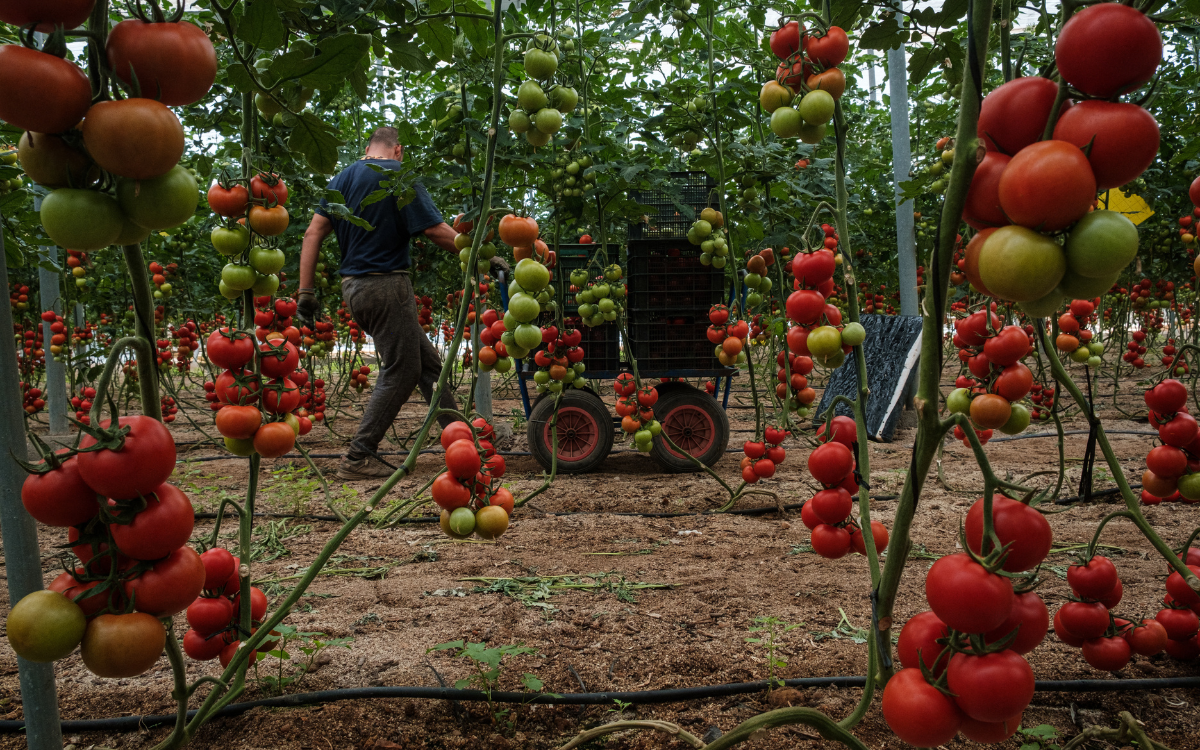
The EU has also moved toward actively organizing labor mobility. Its Talent Partnership with Morocco identifies mechatronics, construction, agriculture, tourism, and lorry driving as priority sectors, with care and metallurgy also identified as areas of interest. This creates an important strategic contradiction. Europe is not simply trying to stop Moroccan mobility; it is selectively facilitating it where European labor markets need workers while attempting to restrict forms of migration it considers irregular.
Europe is not simply trying to stop Moroccan mobility; it is selectively facilitating it where European labor markets need workers while attempting to restrict forms of migration it considers irregular.
Climate Widens the Labor Gap
Climate pressure strengthens the same structural dynamic because it weakens one of Morocco’s most important employment sectors. The agricultural sector accounted for 16 percent of Morocco’s GDP and 19 percent of exports in 2023, while providing 67 percent of rural jobs. Repeated droughts have reduced agricultural production, particularly rain-fed cereal output, exposing the country’s employment structure to increasingly severe water and climate pressures.
Climate change should therefore not be treated as an isolated explanation for migration. Its significance lies in how it interacts with Morocco’s employment problem. When drought reduces agricultural incomes and employment, it increases pressure on other parts of the economy. That pressure builds precisely when Morocco is trying to create enough productive jobs for its expanding working-age population.
The IMF has explicitly linked elevated unemployment in Morocco to agricultural job losses following repeated droughts. The climate problem is consequently also a labor-market problem, and the labor-market problem interacts with an external European market that offers alternative opportunities. This makes migration not simply a reaction to environmental hardship, but an outlet within a wider system of economic adjustment. People move from rural areas to cities, from lower-productivity sectors to higher-productivity ones, and in some cases across borders when international opportunities offer stronger returns.
Border Control Creates Interdependence
The European relationship becomes more strategically complicated because Morocco is not only a source of migrants. It is also a crucial partner in Europe’s effort to manage migration before it reaches European territory. The EU has invested substantially in Moroccan migration and border-management capacity, including cooperation against migrant smuggling and irregular migration. European policy has consequently moved part of migration control beyond the EU’s physical borders and into partnerships with countries such as Morocco.
That arrangement creates mutual dependence. Europe needs Moroccan cooperation to manage migration routes, while Morocco depends heavily on European trade, investment, and access to labor markets. The 2021 Ceuta crisis demonstrated how sensitive that interdependence can become. Spain and Morocco experienced a major diplomatic rupture after thousands of people entered the Spanish enclave. The European Parliament condemned the use of migration pressure and linked the episode to broader tensions between Madrid and Rabat.
The episode should not be reduced to a claim that Morocco mechanically “weaponized” migration. The available evidence does not establish such a simple causal relationship. What it did demonstrate was that European border security can become vulnerable to diplomatic deterioration with a partner whose cooperation is strategically important. That vulnerability matters beyond migration itself.
European border security can become vulnerable to diplomatic deterioration with a partner whose cooperation is strategically important.
Migration and Diplomatic Leverage
The evolution of Spain–Morocco relations after the Ceuta crisis illustrates why migration cannot be separated neatly from wider diplomacy. In March 2022, Spain announced a new phase in its relationship with Morocco, explicitly highlighting cooperation on migration management alongside the movement of people and goods. Madrid subsequently shifted its position on Western Sahara, supporting Morocco’s autonomy proposal as the basis for a political solution.
The evidence does not establish that migration cooperation caused Spain’s Western Sahara policy shift. Such a conclusion would oversimplify a relationship shaped by security, trade, energy, regional politics, and diplomatic calculations. The more defensible strategic conclusion is that dependence on Morocco for migration management forms part of a broader interdependence that affects Europe’s bargaining position. The more valuable Moroccan cooperation becomes to European security and economic interests, the more difficult it becomes to isolate migration policy from other bilateral disputes. These include Western Sahara and human rights.
The relationship has continued to deepen. In January 2026, the EU and Morocco reaffirmed cooperation across migration, security, trade, investment, climate, and socioeconomic development, describing the relationship as a strategic partnership. The result is a relationship in which migration is simultaneously a social outcome, an economic resource, a security concern, and a diplomatic instrument.
The result is a relationship in which migration is simultaneously a social outcome, an economic resource, a security concern, and a diplomatic instrument.
Beyond the Domestic Migration Model
Morocco therefore challenges migration analysis that looks primarily inside the country of origin. Unemployment, demographics, climate stress, and unequal development remain essential variables. But they explain only part of the story. They do not fully explain why migration becomes particularly attractive next to a wealthier economic bloc. Deep integration into European supply chains, ties to its labor markets, and established diaspora communities all sharpen that pull.
The international structure changes the meaning of domestic conditions. A Moroccan worker facing unemployment is responding to one set of incentives. That same worker faces unemployment inside a highly connected economy. With relatives in Europe, access to European information, and emerging legal recruitment pathways, the calculation looks entirely different.
This is why Morocco’s experience matters beyond Morocco. As African economies connect to global markets, migration may initially become more prominent. Development increases the capacity to move, while integration expands the destinations and opportunities available. For Europe, the implication is equally significant. Policies that treat development as a mechanism for reducing migration may underestimate the way economic integration itself generates mobility. Europe cannot simultaneously deepen trade, recruit workers, expand connectivity, and rely on African partners to police borders while assuming that development will automatically make populations less mobile.
The strategic challenge is therefore not simply to make Moroccans stay or to make Europe more effective at stopping irregular movement. It is to understand the structure producing the mobility in the first place. Morocco is becoming more economically capable, more globally connected, and more deeply integrated with Europe. Those changes may eventually reduce migration pressures if domestic employment and living standards catch up with rising aspirations. In the transition, however, they can make migration more important.
That is the deeper Morocco paradox: the country is not migrating away from development. It is migrating through development, within an international system in which European economic demand, labor mobility, and geopolitical dependence increasingly shape what development means. For Africa, the lesson is broader still. Development policy cannot be evaluated solely by asking whether it raises GDP or reduces emigration.
The more consequential question is whether African economies can generate sufficient productive opportunity while negotiating the external relationships that increasingly determine how their people, capital, and labor move across borders. Morocco’s experience suggests that migration is not merely a problem development is expected to solve. It is becoming a structural feature of the development relationship between Africa and Europe—a source of leverage that will shape how Europe bargains along its southern border.
Migration is becoming a structural feature of the development relationship between Africa and Europe—a source of leverage that will shape how Europe bargains along its southern border.