
Russia lost Armenia’s election. That may not matter much. On June 7, 2026, Armenians handed Nikol Pashinyan another term with nearly 50 percent of the vote. It was the country’s first national vote since Azerbaijan seized Nagorno-Karabakh in 2023, and it looked like a verdict against Moscow.
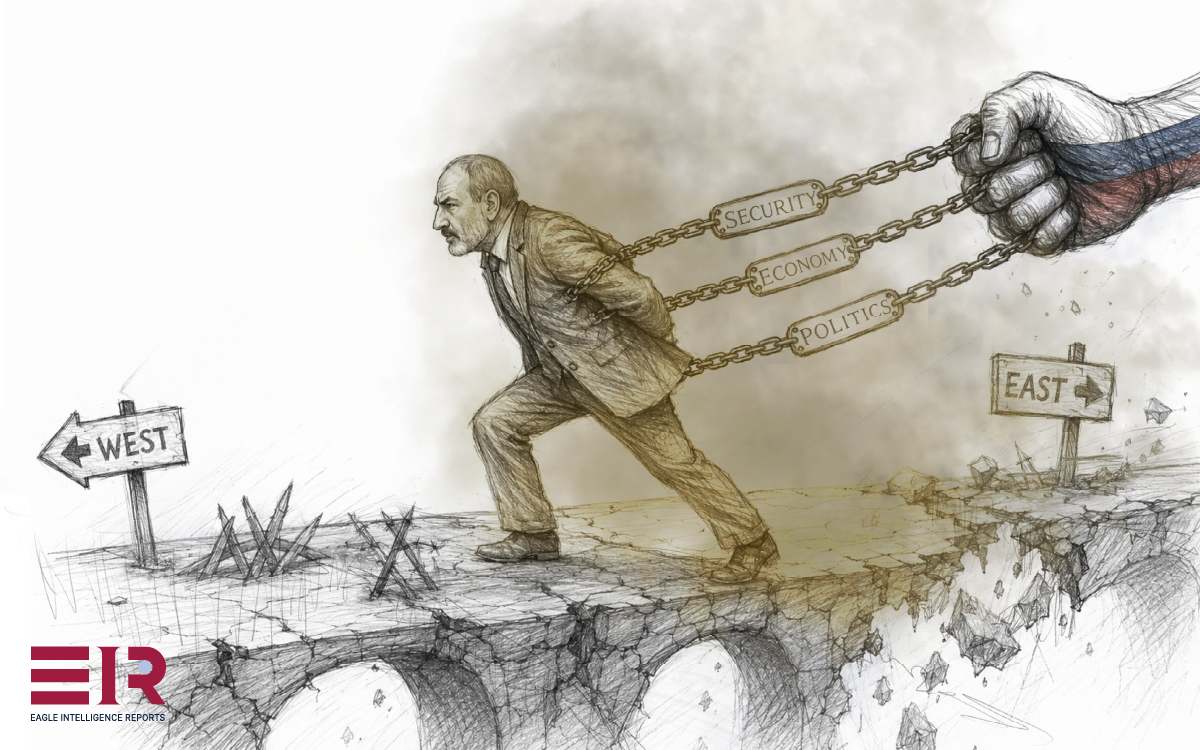
The result, however, obscures a more important dynamic. Great powers no longer need to directly determine political outcomes in states caught between them. They need only raise the cost of strategic realignment. In this sense, Moscow lost the vote but maintained its leverage. Armenia’s question is no longer whether it can turn west, but what that turn will cost.
Moscow lost the vote but maintained its leverage. Armenia’s question is no longer whether it can turn west, but what that turn will cost
Before the vote, the obvious assumption was that Russia’s goal was to defeat Pashinyan outright or restore a more Moscow-friendly government. Yet Moscow appears to have pursued a narrower and more durable objective. Russian pressure was aimed less at a clean electoral reversal than at generating political friction around Armenia’s diversification away from Russia. The purpose was to raise the political, economic, and symbolic costs of every step toward the European Union, the United States, Azerbaijan, and Turkey.
The outcome itself was clear. With all polling stations counted, Armenia’s Central Election Commission put Pashinyan’s Civil Contract first at nearly 50 percent, on a strong turnout exceeding 58 percent. Strong Armenia, associated with Russian-Armenian billionaire Samvel Karapetyan, came in second with around 23 percent. Civil Contract secured a governing majority but not the constitutional strength needed to pass amendments linked to the most sensitive parts of the peace agenda with Azerbaijan. That distinction is now the central fact of Armenian politics. It is also Moscow’s opening.
Moscow’s Real Objective
International media reported on May 29, 2026, that Russia had intensified covert efforts to undermine Pashinyan’s re-election. The reporting mostly cited Western intelligence and government officials. Moscow feared that another victory would consolidate Armenia’s drift away from Russia. The reported methods included disinformation, influence structures, and a plan to bring Russia-based Armenian citizens home to vote against him. Russia has dismissed the allegations as anti-Russian fabrications.
Armenia’s turn away from Moscow is the residue of a security failure, not an ideological conversion. Russia failed to prevent Azerbaijan’s military takeover of Nagorno-Karabakh in 2023. Russian peacekeepers did not protect the Armenian population there. The CSTO proved irrelevant to Armenia’s wider security concerns, including after Azerbaijani incursions into Armenian territory. For Yerevan, the conclusion was unavoidable: dependence on Russia had stopped producing security.
Pashinyan’s answer rested on three connected moves. He reduced security dependence on Moscow, pursued normalization with Azerbaijan and potentially Turkey, and deepened institutional and economic ties with the European Union and the United States. Russia remains important for Armenian trade, energy, labor migration, and parts of the political-media ecosystem. But the overall political direction has changed decisively enough for Moscow to treat it as a strategic problem.
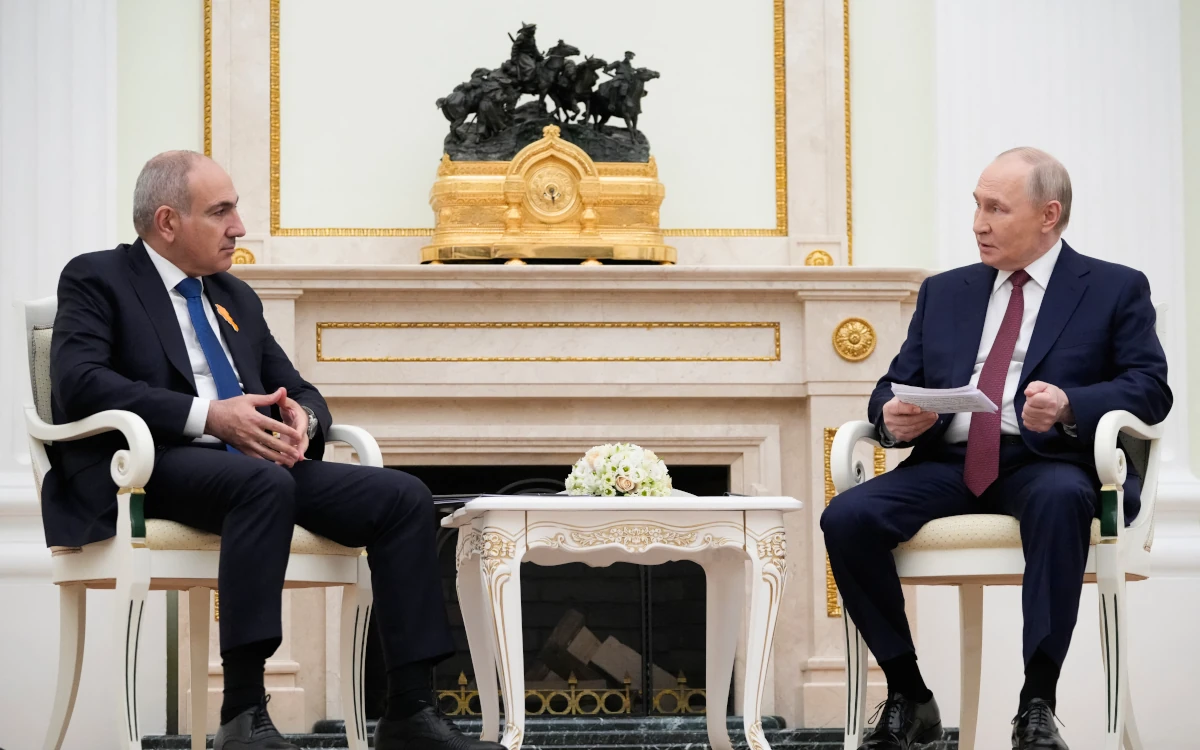
At their Kremlin meeting on April 1, 2026, Vladimir Putin told Pashinyan that simultaneous membership in the European Union and the Russian-led Eurasian Economic Union was impossible. The warning mattered less as a technical statement than as a political admission, and it showed that the relationship has entered an either-or phase. A structural shift of this kind cannot be reversed by a single election.
The Kremlin’s objective was therefore obstruction and delay, not reversal. It sought to turn a likely Pashinyan victory into a politically contested mandate. By portraying the result as foreign-backed and amplifying existing social and political divisions, Moscow aimed to raise the cost of Armenia’s realignment. The outcome further reinforced those constraints by limiting Pashinyan’s ability to pursue the most politically sensitive elements of his agenda.
This does not mean that Armenia is a passive object of great-power rivalry. Yerevan is trying to convert the failure of Russian security guarantees into a strategy of sovereign diversification. But that strategy now must survive domestic polarization.
Yerevan is trying to convert the failure of Russian security guarantees into a strategy of sovereign diversification. But that strategy now must survive domestic polarization
Armenia’s Internal Fractures
Russian influence would have had little to work with if Armenia had no internal fractures. But the trauma of Karabakh remains unresolved, and Pashinyan remains its political face. To supporters, he is the leader trying to salvage Armenian statehood from a disastrous inheritance. To opponents, he is the man of defeat and concession, presiding over a peace process they regard as capitulation.
The confrontation with the Armenian Apostolic Church widened the campaign from foreign policy into a struggle over national identity and the moral language of statehood. The 2025 arrest and prosecution of Archbishop Bagrat Galstanyan, a leading figure of the church-driven protest movement, hardened that conflict. The opposition was fragmented, but fragmentation did not make it irrelevant. Billionaire Karapetyan could not run. Under house arrest and barred from the ballot, he directed the Strong Armenia bloc, fronted by his nephew Narek, who led them to a second-place finish. Robert Kocharyan’s Armenia Alliance also crossed the threshold. The opposition accumulated enough grievance to narrow Pashinyan’s room for maneuver after the vote.
Channels of Russian Pressure
Russian pressure operated through several channels. The first was informational. The same reporting mentioned a Kremlin Directorate for Strategic Cooperation and Partnership, created to oversee influence operations in Armenia. The structure reportedly worked with political consultancies and think tanks, including the Social Design Agency, already sanctioned in the EU and the UK for anti-Ukraine disinformation. One document reportedly proposed a diaspora-facing outlet to promote the message that Armenia could prosper only in close alliance with Russia. The objective was not necessarily to persuade a majority. It was to contaminate the political environment, making every Western-facing Armenian decision appear externally scripted.
The second channel was diaspora mobilization. Because Armenians cannot vote from abroad, Russian officials reportedly considered transporting Russia-based citizens home, with estimates of roughly $50 million to move 100,000 voters. The reporting could not establish whether Moscow implemented the plan. But the political effect of such plans does not depend entirely on implementation. Once the allegation of imported voters enters the campaign, it becomes part of the legitimacy struggle.
The third channel was economic pressure. Moscow restricted Armenian exports, including agricultural products, fish, alcohol, and mineral water, formally on phytosanitary grounds, while signaling that preferential gas pricing was no longer guaranteed. Putin warned that Armenia could lose an estimated 14 percent of its GDP. The European Commission responded with more than €50 million in immediate assistance and market access. That support was necessary, but it also confirmed that Armenia’s economy has become part of the geopolitical contest between Brussels and Moscow.
A fourth layer was domestic rather than directly Russian: the legal and legitimacy battlefield created by the Armenian state’s confrontation with Russia-linked opposition networks. This is illustrated by Karapetyan’s house arrest, the detention of senior Strong Armenia figures on money-laundering and vote-buying charges, investigations into Prosperous Armenia and the Armenia Alliance, and Galstanyan’s prosecution. These steps can be read in two ways: as defensive actions against networks vulnerable to Russian influence, or as an incumbent narrowing the field. For Moscow, both readings are useful because each deepens doubt about the fairness of the campaign.
The Vote Count and Constitutional Constraint
International observers captured this ambiguity. Their preliminary assessment described the election as offering voters a genuine choice in a well-run process. The same assessment noted direct pressure from abroad through escalating trade restrictions and security threats. It also raised concerns over criminal proceedings against opposition figures and pressure on public-sector employees.
On the surface, the election outcome appears to represent a setback for Moscow. Pashinyan won convincingly, turnout was high, and Moscow did not overturn the count. That much is true. Yet it is likely that overturning the count was never in the cards. In the election’s wake, the relevant test is whether Armenia’s westward shift now becomes more costly, more contested, and slower. None of the Russian machinery of influence was built for election day alone. It remains in place for what comes after.
In the election’s wake, the relevant test is whether Armenia’s westward shift now becomes more costly, more contested, and slower. None of the Russian machinery of influence was built for election day alone. It remains in place for what comes after
Indeed, the result itself supplied a second and more durable source of friction. Azerbaijan has made the removal of constitutional language it interprets as an implicit claim to Nagorno-Karabakh a central condition for a final peace agreement. Pashinyan now needs either opposition support or a broader political strategy capable of surviving parliamentary obstruction and public mobilization. That changes the nature of the peace process. What Yerevan and Baku can negotiate may now matter less than what Pashinyan can pass at home.
The same domestic arithmetic affects the wider regional agenda: reopening transport links, normalizing relations with Turkey, and reconnecting the economies of the South Caucasus. Each step now depends not only on diplomacy but on Armenia’s capacity to absorb the political cost of that diplomacy. Civil Contract’s parliamentary majority gives Pashinyan the government. Its lack of constitutional reach gives his opponents the terrain on which to resist him.
The West’s Dilemma
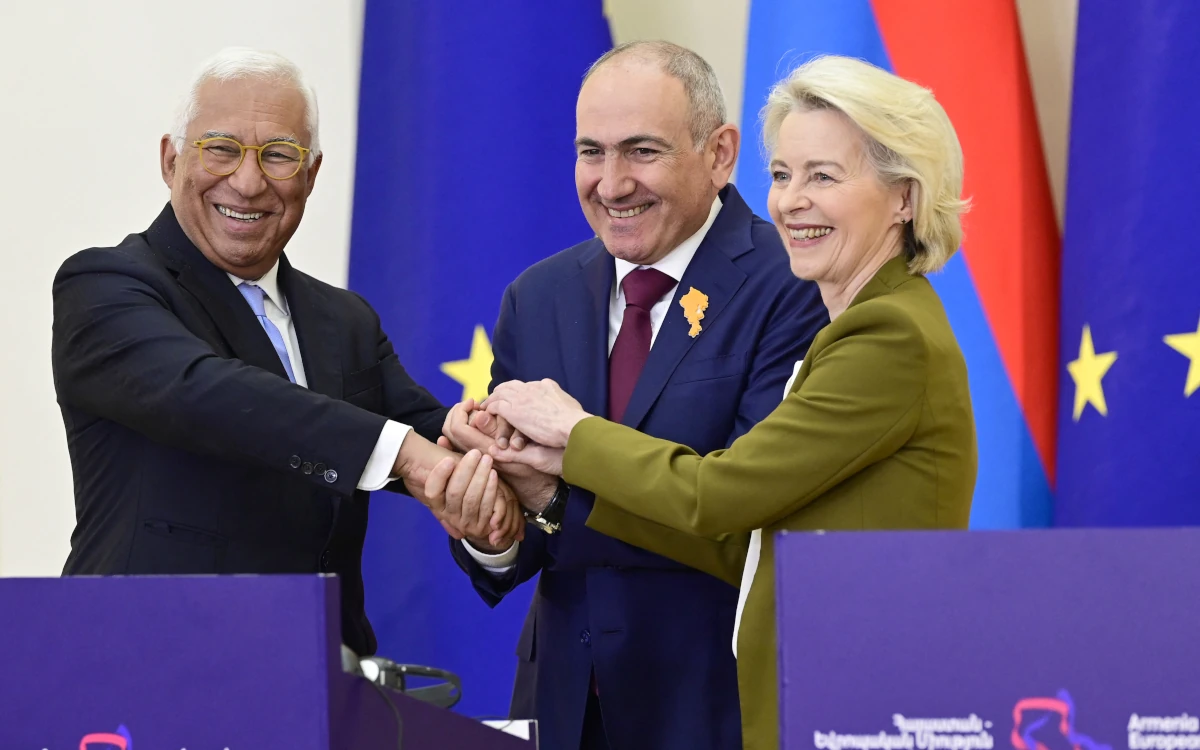
The West faces a dilemma of its own. Its support for Armenia is necessary, but its visibility and involvement feed the narrative Moscow wants to sell. Trump’s late campaign endorsement of Pashinyan, European support, and parts of the Western response that framed the result as a victory over Russian coercion signal a sense of solidarity. But they also hand Moscow a familiar script. Thus, Russia’s foreign ministry cast the election as the product of Western interference in a polarized society.
The West faces a dilemma of its own. Its support for Armenia is necessary, but its visibility and involvement feed the narrative Moscow wants to sell
Going forward, economic cushioning, energy diversification, and election monitoring remain essential. But framing also matters. The more Western support is personalized through Pashinyan, the easier it becomes for Moscow to recode Armenia’s diversification as foreign tutelage rather than sovereign choice.
The election did not settle whether Russia retains influence in the South Caucasus. It does. Nor did it produce a clean rupture. Armenia remains too exposed and too connected for that. The real question is whether Armenia can continue reducing Russian leverage without being paralyzed by the political costs of doing so.
Moscow’s power in Armenia is no longer that of a confident hegemon. It is the power of a declining patron that is able to punish and disrupt but no longer able to command. Its leverage now lives in what remains unresolved. That makes it less predictable, not less dangerous.