
The guns fell silent in Iran after a 60-day ceasefire was called on June 17 via a Memorandum of Understanding. But the pause should not be mistaken for peace. Given the repeated infractions, the ceasefire now looks less like a meaningful end to hostilities and more like a period of military regeneration under diplomatic cover. No broader resolution is likely, especially as Israel remains inclined to act unilaterally against Hezbollah in Lebanon.
After shipping resumed through the Strait of Hormuz, an Iranian drone attack on 25 June provoked U.S. airstrikes against Iran. The incident offered the clearest indication yet that the ceasefire deal may just be a window for replenishment, repair, repositioning, intelligence collection, force protection, and contingency planning.
As the uneasy pause holds, Iran, Israel, and the United States are quickly moving to improve their strategic position. Each party aims to rebuild capacity, shore up vulnerabilities, and harden its systems and infrastructure. This is not a preparation for peace but rather war. Whoever can maximize effect during the regeneration cycle will have the upper hand when talks break down again.
Iran, Israel, and the United States are quickly moving to improve their strategic position. Each party aims to rebuild capacity. This is not a preparation for peace but rather war
The U.S. Regeneration Problem
A paradox exists at the core of American strategy. The United States and its partners have clearly superior military capacity, but they face a replenishment crisis with high-end munitions. The 39-day campaign proved that American and allied forces can employ overwhelming kinetic strikes against Iranian leadership, missile infrastructure, nuclear facilities, and regional military assets. But it also exposed a glaring structural vulnerability: precision warfare and air defense consume weapons that are also the hardest and most expensive to replace.
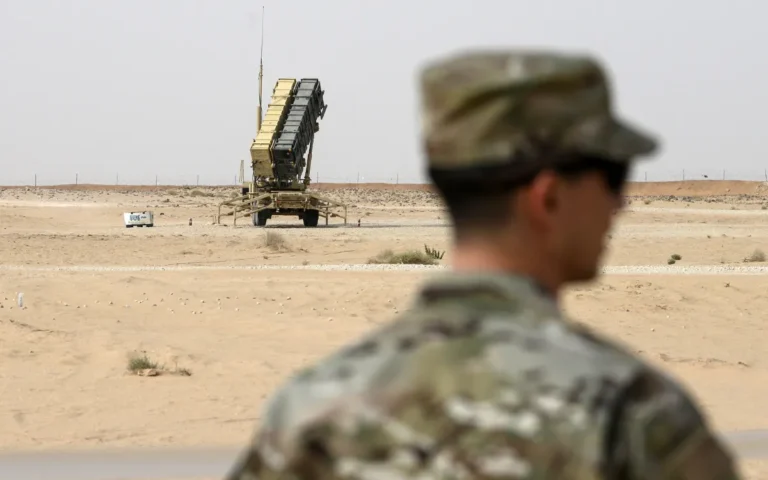
Long-range strike systems, air-defense and naval interceptors, and precision-guided munitions require not months but years to regenerate. Tomahawks, Patriot and THAAD interceptors, and SM-3 and SM-6 interceptor missiles have slow production lines, highly specialized components, and are produced within a heavily constrained industrial process. The United States can redeploy ships and aircraft in days; it cannot rebuild depleted missile depth on the same timeline. For example, in a year, the United States was only able to produce about 100 Tomahawks, 600 Patriot interceptors, and 100 THAAD interceptors. Yet several years of production have been expended in under six weeks of war. Consequently, President Trump has invoked the Defense Production Act to force the industrial base to boost munitions production.
The ceasefire has reduced the munitions burn rate, giving the defense industry more time to convert increases in funding into actual production. It also allows military planners to conduct battle damage assessments, audit remaining inventories, move war matériel, and identify the minimum number of weapon systems and munitions needed for deterrence and contingencies in other theaters.
U.S. Regeneration Priorities
Washington’s first priority is munitions accounting, replenishment, and innovation in the deployment of new air defense systems and tactics. The Pentagon must identify which stockpiles need immediate backfilling from existing inventories—requiring accelerated procurement—and which necessitate long-term production expansion. Congress can appropriate funds, but industry needs time to source sub-tier components, energetics, electronics, rocket motors, seekers, and castings.
The ceasefire has given Washington a temporary reprieve, but the constraints limiting replenishment are structural and long-term. Whether it is sourcing critical minerals, rare earths, or chemicals, the time horizon is years. Success in these endeavors will also require that the United States convince its allies and partners to provide munitions and other industrial inputs to make various weapons and munitions. Yet this comes at a time when those alliances are more strained than at any moment in recent memory.
The ceasefire has given Washington a reprieve, but the constraints limiting replenishment are structural and long-term. Whether it is sourcing critical minerals, rare earths, or chemicals, the time horizon is years
Furthermore, the Pentagon must also contend with the growing impact of the war on domestic political timelines. The 2026 war exposed critical American vulnerabilities in energy transmission and sulfur supply chains. It proved that a Middle Eastern disruption directly impacts household economics and manufacturing in the United States, with political consequences. U.S. military capabilities provide options, but political timelines dictated by global energy markets and inflation determine the political viability of choices.
The second priority requires maintaining forward force posture. These deployments are costly and operationally taxing, but drawing them down creates new vulnerabilities prematurely. Carrier strike groups, destroyers, air-defense assets, ISR platforms, bombers, tankers, and ground forces reassure partners while preserving enforcement options. They enable responses like the U.S. airstrikes that followed the Iranian drone attack in Hormuz. Reducing that posture signals to Tehran that Washington treats the ceasefire as a permanent closure rather than a conditional pause.
The third priority is intelligence collection. A ceasefire massively increases the value of persistent surveillance. U.S. and allied ISR is aggressively monitoring Iranian missile bases, tunnel complexes, drone facilities, naval activity, air defenses, proxy movements, and nuclear sites. Similarly, given the heavy damage to at least 20 U.S. bases across the Middle East that Iran inflicted, this window also gives American forces time to repair critical facilities and assess force positioning in newly hardened infrastructure.
Allied Coordination and Regeneration
Israel and allied Gulf states also have a similar regeneration problem. Israel will be looking to further degrade Hezbollah, repair air-defense networks, replenish Arrow interceptor stocks, and finalize contingency plans if Iran develops a nuclear weapon or fully activates its proxies against Israel. Given Iranian missile strikes in the region, Gulf states will prioritize layered air and missile defense, port security, critical infrastructure protection, and maritime resilience. While each Gulf country has its own threat perception and bargaining approach to Iran, all understand that even a fully open Strait of Hormuz fails to eliminate Iran’s capacity to impose serious costs via missiles, drones, naval mines, cyber activity, and proxy activation.
Synchronization in these efforts strengthens deterrence across the region. Fragmentation gives Iran asymmetric advantages to exploit. The United States will prioritize munitions conservation and reduce risk. Israel will maximize readiness for renewed actions, be they unilateral or multilateral. Most importantly, Gulf states will demand de-escalation paired with protection of revenue sources, be it energy infrastructure or maritime shipping. In short, the ceasefire is testing coalition coordination perhaps just as much as military action did.
Synchronization in allied regeneration efforts strengthens deterrence across the region. Fragmentation gives Iran asymmetric advantages to exploit
Iran’s Reconstitution Window
Tehran equally understands the ceasefire as an opportunity to aggressively reconstitute and regenerate both military capabilities and proxy capacity. The 60-day window provides an opportunity to recover from strikes, reinforce and stabilize the regime, and rebuild military capacity. In addition to these three lines of effort, the Iranian regime believes time is on its side. Iran maintains diplomatic confidence in negotiations because it knows full well its ability to absorb strikes and retaliate effectively, inflicting much more economic pain on the U.S.-led alliance.
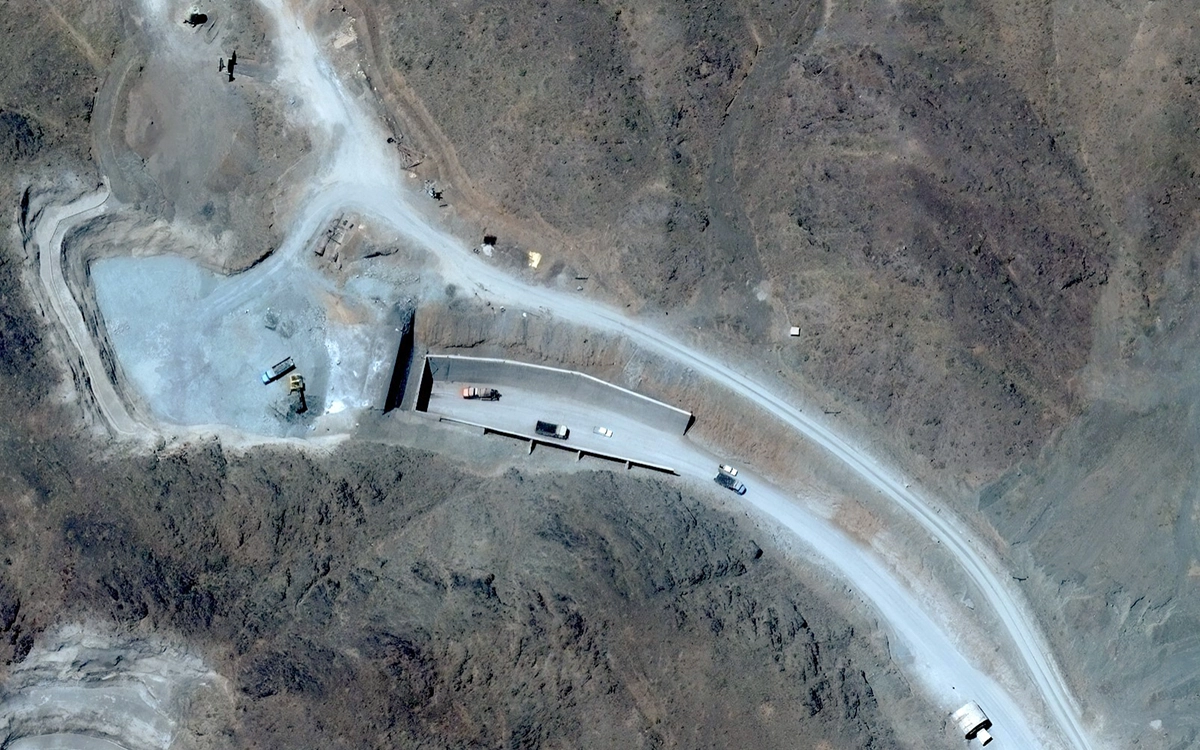
Following U.S. and Israeli strikes, Iranian forces have likely evaluated and fixed the functionality of surviving missile sites, tunnels, command nodes, air-defense systems, drone facilities, and nuclear-related locations. Underground infrastructure is designed to survive major strikes, but facility survival rarely equates to immediate usability. This means that clearing debris, restoring ease of access, repairing power systems, and reconnecting dispersed units are essential military readiness activities.
The second requirement is missile and drone regeneration. Iran only needs just enough surviving ballistic missiles, cruise missiles, drones, heavy equipment, and launchers to make renewed American enforcement politically and militarily costly. Even a largely degraded Iranian force can give Tehran substantial leverage by threatening neighboring bases, ports, cities, energy infrastructure, and commercial maritime vessels. Thus, Iran will continue mobilizing launchers, concealed storage, camouflage, decoys, drone assembly, and hardened command-and-control infrastructure.
The third requirement is the reinforcement of proxies. Hezbollah, the Houthis, Iraqi militias, and other Iran-aligned groups give Tehran options below the threshold of direct warfare. Unfortunately for advocates of the ceasefire, this reconstitution of Iranian-backed proxies will be directly subsidized by the terms of the memorandum itself. Unfrozen capital and restored oil revenues will flow directly to the Islamic Revolutionary Guard Corps (IRGC), which in turn will fund, rearm, and embolden these networks. Tehran can achieve nominal compliance with the memorandum while actively enabling proxy harassment, probing boundaries with hybrid actions, and testing Washington’s willingness to resume military operations to keep Hormuz open.
This dynamic means the ceasefire is on slippery footing. Iran can harden sites, disperse assets, restore command-and-control, move components, replenish drones, and rebuild proxy networks while remaining formally compliant with the diplomatic process. And it benefits further from the windfall in funds reached through initial negotiations. Tehran will utilize incrementalism to probe coalition pain tolerance and response thresholds while boosting its strategic position.
The Iranian objective during the 60-day window is to secure asymmetric recovery. Tehran seeks to preserve enough military and proxy capacity to ensure that, if negotiations fail, renewed coercion remains prohibitively expensive for Washington and its allies in the region.
The ceasefire will most likely degrade through small, calibrated tests: a random rocket salvo, a militia drone attack, a cyber intrusion, a maritime incident, or a dispute over inspections. Yet, if 60 days are reached, the following scenarios are the most likely.
The ceasefire will most likely degrade through small, calibrated tests: a random rocket salvo, a militia drone attack, a cyber intrusion, or a maritime incident
The End-of-Window Scenarios
The next 60 days should be analyzed through verifiable military activity and plausible end-of-window outcomes. Observers must evaluate how the adjusted military balance will shape diplomacy when the clock expires.
The first scenario is managed de-escalation. The United States and its partners maintain enough regional military capabilities to deter Iranian cheating, Iran limits proxy activity, and Tehran accepts verifiable nuclear constraints. Hormuz remains open, energy markets stabilize, and the ceasefire transitions into a more durable framework. This requires disciplined enforcement, allied coordination, and a final agreement that includes aggressive verification.
The second scenario is an asymmetric pause. The ceasefire reduces direct fighting but continues to disproportionately benefit Iran. Tehran restores revenue, repairs military capacity, hardens sites yet further, and revives proxy networks while negotiations stall. The United States conserves munitions but relaxes pressure. By the end of the window, Iran emerges stronger than it was when the ceasefire began. This represents the most likely risk if Washington treats the pause as a diplomatic success rather than a window for military preparation and regeneration.
The third scenario is renewed enforcement. Negotiations fail, Iran crosses a nuclear or proxy threshold, and the United States or Israel resumes a major military campaign. This phase would commence under vastly different conditions. Targeting would utilize updated intelligence, but Iran’s surviving assets would be more camouflaged, dispersed, and hardened. The conflict would restart with significantly higher costs for all parties.
The fourth scenario is allied coalition divergence. Even though the United States prefers extending diplomacy, Israel may conclude that an Iran proxy like Hezbollah or the Iranian nuclear development issue is a non-starter. They may restart major military operations on that basis. Gulf states prioritize maritime stability for revenue but demand stronger defenses against missile threats. This scenario requires only that American, Israeli, and Gulf threat perceptions drift apart, causing the coalition to fragment.
The Risk of Strategic Complacency
Thus far, the ceasefire deal is basically creating more time for militaries, intelligence services, defense industries, and proxy networks to repair and reload.
But Washington must treat the 60-day window as preparation to enforce punishments. The Pentagon should preserve regional military force postures and readiness to deter cheating, accelerate munitions replenishment, deepen intelligence sharing with Israel and Gulf partners, and clearly define and game out consequences for Iran over nuclear, proxy, cyber, or maritime violations. De-escalation cannot be confused with demobilization.
Diplomats may control the pace at the moment, but militaries are actively reloading and preparing should negotiations break down. The ceasefire’s success will depend on how the United States and its partners emerge from the pause and what they do in the run-up to its end.
But if preparations and readiness measures are not thorough, the ceasefire may not simply fail in its purpose to bring peace. It might actually help the weaker adversary regenerate and fortify its strategic position.
If preparations and readiness measures are not thorough, the ceasefire may not simply fail in its purpose to bring peace. It might actually help the weaker adversary regenerate and fortify its strategic position