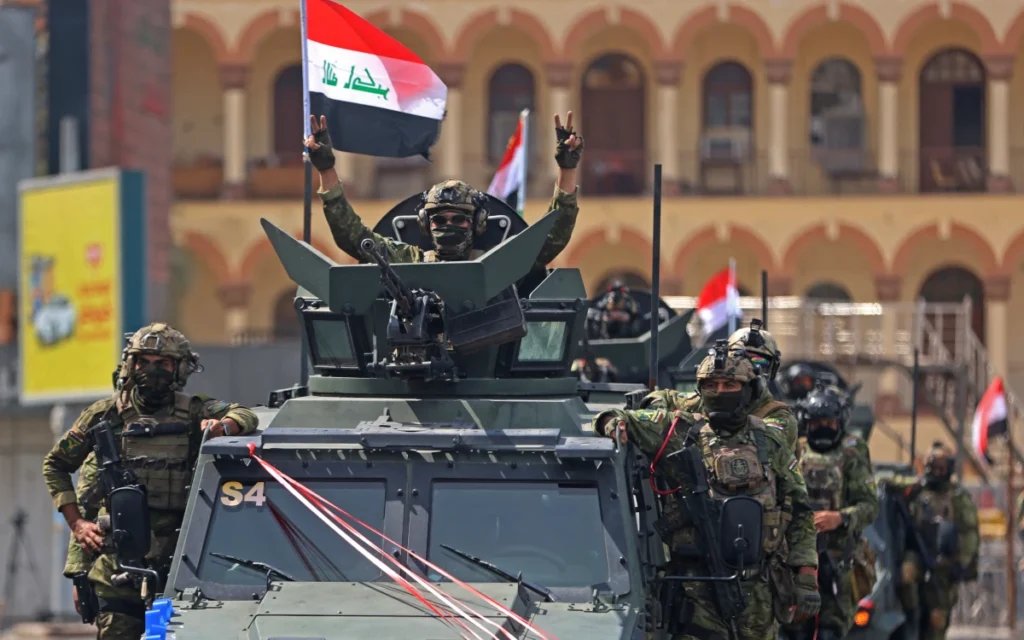

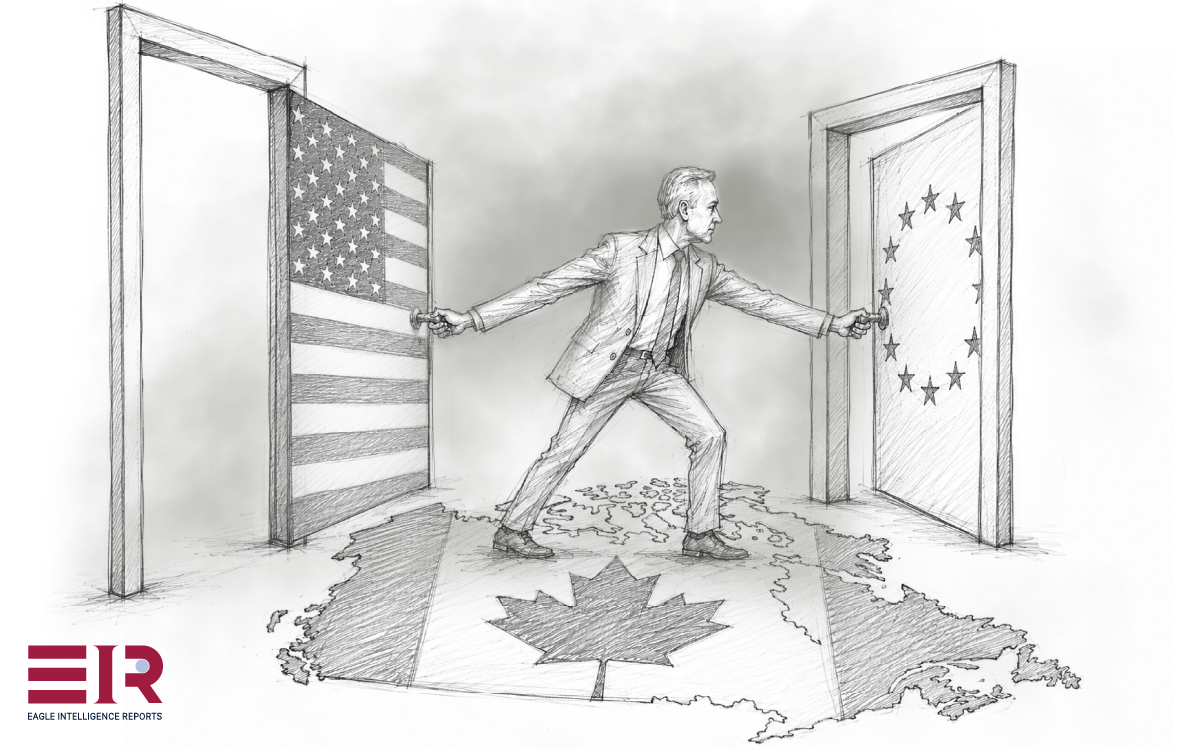
On February 14, 2026, at the Munich Security Conference, Canadian Defense Minister David McGuinty signed a document no non-European nation had signed before. The agreement allowed Canada to join the EU’s Security Action for Europe (SAFE) program, a $175 billion defense procurement initiative central to Europe’s rearmament plans. The terms were unprecedented: up to 80 percent of components in Canadian-made defense gear sold through SAFE could be sourced domestically, far above the 35 percent cap applied to all other countries.
At first glance, the SAFE agreement appears financially impressive. Canadian contractors gain access to billions of dollars through EU defense contracts. Compared to the projected $1.5 trillion U.S. defense budget for 2027, though, Canada’s share seems like small change. But the dollars involved are not the significant element of the SAFE deal. The true significance resides in the precedent the accord sets. For the first time, a longstanding American ally is openly pursuing a parallel and alternative defense partnership with Europe, signaling a broader effort among Western allies to diversify strategic dependencies. Canada was the first nation to embrace SAFE as an alternative to America. But will it be the last?
The dollars involved are not the significant element of the SAFE deal. The true significance resides in the precedent the accord sets. For the first time, a longstanding American ally is openly pursuing a parallel defense partnership with Europe
It would be easy to blame President Donald Trump for worsening relations with America’s northern neighbor, which has set Canada on a path away from its warm defense ties to the United States. His trade wars, tariffs, and stated desire for Canada to become the 51st state led Prime Minister Mark Carney to call Trump’s approach a “rupture,” not a transition, in the Western alliance. But this caricature overlooks a deeper, more important factor in the alliance’s strain that many Americans still value.
What Carney Actually Said
Carney, speaking at Davos earlier this year, drew attention to the durability of the Western alliance. He warned the world’s middle powers that the great powers now threaten institutions they once relied on, such as the WTO and UN. His speech earned the relatively new Canadian prime minister a surge of attention when he said the Western alliance faced a “rupture,” not a transition. However, Carney did not conclude that the solution lies in erecting more political barriers. Instead, he warned that “a world of fortresses will be poorer, more fragile, and less sustainable.” Carney’s question for Canada was deeper: Could middle powers like Canada be more creative than simply raising barriers that serve their interests?
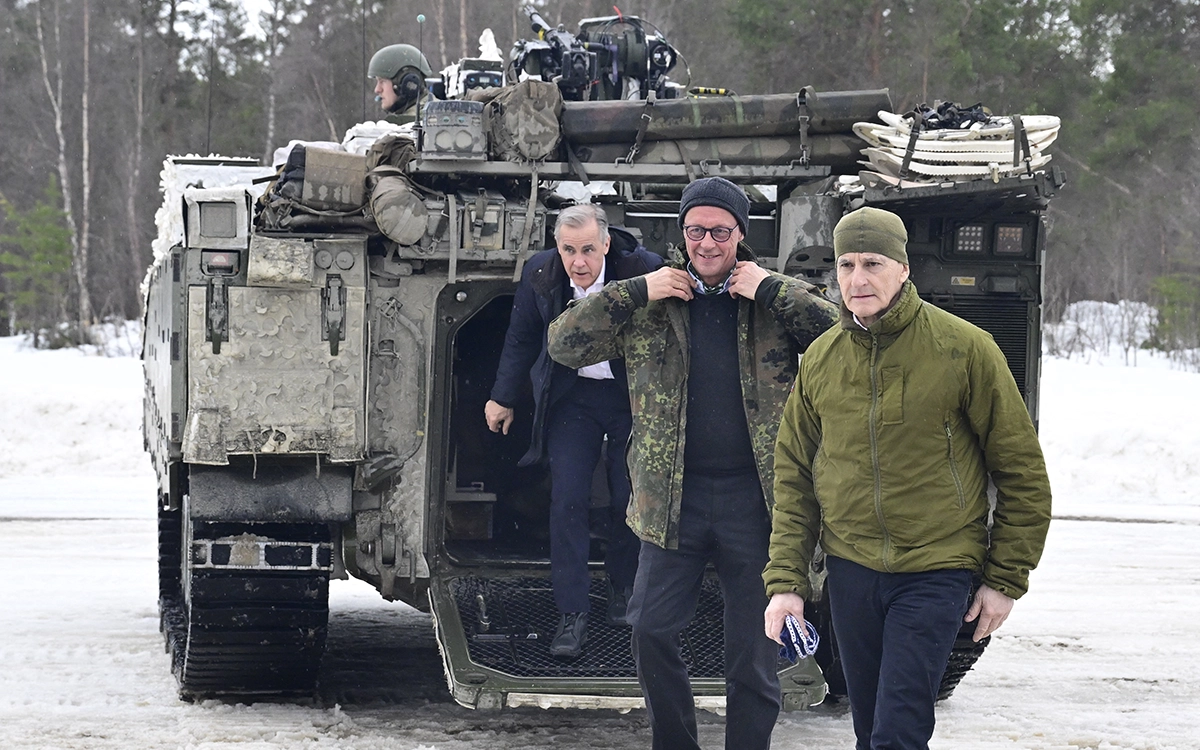
Carney chose a word outside the typical diplomatic lexicon for his idea: geometry. Canada, he said, would pursue “variable geometry”—different solutions for different issues, based on common values and interests. For Ukraine: treat it as a core member of the Community of the Willing. On defense: partner with the EU. On minerals: work with the EU and Australia. On energy: build a new framework with China. The United States is not the only partner, despite decades of close ties. Canada, Carney said, should pursue a broader, more diverse alliance architecture to meet its needs.
This distinction is a fundamental yet often misunderstood element in analyses of Carney’s statements. He is not proposing a break from the U.S. Instead, he advocates strategic hedging—building alternative partnerships so that no single ally dominates Canada’s interests. Carney’s observation that Canada’s ties with China have become “more predictable” than those with Washington underscores this: predictability and balance, not patronage, guide his approach. The SAFE deal is a key component of this broader strategy to manage uncertainty about the U.S.
What Canada Stands to Gain
For Ottawa, the defense arrangement addresses a longstanding problem—about half of Canada’s defense procurement has historically gone to foreign suppliers, most of it to the U.S. When the Royal Canadian Air Force buys an American-made F-35, the design, intellectual property, software architecture, and production remain in the United States. Canadian firms typically secure only maintenance and parts contracts—the leftovers. As a result, most of Canada’s defense spending ultimately reinforces American defense-industrial capacity rather than Canada’s own.
SAFE could help rebalance that flow. The 80 percent content rule allows Canadian defense firms to bid on European contracts as if they were local. SAFE’s low-interest financing mechanisms could also support Canada’s modernization—including the long-delayed Canadian Patrol Submarine Project—by opening access to procurement capital usually reserved for German, French, or Spanish firms. The agreement also opens contracts in space surveillance, early warning systems, secure communications, and dual-use AI and cyber capabilities. For many Canadian firms, which are often too small to scale domestically, SAFE offers access to an integrated, continent-wide market.
Still, SAFE is not a guaranteed windfall for Canada. The country’s total defense sector generated only $17.38 billion in 2024 and remains fragmented across some 600 mostly small- and medium-sized firms, many of them subsidiaries of larger American firms. European officials also remain cautious due to Canada’s history of unexpectedly canceling contracts. Furthermore, the SAFE agreement is set to expire in 2030, and the lengthy procurement process means tangible benefits may take years to materialize. Nevertheless, SAFE offers Canada a rare chance to demonstrate its ability to reduce U.S. dependence. If successful, the arrangement could provide a model of how allied states can diversify defense relationships away from American dominance, fulfilling some of President Trump’s calls for burden-sharing, but possibly at the expense of U.S. influence.
If successful, the arrangement could provide a model of how allied states can diversify defense relationships away from American dominance, fulfilling some of President Trump’s calls for burden-sharing, but possibly at the expense of U.S. influence
What Europe Stands to Gain
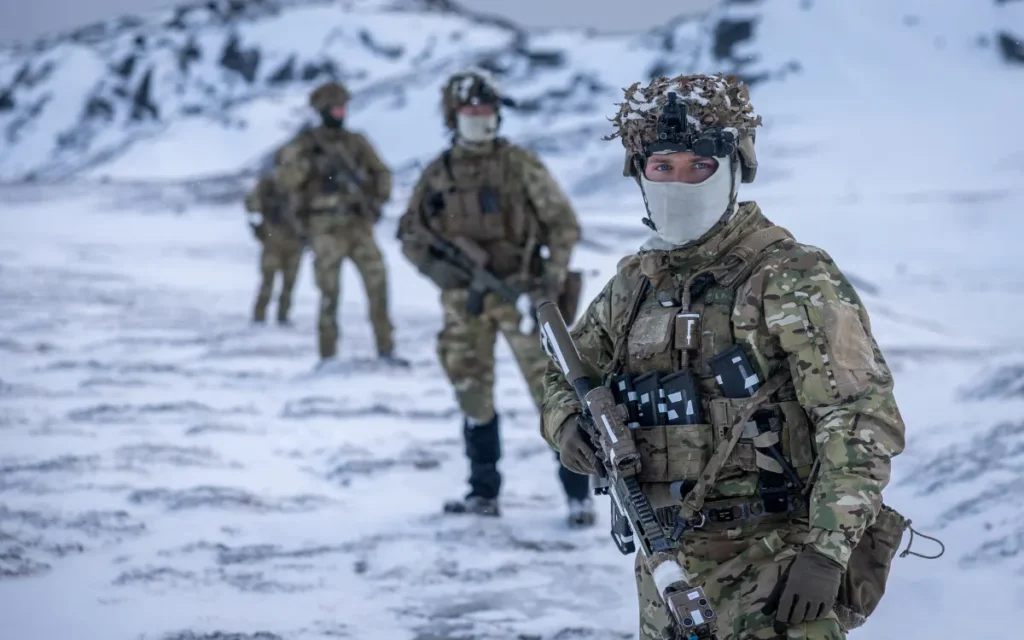
Brussels didn’t offer Canada’s 80 percent allowance out of sentiment. A North American partner furthers European goals. Canada brings Arctic and maritime expertise. Europe doesn’t lack these skills—Norway, Finland, and Sweden provide world-class capabilities in cold-weather operations, surveillance, and icebreaking. But Canada is a NORAD-tested Atlantic-facing power that straddles both polar approaches and the western gateway to transatlantic sea lanes. With space and intelligence capabilities, the strategic logic is clear.
Brussels’ bigger prize is the precedent. Admitting the first non-European member on generous terms signals to capable democracies that Europe is open for business. The Brussels 2030 Readiness plan, at $900 billion, aims for credible strategic autonomy. The limiting factor isn’t money or will, but scale.
Europe’s defense industry is currently fragmented, with national companies making incompatible systems for limited domestic markets. By grouping allied demand within programs like SAFE, Europe hopes to achieve larger production runs with lower costs. The Canadian partnership serves as a crucial test: it will reveal whether Europe can successfully integrate a sophisticated non-European partner while maintaining its own standards or inadvertently become yet another route for U.S. supply chains. If successful, the model could be extended to other capable democratic allies.
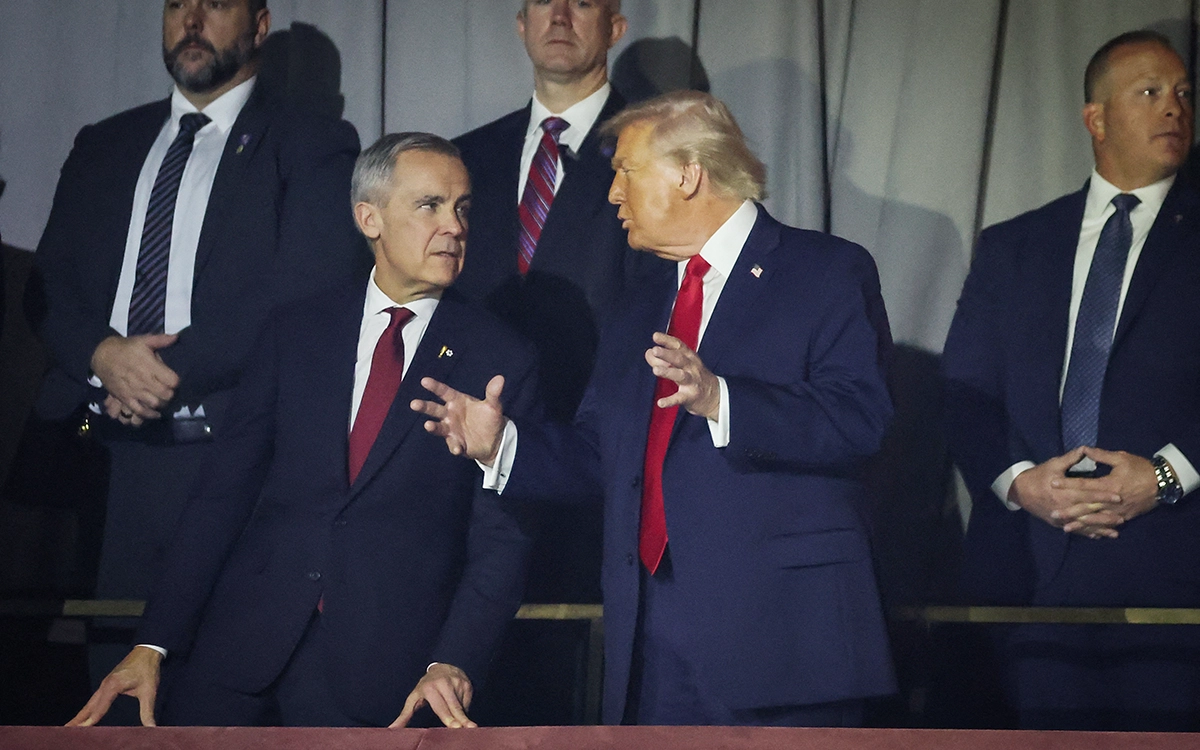
The Contradiction Washington Built
There are two ways to interpret Canada’s move into SAFE, and the Trump administration’s own strategy documents point in both directions.
The first is burden-sharing, which the administration repeatedly claims to want. The 2026 National Defense Strategy, released three weeks before Canada joined SAFE, places greater responsibility for European security on Europe itself. Washington says it will continue supporting Europe but expects allies to fund more of their own defense. By that logic, Canada strengthening its military capabilities through any viable channel is doing as Washington asks.
The second interpretation sees the move as a diversion of industrial capacity away from the United States. The same strategy document treats the U.S. defense industrial base as a strategic asset to be mobilized on something approaching a WWII scale and presents manufacturing capacity as a core pillar of deterrence. From this perspective, shifting allied procurement to European supply chains and technical standards does little to help U.S. factories marshal the capacity that the policy envisions and—potentially more damaging—will set the precedent for others to follow.
Shifting allied procurement to European supply chains and technical standards does little to help U.S. factories marshal the capacity that the policy envisions and—potentially more damaging—will set the precedent for others to follow
Both perspectives on Canada’s actions are valid, which illustrates the central challenge. Washington cannot both demand higher allied defense spending and expect spending to flow exclusively to American firms. The 2026 National Defense Strategy implicitly seeks both outcomes but offers no clear mechanism for reconciling them. Canada’s entry into SAFE simply exposes this unresolved contradiction in American policy.
Canada Remains a Partner Despite Carney’s Tough Talk
The interoperability dimension further sharpens the paradox. The SAFE framework aligns Canadian equipment with European technical standards from the design phase forward. For seventy years, North American defense rested on the assumption that Canadian and American systems would integrate seamlessly with one another—a NORAD relationship, not merely a contractual one. If Ottawa picks the German Type 212CD this summer, Canada’s next submarine fleet will answer to a NATO-European standard, not a North American one, shifting the integration burden toward the American side of the Arctic theater. NORAD was built on the assumption that Canada and the United States would continue speaking the same operational language.
None of this is a “rupture” in the literal sense. Canada remains in NORAD and NATO. The United States will likely continue to win the largest Canadian procurement bids for years. European suppliers cannot replace the depth, interoperability, and industrial integration of the existing U.S.–Canadian defense relationship overnight. Even under Carney’s own benchmark—lifting the domestic share of defense contracts to 70 percent, down from the roughly three-quarters of procurement dollars now flowing south—the United States would remain Canada’s dominant defense partner by a wide margin. Analysts at the Royal United Services Institute have noted that such a shift, far from reckless abandonment, would represent a modest and definable diversification.
Still, the diversification serves as a warning to the American defense establishment. What Canada has opened is not an exit. It is a parallel channel—a second door that did not exist eighteen months ago—built deliberately and left open. Carney’s broader project makes the intent unmistakable: the China energy framework; the Qatar commitment to significant strategic investments in Canada; the critical minerals agreement with the EU and Australia; the free trade talks with India and ASEAN. SAFE is the defense-industrial expression of a broader strategic doctrine.
Middle-power countries are taking steps to collectively move toward a more equal footing with the great powers. If a patron can no longer be relied upon to behave predictably, methodically reducing the share of security, trade, and energy that depends on any one capital makes sense.
The strategic question for Washington is therefore not whether it has lost Canada. It has not. The question is whether Canada has just written the manual that Australia, Japan, South Korea, and the Gulf states will read—one that shows how to remain within the Western alliance while quietly building the means to survive outside Washington’s good graces. And the first one out the door usually props it open for the rest.
The strategic question for Washington is whether Canada has just written the manual that Australia, Japan, South Korea, and the Gulf states will read—one that shows how to remain within the Western alliance while quietly building the means to survive outside Washington’s good graces