

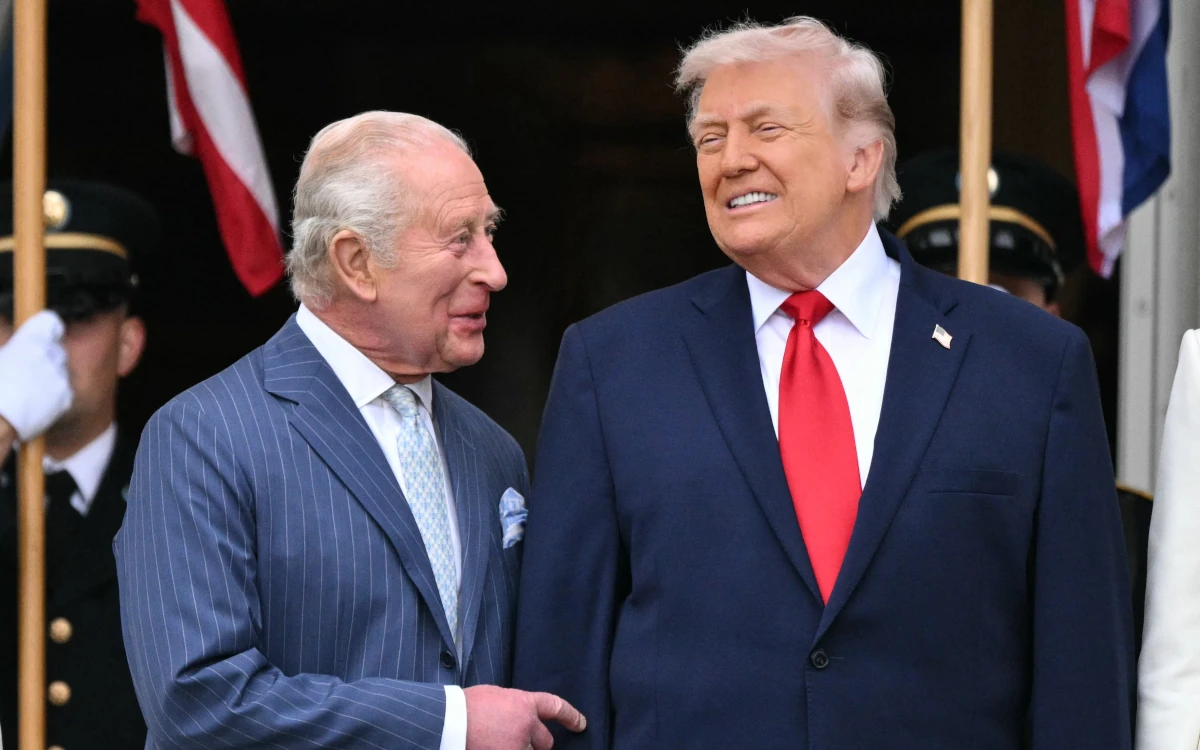
King Charles III and Queen Camilla arrived in Washington in late April for a four-day state visit framed around the 250th anniversary of American independence. But the political objective was less comfortable than the itinerary.
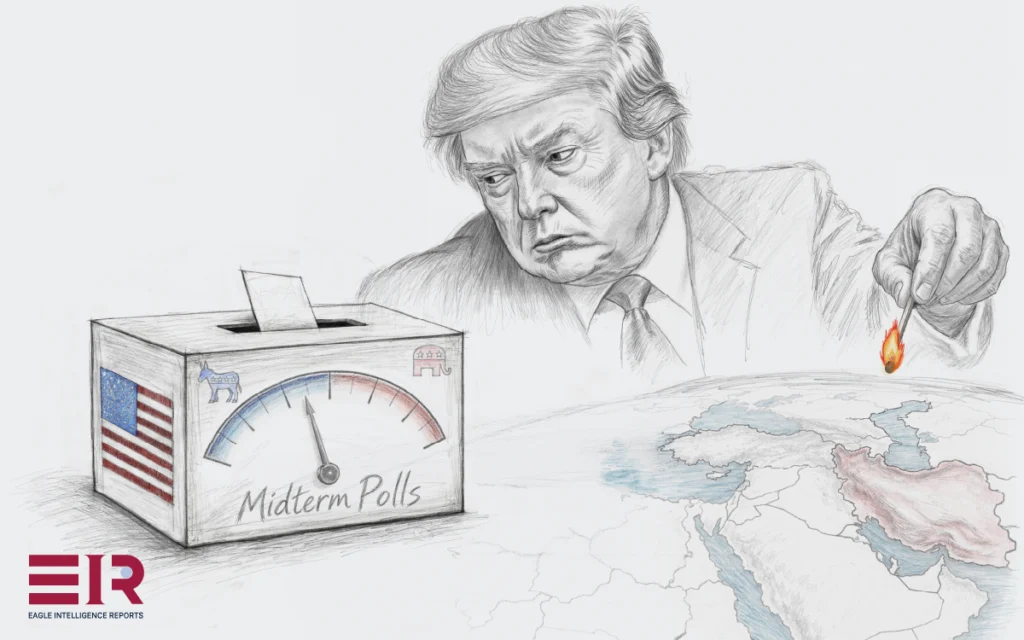
Donald Trump had publicly berated Prime Minister Keir Starmer over his refusal to commit British forces to the U.S.–Israeli war effort against Iran. Washington had also threatened fresh tariffs against Britain in the days immediately preceding the visit. Britain was deploying its monarchy as a strategic instrument—a diplomatic vehicle for managing the atmosphere of a relationship whose substance had become deeply contested.
The special relationship is not collapsing, but it is being renegotiated on terms Britain did not choose and cannot fully resist. London’s task is precise: to remain indispensable to Washington without becoming wholly dependent upon it at a moment when American reliability is in structural retreat. That demands something more complex than the loyal followership that characterized British foreign policy through most of the post-war era: a multi-aligned posture that sustains the transatlantic relationship through selective cooperation while constructing alternative anchors in Europe and the broader defense-industrial sphere.
The special relationship is not collapsing, but it is being renegotiated on terms Britain did not choose and cannot fully resist
The Ceremony and Its Limits
The state visit accomplished what such occasions are designed to do. It elevated the bilateral relationship above its immediate irritants and created space for engagement at a moment when direct political dialogue between Starmer and Trump had become strained. The monarchy provided an interlocutor not subject to Westminster’s partisan pressures or Washington’s political grievances.
The personal friction between the two governments had been considerable. Trump had mocked Britain’s aircraft carriers as “toys” and insisted that his relationship with Starmer would recover only if the Prime Minister reversed course on immigration policy. He had further demanded that London reduce the tariff on American goods before any trade deal could progress. The King’s presence temporarily reframed the encounter in terms of historical intimacy rather than transactional grievance.
Yet the visit resolved none of the underlying disagreements. Disputes over military cooperation in the Middle East, trade tariffs, digital policy, and the broader terms of alliance management remained entirely open once the ceremonies concluded. Symbolism can preserve the atmosphere of a relationship, but it cannot address the strategic realities bearing down upon it.
Washington’s Structural Reorientation
Understanding Britain’s repositioning requires understanding the American foreign policy shift that has made it necessary. Secretary of War Pete Hegseth outlined the direction at the Reagan National Defense Forum in December 2025. He argued that decades of U.S. policy had turned allies into dependents, leaving Washington to subsidize their defense at American taxpayers’ expense. Security commitments would henceforth be conditioned on meaningful allied burden sharing.
The 2026 National Defense Strategy formalized this position. It calls on NATO allies—described as substantially more powerful than Russia—to assume primary responsibility for Europe’s conventional defense, thereby freeing American capacity for other theaters. U.S. intelligence assessments hold that Xi Jinping has ordered the People’s Liberation Army to develop the capacity to invade Taiwan by 2027. The Trump administration has repeatedly stated that it is working to maintain military overmatch with China, and Washington’s attention has been reorienting accordingly.
The consequences for Britain are direct. The special relationship was built on an assumption of convergent strategic priorities. When those priorities diverge—when Washington is focused on the Pacific and London remains concerned with European security and the Russia-Ukraine theater—the relationship becomes conditional rather than axiomatic. Britain must now actively justify its position within American strategic architecture rather than assume it as given.
The special relationship was built on an assumption of convergent strategic priorities. When those priorities diverge—when Washington is focused on the Pacific and London remains concerned with European security and the Russia-Ukraine theater—the relationship becomes conditional rather than axiomatic
The Iran conflict has complicated this reorientation without reversing it. American military assets were drawn back into the Middle East, but the underlying logic of the National Defense Strategy—burden shifting, China primacy, selective engagement—remains intact. Europe, including Britain, is expected to carry considerably more of its own security burden.
The Iran Precedent and Its Ambiguity
The Iran conflict brought London’s predicament into stark relief. Britain did not directly participate in the U.S.–Israeli attack, launched in February. Starmer stated that the UK would not go to war without a legal basis and had taken no part in the initial strikes.
Yet the boundary between non-participation and active logistical support proved difficult to hold. On March 1, amid domestic backlash, the Prime Minister authorized the United States to use UK military bases for a “specific and limited defensive purpose”—to destroy Iranian missiles at source. Within three weeks, that authorization had expanded. By March 20, the government had extended it to include operations targeting Iranian missile sites attacking shipping in the Strait of Hormuz. The mandate had shifted from intercepting projectiles to degrading the infrastructure generating them.
The episode revealed a mechanism likely to constrain British decision-making long after the immediate conflict subsides. Even purely rhetorical association with an American operation is sufficient to cross a threshold in adversarial calculations. The legal distinction between “defensive” and “offensive” operations that London relied upon had no meaning in Tehran’s target calculus. The costs that followed were determined not by Britain’s actual military role but by its alignment and logistical support.
The material cost was immediate. Iran targeted UK bases in Cyprus, Bahrain, and Qatar in retaliation. The RAF base at Akrotiri was struck by an Iranian drone in March 2026. Britain’s attempt to occupy a middle position—supporting Washington without rhetorically endorsing its war—resulted in British installations becoming targets regardless.
The “defensive” qualifier was not a firewall but rather a threshold that moved. London satisfied Washington’s operational requirements while maintaining stated legal distance from American choices. The result was a graduated entanglement that neither fully satisfied Washington nor fully insulated Britain from the consequences of American action.
The result was a graduated entanglement that neither fully satisfied Washington nor fully insulated Britain from the consequences of American action
Trade as Leverage and Liability
The economic dimension of the relationship follows a similar pattern of selective concession under American pressure. The Economic Prosperity Deal announced in May 2025 was the first bilateral arrangement since Trump imposed sweeping tariffs on U.S. trading partners. It delivered targeted relief, eliminating U.S. tariffs on British steel and aluminum and reducing duties on automotive exports. The baseline ten percent tariff on all other British exports, however, remained in place.
The White House estimated the deal would open $5 billion in export opportunities for American businesses while generating $6 billion in duties on UK imports. Gains in steel and automotive were offset by the broader tariff burden continuing to press against the wider export portfolio. Starmer secured some of what he sought; Britain still emerged as a net payer.
Digital policy has become the sharpest subsequent point of friction. The UK’s two percent digital services levy applies to the revenues of large search engines, social media platforms, and online marketplaces operating in the British market. It generated $1.26 billion in fiscal year 2025-26. Trump threatened new tariffs specifically over this tax in late April 2026, saying it targeted American companies. Starmer’s office held firm, insisting the levy was fair and proportionate. The May 2025 deal had designated the issue for further negotiation, but for now that negotiation remains unresolved.
The underlying problem is structural. Washington uses market access as a coercive instrument, not merely a commercial one. Tariff threats are the mechanism through which the United States secures allied alignment on regulatory, fiscal, and strategic choices that direct negotiation cannot otherwise deliver. Thus, surrendering the digital services tax under American pressure would set a precedent extending well beyond technology policy. Yet retaining it sustains a live tariff threat. Neither option leaves Britain in a secure position.
Tariff threats are the mechanism through which the United States secures allied alignment on regulatory, fiscal, and strategic choices that direct negotiation cannot otherwise deliver
This coercive architecture extends well beyond trade. Washington can leverage asymmetric dependencies across multiple domains—intelligence sharing through Five Eyes, defense technology access under U.S. export controls, and the nuclear-propulsion technology transfer at the core of AUKUS. Each constrains British decision-making at minimal political cost to Washington. Dollar primacy adds a further dimension. U.S. sanctions infrastructure and dollar-clearing networks allow American financial pressure to reach British companies and institutions throughout the global financial system. The effect is to shape what is commercially and politically viable within the UK, often without any formal diplomatic demand. Washington, in other words, can compel alignment structurally—without the friction that explicit coercion would generate.
London has responded in part by widening its commercial relationships beyond the American market. Britain formally acceded to the Comprehensive and Progressive Agreement for Trans-Pacific Partnership in 2023. The grouping provides a framework for deepening trade ties with members including Japan, Australia, Canada, and Vietnam. Negotiations with India—one of the world’s fastest-growing consumer markets—have continued in parallel, while Gulf trade talks have also advanced.
This diversification does not displace the American market, which remains Britain’s largest bilateral trade relationship. It does, however, reduce the degree to which Washington can pressure Britain through any single tariff instrument or market-access threat.
Europe as Strategic Insurance
The most consequential adjustment underway in British foreign policy is the deliberate deepening of its relationship with European partners. This is driven by strategic calculation, not post-Brexit reconciliation. Washington’s unpredictability has made European positioning a form of reinsurance rather than an ideological choice.
The May 2025 UK-EU summit was the first joint summit since Britain left the European Union. It produced a Joint Statement on strategic partnership, a Common Understanding on future policy cooperation, and a Security and Defense Partnership establishing a political framework for defense collaboration. The intent was plain: Britain was re-engaging with European architecture on security, having kept it at arm’s length since the Brexit transition. Annual summits and structured technical dialogues were established alongside these documents.
The partnership has not yet reached its stated potential. Negotiations over UK participation in the EU’s Security Action for Europe (SAFE) financing program collapsed in November 2025, effectively removing a key mechanism through which British defense industry might have accessed European procurement networks. Britain’s position outside the single market and customs union limits how far cooperation can extend. London and Brussels also hold different assumptions about what drives the relationship’s value—London emphasizing strategic clout, Brussels emphasizing regulatory proximity.
The intent behind this engagement is optionality rather than alignment. By pre-positioning within European security frameworks, Britain ensures that if American support contracts further, it will not be left without established partners and structures to rely upon. The European pillar does not replace the American relationship—it insures against the costs of its deterioration.
By pre-positioning within European security frameworks, Britain ensures that if American support contracts further, it will not be left without established partners and structures to rely upon
Ukraine and the Defense-Industrial Dimension
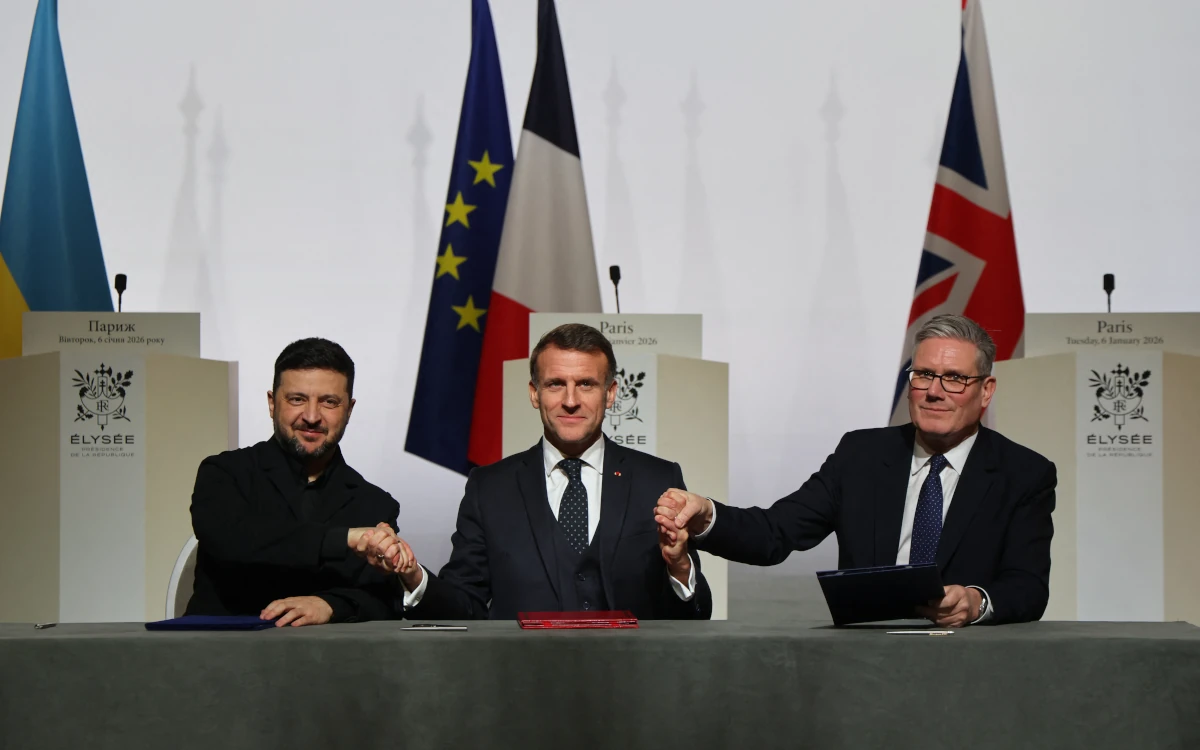
Britain’s Ukraine engagement represents what is currently its most visible exercise of independent strategic agency. The Coalition of the Willing was founded in London in March 2025, co-led by Starmer and President Emmanuel Macron alongside President Volodymyr Zelensky and Chancellor Friedrich Merz. It encompasses 35 participating states and two organizations, and Britain has placed itself at its center, occupying ground that Washington has only partially filled.
The March 2026 Enhanced Security and Defense Industrial Collaboration Declaration, signed in London with Ukraine, set out a framework for joint co-production of long-range strike capabilities. It extends and deepens the One Hundred Year Partnership Agreement signed in January 2025, with commitments spanning air defense, artillery, and advanced military technology. Britain also leads the Ukraine Defense Contact Group, maintaining continuity at a moment when American engagement with multilateral Ukraine support has become less consistent.
The engagement serves compounding purposes. It positions Britain as a credible first-tier security actor with autonomous force-generation capacity. It strengthens the British defense-industrial base at a moment when London has committed to raising defense spending toward 2.5 percent of GDP. And it signals to Washington that Britain can carry strategic weight without American direction—a reality that reshapes, rather than weakens, the terms of alliance.
By leading security arrangements that include European states but do not require Washington’s participation, Britain accumulates standing and influence in a theater where it can act with relative autonomy. American political involvement has been actively sought and occasionally achieved—U.S. representatives have participated in Coalition of the Willing meetings. The coalition nonetheless represents diversification in security terms: accumulating relationships and commitments that reduce dependence on a single patron without severing that relationship.
The Logic of Multi-Alignment
The pattern across these domains is more coherent than it might initially appear. Britain is not drifting from the United States, nor building an alternative alliance designed to supplant the transatlantic relationship. It is accumulating a denser web of commitments, positions, and commercial relationships that give London greater resilience and, critically, greater leverage.
Britain is not drifting from the United States, nor building an alternative alliance to supplant the transatlantic relationship. It is accumulating a denser web of commitments, positions, and commercial relationships that give London greater resilience and, critically, greater leverage
Yet Iran’s retaliatory strikes against British bases on account of their logistical support of the American operation make the costs of the present posture visible. The digital services tax remains a live flashpoint, and the baseline ten percent tariff on British exports has not been lifted. Economic asymmetry translates into political vulnerability when Washington can threaten entire sectors of British trade without bearing equivalent reciprocal risk.
The multi-aligned posture is designed to shift that calculus incrementally. Deeper European security relationships, the defense-industrial partnership with Ukraine, and broader trade diversification through CPTPP and bilateral agreements collectively reduce this vulnerability. They ensure that no single dimension of the American relationship can function as a unilateral pressure point without political cost to Washington as well.
However, the posture demands continuous and careful calibration. Conceding too much to Washington risks subordination; withholding too much risks losing the intelligence access, the AUKUS partnership, and the military interoperability that the special relationship still uniquely provides. Moving too quickly toward European integration risks triggering American accusations of strategic drift; moving too slowly means being caught without alternatives when they are needed.
What the King Charles visit confirmed is that the relationship retains genuine assets that no alternative partnership can replicate in the near term. Historical depth, intelligence intimacy, and cultural familiarity gave Britain a form of influence over Washington’s atmosphere that direct political engagement between Starmer and Trump could not have generated. The monarchy served its strategic purpose. But the visit also confirmed that this form of capital, however expertly deployed, cannot substitute for the weight of accumulated relationships and independent capacity.
Britain’s long-term position depends on demonstrating that it is a capable and active strategic actor across multiple theaters—not a middle-power dependent waiting on American decisions. That demonstration is underway. Where it will lead remains to be seen.