
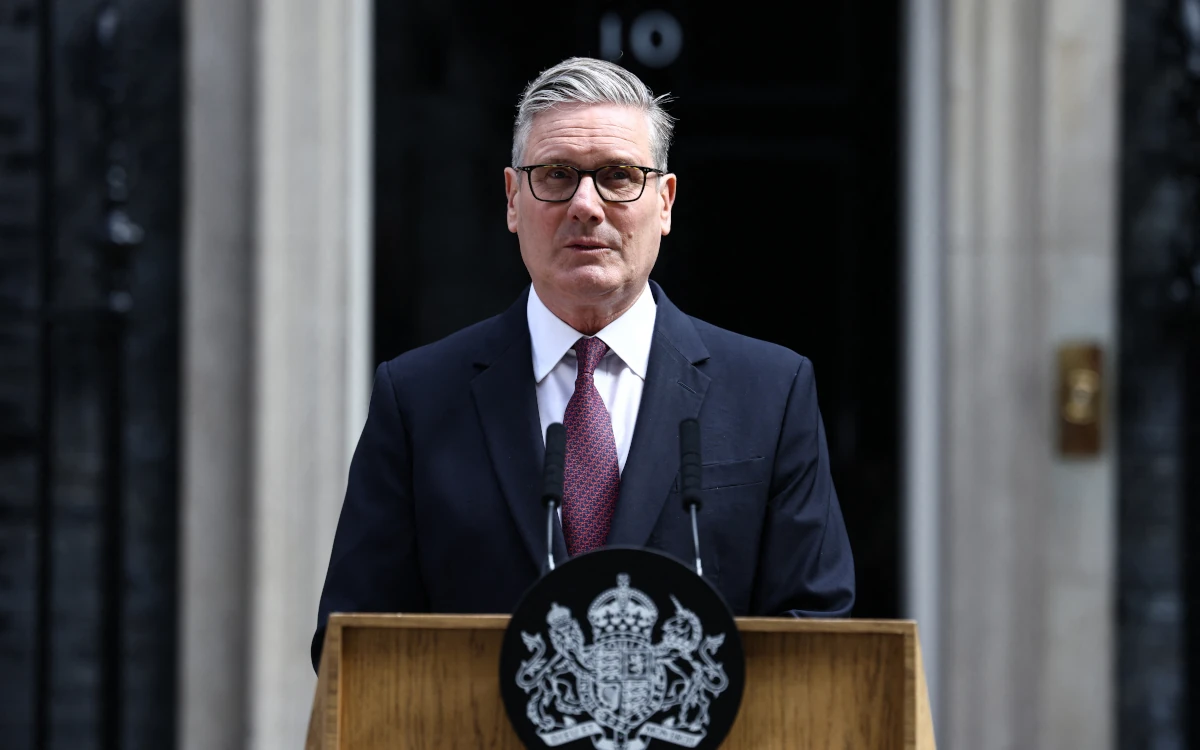
Keir Starmer announced his resignation as prime minister today, becoming the sixth British leader since 2016 to leave Downing Street before completing a full term. His departure clears the way for Andy Burnham, the former mayor of Greater Manchester, to become Britain’s seventh prime minister in a decade.
The proximate triggers were domestic: Starmer’s unpopularity, his party trailing Reform UK in polls, and, ironically, Labour’s victory in the Makerfield by-election, which returned Burnham to parliament. The deeper causes are structural, rooted in Britain’s struggle to turn electoral majorities into lasting governing authority after Brexit.
Reading Starmer’s fall primarily through his personal limitations misses the more consequential story. Britain wants to act as a serious power on Ukraine, NATO, China, and the transatlantic relationship, yet its domestic institutions increasingly struggle to sustain the stable government that such ambition requires. Starmer’s premiership did not create this gap between ambition and capacity; it inherited it and narrowed it only briefly.
Britain wants to act as a serious power on Ukraine, NATO, China, and the transatlantic relationship, yet its domestic institutions increasingly struggle to sustain the stable government that such ambition requires
A Mandate Without Authority
Starmer’s fall fits an established pattern rather than standing as an isolated event. David Cameron resigned in July 2016 after the Brexit referendum, and Theresa May followed in 2019 after parliament had repeatedly rejected her withdrawal agreement. Boris Johnson left in 2022 amid the Partygate affair, and Liz Truss lasted only 49 days before a bond market revolt forced her departure.
Each of these premierships lasted, on average, less than two years, far short of the multi-term stability that defined the Thatcher and Blair governments. Starmer’s own case is more revealing still, because a weak mandate cannot explain his fall.
Labour won 411 seats in July 2024, one of the largest Commons majorities in modern British history. It did so on just 33.7% of the national vote, the lowest share ever recorded for a governing party. Commentators at the time called it a “loveless landslide”: commanding in seats, thin in actual support, and built on a fragmented opposition rather than a coherent coalition behind Labour itself.
British constitutional theory has long worried about the opposite problem. Lord Hailsham’s 1976 warning of an “elective dictatorship” held that a disciplined Commons majority allowed the executive to govern with too few restraints. Labour’s 2024 majority inverts that fear: the seats are there, but the command is not.
That gap between mandate size and governing authority is a more precise diagnosis than any single leader’s failings. It signals an erosion of state capacity: the institutional ability of British governments to convert parliamentary arithmetic into sustained authority in moments of difficulty.
The practical effect falls hardest on policy areas requiring genuine continuity, such as defense procurement, energy strategy, and long-term fiscal planning. Each is planned in increments far shorter than the timeframes it actually requires.
Parliament repealed the Fixed-term Parliaments Act in 2022, removing one stabilizing mechanism without replacing it at precisely the moment when two-party discipline was weakening across the political spectrum. Westminster’s model assumes that a large majority delivers durable command of parliament; Starmer’s experience suggests that this assumption no longer reliably holds.
Westminster’s model assumes that a large majority delivers durable command of parliament; Starmer’s experience suggests that this assumption no longer reliably holds
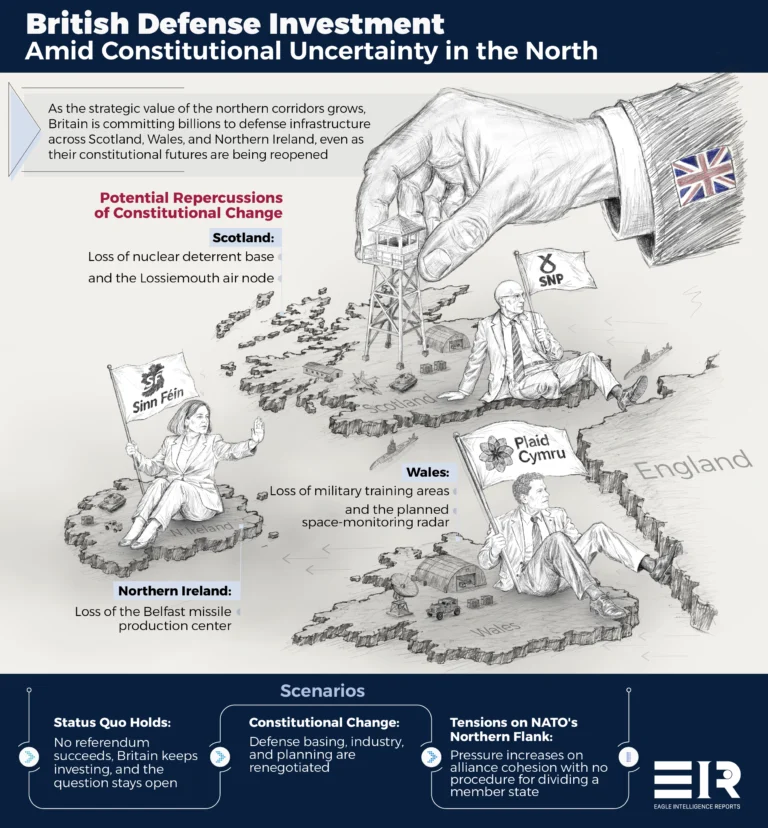
Devolved tensions in Scotland and Wales add a further layer of fragmentation that the center is increasingly ill-equipped to manage.
Brexit’s Unfinished Settlement
The instability traces back to an argument that the 2016 Brexit referendum was meant to settle but never did. That vote promised a clear restoration of sovereign control, yet successive governments have struggled to convert that promise into a coherent governing project capable of sustaining public confidence.
Voter coalitions assembled around the original Leave and Remain divide have since splintered along new and increasingly unstable lines. Reform UK, led by Nigel Farage, has absorbed working-class Leave voters disillusioned with both main parties and has led every national poll since late 2025.
The Green Party and a cluster of independents have meanwhile drawn voters away from Labour’s left flank. Labour and the Conservatives are both now polling in the high teens, roughly six points behind Reform.
This multiplication of viable parties makes a single-party landslide like Labour’s 2024 win easier to produce under Britain’s electoral system, yet harder to sustain in office. The underlying coalition of support is thinner and more contingent than the seat count implies, which is precisely the mechanism behind the gap between mandate and authority described above.
The underlying coalition of support is thinner and more contingent than the seat count implies, which is precisely the mechanism behind the gap between mandate and authority described above
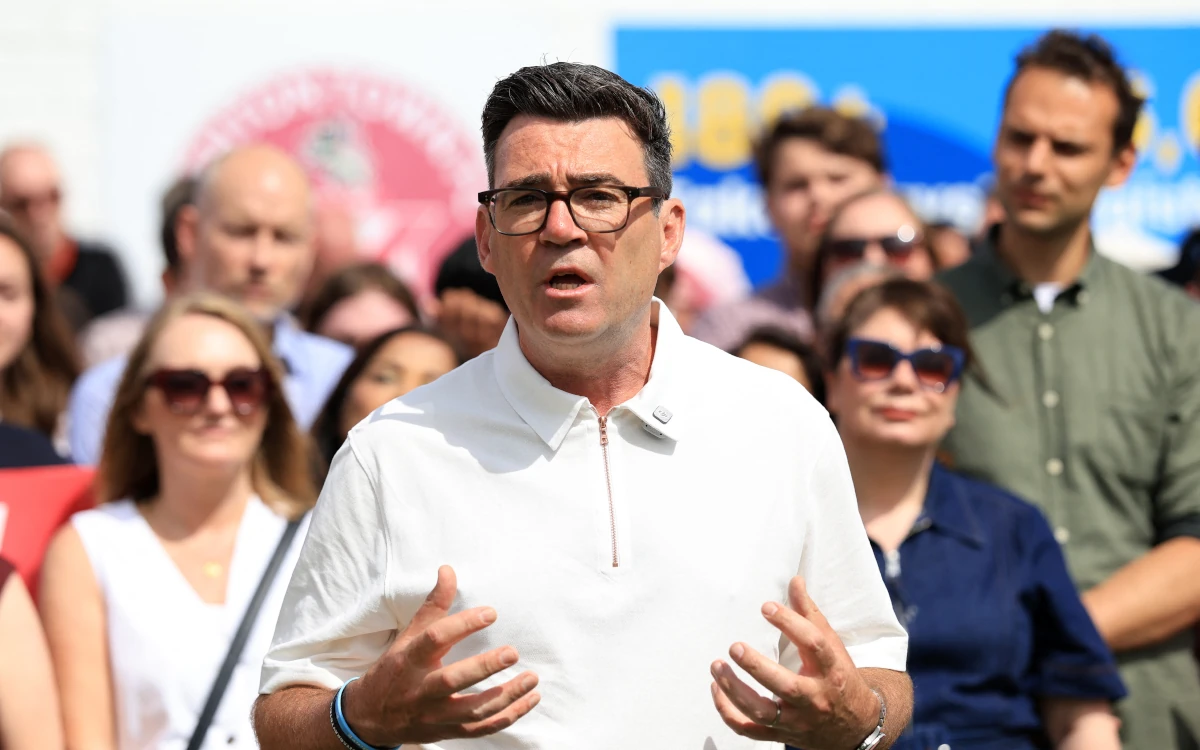
Burnham’s victory in Makerfield, a seat that voted heavily to leave the European Union in 2016, illustrates this fragmentation rather than reversing it. He won by distancing himself from talk of rejoining the European Union and by promising a single-minded focus on domestic renewal rather than international engagement.
The post-Brexit consensus, which held that restored sovereignty alone would deliver governing confidence and economic renewal, has not held under any government tasked with delivering it. Starmer governed atop a settlement nobody had genuinely agreed to, pursuing gradual, area-by-area normalization with the European Union without ever reopening the question of membership that still divides the electorate.
Managing Washington Without Leverage
Britain’s domestic fragility has not stopped successive governments from pursuing an ambitious international role. Starmer’s clearest achievement was managing an asymmetric relationship with Donald Trump’s administration without provoking an open rupture, securing reciprocal state visits and avoiding damaging public disputes with Washington.
He also kept British forces out of direct involvement in the US-Iran war, citing lessons drawn from Iraq and the Chilcot Inquiry. That restraint preserved scarce military resources and shielded Starmer from domestic accusations of reckless entanglement in another American-led conflict.
Trump’s reaction to the resignation exposed how transactional that relationship always was beneath the diplomatic courtesies. He publicly criticized Starmer over immigration and energy policy even while wishing him well, framing the departure as a personal failure rather than a failure of alliance management.
The episode confirmed that Britain’s standing in Washington depends more on individual rapport than on institutionalized commitment. That is a precarious foundation, given how little spare capacity London has to invest in shoring up the relationship. Burnham, with no comparable diplomatic experience and a stated preference for minimal foreign travel, inherits that exposure directly.
A relationship built on personal rapport also resets with every change of leader, compounding the cost of Westminster’s revolving door for a country trying to manage an asymmetric alliance. The same dependence that constrains Britain’s room for maneuver with Washington shapes its position toward Beijing.
A relationship built on personal rapport also resets with every change of leader, compounding the cost of Westminster’s revolving door for a country trying to manage an asymmetric alliance
Hedging on Beijing
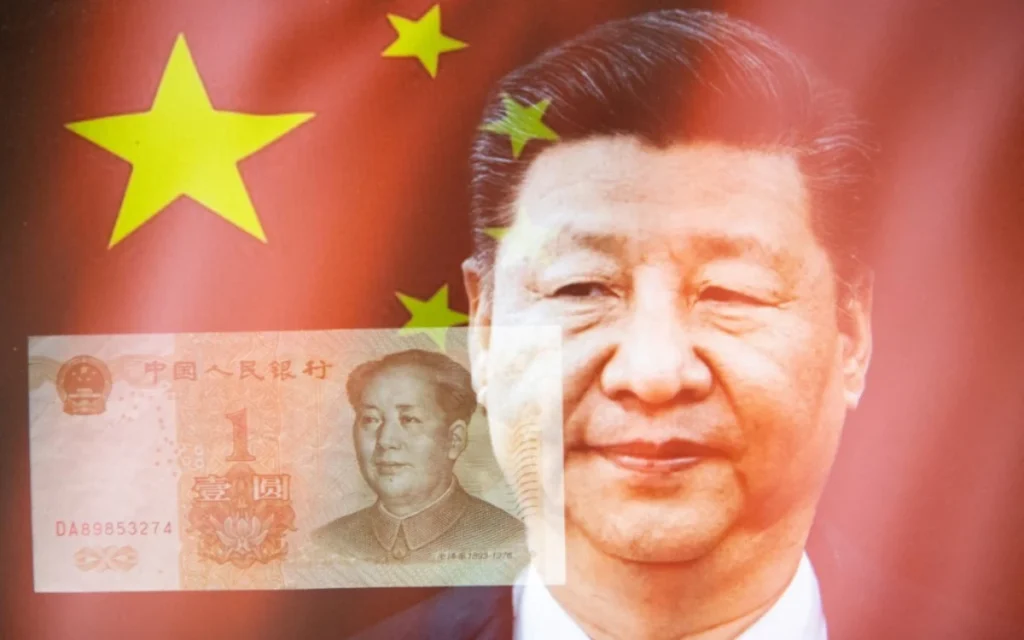
China policy reveals the ambition-capacity mismatch in a different form. Starmer’s government pursued what can be termed pragmatic engagement, restarting high-level economic dialogue and courting Chinese investment in infrastructure and clean energy. It simultaneously tightened restrictions on sensitive technology exports under pressure from Washington.
Chancellor Rachel Reeves traveled to Beijing seeking investment even as the government maintained earlier restrictions on Huawei’s role in Britain’s telecom network. Officials described the approach as deliberate rather than contradictory, though it reflects how little room Britain has to choose one clear lane.
Intensifying competition between Washington and Beijing has narrowed that room even further. Export controls and tariffs deployed by both powers increasingly force smaller states to choose sides on specific technologies and supply chains.
This erodes the latitude that previously allowed London to balance commercial ties with Beijing against security cooperation with Washington. Burnham inherits this narrowing corridor without having articulated any clear position on it, an omission that signals how peripheral China policy remains to Labour’s current political battles.
Ukraine and the European Pivot
The same dynamic recurs in Ukraine policy, where ambition has consistently outpaced resources. Starmer maintained continuity with previous governments, extending sanctions against Russia, supplying weaponry, and coordinating closely with Nordic and Baltic states through the Joint Expeditionary Force.
He also pursued access to European Union defense financing mechanisms, treating collective European procurement as essential given the diminishing certainty of long-term American security commitments under Trump. These steps positioned Britain as a serious contributor to European security planning after years of post-Brexit drift on defense. The underlying weakness has never been intent but capacity.
Britain has tried to sustain the military posture of a major power on a budget suited to a middle-ranking one. Defense spending stood at 2.3% of GDP in 2024. Starmer had pledged to raise that to 2.5% by 2027, with an ambition of 3% in the next parliament, en route to a NATO target of 3.5% by 2035.
That trajectory depended on the Defense Investment Plan, the document meant to translate those pledges into an actual budget and procurement schedule. Defense Secretary John Healey resigned on June 11, 2026, after the Treasury offered a settlement that he said fell well short of what the armed forces needed.
He warned that the shortfall could make the country less safe, and the Armed Forces Minister, Al Carns, resigned hours later for the same reason. The dispute is a concrete illustration of the ambition-capacity mismatch: a prime minister pledging escalating commitments abroad while his own Treasury resists funding them.
Burnham inherits an unresolved Defense Investment Plan and the same choice that forced Healey out: raise spending despite competing domestic priorities, or quietly narrow Britain’s security ambitions. That choice carries direct consequences for the credibility of Britain’s contribution to deterring Russia, particularly as Ukrainian strikes deep inside Russian territory suggest the conflict remains far from settled.
Labour’s Leftward Turn
Burnham’s path to Downing Street looks increasingly like a coronation rather than a contest. Wes Streeting, the only declared potential challenger, has said he would stand if a vote occurs, but Labour’s 20% nomination threshold and Burnham’s commanding lead make a serious challenge improbable.
The more consequential question concerns not the mechanics of succession but the direction Burnham represents within his party. As mayor of Greater Manchester, he built a record as a vocal critic of fiscal orthodoxy, pressing for greater devolved spending power and challenging Treasury constraints on regional investment.
His ascent signals a shift toward Labour’s soft left, away from the spending discipline that Starmer and Chancellor Rachel Reeves maintained to preserve market confidence. Burnham has so far pledged continuity with existing fiscal rules, but his political base expects greater public investment than his predecessor delivered.
That tension spills directly into commitments already under strain elsewhere in British policy. Greater domestic spending competes for the same fiscal headroom that defense budgets and European security commitments require, sharpening the trade-offs that Britain’s military posture already faces.
A leftward economic turn also carries political risk on Labour’s most exposed flank. Reform UK has built part of its appeal on economic insecurity rather than ideology, and a more visibly left-wing Labour government risks deepening that fragmentation rather than easing it. Burnham’s government may therefore inherit not just an unresolved foreign policy, but also a domestic spending agenda competing directly with it for the same scarce resources.

Strategic Drift, Not Strategic Choice
Financial markets have, thus far, treated the resignation itself as a non-event. However, the muted reaction reflects weeks of anticipation rather than confidence in what follows.
Burnham has worked deliberately to keep it that way, reaffirming Rachel Reeves’s fiscal rules and recruiting a former head of the Office for Budget Responsibility as an advisor. Yet the calm is fragile rather than settled.
Given Burnham’s plan to break with neoliberal economics and increase public spending, the market risk of his government is real. Gilt yields rose and sterling weakened simultaneously after his Makerfield victory, an unusual pairing that signaled concern over fiscal credibility rather than routine political noise.
That fragility is itself a verdict on British governance: investors are pricing the absence of fresh news, not genuine confidence in what comes next. Whether any leader can convert Westminster’s fragmented mandates into sustained authority, while also meeting the spending demands building within Labour, remains unanswered.
Starmer was less a cause of Britain’s predicament than a symptom of it. Two problems converge in his fall: a state losing institutional capacity to govern through difficulty, and an ambition abroad that has outrun the resources available to sustain it.
A third lies in a Westminster model struggling to convert electoral mandates into durable authority, a problem this resignation has not solved, and Burnham’s government seems unlikely to solve either.
Each successive government has handled these tensions tactically rather than confronting them structurally, producing competent short-term management without durable direction. A more stable parliamentary majority than recent history suggests seems unlikely in the near term.
Absent one, Britain’s pattern of short-lived premierships will probably continue, with foreign policy increasingly conducted through inherited reflexes rather than renewed deliberation. Burnham’s premiership may extend this drift rather than resolve it, though that trajectory remains contingent on economic performance and decisions still to be made. The deeper test facing Britain concerns not who occupies Downing Street but whether its institutions can still convert ambition, however well-founded, into the sustained governing authority that such ambition requires.
The deeper test facing Britain concerns not who occupies Downing Street but whether its institutions can still convert ambition, however well-founded, into the sustained governing authority that such ambition requires