
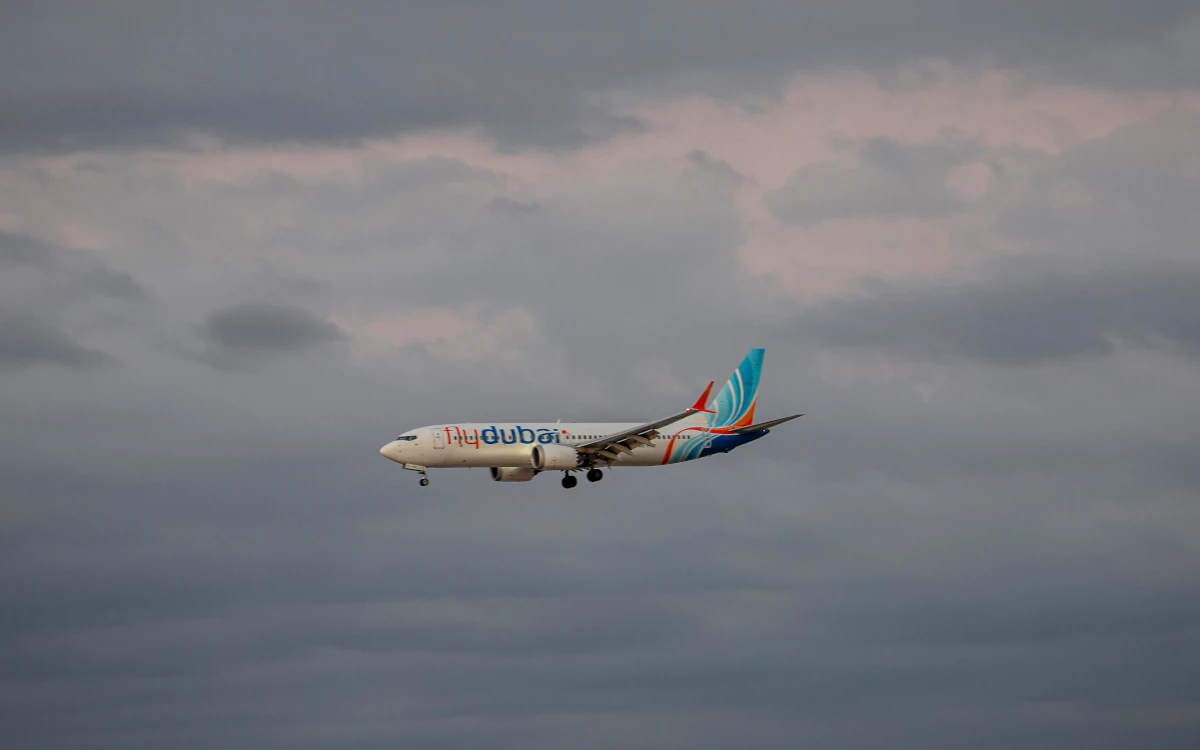
A regional security source says two Flydubai relief pilots aboard the flight not only took command of the aircraft but also intervened during the attack and subdued the co-pilot before diverting the flight to Tabuk.
A regional security source briefed on the details of the Flydubai flight incident on September 30, 2026, has told Eagle Intelligence Reports that two Flydubai relief pilots travelling aboard the aircraft intervened to subdue the Omani co-pilot before taking control of the aircraft and landing it at Prince Sultan bin Abdulaziz International Airport in Tabuk, Saudi Arabia.
According to the source, the two relief pilots aboard the flight played a decisive role in bringing the situation under control. Their role was not limited to taking over the aircraft after the immediate threat had passed. The source said they actually intervened while the confrontation was still ongoing, helped bring the co-pilot under control, and subsequently entered the cockpit and took control of the aircraft.
The two relief pilots aboard the flight played a decisive role in bringing the situation under control. Their role was not limited to taking over the aircraft after the immediate threat had passed
The account provides further detail on what happened during the critical period before the aircraft was diverted to Tabuk. It suggests that the relief pilots were directly involved in neutralizing the threat rather than simply replacing the cockpit crew after the situation had already been secured.
The source said this version differs from accounts published by some Israeli media outlets following the incident, which attributed a prominent role in restraining the co-pilot to Israeli passengers traveling aboard the flight.
According to the source, those reports did not fully reflect the sequence of events aboard the aircraft. He maintained that the two Flydubai relief pilots were the individuals who ultimately brought the co-pilot under control before assuming command of the aircraft and directing it to Tabuk.
The source did not exclude the possibility that other passengers or crew members may have become involved during the confusion surrounding the incident. However, he said the decisive intervention that allowed control of the aircraft to be restored was carried out by the two relief pilots.
Initial reporting focused heavily on who intervened inside the aircraft and how the situation was brought under control. Several aspects of those critical minutes remain unclear to the public, including the extent to which passengers or other crew members were involved before the relief pilots took command of the flight.
Eagle Intelligence Reports was unable to independently verify the information provided by the security source at the time of publication.
Saudi Arabia’s Ministry of Interior had earlier said that preliminary investigations showed that the co-pilot assaulted the captain and that both men were taken to hospital after the aircraft landed in Tabuk.
After Saudi authorities completed the necessary procedures and the captain and co-pilot received medical clearance, both men were transferred to Abu Dhabi, where Emirati authorities then assumed responsibility for the main criminal investigation.

The transfer reflected the UAE’s jurisdiction over offenses committed aboard UAE-registered aircraft. The aircraft is registered in the United Arab Emirates and operates under the UAE flag, giving Emirati authorities jurisdiction over criminal acts committed on board even when the aircraft is outside UAE territory.
Separate aviation-safety inquiries are also looking into issues of aviation safety and the operational circumstances surrounding the incident, including what took place inside the cockpit, how command of the aircraft was restored, and the procedures followed before the diversion to Tabuk.
The UAE Attorney General also announced today that the investigation to date indicates that the co-pilot had begun carrying out what authorities described as a terrorist act aboard the flight.
The UAE Attorney General also announced today that the investigation to date indicates that the co-pilot had begun carrying out what authorities described as a terrorist act aboard the flight
According to findings announced by Emirati authorities, the co-pilot attacked the captain inside the cockpit using the aircraft’s emergency axe and attempted to seize control of the aircraft.
The authorities have not yet announced the final findings of the investigation or established the full motive behind the incident. Investigators are continuing to examine physical and digital evidence, assess whether the co-pilot had any links to other individuals or entities, and determine whether he acted alone.