
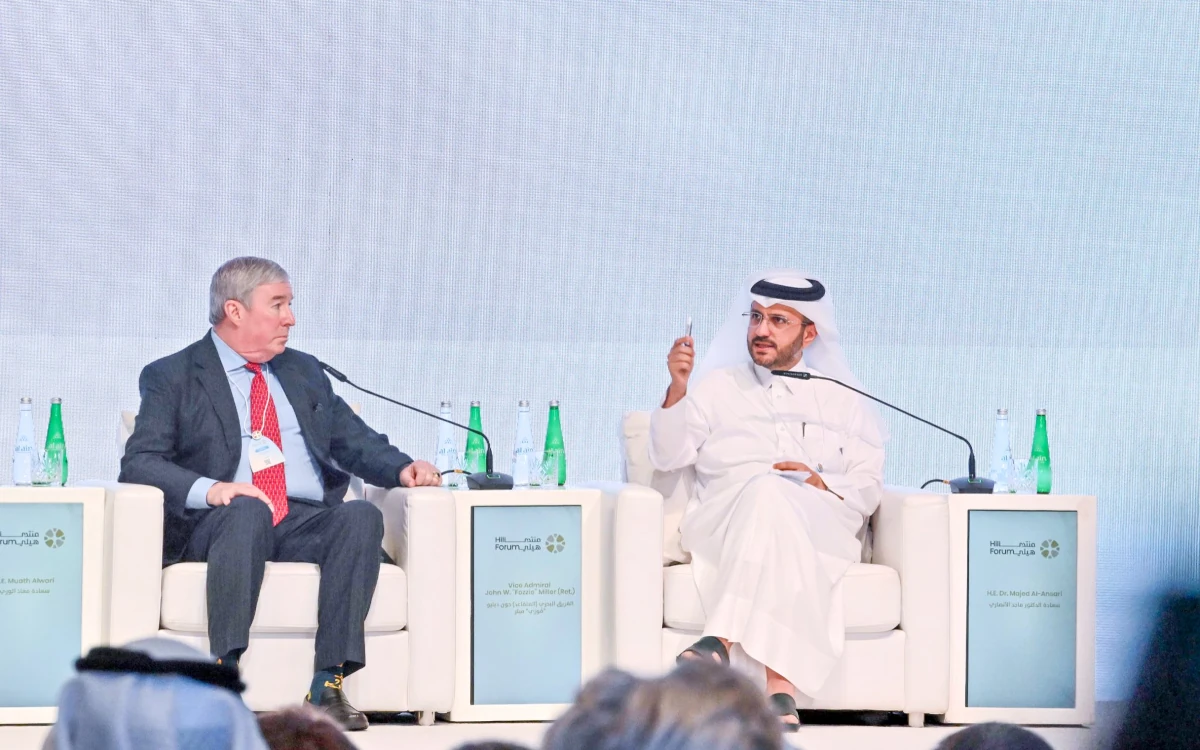
Qatar said Gulf states cannot rely solely on the United States and other international alliances to ensure their security, as a senior UAE official outlined the issues that should form part of any dialogue with Iran.
Speaking at the Hili Forum in Abu Dhabi on Monday, Qatar’s foreign ministry spokesman said, “self-sufficiency when it comes to security is the only way forward.”
“Yes, we need our partners. Yes, we need our allies. But we cannot depend on them alone for our security. We need to realize in the Gulf that having international forces in the region, having a strategic alliance with the United States, is very important, but is not enough,” he added.
Meanwhile, a top UAE official said that regaining Iran’s trust is a “mountain” worth “climbing toward.” Speaking at the same forum, Anwar Gargash, diplomatic adviser to the UAE President, said any dialogue with Iran should address wider strategic questions for the Gulf, including “security, non-interference, freedom of navigation, economic cooperation.” Gargash said Gulf countries failed to come together to counter the Iranian threat.
The comments come after both countries sustained Iranian attacks despite their close security ties with Washington. Qatar, which hosts the largest U.S. military base in the Middle East and has served as a key mediator in the U.S.–Iran conflict, has faced attacks on its energy infrastructure and American military sites. The UAE, located across the Gulf from Iran near the Strait of Hormuz, has been targeted by thousands of Iranian missiles and drones during the conflict, while tankers belonging to state-owned ADNOC have come under repeated attack in recent weeks.
The remarks point to a potential shift in Middle Eastern power dynamics as Gulf states reassess a security architecture that has relied heavily on U.S. military power for decades. Qatar’s call for greater self-reliance, alongside Gargash’s emphasis on the issues that any dialogue with Iran should address, suggests Gulf capitals are debating how to balance their strategic partnerships with Washington with regional approaches aimed at reducing confrontation with Tehran.
Rather than signaling an abandonment of the U.S. alliance, the emerging approach could produce a more multipolar regional order in which Gulf states exercise greater strategic autonomy and traditional alliances become less exclusive. The key indicators to watch are whether these positions translate into deeper Gulf defense integration, more structured regional dialogue with Iran, or changes in the scale and role of the U.S. military presence in the region. (AFP+EIR)