
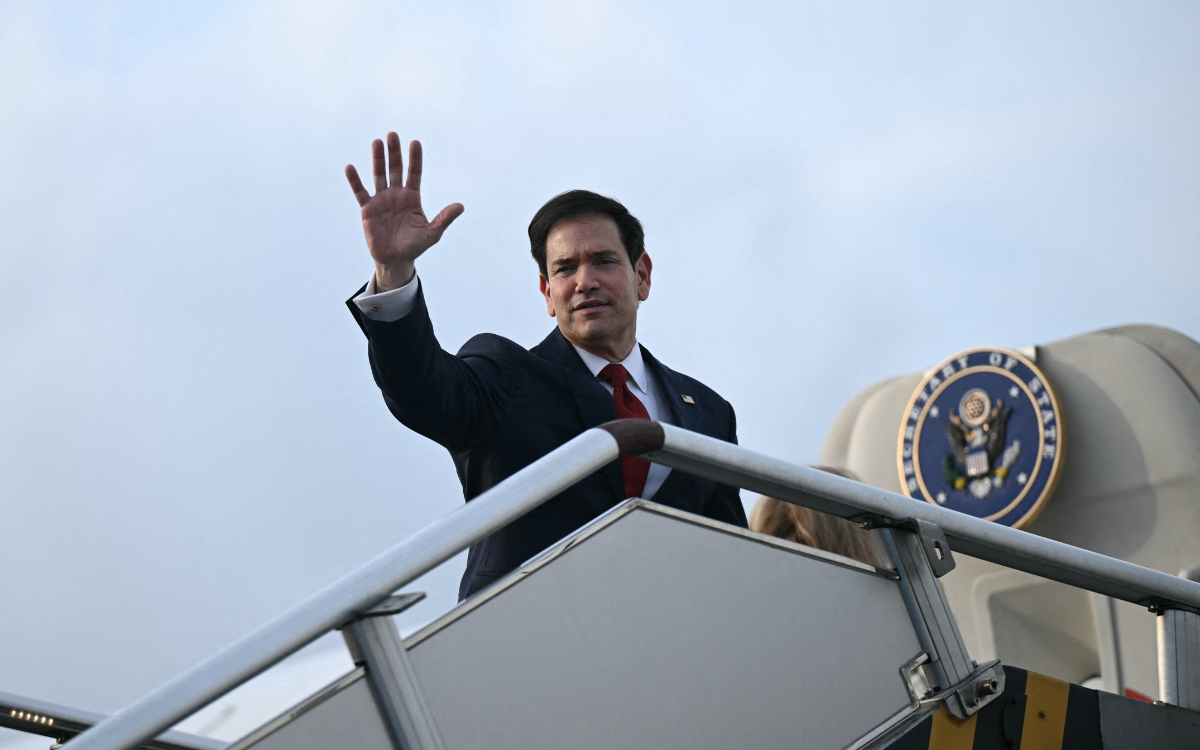
U.S. Secretary of State Marco Rubio is starting a Latin American tour on Tuesday to strengthen pro-U.S. leaders and American influence across the region.
Rubio’s first stop in Colombia on Tuesday comes after the recent election of President Abelardo de la Espriella, a right-wing millionaire, with whom Washington expects better relations than with former left-wing President Gustavo Petro. Since the election, Colombia has authorized joint military operations with the United States and has joined the “Shield of the Americas,” a coalition of countries led by Trump to combat drug trafficking in the region. This week’s visit to the city of Barranquilla aims to improve “cooperation in the shared fight against narcoterrorism” and discuss suspending U.S. customs duties to support the country’s reconstruction after the August 10 earthquake.
After Colombia, Rubio will travel to Ecuador on Thursday to meet President Daniel Noboa and then to Peru, where he is set to meet right-wing President Keiko Fujimori, who is also aligned with U.S. President Donald Trump’s policies. The Latin American tour comes days after the United States concluded an agreement that would see Washington take majority control of more than 65 billion barrels of Venezuela’s oil reserves, following the capture of Nicolás Maduro and negotiations with an interim government.
Rubio’s tour also comes amid increased U.S. pressure on governments in the region that remain at odds with Washington. Cuba said Monday that the U.S. embargo caused more than $8 billion in economic losses between March 2025 and February 2026, while Foreign Minister Bruno Rodriguez said Havana remains open to dialogue with Washington but ruled out normalization under current conditions.
Rubio’s tour reflects Washington’s push to capitalize on a broader conservative political shift across Latin America and translate ideological alignment into deeper U.S. security, economic, and diplomatic influence. With several countries moving rightward since Trump returned to office, the visits to Colombia, Ecuador, and Peru could help consolidate a bloc of governments more closely aligned with Washington’s regional priorities, consistent with the administration’s renewed emphasis on the Western Hemisphere in its national security strategy. Key indicators to watch are new commitments on joint military and counternarcotics operations, trade, and reconstruction assistance, and whether additional governments join U.S.-led regional initiatives—signaling whether the current political realignment develops into a more durable U.S.-aligned security and economic architecture. (AFP+EIR)