
German Chancellor Friedrich Merz will meet with his party on Monday after anti-immigration Alternative for Germany (AfD) achieved its biggest win on Sunday.
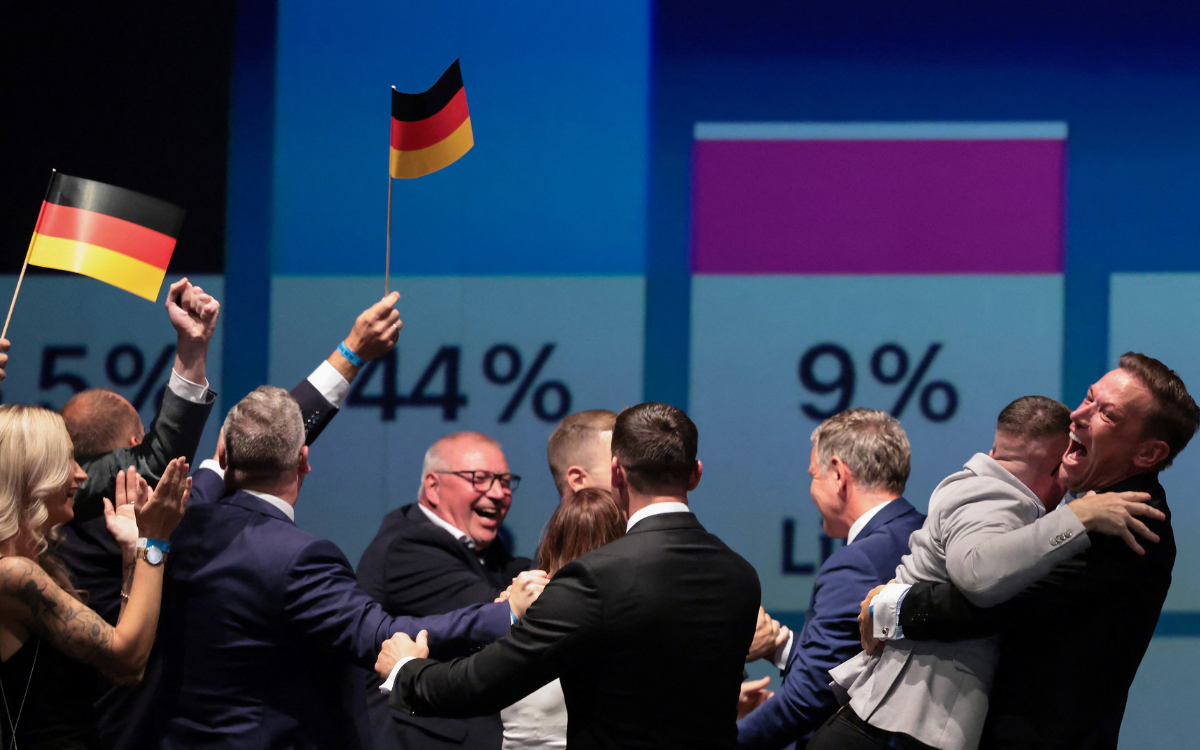
The AfD won 44 percent of the vote in state elections in the former East German state of Saxony-Anhalt, where the state’s domestic intelligence agency lists the party branch as “right-wing extremist.” Meanwhile, Merz’s center-right Christian Democrats received just 18 percent and the Social Democratic Party took just 9 percent.
“For the first time since the end of World War II, the AfD—a party whose state branch is classified as right-wing extremist—is close to securing an absolute majority,” said Daniel Guenther, the CDU premier of Schleswig-Holstein state.
AfD national co-leaders Alice Weidel and Tino Chrupalla view the resultas a steppingstone for the 2029 national elections. According to projections by German public broadcasters, the AfD fell just three seats short of an absolute majority of 42 seats in the regional parliament.
The AfD’s breakthrough in Saxony-Anhalt is more than a regional political upset. It could become a significant European security challenge if the party replicates that success at the national level. The party’s Kremlin-friendly positions, opposition to continued military support for Ukraine, and calls to overhaul Germany’s intelligence services have intensified concerns among allies that an AfD-led administration could weaken Berlin’s security architecture and complicate NATO coordination.
The result has already reverberated internationally: Russian presidential envoy Kirill Dmitriev hailed it as a “historic win” and shared a screenshot of President Donald Trump’s post on the result, while Elon Musk congratulated the AfD. European officials struck a sharply different tone, with France warning of a “serious moment” for Europe and Polish Prime Minister Donald Tusk saying only “idiots or traitors” could celebrate the AfD’s triumph.
The key development to watch is whether mainstream parties can preserve the firewall excluding the AfD from power—or whether coalition negotiations begin to erode one of postwar Germany’s defining political conventions. An AfD entry into government would significantly raise the stakes for Germany’s policies toward Ukraine and Russia, as well as for intelligence cooperation with NATO allies. (AFP)