
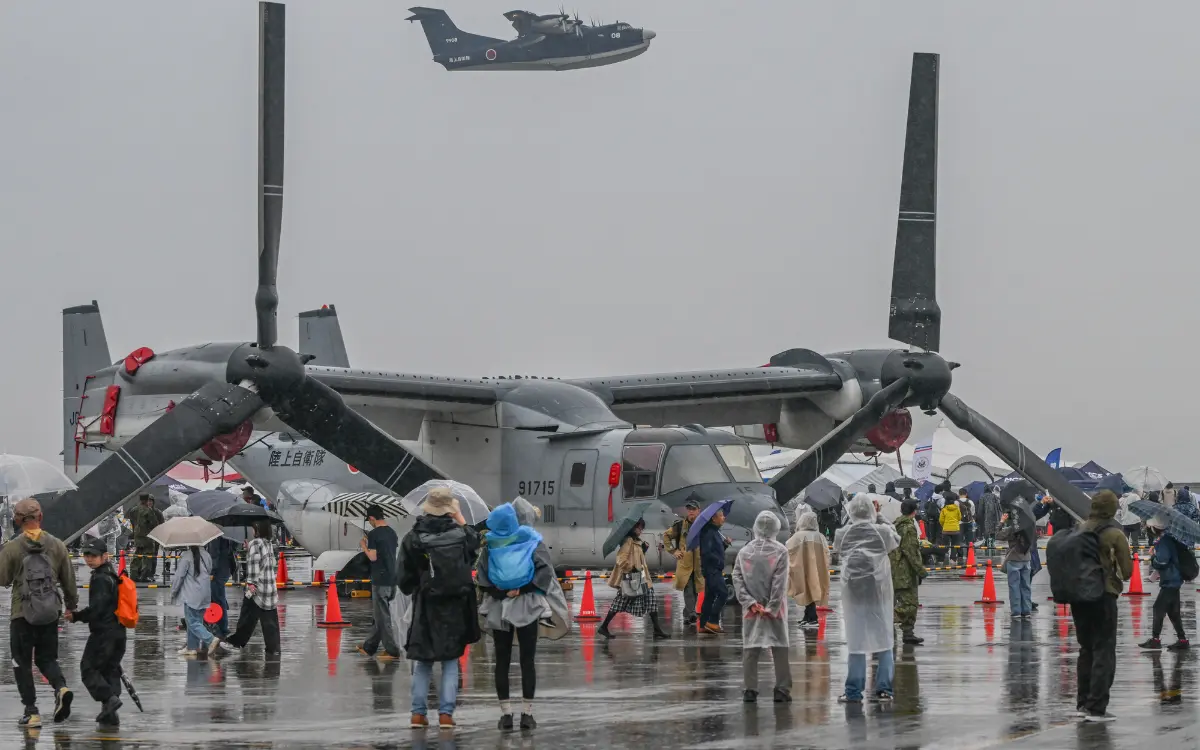
Japan faces a strategic nightmare. China, Russia, and North Korea are increasing pressure on Tokyo while expanding cooperation with one another. Japan’s annual Defense White Paper, released earlier this month, underscores how Tokyo concurrently confronts these three powerful potential adversaries seeking to revise the regional order. Together, they aim to weaken and isolate Japan from its allies, above all the United States. Until now, Japanese leaders have relied on U.S. security guarantees to balance that threat. Today, as questions grow about the durability of U.S. commitments, Japan is moving to strengthen its own military capabilities.
The Trump administration has continued the traditional U.S. policy of defense and deterrence, declining to make major cuts in U.S. forces stationed in Japan or remove its nuclear umbrella. But the White House has adopted a more ambiguous public stance toward Asian threats than Tokyo would like. And recent U.S. actions—including redeploying the last Navy aircraft carrier from East Asia, curtailing South Korean–U.S. military exercises, and demanding that allies make major financial and economic concessions—have deepened Japanese angst.
The immediate response will likely be evolutionary rather than revolutionary. Tokyo can strengthen its own capabilities and expand partnerships with its neighbors while preserving its alliance with Washington. But those relationships can mitigate reduced U.S. support; they cannot replace it. If the slide toward American retrenchment continues, or if political change in Russia brings an opportunity for rapprochement, Japan could face choices that would fundamentally change the Northeast Asian security environment. Either way, Japan’s national security community is now pondering unprecedented security stances.
Tokyo can strengthen its own capabilities and expand partnerships with its neighbors while preserving its alliance with Washington. But those relationships can mitigate reduced U.S. support; they cannot replace it.
A Triad of Trouble
China, Russia, and North Korea pose different kinds of threats to Japan. China is the long-term structural challenge. Chinese statements and policies depict Northeast Asia as falling within Beijing’s sphere of influence, with the PRC sitting at the apex of a hierarchical regional order. Beijing wants other Asian governments to acknowledge its leadership and non-Asians to accept their lesser role or leave the region (“Asia for Asians”). PRC messaging conveys that a future China-dominated regional order is inevitable because of U.S. decline and China’s rise. It also warns that Japan and other states should therefore accommodate, rather than resist, Beijing’s regional preeminence.
Russia’s ambitions in the Indo-Pacific are narrower than China’s but similarly seek to revise the regional order. The Kremlin desires a more multipolar structure that would give Moscow greater maneuvering room in Northeast Asia to exploit divisions and cement its claims to great power status. A specific Russian goal is to consolidate control over the islands Moscow contests with Tokyo, which Russians term the Southern Kurils and Japan designates the Northern Territories. These strategic islands, along with the Sea of Okhotsk, provide a protective bastion for Russia’s Pacific Ocean strategic submarine fleet.
Under supreme leader Kim Jong Un, North Korea strives for near-term recognition as a nuclear weapons state and long-term reunification of the Korean Peninsula under Pyongyang’s leadership, despite its recent constitutional revision recognizing the South as a separate hostile state. North Korea demands that Japan and other countries acknowledge the DPRK’s status as a permanent nuclear weapons possessor state, eschew threatening military activities, and relax economic sanctions.
Though their long-term visions for Asian security may differ, their goals regarding Japan are compatible. Beijing has shifted from its Cold War-era position of tacitly accepting Tokyo’s stance on the Russian-occupied islands to its recent approach of backing Moscow’s demands. Meanwhile, Moscow no longer publicly objects to Beijing’s claims to the Japanese-occupied islands in the East China Sea. Beijing and Moscow strive to fuel Japanese anxieties about U.S. disengagement.
Moreover, the three governments’ anti-Japanese rhetoric has become increasingly coordinated and intense. Their growing military cooperation compounds the risks of a two-front confrontation to Japan’s west and north. To make matters worse, Russia and North Korea may engage in diversionary military maneuvers to dilute Japan’s support for Taiwan in a potential crisis.
The strategic problem for Tokyo is not simply that it confronts all three, but that their cooperation increasingly makes it harder to manage each threat separately. Still, from Tokyo’s perspective, the ambitions and capabilities of the three vary. The asymmetries matter. North Korea represents the most acute and unpredictable threat, China presents a long-term existential challenge, and Russia poses an indirect threat primarily by empowering the other two. But that distinction may also create an opportunity for Tokyo: Russia is the antagonist with which some sort of future accommodation is most conceivable.
The strategic problem for Tokyo is not simply that it confronts all three, but that their cooperation increasingly makes it harder to manage each threat separately.
Wavering Anchor
Thanks to its strategic location, vast economic influence, and large U.S. military presence, Japan anchors Washington’s military strategy in East Asia. The U.S. military presence there makes the country indispensable to American operations in the western Pacific. Meanwhile, Japanese air, sea, and ground forces enjoy substantial interoperability with the U.S. armed forces. They could augment U.S. military operations to defend threatened partners and allies, including Taiwan, South Korea, and the Philippines.
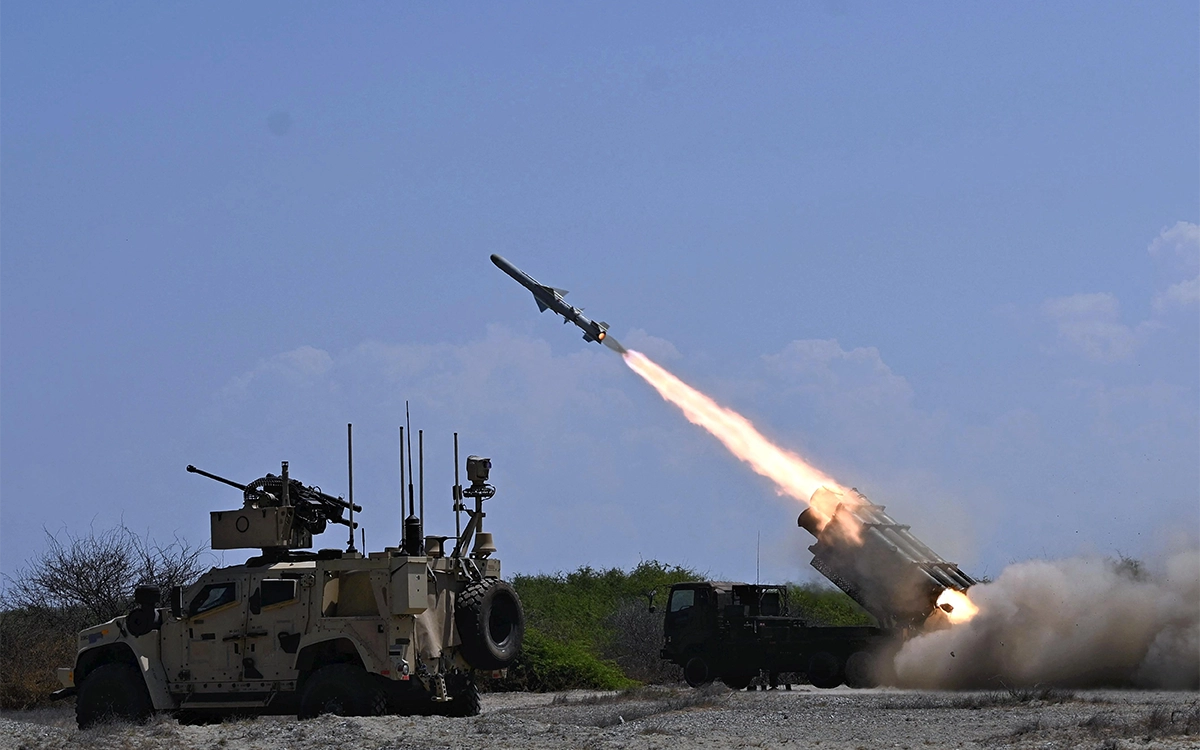
The relationship works in the opposite direction as well. American conventional and nuclear capabilities provide Japan with deterrence against threats that it could not easily counter alone. The United States could offer Tokyo critical support in its disputes with China, Russia, and North Korea. Successive U.S. governments have pledged to employ all available means to defend Japan, allowing Japanese leaders to eschew developing their own nuclear deterrent. However, making such guarantees credible is inherently challenging since Washington must risk nuclear retaliation to protect a foreign country.
The problem increasingly extends beyond the credibility of American political commitments. Recent years have underscored the intensity of the U.S. “simultaneity problem”: Washington must address multiple concurrent security challenges in Europe, the Middle East, and the Indo-Pacific despite significant constraints in platforms, personnel, and munitions. The redeployment of the USS George Washington from East Asia illustrates how demands elsewhere can affect the resources readily available in the region even without a formal change in U.S. strategy.
Recent years have underscored the intensity of the U.S. “simultaneity problem”: Washington must address multiple concurrent security challenges in Europe, the Middle East, and the Indo-Pacific despite significant constraints in platforms, personnel, and munitions.
The Trump administration’s unconventional approach to both allies and adversaries has deepened Tokyo’s angst and added a political dimension to this structural problem. The White House failed to condemn Putin’s visit to the Southern Kurils/Northern Territories, has expressed lukewarm commitments to defending Taiwan from a Chinese invasion, and has striven to improve relations with China, Russia, and North Korea while demanding that allies like Japan make major economic concessions and assume unprecedented defense burdens.
These doubts predate the latest disputes. A poll conducted last year found that only 15% of the Japanese respondents believed the United States would protect them against foreign aggression. Meanwhile, the Japan–U.S. Special Measures Agreement, which specifies the costs Japan covers to host U.S. troops, will expire next March, creating another potential source of alliance friction.
Decision Time
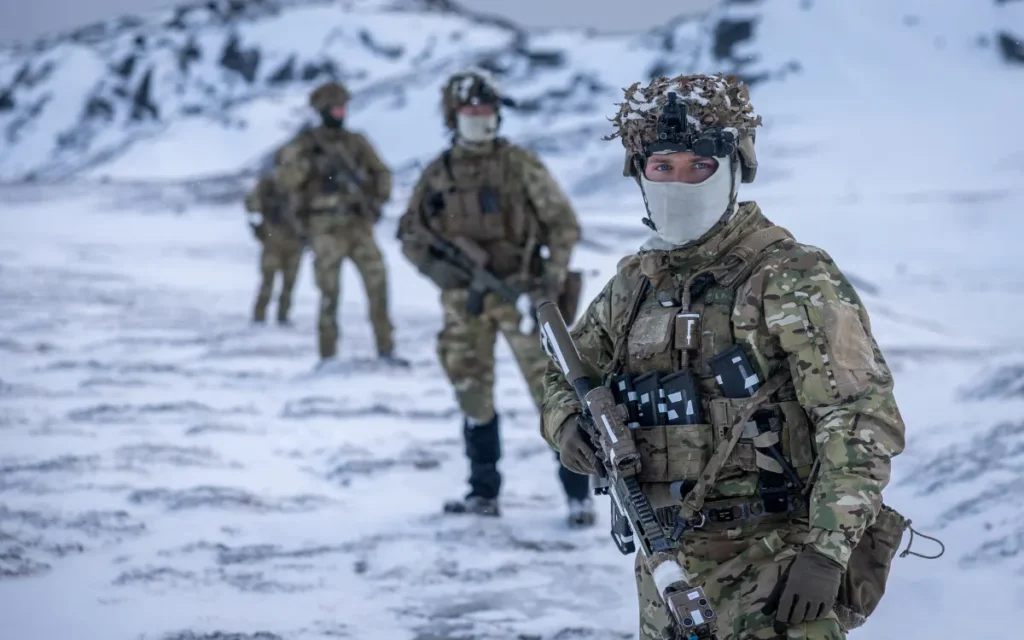
Prime Minister Sanae Takaichi has striven to build on the legacy of her mentor, former Prime Minister Shinzo Abe, by expanding Japan’s role in sustaining a “Free and Open Pacific,” alongside the United States. Her government has accelerated planned increases in defense spending, prioritizing conventional strike and missile-defense systems intended to buttress Japan’s non-nuclear deterrent. Japan has also reformed its intelligence services, established a joint operations command, and expanded arms transfers and defense cooperation with other Asian countries.
These policies serve two purposes. They make Japan less vulnerable to changes in U.S. policy while demonstrating that Tokyo can contribute more to Washington’s regional strategy. That distinction is important: Japan is currently seeking more autonomy within the alliance structure, not freedom from it.
There are limits, however. The Japanese government still maintains that constitutional restrictions prohibit Japan from contributing to U.S. military operations in areas outside East Asia—for example, in the Middle East. Until now, the Trump administration has not challenged this interpretation. But the president’s intensifying complaints about inadequate allied support for the U.S. confrontation with Iran suggest that Tokyo’s immunity from White House umbrage and retaliation might not last.
The Japanese government still maintains that constitutional restrictions prohibit Japan from contributing to U.S. military operations in areas outside East Asia—for example, in the Middle East.
The Japanese government is now finalizing its most important national security documents: the high-level National Security Strategy, the operationally focused National Defense Strategy, and the Defense Buildup Program specifying the capabilities required to implement them and address these threats. When these documents were last written five years ago, Japan faced a substantially different and less threatening security environment. North Korea was more isolated, Russia had not become as closely aligned with Pyongyang and Beijing, and prospects still existed for improving Russian–Japanese relations through a territorial deal.
Although Tokyo has raised defense spending, revised force-planning metrics, and made other policy changes, its existing core strategy remains. But if the external environment changes sufficiently, Japan has at least three broader pathways.
Scenarios
For the first time in decades, Japanese leaders are debating revisions to the country’s hitherto sacrosanct three non-nuclear principles: that Japan will neither possess nor produce nuclear weapons nor permit their introduction into Japanese territory. Some favor changes. The junior coalition partner, the Japan Innovation Party, for example, has openly advocated a more flexible approach and is open to the possible deployment of U.S. nuclear weapons on Japanese territory. That would allow the temporary docking of a U.S. nuclear-armed ship in the case of a crisis. Takaichi has not openly supported this approach, stressing instead the value of maintaining the currently strong Japanese–U.S. security ties. But she has not excluded it either.
Less Depth, More Breadth
In this scenario, which is overwhelmingly the most likely for the next two years, Tokyo would seek to manage the remainder of Trump’s second term. Japan would accept the inevitability of a reduced U.S. military presence but insist on prior consultations and an acceptable transition period before Japan must fully substitute for major U.S. force reductions. Tokyo would use the transition time to assume greater responsibility for its own defense and boost its autonomous military and intelligence capabilities.
Though traditional defense ties with the United States would decrease, cooperation on dual-use economic security involving energy, chips, and critical minerals would continue to increase. Furthermore, Japan could pursue low-cost military drone cooperation with the United States, which would help address Japan’s declining cohort of young military recruits. Other areas for expanded collaboration could include shipbuilding, artificial intelligence, and supply chain security.
At the same time, Tokyo would also compensate for decreased U.S. military support by deepening security ties with other like-minded partners, especially South Korea, the Quad, NATO, and Southeast Asian states like the Philippines that welcome Japan’s contribution to balancing China’s economic and military power. These partnerships cannot substitute for the American strategic security presence, but they can mitigate the consequences of its drawdown.
Russian Reconciliation
A rapprochement with Moscow represents a more distant possibility. However, Japanese leaders could plausibly conclude that two great power threats are better than three. If Japan decided to make major concessions to one potential adversary to concentrate on the other two, Russia seems the safer choice. Russian–Japanese animosities are less existential than those between Tokyo and Beijing or Tokyo and Pyongyang. Moscow’s territorial claims regarding Japan are limited to the Southern Kurils/Northern Territories. Other demands could include a relaxation of sanctions on Russia, reduced support for Ukraine, and limits on Japanese–U.S. military cooperation.
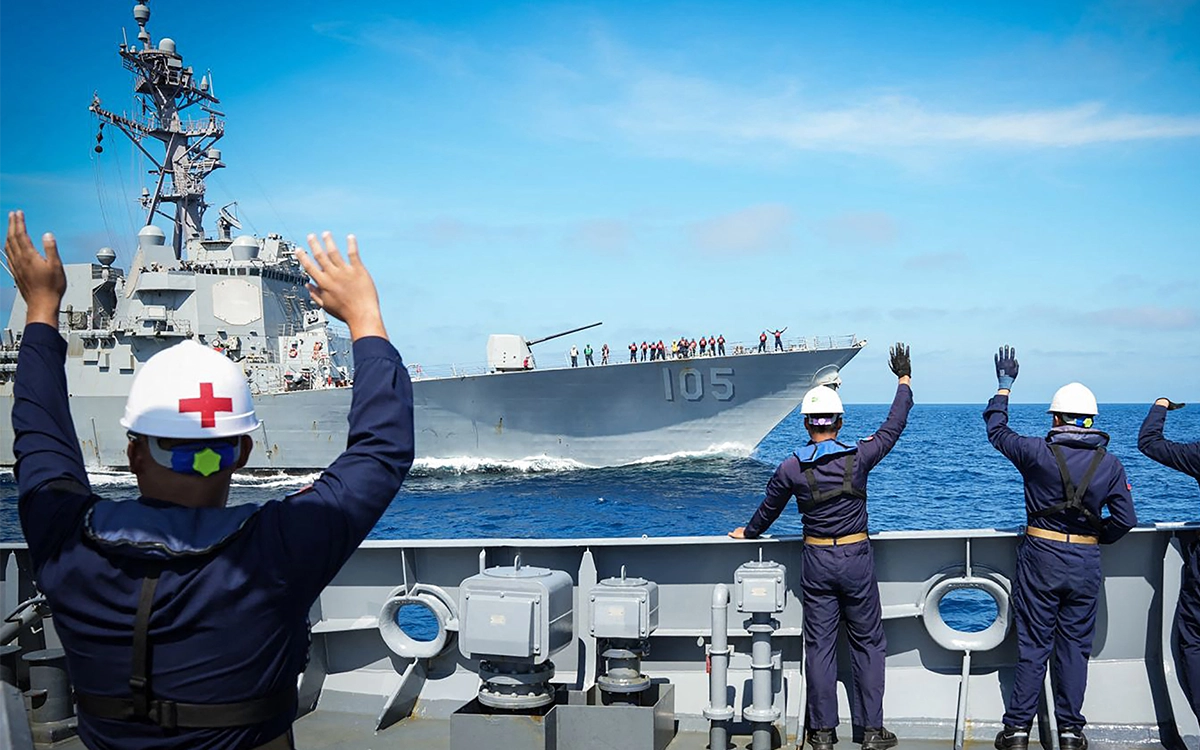
If Japanese policymakers assess that their security cooperation with the United States will decline in any case, they might find these concessions acceptable given the exigencies of their security environment. In return, Tokyo would expect Russia to reduce its military-technical support for China and North Korea, and refrain from providing concrete backing to Chinese claims to Japanese territory. In the past, Russian policymakers have appreciated the value of improving relations with Tokyo to expand Moscow’s geopolitical maneuvering room in Northeast Asia, expand access to Japanese investment and technology, and decrease Russia’s dependence on China.
Reduced tensions with Moscow would enable Japan to concentrate more on managing Beijing’s growing economic and military power, might induce Beijing and Pyongyang to moderate their policies toward Tokyo, and could decrease Russian incentives to cooperate with North Korea, at least after the Russia–Ukraine War. The obvious risk is that Moscow might pocket the concessions and demand more.
Such a reconciliation, however, is unlikely. Moscow currently has little incentive to move in that direction. The scenario could become more plausible under a post-Putin leadership in Moscow, as a new leadership undertakes a broader reassessment of Russian policy. A future regime may see strategic value in moving toward reconciliation with the West to reduce its dependence on Beijing, and Japan would be part of that equation.
Going Alone
This least likely pathway would require a much more fundamental breakdown of the existing regional security infrastructure.
In recent years, Japan has enhanced its retaliatory counterstrike capabilities and is developing new and enhanced offensive missiles, missile defenses, military satellites, and intelligence capabilities.
Thanks to its skilled workforce, extensive civilian nuclear infrastructure, and advanced aerospace industry, Japan has the capacity to rapidly develop and deploy nuclear weapons. Should Japanese confidence in U.S. security guarantees substantially decline, interest in acquiring nuclear weapons could increase. Growing acceptance of North Korea’s nuclear claims, and a South Korean decision to develop nuclear weapons itself in response to that, would provide Tokyo with additional incentives to pursue such policies.
No current Japanese leader has advocated developing an independent nuclear deterrent. Takaichi and other members of the Japanese national security establishment continue to emphasize the value of strong Japanese–U.S. security ties. Washington would have to push Tokyo in that direction. The decisive trigger might be a genuinely isolationist American foreign policy that encourages allies to adopt nuclear weapons rather than rely on U.S. military support. For now, that remains the least likely outcome.
The decisive trigger might be a genuinely isolationist American foreign policy that encourages allies to adopt nuclear weapons rather than rely on U.S. military support. For now, that remains the least likely outcome.
Japan has not yet chosen between Washington, Moscow, and strategic independence because it has not had to. Tokyo is prudently buying options against multiple futures, hoping for the best but preparing for the worst.
Japan is not the only U.S. military ally grappling with a more challenging international environment. But policy changes in Tokyo could serve as a bellwether for how other U.S. allies will grapple with heightened threats and uncertain U.S. defense commitments.