
America needs welders as much as warriors to rebuild its Arsenal of Democracy, which has atrophied under decades of strategic malpractice. Years of bipartisan budgetary negligence have hollowed out the skilled workforce, creating a deficit that money alone cannot fix. Unless Washington can close that gap, its ability to deter China’s global ambitions could be jeopardized.
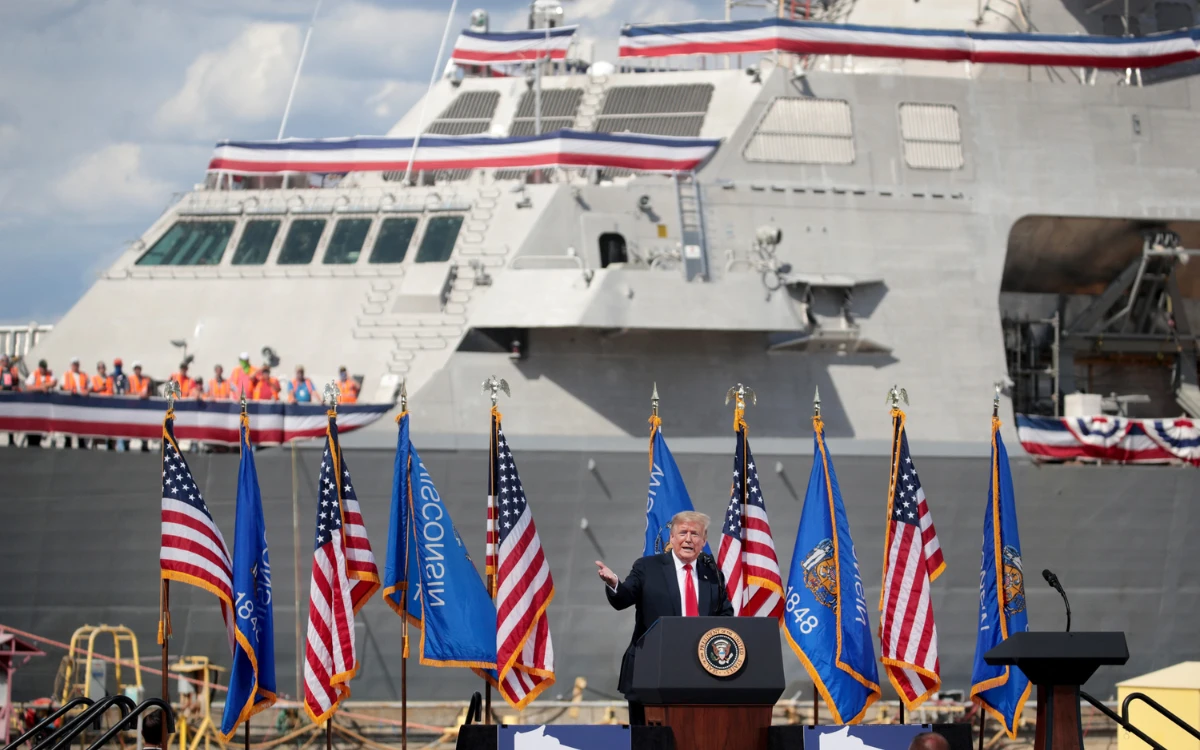
The scale of the challenge casts doubt on President Donald Trump’s vows to rebuild American manufacturing. He has not explained how he will solve the main problem: a critical shortage of engineers, technicians, welders, electricians, and other skilled workers needed to get the job done.
The United States spent decades after World War II building a defense industrial base and developing a skilled workforce. Master tradespeople built the ships, tanks, tools, weapons, and missiles that sustained America as the core of democracy in a hostile world.
But layoffs, plant closings, and downsizing shifted the momentum. Corporate America hollowed out entire regions of the country in the 1980s and 1990s, leaving behind a Rust Belt of shuttered factories and shattered dreams. Companies chased lower wages overseas, and the skilled workers left behind lost their jobs, their trades, and the pipeline that trained their replacements.
Deterioration in U.S. Defense Base
The numbers reflect the toll. Defense-related employment fell by 2.1 million between 1985 and 2021, according to the White House’s 2026 Economic Report. That loss accounted for roughly 40 percent of all U.S. manufacturing job cuts. The hollowing out did not remain in the past. America still wrestles with it four decades later.
Deloitte, the consulting company, and the Manufacturing Institute, the workforce affiliate of the National Association of Manufacturers, studied the problem jointly. They project that U.S. manufacturers could need to fill as many as 3.8 million jobs between 2024 and 2033. If the skills gap persists, around half of them, or 1.9 million, could go unfilled.
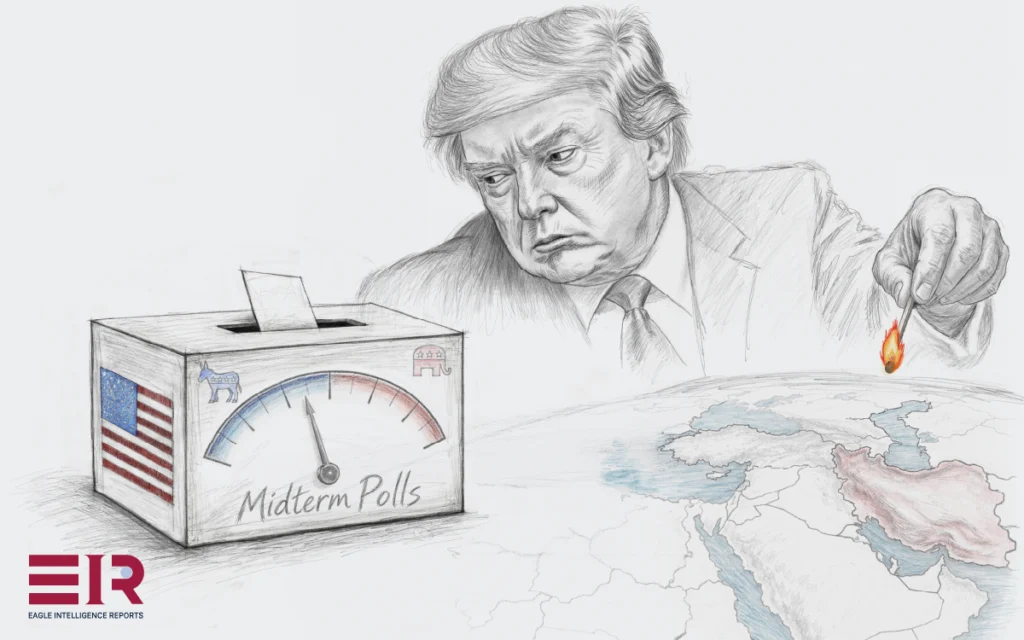
President Trump has vowed to counter the deficit, and he has taken steps in that direction. His huge tax and spending law added $156 billion in military spending through fiscal 2029. Total defense appropriations and requests reached about $1 trillion for fiscal 2026, which ends this month. He has requested $1.5 trillion for fiscal 2027, although $350 billion of that depends on a second reconciliation bill. The administration says the money will create thousands of defense manufacturing jobs. Trump would partially fund the increase by cutting other civilian job programs.
The budgets are large. The workforce is not. Additional dollars will not fund production shortfalls if the nation’s skilled workforce has lost muscle.
The budgets are large. The workforce is not. Additional dollars will not fund production shortfalls if the nation’s skilled workforce has lost muscle.
Both Political Parties Fed the Decline
The congressional budget process helped create the skills deficit. So did globalization, the politics of procurement, the financialization of American business, and Trump‘s immigration policies. The press usually covers these as separate stories: congressional gridlock, border walls, wasteful spending, sweeping layoffs. The broader pattern goes unreported. Democratic and Republican administrations, each acting independently and inadvertently, created long-term structural problems in America’s economy, particularly in the defense industry. Over time, competing forces within the government diluted its ability to project strength abroad because the country lacks workers with the right skills in the right places.
“There aren’t enough skilled tradespeople to be hired. We need millions and millions and millions,” Chris Power, founder of Hadrian, a defense manufacturing technology company, told the Global Security Forum in Washington in June. “I think everyone’s on board with the mission, but it will take two to four years for this to stick.”
Anyone seeking a reason for the skills deficit should start with the Congressional Budget and Impoundment Control Act of 1974. Designed to give contractors, workers, and soldiers a clear picture of federal spending priorities, the act rarely worked as intended. Congress has passed all 13 appropriations bills on time four times since the law took effect: fiscal 1977, 1989, 1995, and 1997. It has enacted 207 continuing resolutions (CRs), or stopgap measures, across the 49 fiscal years that followed. They freeze spending at prior-year levels while inflation quietly erodes the dollars that survive.
Sixteen times since fiscal 1977, the Congressional Research Service reports, at least one part of the government ran on a stopgap for an entire fiscal year. Four of those came after 2000, in fiscal 2007, 2011, 2013, and 2025. A CR signals a funding “deadlock,” and it arrives with packs of well-heeled lobbyists each seeking exceptions for their clients. Over the years, Congress institutionalized the process, creating a federal budget that runs on autopilot.
A stopgap arrives with packs of well-heeled lobbyists, each seeking exceptions for their clients. Congress institutionalized the process, creating a federal budget that runs on autopilot.
Multinational Corporations Shutter U.S. Plants
Faced with durable revenue threats, companies heavily reliant on government spending looked for alternatives, and globalization provided them. Trade liberalization embedded in pacts like NAFTA played a part. So did China’s accession to the World Trade Organization in December 2001. Shipping containerization made assembly of finished goods across multiple continents feasible. But the big prize for companies with highly paid union workforces was cheaper labor.

A May 2019 paper for the National Bureau of Economic Research put a number on it. Economists Christoph Boehm, Aaron Flaaen, and Nitya Pandalai-Nayar found that multinational-owned plants accounted for 41 percent of the decline in U.S. manufacturing employment between 1993 and 2011. Those parent companies had shifted their sourcing abroad. The sharpest job losses came from the multinationals that closed plants in America and laid off well-trained workforces.
The financialization of American business intensified the skills deficit. Companies facing revenue threats tied executive pay to year-end results through bonuses and stock options. Highly paid skilled workforces became a prime target. Many American corporations began cannibalizing themselves to sustain earnings reports that drew rave reviews on Wall Street.
The damage compounded down the line. Community colleges got the message to disinvest in training that could vanish every few years. Welder training, for instance, requires expensive ventilation, booths, and materials, according to the American Welding Society, a trade group. That made it a prime target for cost reductions. National policy also heavily favored four-year college degrees at the time. The Hechinger Institute at Columbia University said the preference left trade school programs vulnerable to budget cuts and stagnation.
Myopic Mindset Spreads Beyond Congress
The last decade has reversed some of those trends. Demand for welders has soared along with money for training programs. Whether schools can recover the lost momentum remains an open question. The American Welding Society projects that the country will need 320,500 new welding professionals by 2029. The current retirement rate makes the situation worse.
Engineering and STEM graduate shortages also erode key segments of the technology and defense industrial base. STEM graduates usually head for where the money is best: software and finance, rather than manufacturing. And a growing share of them are not Americans. Temporary visa holders earned 61 percent of U.S. doctorates in computer and information sciences and 54 percent in engineering, according to a 2026 National Science Foundation report.
For most of the economy, the visa program represents a solvable problem. Hire the graduate and sponsor the visa. The same rules do not apply to the defense industrial base. Export controls reserve key defense jobs, such as missile engineer or submarine designer, for U.S. citizens. The rules keep sensitive technology out of the wrong hands. They also deny foreign labor to the one sector that needs it most.
Export controls reserve key defense jobs for U.S. citizens. They keep sensitive technology out of the wrong hands, and deny foreign labor to the one sector that needs it most.
President Trump‘s immigration policy sharpens the contradictions. The administration imposed a $100,000 fee on new H-1B petitions, which federal courts have blocked and which lapses this month absent renewal. By tightening student and work visa rules, Trump eliminated a pressure relief valve that covered civilian workforce shortages. Domestic engineers who might have worked at General Dynamics switched to jobs that Silicon Valley could no longer fill with immigrants.
Aging Workforce Deepens Skills Gap
The trades face the same numbers. Electricians, like welders, are aging out of the workforce. The U.S. Bureau of Labor Statistics projects that employment of electricians will grow 9 percent between 2025 and 2035, adding about 75,900 jobs. Employers will need to fill roughly 727,000 openings over the same decade after counting retirements and churn. Industry estimates put the share of electricians nearing retirement age at 20 to 30 percent. The gap comes from aging more than from demand growth, and it means hiring nearly ten workers for every one the growth figures show.
Shipyards know what it takes to rebuild skills. The Newport News Shipbuilding Apprentice School has trained shipbuilders since 1919, and it says the work takes years, not months. Its apprenticeships in welding and other trades run four to five years and require 1,000 hours of classroom work.
Two generations of workers learned the hard way that defense jobs were insecure, no matter how vital the mission. Wall Street treated factories and machinists as costs to cut rather than capacity to preserve. Globalization supplied cheaper labor overseas just as domestic policy weakened the skills pipeline at home.
The question now is whether America can rebuild the skilled workforce it needs to counter a China openly challenging American dominance.
Navy Mirrors Broader Problems
America has met such challenges before. On the eve of World War II, the U.S. Army was smaller than countries such as Romania and Portugal. The defense industrial base had just suffered through a decade of depression. Yet within four years, America rebuilt the base and won a world war. Differences of scale make the current challenge harder, particularly given the rise of China.
The Navy’s current challenges include modernizing and reviving shipbuilding. Naval superiority is critical to any conflict with China, which insists that Taiwan, a longstanding American partner, is part of the mainland. However, the odds of sustaining that superiority look poor.
A Center for Strategic and International Studies analysis says the United States built five large ocean-going merchant ships in 2024. China State Shipbuilding Corporation alone delivered more than 250. The Washington-based think tank puts the American share of the global market at 0.1 percent, against China’s 53 percent and 42 percent for South Korea and Japan combined. The same state-owned Chinese firm built more commercial tonnage in 2024 than the entire U.S. shipbuilding industry has built since the end of World War II.
One state-owned Chinese firm built more commercial tonnage in 2024 than the entire U.S. shipbuilding industry has built since the end of World War II.
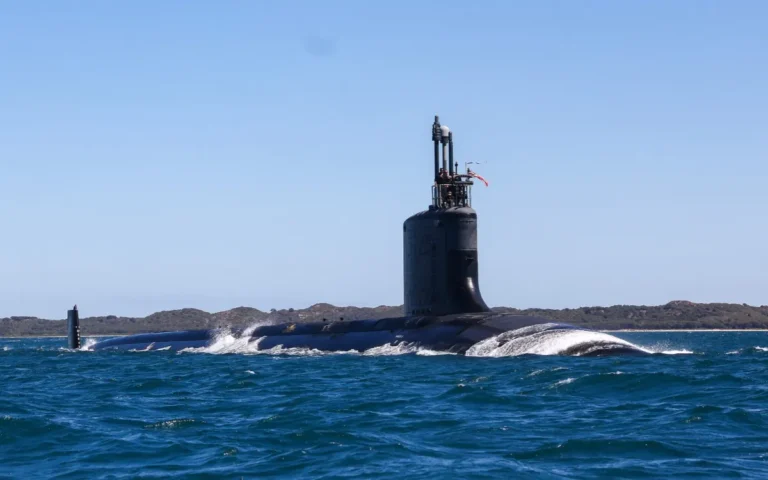
The Government Accountability Office found that the Navy’s fleet has not grown even though the shipbuilding budget nearly doubled over the past two decades. Delays proliferate. Virginia-class submarines are running at half the Navy’s goal of two boats a year. Delays on DDG-51 Flight III destroyers widened in a single year, from a range of eight to 33 months to a range of 22 to 58.
Senator King: Workforce, Workforce, Workforce
Beneath both negative trends sits the same bottleneck. As Senator Angus King, an independent from Maine, put it, “If I were to list the three biggest problems right now in developing shipyard capacity, the first would be workforce, the second would be workforce, the third would be workforce.” Then-Navy Secretary John Phelan said in January that shipbuilders and their suppliers must hire about 250,000 skilled workers over the next decade. The Navy separately reckons the submarine industrial base alone needs more than 140,000 people over the same span.
The Trump administration has turned to South Korea to fill the gap. The centerpiece is a $350 billion package tied to a 2025 trade deal, including $150 billion in financing and guarantees for shipbuilding cooperation.
Three of South Korea’s largest companies are pouring capital and expertise into American shipyards through 15 cooperative agreements covering naval vessel design, smart-yard technology, and workforce training. The logic: pair South Korea’s shipbuilding expertise, second only to China’s, with American capacity. But the program’s durability rests on an already strained relationship. Trump recently scaled back a joint military exercise, citing, among other things, South Korea’s refusal to help America in the Iran war.
Navy Bets on AI Robots
Like much of the U.S. economy, the Navy is also betting on artificial intelligence (AI) to break any bottlenecks. In December 2025, Phelan announced a $448 million investment in the Shipbuilding Operating System, a Palantir platform designed to speed up planning, engineering, and delay detection. The Navy says the software cut submarine schedule planning at General Dynamics Electric Boat from 160 manual hours to under ten minutes. The Portsmouth Naval Shipyard cut material review times from weeks to under an hour.
The AI push reaches the shop floor. Huntington Ingalls, America’s largest shipbuilder, signed agreements worth up to $900 million with GrayMatter Robotics and Path Robotics for autonomous welding, grinding, and inspection. Gecko Robotics won a contract worth up to $71 million to use AI-driven wall-climbing robots and digital models to catch structural problems on warships.
The problems that the GAO and Senator King flagged could offset the improvements. South Korean rivals like Hanwha Ocean and HD Hyundai are pursuing the same robotics push. AI may help the Navy keep pace with the gap rather than close it. The GAO says the initiatives attack pieces of a problem layered on a system that lacks a deliberate approach.
Rebuilding the Arsenal May Be Easy Part
AI compounds the strain. A robot cannot learn to weld a submarine hull from scratch. A human expert must teach it, define the parameters, judge the quality, and monitor the work. The robot does not replace the welder; it changes the job from torching to teaching. When the pool of skilled welders shrinks, the country loses more than people. It loses the expertise that robotic welding programs need to be trained and validated.
A robot cannot learn to weld a submarine hull from scratch. It does not replace the welder; it changes the job from torching to teaching.
Silicon Valley’s appetite for data centers makes things worse. The tech industry competes with the government for the same skilled workers. Data center jobs in installation and maintenance advertise hourly pay 42 percent above comparable roles elsewhere, according to a July 2026 analysis by Indeed. Meta and Google have committed a combined $165 million to train electricians and construction workers. The money is not meant to rebuild the Arsenal of Democracy but to feed their own AI infrastructure.
Trump‘s defense budgets shatter peacetime records. Yet they will not be enough. China builds ships because it invests in shipbuilders. America has appropriations. The distance between the two countries is not measured in dollars. It is measured in the welders, electricians, and engineers America stopped training when its business interests counted those jobs as costs. Congress can find money overnight. A nuclear-qualified welder takes years to train. What now limits American military power is not the size of the budget but the capacity of the state and the workforce to convert it into ships. Washington has been playing this game for five decades, and the bill has arrived. Rebuilding the arsenal may be the easy part.