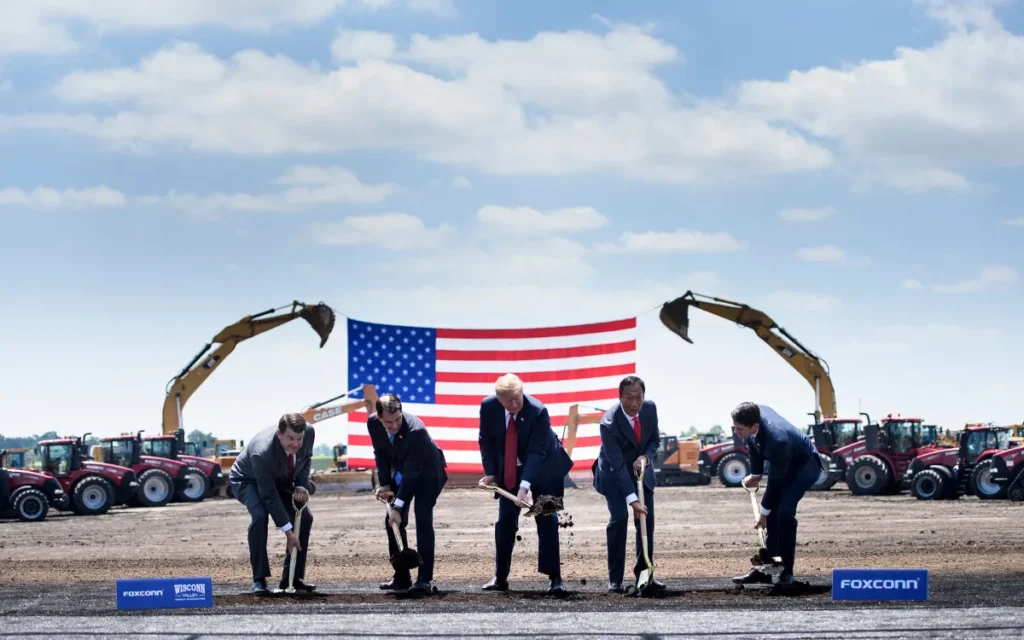

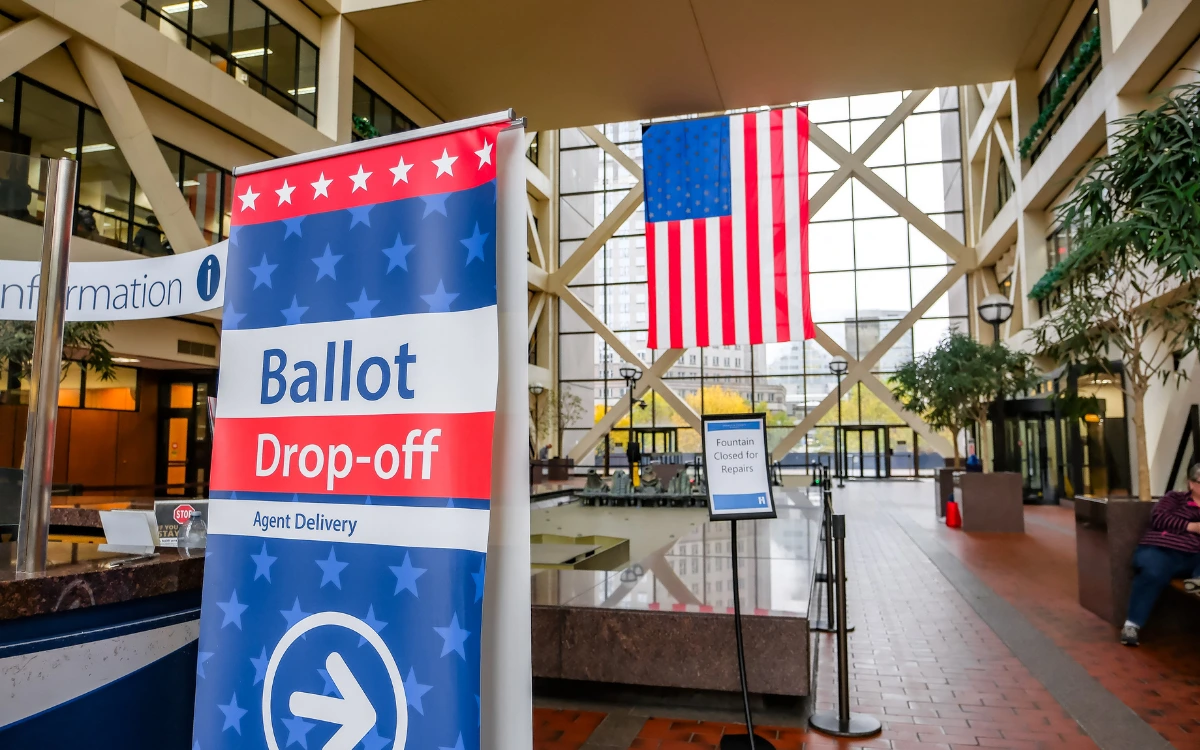
On August 24, 2026, the Supreme Court handed the Trump administration significant win in its campaign to assert federal authority and oversight over America’s election process. The Court paused a ruling blocking Trump’s executive order, which the administration says is intended to stop ineligible voters from casting a ballot. The move clears a legal obstacle for Trump’s directive that a list of adult U.S. citizens be compiled and that mail-in ballots be issued only to those who are eligible.
Although the Supreme Court’s decision strengthens Trump’s order, it does not weigh in on whether it is constitutional. With some states preparing to distribute ballots within weeks ahead of November’s midterm elections, the practical effects will likely arrive before the courts provide a final answer. Separate pending litigation and administrative constraints make these effects even more unpredictable.
With some states preparing to distribute ballots within weeks ahead of November’s midterm elections, the practical effects will likely arrive before the courts provide a final answer. Separate pending litigation and administrative constraints make these effects even more unpredictable.
This is not the only recent clash of federal and state power related to U.S. elections. Republicans and Democrats remain at odds over whether voters should have to provide identification in order to cast a ballot. The Trump administration would like to settle that conflict as well by using executive authority. Moreover, the federal government has so far filed suit against 30 states and the District of Columbia for failure to provide voter registration rolls, which it says are necessary to enforce list-maintenance laws. Attorney General Todd Blanche said in August that the Department of Justice may formally request that the Supreme Court intervene directly in disputes over access to state voter rolls.
The Pandemic Catalyst
A decrease in public trust in the American electoral process has been legible since 2016, when allegations of Russian interference became central to discussion of Trump’s victory. The mail-in voting controversy itself can be traced back to the extraordinary election of 2020, which remains a disputed election in the minds of a third of American voters polled. Mail-in voting, which was expanded as a health and safety precaution during the COVID-19 pandemic, coincided with unusually high voter turnout. Joe Biden received around 81.3 million votes—by far the largest vote total in American history and almost 20 million more than the previous election winner. Trump himself received about 74.2 million in 2020, over 8 million more than any losing candidate in history.
Those totals reflect an Election Day that was transformed by the pandemic into an extended election season. Ballots were requested from home, delivered by post, and returned through election offices and drop boxes. Nearly half of all ballots were cast by mail, while only 30.5 percent were cast in person on Election Day. The mail-in option became strongly associated with the Democrats after Trump dismissed the changes, questioned the integrity of mail-in voting, and urged his Republican supporters to vote in person.
Mail-in voting was not invented during the pandemic. Absentee ballots had long been available to soldiers, travelers, sick voters, and others unable to reach a polling place. Beginning in the 1980s, states increasingly allowed people to request absentee ballots without providing a special excuse. But only five states—Oregon, Washington, Colorado, Utah, and Hawaii—conducted elections primarily by mail before the pandemic. Another 28 states allowed so-called “no-excuse” absentee ballots, meaning no justification was required for mail-in voting, but a ballot still had to be specifically requested.
With the COVID-19 pandemic, states moved to temporarily allow mailed ballots to all voters, with many states later making the system permanent. Today, 37 of 50 states and Washington, D.C. allow any voter to cast an absentee or mail ballot without providing an excuse. Eight states conduct elections almost entirely by mail, as does Washington, D.C. Almost all of these jurisdictions are Democratic-leaning.
Politicization of Mail-in Voting
Over 43 percent of voters mailed in their ballots during the 2020 pandemic election, compared with just 23.5 percent in 2016. The number has since fallen but remained over 30 percent in the 2024 presidential election. The pandemic therefore did not create mail voting so much as generalize it for broader use across the nation. In swing-state electorates decided by small margins, a shift of this magnitude has the potential to be significant. The issue has also become highly politicized as Republican authorities continue to question the integrity of the expanded mail-in process. While critics say Trump is trying to make it harder for his opponents to vote, Republicans have expressed doubts about whether the practice has expanded faster than the institutional mechanisms needed to safeguard it.
While critics say Trump is trying to make it harder for his opponents to vote, Republicans have expressed doubts about whether the practice has expanded faster than the institutional mechanisms needed to safeguard it.
Either way, Trump’s March 31 executive order attempts to place a new federal structure over the traditionally state-based electoral system. It directs the Department of Homeland Security, working with the Social Security Administration, to create a citizenship list for every state containing confirmed U.S. citizens who will be at least 18 by the next federal election. It also directs the U.S. Postal Service to develop new regulations for mail-in and absentee ballots, including official election envelopes, unique barcodes, and a state-specific mail-in and absentee participation list.
Under the proposed system, the U.S. Postal Service would not transport ballots from voters who were not enrolled on the relevant list or whose envelopes failed to meet the new requirements. The order also instructs the Justice Department to prioritize investigations involving ballots distributed to ineligible voters, calls for election-participation records to be preserved for five years, and threatens the possible withholding of legally available federal funds from jurisdictions that do not enforce the new rules in order to ensure compliance. Supporters describe this as a coordinated security system to ensure election integrity, while critics see it as an error-prone federal structure that may infringe on state authority while possibly preventing eligible voters from casting ballots.
The partisan arguments reflect two different ideas about the relevant threat to America’s elections. Republicans emphasize the danger of illegal or fraudulent voting. They argue that the absence of voter identification rules, outdated registration lists, weak citizenship checks, mass ballot distribution, and voting outside a supervised polling place create opportunities for mistakes, coercion, or fraud. They contend that elections are sometimes decided by narrow margins and that visible safeguards can improve public confidence.
By contrast, Democrats emphasize the opposite danger: an eligible citizen being prevented from voting because of stringent new rules. They argue that voter fraud is rare, that states such as Oregon and Colorado have safely administered mail-in elections for years, and that Trump’s claims about the lack of election integrity are unfounded. They also argue that complicated documentation rules may overburden low-income, minority, and recently naturalized citizens—all groups that tend to vote Democratic rather than Republican. The disagreement is therefore not simply between election security and no security. It is a dispute over which kinds of errors are more likely and more important, and what verification responsibilities should be allocated to prevent them.
Federal–State Clash Ahead of November
Behind that partisan debate is also a constitutional struggle over who controls elections. State and local governments traditionally establish registration procedures, polling locations, early-voting periods, recount rules, ballot designs, and identification requirements. But that authority is not unlimited. The Constitution allows Congress to regulate the “Times, Places and Manner” of congressional elections, and federal laws such as the Voting Rights Act restrict what states may do.
The executive, however, does not possess Congress’s independent constitutional authority over elections. Trump’s strategy attempts to produce more uniform national rules through executive agencies without first securing comprehensive legislation from Congress. That distinction explains much of the opposition. A national rule might be defensible as policy while still being imposed by the wrong branch of government by the wrong process. The litigation surrounding Trump’s order will consequently determine more than the future of mail ballots; it will help define the constitutionality of recent orders and ultimately establish how much power a president may exercise over an election in which his own political movement has an immediate stake.
Voter Identification and the Democrat–Republican Divide
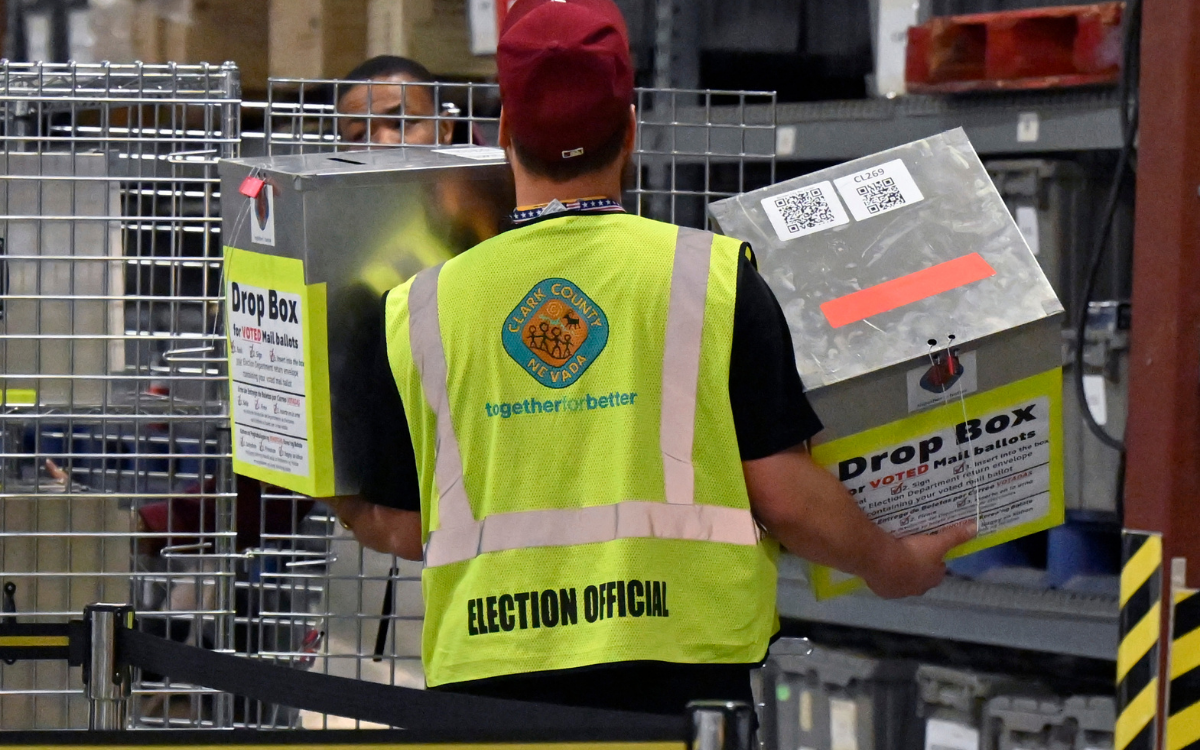
The struggle over voter identification reflects similar federal–state dynamics as well as the Democratic–Republican divide. Twenty-four states request or require photo identification to vote. Twelve more also accept less secure documents like utility bills, bank statements, or certain correspondence. Fourteen more states—almost all of them Democratic strongholds—plus Washington, D.C., verify voters at the polls without requiring any identification document. The contested swing states of Pennsylvania and Nevada are among those states not requiring any identification document, although Pennsylvania requires identification for first-time voters in an election district.
These jurisdictions use non-documentary methods to verify identity, including verbal checks against registration records, potential signature comparison, requesting information such as address, or requiring voters to sign an affidavit under penalty of perjury saying that they are who they say they are. Republicans argue that a uniform photo-identification rule would be easy to understand and would strengthen confidence. Democrats respond that acceptable identification is not equally available to every citizen, again pointing to minorities, recently naturalized citizens, and the very poor.
Republicans argue that a uniform photo-identification rule would be easy to understand and would strengthen confidence. Democrats respond that acceptable identification is not equally available to every citizen, again pointing to minorities, recently naturalized citizens, and the very poor.
The same struggle extends to documentary proof of citizenship, automatic registration, same-day registration, voter-roll maintenance, ballot drop boxes, early voting, and the treatment of ballots arriving after Election Day. The Trump movement generally favors proof-of-citizenship documents, aggressive removal of inactive registrations to ensure integrity, shorter voting periods, and a firm Election Day receipt deadline. Democrats generally favor automatic registration, longer early-voting periods, and more accessible drop boxes. They are also more lenient about counting ballots that were cast and postmarked by Election Day but arrived afterward.
Felony voting rights and third-party ballot collection create further divisions. Nearly every policy can be described in two ways: as a safeguard preventing abuse or as a restriction capable of suppressing legitimate participation. The real consequences often depend on minute details such as whether identification is free, whether voters can correct defective ballots, how accurately registration lists are maintained, and how much time officials receive to implement new rules.
The Politics of Voter Turnout
Voting methods have become highly partisan since 2020. Even if claims that higher voter turnout tends to favor Democratic candidates have not been consistently demonstrated in political science literature, perceptions have a material effect on voter behavior. In 2020, approximately 58 percent of Democratic voters cast ballots by mail, compared with only around one-third of Republican voters. The increased oversight and election process enforcement measures may therefore have a partisan effect on voters relying on a constrained mail-in system. That could turn the tables.
It is certainly true that mail-in systems face genuine challenges, including rejected signatures, late delivery, administrative errors, ballot-collection schemes, and slower reporting. Those vulnerabilities may justify security measures, but they are not in themselves evidence of fraud. On the other hand, more oversight of the electoral process is not unusual in global terms. Most countries require voters to present identification at the polls, including almost all European states.
November and Electoral Legitimacy
The legacy of 2020 extends beyond Joe Biden’s record vote totals and the broader effects of COVID-19 on American institutions. The pandemic demonstrated how rapidly election procedures could change and how expanded voting options could produce extraordinary participation. It also demonstrated that partisan disagreements could convert confidence in a secure election process into a real crisis of public electoral legitimacy. Trump’s order responds to continuing public concern about consistency and election integrity. But set alongside his continued claims that the 2020 election was rigged, it has also become part of the broader controversy over election administration and public confidence.
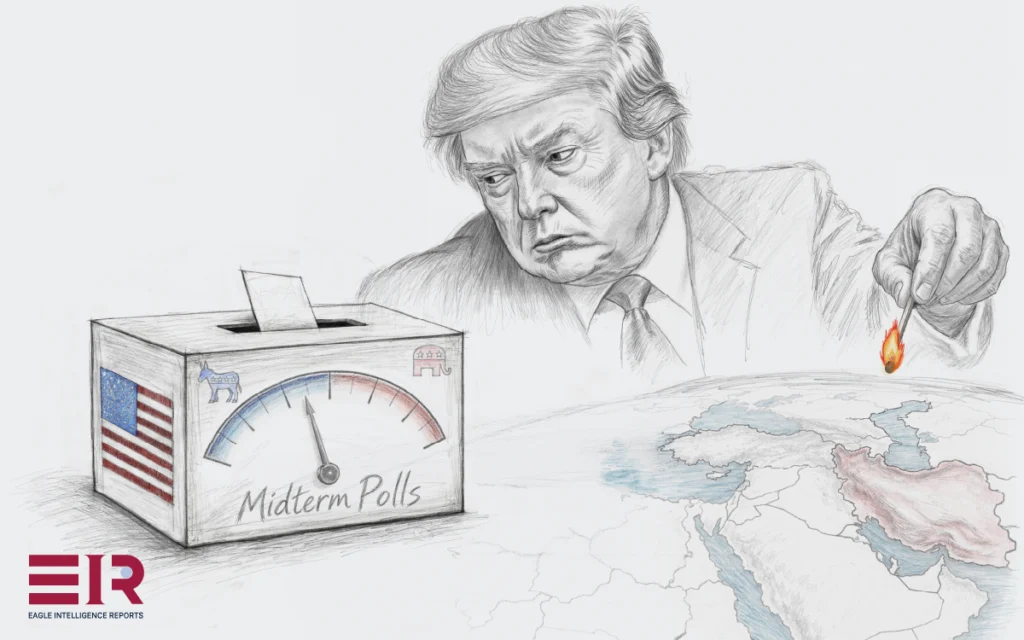
The controversy also has a clear geopolitical dimension. Whatever the result, the November midterms are expected to be fiercely contested. As foreign powers increasingly use information operations to exploit domestic divisions, declining confidence in election administration creates vulnerabilities extending beyond the mechanics of voting itself. Under such scrutiny, any irregularities or administrative shortcomings may be magnified and incorporated into broader narratives of American institutional decline.
Trump’s attempt to resolve the problem also constitutes a claim of presidential authority over responsibilities traditionally divided among states, local officials, and Congress. For that reason, the resulting constitutional conflict is likely to persist beyond November, irrespective of the order’s immediate effect on the midterm elections.
The ultimate issue is not whether access or security should prevail, for the two need not be mutually exclusive. It is that a functioning democracy requires both: rules established through institutions that voters regard as legitimate, and verification mechanisms that ensure that access is safeguarded.
The ultimate issue is not whether access or security should prevail, for the two need not be mutually exclusive. It is that a functioning democracy requires both: rules established through institutions that voters regard as legitimate, and verification mechanisms that ensure that access is safeguarded.