

Bill Gates recently warned that the transition to artificial intelligence will usher in “one of the most turbulent times in human history.” Commercial productivity could surge across legal services, finance, medicine, and software, even as AI permanently displaces portions of the workforce. Most governments, Gates argues, remain structurally unprepared for the macroeconomic and societal upheaval ahead. In his view, “AI will either be the greatest equalizer ever invented or the worst source of injustice,” and that outcome depends on leaders effectively managing choices now.
That warning asks who gets the new wealth. A second question arises: if AI makes a country dramatically richer, does it also make it militarily stronger? Conventional measures of national power encourage an intuitive answer: yes. Wealth buys technology, technology buys advantage, and the richest economy wins the long war. That assumption skips a step. Between economic resources and usable military power sits an intermediary that no balance sheet captures: convertibility.
Before World War Two, the United States possessed enormous latent military power. Its GDP dwarfed that of rivals, but much of its industrial economy also sat physically adjacent to military production. Automobile assembly lines, machine tooling, smelters, chemical plants, shipyards, energy infrastructure, and skilled industrial labor could be repurposed for wartime needs.
Military convertibility is the speed, depth, and structural ease with which a country can transform its economic base, skilled workforce, capital, and technology into usable combat mass within decisive timeframes. Mobilizable military power is what a government can generate in a crisis. This distinction is critical in the AI era. Algorithmic and financial wealth can scale exponentially on balance sheets, while the tooling, metallurgy, and propellant lines needed for warfighting remain tied to the slow timelines of heavy industry.
Algorithmic and financial wealth can scale exponentially on balance sheets, while the tooling, metallurgy, and propellant lines needed for warfighting remain tied to the slow timelines of heavy industry.
Rather than diminishing the strategic utility of economic scale, AI elevates the physical and industrial substrate beneath it into the decisive determinant of military power. This exposes the central paradox of the digital era. AI can make states dramatically richer while making aggregate GDP a far less reliable proxy for the military power they can mobilize on demand.
When GDP Could Become an Arsenal
In December 1940, Roosevelt told Americans that the United States must become “the great arsenal of democracy.” That arsenal was more than resources and capital. It was the structural convertibility of American manufacturing. Automobile assembly lines already used vast quantities of steel, rubber, glass, and precision machine tools. Wartime footing turned those lines toward tanks, airframes, munitions, and weapon systems. Machine-tool production surged, foundries expanded, civilian plants were rapidly retooled, and supply chains were marshaled toward wartime requirements. By 1945, American industry had built more than 300,000 aircraft, tens of thousands of armored vehicles, thousands of combat and cargo vessels, and vast quantities of munitions.
Yet even this historic mobilization was measured in years, not months. American rearmament was already underway well before the attack on Pearl Harbor through early naval expansion acts, Allied purchasing orders, front-loaded machine-tool investments, and targeted subsidies. Even under exceptionally favorable structural conditions, like civilian manufacturing being adjacent to defense needs, conversion was not automatic. Latent economic capacity requires substantial lead time before it becomes usable combat mass.
This reality is grounded in foundational defense economics, as set out by Klaus Knorr in 1956. He noticed that war potential depended far more on industrial structure and administrative capacity than on aggregate output alone. Paul Kennedy similarly illustrated that great power competition outcomes depended on how states could effectively harness tangible productive resources for strategic ends. More recently, Michael Beckley’s research into net resources has shown how gross economic indicators obscure the overhead and production costs states must bear before their wealth becomes strategically usable.
Gross economic indicators obscure the overhead and production costs that states must bear before their wealth becomes strategically usable.
The modern composition of economic output has since transformed. Capital is fungible, but specialized industrial infrastructure is not. A state cannot take sovereign credit or equity market valuations and quickly convert them into defense industrial capacity.
Thus far, the most visible productivity gains from generative AI have appeared in knowledge-intensive domains such as analytics, software, finance, legal work, and professional services. These sectors expand GDP, but their conversion pathways into physical military capacity are far longer and less direct than those of machine tools, metallurgy, chemicals, or advanced manufacturing.
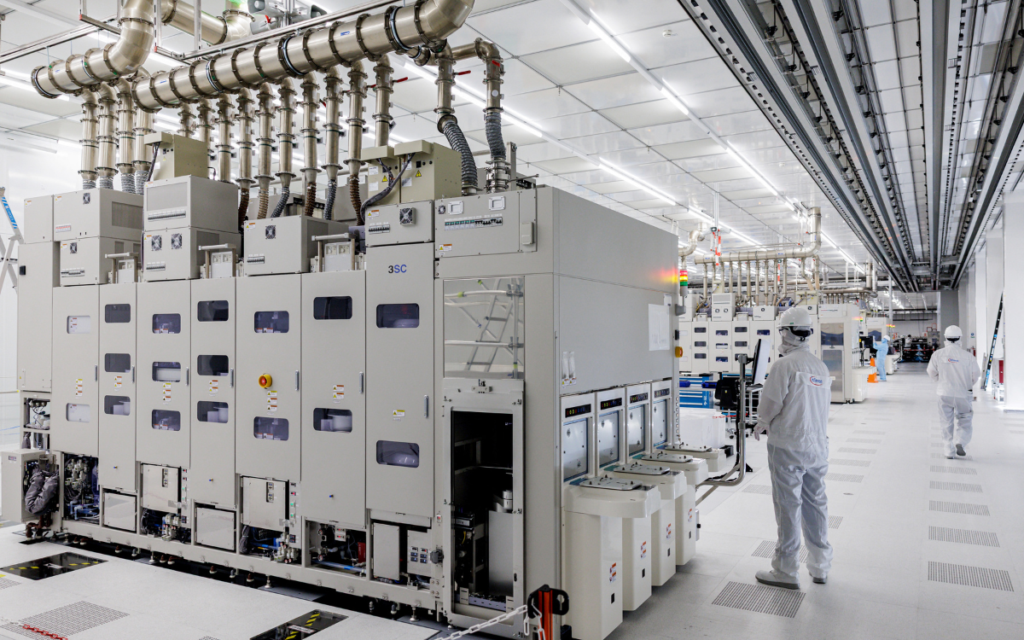
In a strange twist of defense economics, AI’s demand for hardware has produced an insular boom. Capital is mobilized at scale for server farms and silicon, while the physical machinery of warfighting loses industrial mass.
The AI Convertibility Gap
AI alters military power through three competing, interactive mechanisms. First, a composition effect threatens to widen the convertibility gap. When an expanding share of economic value accumulates in intangible, automated, and digital sectors, aggregate GDP becomes a less helpful proxy for mobilizable combat potential. Intangible prosperity creates fiscal resources, but converting that capital into weapons systems and munitions requires navigating long and complex defense manufacturing pipelines. Intangible wealth is also harder for a government to reach. Models, licenses, and compute capacity sit with a handful of private firms, and it is more difficult for states to requisition them the way they once requisitioned foundries.
Models, licenses, and compute capacity sit with a handful of private firms, and it is more difficult for states to requisition them the way they once requisitioned foundries.
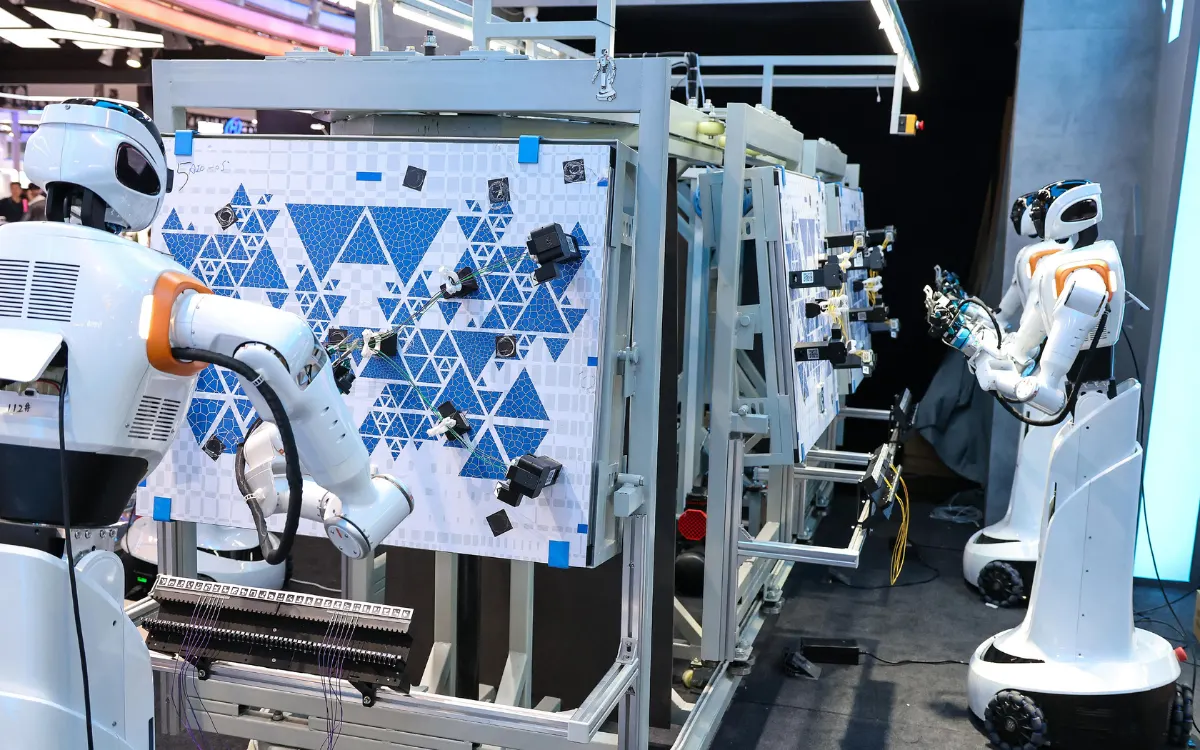
Second, a productivity effect can compress the convertibility gap. When applied to physical engineering and production nodes, AI makes existing industrial capacity significantly more efficient. Generative design, digital twins, predictive maintenance, computer-vision quality control, and autonomous robotics let smaller workforces deliver substantially more physical output. Prototyping cycles can compress from years into weeks, while software-defined production lines adjust in real time.
Third, an emerging physical-resource effect complicates boundaries between the digital and physical economies. While AI produces intangible outputs, its infrastructural footprint has become extraordinarily physical, consuming massive quantities of electricity, advanced semiconductors, high-voltage transformers, cooling systems, rare materials, and skilled trades. This dynamic cuts two ways. It can drive broader modernization of national energy and industrial infrastructure, or it can compete directly with the defense industrial base for scarce inputs and engineering talent. AI-era mobilization may increasingly require governments to make politically difficult allocation choices between civilian AI infrastructure and defense production.
Overall, the impact of these mechanisms depends on the underlying economic substrate onto which AI is deployed. China illustrates the potency of layering AI onto a dense physical foundation, accounting for 30 percent of global manufacturing output. Beijing also leads the world in industrial robot installations, commercial shipbuilding, battery chemistry, and critical-mineral processing. Since the 2015 launch of Made in China 2025, Chinese industrial policy has deliberately coupled AI and autonomy with heavy industrial production.
Yet industrial scale cannot overcome friction, as Beijing confronts persistent vulnerabilities in advanced semiconductor lithography, high-bypass turbofan certification, high-end metallurgy, and rigid organizational command structures. Conversely, America’s service-heavy economy retains major advantages in foundational model innovation, advanced compute architectures, capital allocation, aerospace engineering, and robust allied technological networks. Hence, identical increments of AI-driven economic growth will generate vastly different strategic outcomes depending on the physical manufacturing foundation beneath them.
Identical increments of AI-driven economic growth will generate vastly different strategic outcomes depending on the physical manufacturing foundation beneath them.
The Russo-Ukraine War and the 2026 Iran War demonstrate that governments can authorize billions for defense spending almost overnight. However, converting that fiscal capacity into new production facilities can take years. American attempts to scale up Patriot interceptor production continued even after a $58.6 billion contract was awarded to Lockheed Martin in July 2026. This conversion friction extends well beyond ammunition burn rates. Money and industrial throughput operate on different timelines.
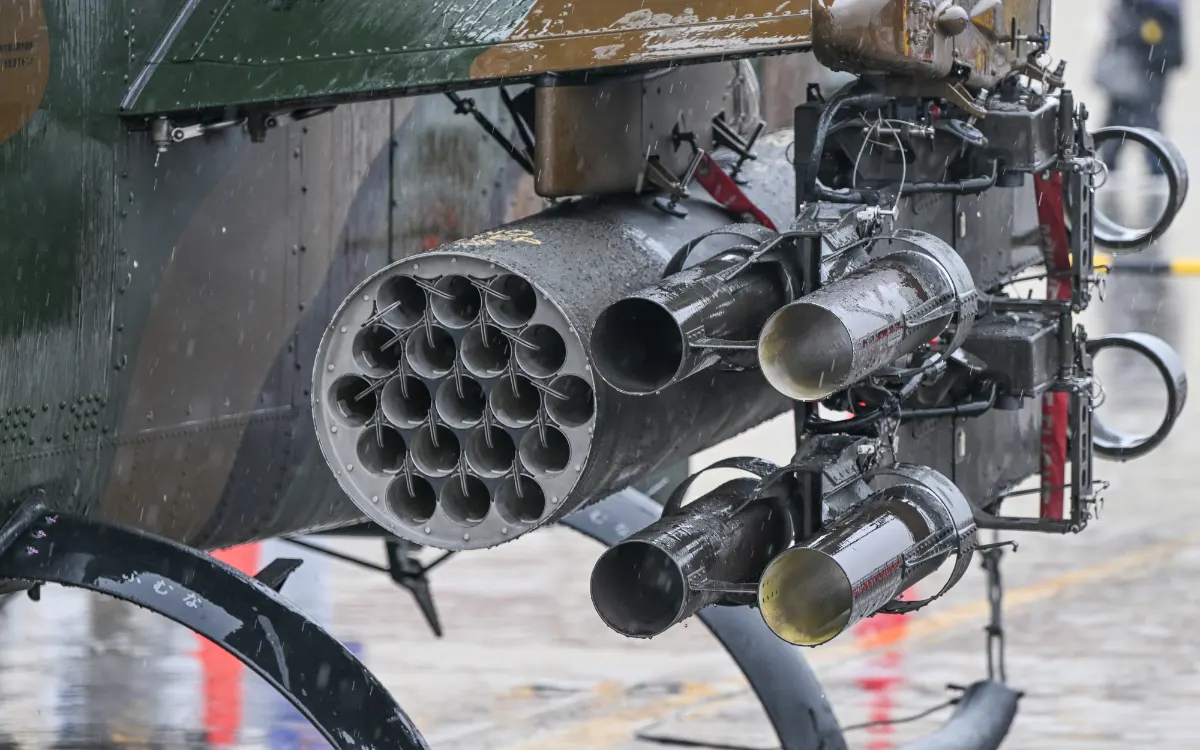
Ukraine appears to cut the other way, with drone output showing that combat mass can be assembled from commercial electronics rather than heavy industry. But those drones run on Chinese motors, cells, and optics, which makes it borrowed convertibility through a supply chain that can be cut. Physical depth has not disappeared, only relocated to the state that makes the components. The balance between the digital and the physical will help determine which states can translate AI development into usable combat capabilities.
Measuring Power in the AI Age
GDP remains an important measure of the resources available to a state, because it reflects an ability to raise revenue, borrow cheaply, fund research, and absorb the costs of war. Yet aggregate wealth alone reveals very little about conversion speed: how much additional military capability a state can generate from those resources within the time available.
That distinction matters because industrial conversion timelines and military escalation timelines increasingly operate at different speeds. Factories, shipyards, and skilled workforces take years to expand. When a crisis turns into open warfare within weeks, economic potential that arrives too late has limited value to policymakers and military leaders who need resources immediately.
When a crisis turns into open warfare within weeks, economic potential that arrives too late has limited value to policymakers and military leaders who need resources immediately.
Assessing national power in the AI era means looking beneath aggregate output. Industrial throughput, surge capacity, skilled labor, energy availability, critical material access, and supply-chain depth provide insight into mobilizable power. AI adds another variable: whether productivity gains remain concentrated in intangible economic activity or penetrate the physical systems responsible for producing military capability.
Over the longer term, technological breakthroughs could alter this calculus considerably. If AI accelerates advances in commercial nuclear fusion and next-generation power architectures, abundant energy could eventually support both hyperscale computing and energy-intensive manufacturing.
This is why the AI debate cannot be only about the race for the best models or their economic impact. Gates asks how governments can ensure that AI-generated prosperity works for everyone. Policymakers and national security experts should ask an adjacent question: how much of that prosperity can be converted into national power when a state actually needs it?
Great-power competition is drifting away from the question of who accumulates the most digital wealth. The decisive question is who can convert it in time. Countries that can turn silicon into steel, algorithms and software into abundant energy and physical mass, and latent economic potential into mobilizable combat power will hold the advantage when deterrence fails.