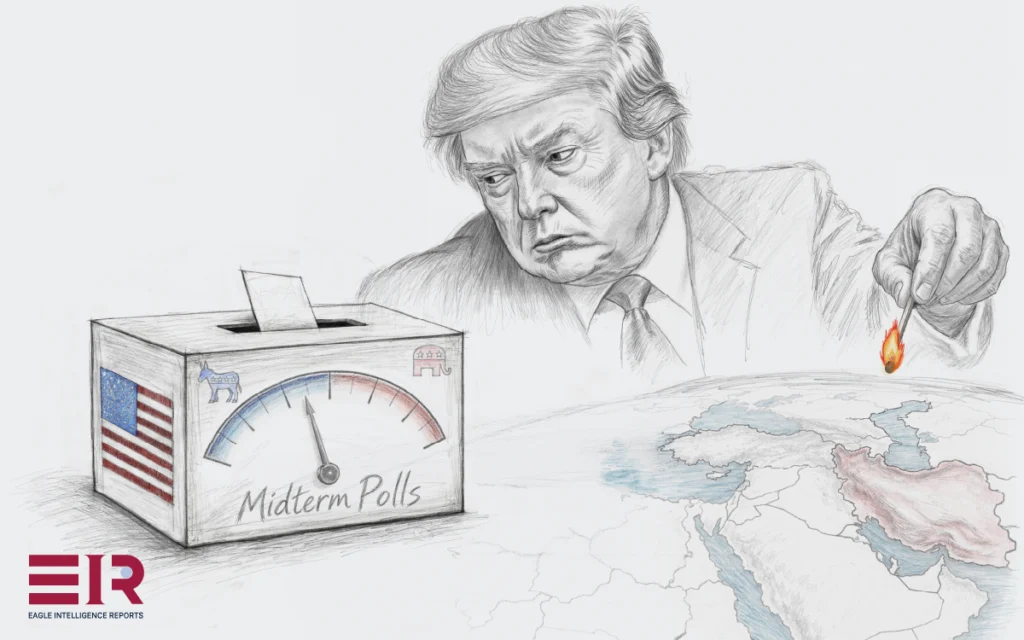

U.S. President Donald Trump’s shift from military escalation toward economic strangulation to force Tehran into substantial concessions has intensified debate over what will happen if Iran adapts to the pressure through the end of Trump’s term in about two years. But the more consequential issue is what this confrontation will leave behind in Washington if the United States fails to convert its overwhelming military superiority into a durable political outcome.
That legacy may be an “Iran Syndrome”: not simply a public reluctance to fight a war, but a long-term psychological and institutional conviction among policymakers that the United States may be able to punish Iran severely yet remain unable to control the duration of a confrontation, prevent regional escalation, or resolve the conflict decisively.
Such a syndrome would matter far beyond Washington. If Tehran concludes that the United States possesses the capability to devastate Iran but lacks confidence that escalation can produce an acceptable end state, that perception itself could become an Iranian strategic asset.
If Tehran concludes that the United States possesses the capability to devastate Iran but lacks confidence that escalation can produce an acceptable end state, that perception itself could become an Iranian strategic asset.
Since 1979, the Iranian regime has endured repeated rounds of sanctions, diplomatic isolation, and military pressure and has managed to survive without making substantial concessions in its political and military approach. Over the same period, Iran has expanded not only its uranium enrichment activities but also its missile and drone capabilities, while building a network of armed proxies capable of interfering in political affairs across the region.
The question facing Trump is therefore not simply how much damage the United States can inflict. American military superiority has never seriously been in doubt. The issue is that if Trump’s term ends without his achieving a clear resolution, or at the very least a genuine guarantee that the Iranian regime will change its behavior and approach in the region, Trump will not merely bequeath his successor an ongoing Iranian threat. He may hand his successor a strengthened one that can exploit the new American syndrome in Washington to blackmail the region.
The war’s outcome cannot be measured by the scale of the losses inflicted on Iran, but by Washington’s ability to achieve its objectives: a verifiably dismantled nuclear program, a neutralized missile capability, and a sustained decline in Iran’s capacity to support destabilizing armed groups throughout the region.
Tactical success in destroying facilities and assassinating leaders does not amount to strategic resolution as long as Iran remains capable of rebuilding its capabilities and continuing to threaten the region. It is from this gap—between military superiority and political outcomes—that the Iran Syndrome may emerge.
Tactical success in destroying facilities and assassinating leaders does not amount to strategic resolution as long as Iran remains capable of rebuilding its capabilities and continuing to threaten the region.
From the Vietnam Syndrome to the Iran Syndrome
The comparison with Vietnam is useful, but an Iranian equivalent would not be an exact replica.
Vietnam left within the American political consciousness a deep reluctance toward prolonged overseas wars that begin with major objectives and descend into attrition without a clear political victory. Even if Vietnam also led to major shifts in strategic thinking, its impact on American foreign policy has been indelible. The aversion to extended ground wars became even more deeply entrenched after the Iraq War, which added another lesson: the ability to overthrow a regime is not the same as the ability to build a stable state afterward. Afghanistan then demonstrated that twenty years of war, military presence, and state-building could end in a chaotic withdrawal and the return of the same adversary to power, with trillions spent and thousands killed.
But the Iran Syndrome, if it emerges, would represent a further development of this pattern. It would likely emerge even without a conventional American military defeat, a major ground invasion, or a large-scale occupation. Its essence would be more complex: a growing strategic pessimism about whether coercion itself—military and economic—can compel a resilient adversarial state to accept Washington’s desired political outcome.
The United States can carry out strikes and destroy capabilities, but it cannot guarantee control over the confrontation’s limits, duration, or the political end state.
In Vietnam, the syndrome was associated primarily with the fear of a ground quagmire and human losses. Iraq deepened skepticism about the cost and viability of regime change and the process of state-building. Afghanistan weakened confidence in the ability to transform a prolonged military presence into a sustainable political system. In Iran, however, the syndrome may arise from the realization that the United States’ overwhelming military and economic power, despite its superiority, may not be sufficient to extract political surrender from a state capable of distributing the cost of confrontation across the region and the global economy.
The open question is therefore whether Iran produces a new doctrine for the more effective use of American power, or a deeper loss of confidence in the ability of that power to produce decisive political outcomes at an acceptable cost. The conditions for the latter, though, may already be forming.
If Trump leaves office with the war ongoing, or if the conflict ends with a settlement that does not achieve its minimum objectives, the next administration will view Iran through the lens of an experience showing that confrontation with Iran is easy to begin but extremely difficult to bring to a decisive end.
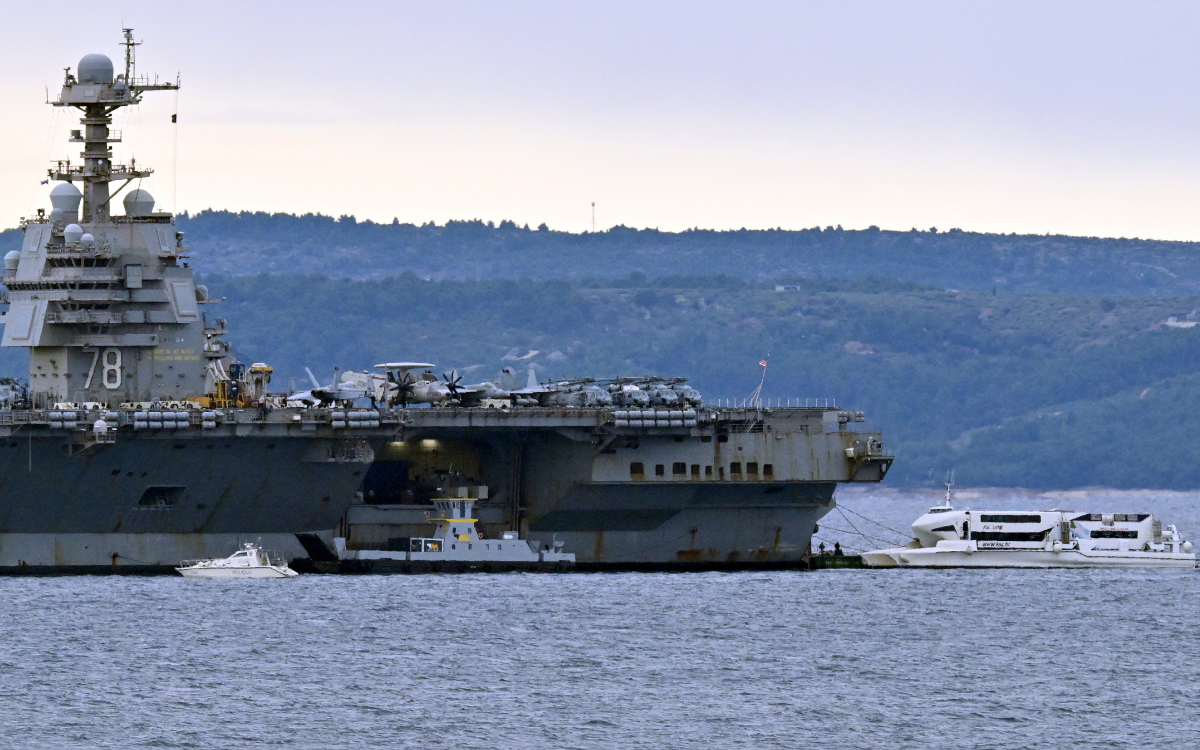
In every subsequent crisis, the central question in Washington will not be: Can U.S. forces strike Iran? Rather, it will be: What comes after the strike?
Will the war spread to the Gulf states? Will U.S. bases be targeted? Can Washington protect oil and gas facilities and ports? Can it guarantee safe passage through the Strait of Hormuz? And what will it do if the regime absorbs the strike and refuses to surrender?
These questions will be raised by any new U.S. administration. It is when these critical questions harden into strategic assumptions that a new syndrome may spread across American institutions.
From Sentiment to Institution
A war does not become a “syndrome” merely because it is long or costly. It becomes one when its experience is absorbed into institutional assumptions through which state institutions assess future risks. If the war ends without a clear political outcome, its lessons will enter intelligence assessments, Pentagon plans, congressional calculations, candidates’ rhetoric, and the strategic thinking of U.S. allies.
A war does not become a “syndrome” merely because it is long or costly. It becomes one when its experience is absorbed into institutional assumptions through which state institutions assess future risks.
The syndrome will not pass between administrations as a mere sentiment. Rather, it will appear in more pessimistic assessments, more cautious military plans, stronger opposition within Congress, greater sensitivity to human losses and energy price fluctuations, and hesitation among allies to host new American military operations.
Every subsequent American strategy will necessarily have to answer questions that are no longer theoretical: How will Iran respond beyond its borders? Can Washington protect its bases and energy facilities while maintaining security guarantees for its partners? What happens if the regime again withstands the onslaught and rebuilds its capabilities instead of negotiating?
In this sense, the Iran Syndrome is not fear of Iranian power in itself, but a loss of confidence in the ability of American power to produce a controllable political outcome.
Critically, while military plans may remain in place, the political threshold for using them will rise, the ceiling of objectives will fall, and future administrations will be more inclined to manage the threat rather than seek to resolve it.
Threatening, Then Retreating
The danger of Trump’s hesitant decisions lies in the fact that they are not being observed only within the United States. They are also being closely studied by the Iranian leadership and regional states. On more than one occasion, Trump has raised the ceiling of his threats and spoken of devastating strikes or broader military operations, only to suspend or limit attacks while citing regional concerns or the need to give negotiations a chance.
Some may present this caution as wisdom, informed restraint, or a strategic attempt to contain the consequences. But repeatedly threatening to crush Iran and then backing away sends another message to Tehran: The United States fears the regional consequences of a decisive military campaign more than Tehran fears prolonged confrontation.
Hesitation does not remain merely a feature of Trump’s decision-making style. It becomes an element in the balance of deterrence. Every American threat that is not carried out and every strike that is not followed by a clear political path, helps Tehran gauge the true ceiling of American resolve.
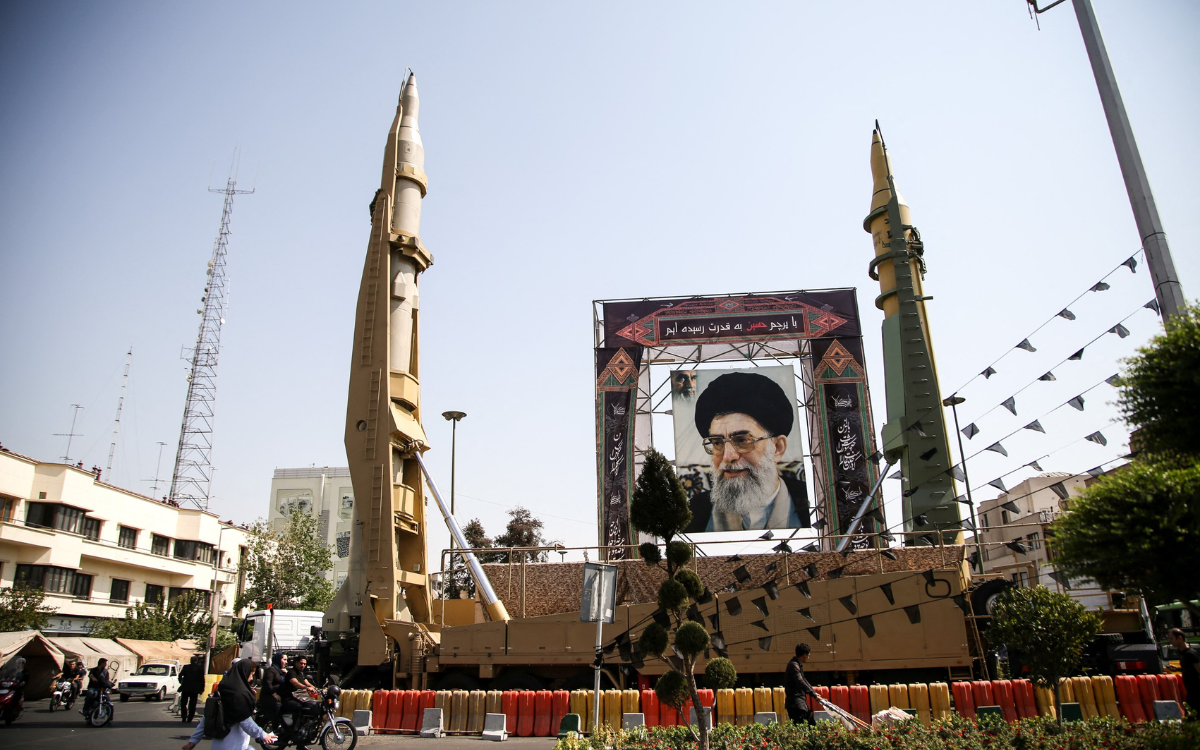
Iran does not need to defeat the United States in a direct military confrontation. It is enough for it to convince Washington that the cost of striking it will not be confined to Iran, but will extend to U.S. bases, the Gulf states, energy facilities, maritime routes, and the global economy itself.
This means that Iran has succeeded in shifting the question from whether it can withstand the strikes to whether the United States can bear their consequences. When that happens, the balance of deterrence can shift without the underlying balance of power changing.
From the American Syndrome to Iranian Blackmail
Here the more dangerous implication emerges: if an Iran Syndrome takes root within American decision-making, it will not remain an internal American problem. It will become a source of power in Tehran’s hands. The new Iranian deterrence will not be based on preventing the United States from launching strikes, but on convincing Washington that continuing them until political objectives are achieved will impose unacceptable costs.
If Iran knows that the next administration will think twice before entering a broad military confrontation, it will try to operate below the threshold of all-out war. It will gradually rebuild its capabilities, restore its influence within fragile states, use armed proxies, and threaten navigation and energy facilities whenever its interests are endangered.
Iran will not need to close the Strait of Hormuz permanently or wage an all-out war against the Gulf states. It will be enough for it to possess a credible ability to cause major disruption and for the states of the region to realize that the American umbrella may respond to attacks but lacks the willingness and resolve to sustain the confrontation through to its conclusion.
That distinction is important. Preventing Washington from escalating would constitute deterrence. Using that American hesitation to influence the behavior of neighboring states would turn deterrence into coercive leverage. At that point, the Iranian message to the region becomes simple: any participation in pressure on Tehran, or any permission to use bases and airspace in a new war, will turn Gulf infrastructure into part of the battlefield. Trump may therefore bequeath his successor more than an Iran that has been damaged but remains standing. He could leave behind an Iran that is more aware of the limits of American power, a region more vulnerable to coercive pressure, and a Washington more cautious about repeating a confrontation that failed to deliver its objectives.
Trump could leave behind an Iran that is more aware of the limits of American power, a region more vulnerable to coercive pressure, and a Washington more cautious about repeating a confrontation that failed to deliver its objectives.
What About the Region?
Perhaps the worst consequences of the Iran Syndrome would fall on the Gulf states. Their national development strategies rely heavily on stability, investment, secure energy exports, and confidence in their ability to remain insulated from conflict. The survival of the Iranian regime, combined with the arrival of a new U.S. administration far more cautious about confronting Iran, would create the conditions for sustained Iranian economic coercion across the region. That would threaten the foundations of Gulf prosperity, and the region would lose one of the most important sources of attraction it has enjoyed over the decades.
Iran does not need to expel the United States from the Gulf. It is enough for it to convince the states of the region that the American response will be limited and that Washington will seek to contain an attack more than eliminate the source of the threat.
The Gulf states may then be forced to adjust their policies, reduce their cooperation with Washington on certain issues, or avoid steps that Tehran regards as a direct threat, out of fear of a confrontation in which there is no guarantee that the United States will see it through to the end.
The question then becomes: Were the Gulf states truly right when they pushed so strongly for diplomatic solutions and against pursuing military resolution?
The answer depends on what happens over the coming months. If the Iranian regime manages to adapt to the harsh sanctions, if Trump accepts an agreement similar to the Joint Comprehensive Plan of Action, or if the regime survives until the end of Trump’s term without a fundamental change in its behavior, the region may have paid the price of the war without eliminating the source of the threat.
At the same time, it cannot be ignored that the Gulf states feared a broad war that would destroy their facilities, ports, and economic achievements. The choice for them was therefore between two dangers: an all-out war that could immediately shatter stability, and a long-term Iranian threat that could gradually erode it.
But the most dangerous outcome would be for the war to end with Iran militarily weaker but politically bolder, having concluded that Washington can strike it but cannot or does not want to see the confrontation through to its conclusion.
Trump Faces the Test of the Ending
Trump’s problem does not lie merely in the fact that he started a war with Iran. It lies in the gap between the objectives he has articulated and the instruments available to him to achieve them, and in his reluctance to move to a level of force capable of imposing the resolution he had promised.
His rhetoric has shifted between military threats, the search for an agreement, a return to strikes, their suspension, and then another shift toward economic pressure. This course is what can create the syndrome: major objectives, changing decisions, a prolonged war, declining domestic support, and an adversary that remains standing.
But the dilemma does not necessarily mean that the solution is to escalate and pursue a military resolution regardless of the cost. That assumption presupposes the existence of a level of force automatically capable of producing the required political outcome, something the war has not yet demonstrated.
Trump therefore faces several difficult paths: a verifiable settlement that durably constrains the threats posed by Iran; long-term containment that reduces Iran’s ability to rebuild its capabilities and engage in regional blackmail; or broader military escalation whose cost may exceed the outcome it can realistically achieve.
If Trump can move beyond launching strikes and actually bring about a political solution, he can say that he strengthened American deterrence and demonstrated that the Iranian challenge can be resolved without creating a new strategic constraint in Washington.
But if his term ends with Iran still standing, rebuilding, and capable of threatening its neighbors, Trump will not merely leave his successor an unfinished file. He will leave behind the memory of a war that began with talk of crushing the enemy, then descended into stalemate, hesitation, and a search for an acceptable exit.
It is precisely under these conditions that the Iran Syndrome could take root. Trump is therefore not only deciding how his war will end. He may also be determining how future American administrations understand the use of force against adversaries and how they will deal with Iran in the future. Ultimately, the experience will determine whether Iran is viewed as a threat that can be deterred and dealt with decisively, or as a trap that Washington can enter but does not know how to escape.
The question that will define his legacy is this: Will Trump end the war he started, or will he create for Iran a new source of deterrent power derived from America’s fear of repeating the experience?
The question that will define his legacy is this: Will Trump end the war he started, or will he create for Iran a new source of deterrent power derived from America’s fear of repeating the experience?