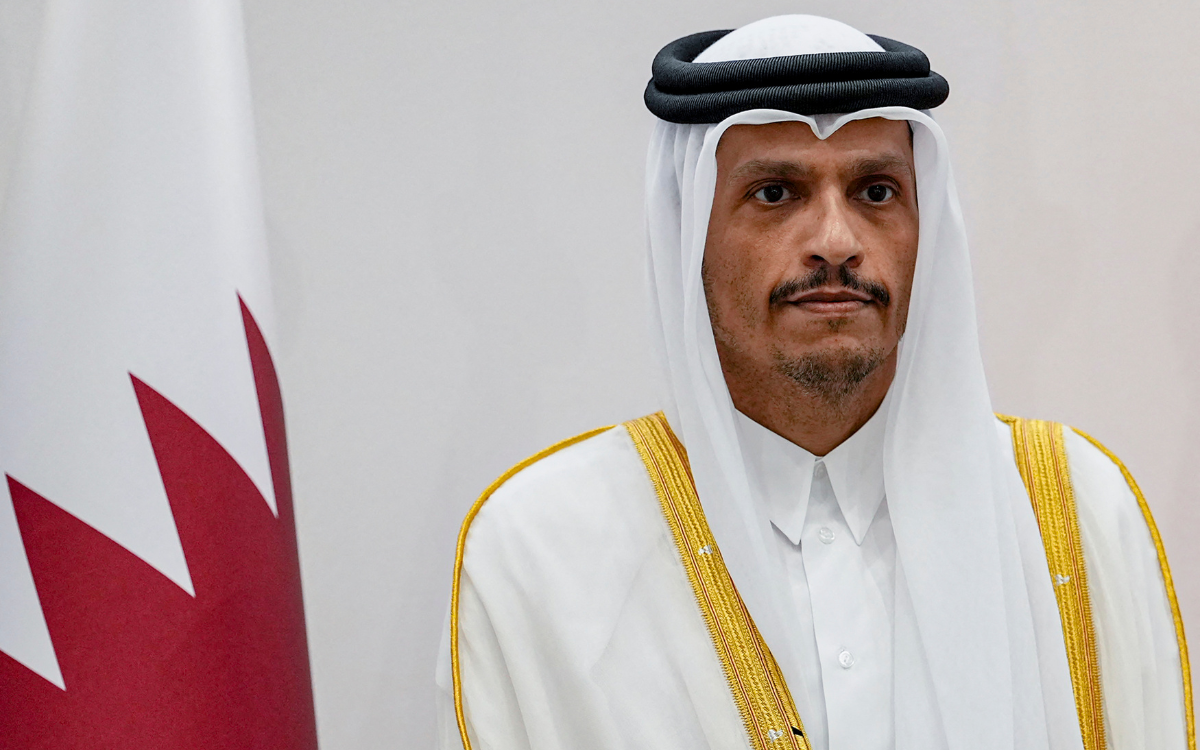
Qatar’s prime minister is set to visit Tehran on Thursday as part of ongoing consultations with Iran to expand relations and strengthen regional security.
The visit comes after, last week, U.S. President Donald Trump announced an “economic D-Day” for Iran and threatened that any countries that offer “any type of lifeline” to Tehran will face “tremendous economic consequences.” Iran’s Ministry of Foreign Affairs spokesperson Esmaeil Baqaei called the move bullying and claimed it violates international law and the UN Charter.
“No decent state that values its sovereignty and national interests will accept the normalization of such grand lawlessness and systemic bullying. Canada is among those already learning that lesson,” he said, referring to the recent breakdown of trade talks between Ottawa and Washington.
Baqaei also mocked the United States this week, suggesting that U.S. cooperation with Bahrain will not hurt Iran because Tehran does not have much commerce with it to begin with. He also laughed off the U.S. decision on Monday to suspend sports activities and academic exchanges with Iran, indicating that such exchanges were already largely unworkable. Decades of sanctions, diplomatic hostility, visa restrictions, and political tensions were most likely the basis for Baqaei’s claim that the United States is “sanctioning the already sanctioned.”
China rejected U.S. pressure to restrict Iran’s access to international trade and finance. Chinese Foreign Ministry spokesman Lin Jian said that “sanctions and pressure will not help resolve the issue” and that Beijing will protect its own “rights and interests.” Mohammad Ghalibaf, Speaker of the Parliament of Iran, responded by praising China for “rejecting illegal sanctions against Iran.” “The Iran–China comprehensive strategic partnership is rooted in mutual respect, win-win cooperation, and a shared vision for a multipolar world. This relationship needs no one’s permission,” Ghalibaf said. China’s position matters to Washington’s economic campaign because Beijing serves as the ultimate financial lifeline for Tehran, purchasing roughly 80% to 90% of Iran’s total oil exports.
Meanwhile, Iranian Armed Forces spokesperson Sardar Shokarchi threatened Western-based Persian-language media outlets. “Hostile media outlets can be placed in the military target bank. Media outlets such as BBC, Iran International, and Radio Farda are directly connected to Mossad, CIA, and the enemy’s intelligence agencies, receiving operational directives and support from them,” Shokarchi said.
The key question is whether Iran can turn diplomatic ties with China and Gulf states into an effective buffer against Washington’s economic campaign. China’s rejection of U.S. pressure is particularly significant because Beijing remains Iran’s most important economic lifeline, while Qatar’s planned visit to Tehran offers another potential channel for de-escalation. At the same time, Tehran’s increasingly aggressive rhetoric toward Western-aligned Persian-language media indicates that the government is preparing for a prolonged information and economic confrontation alongside the broader standoff.
The next indicators to watch are whether Washington moves from threatening secondary sanctions to targeting major Chinese banks or oil buyers, whether Beijing materially increases its economic support for Tehran, and whether Qatar can reopen substantive U.S.–Iran negotiations. A meaningful Chinese response—or successful Qatari mediation—would complicate Washington’s strategy of economically isolating Iran; conversely, new restrictions on China’s Iran trade would provide a much stronger test of whether the U.S. campaign can actually cut Tehran’s remaining economic lifelines. (EIR)