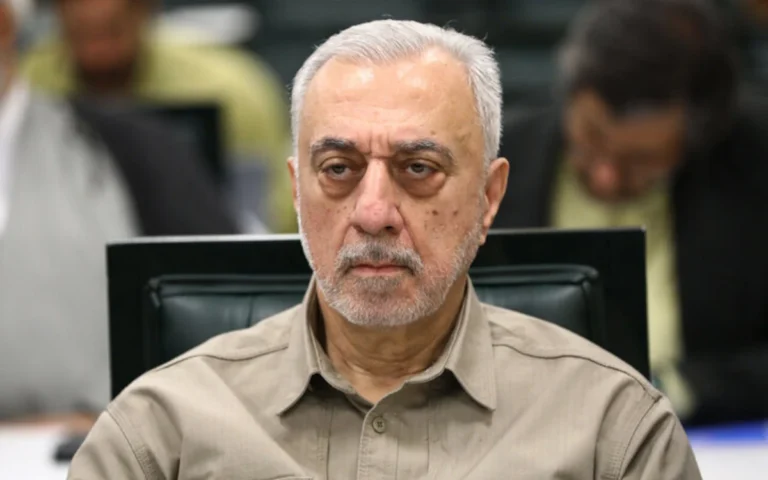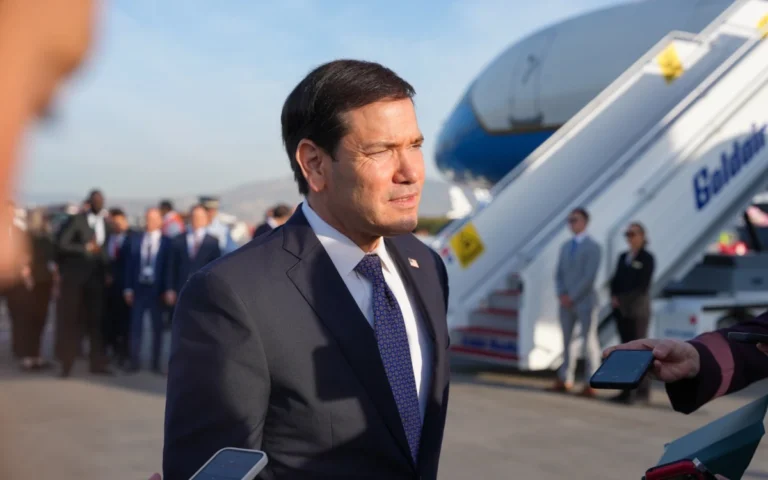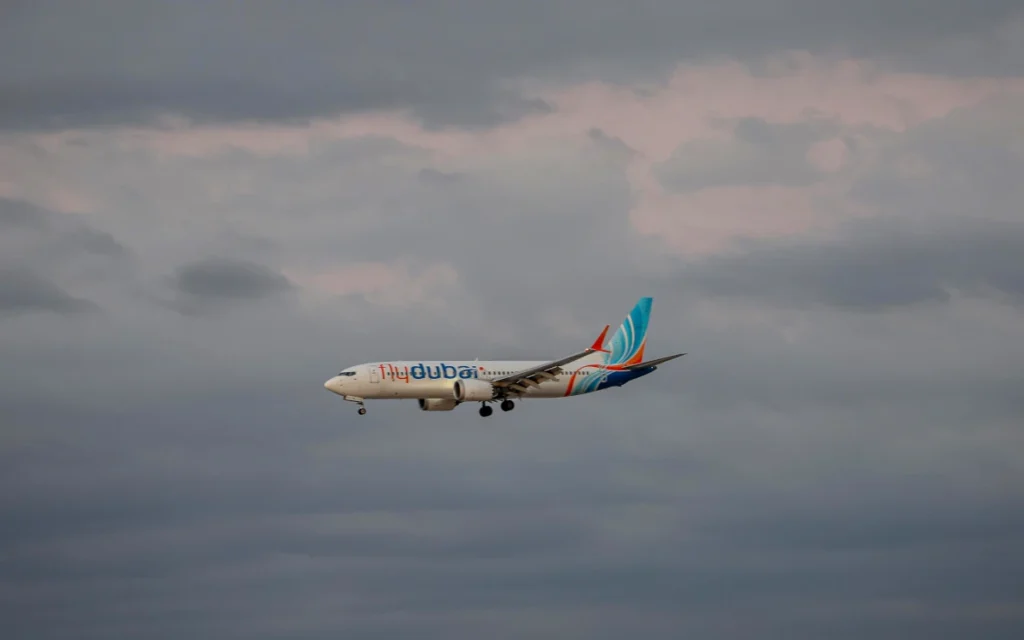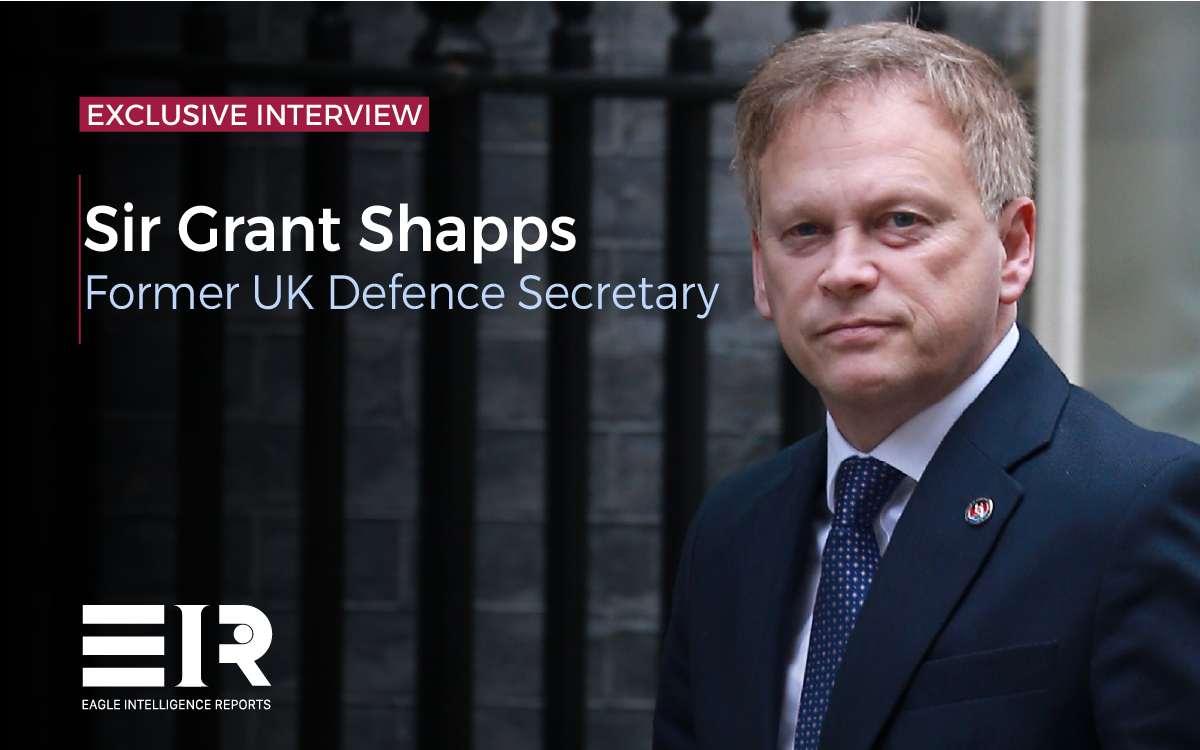
Former British Defence Secretary Sir Grant Shapps has warned that Iran is expanding its destabilizing activities beyond the Middle East, threatening international shipping, global energy security and European countries, while acknowledging that Western military operations against the Houthis have failed to establish effective deterrence.
In an exclusive interview with Eagle Intelligence Reports, Shapps said conventional military strikes had proved insufficient against the Houthis’ mobile drone operations, raising broader questions about the effectiveness of Western military responses to increasingly asymmetric threats across the region.
He accused Tehran of financing, training and supplying the Houthis, arguing that Iran and its regional allies were exploiting vulnerabilities in global maritime trade. Shapps suggested that the Houthis’ attacks on Red Sea shipping and Iranian threats to the Strait of Hormuz formed part of a coordinated strategy to exert pressure on the international community.
The former Defence Secretary warned that disruptions to strategic waterways and energy supplies posed serious risks to the global economy, making developments in the Middle East a direct concern for Britain and its Western allies.
The former Defence Secretary warned that disruptions to strategic waterways and energy supplies posed serious risks to the global economy, making developments in the Middle East a direct concern for Britain and its Western allies
Despite supporting further military action against Houthi targets, Shapps acknowledged the limitations of force alone, arguing that lasting regional stability would require a broader diplomatic and political settlement supported by international cooperation.
He also reflected on what he described as the West’s earlier failure to fully appreciate the threat posed by the Houthis, particularly during their confrontation with Saudi Arabia, and called for stronger British military, intelligence and diplomatic support for Gulf partners.
Asked whether Britain should become more directly involved in defending Saudi Arabia against missile and drone attacks, Shapps supported extending British air operations to assist the Kingdom, including through fighter jets and Reaper drones, while ruling out the deployment of ground forces.
Shapps supported extending British air operations to assist the Kingdom, including through fighter jets and Reaper drones, while ruling out the deployment of ground forces
Discussing the relationship between the Gaza war and instability in the Red Sea, Shapps argued that Iran’s support for Hamas, Hezbollah and the Houthis represented a common factor in regional conflicts. However, he maintained that Western operations to protect commercial shipping were intended to prevent the Gaza conflict from expanding into a wider regional confrontation.
On threats beyond the Middle East, Shapps warned that Iran was increasingly seeking to carry out acts of violence on European soil through individuals recruited for financial rather than ideological reasons. He described the practice as a dangerous development in Tehran’s methods and highlighted the work of British security services in disrupting suspected threats.
Shapps warned that Iran was increasingly seeking to carry out acts of violence on European soil through individuals recruited for financial rather than ideological reasons
Drawing parallels with Russian activities in Europe since the invasion of Ukraine, Shapps said Iran was adopting methods aimed at disrupting everyday life in Western countries. He pointed to a suspected plot involving RAF Fairford as an example of the growing security concerns facing Britain.
Throughout the interview, Shapps outlined his views on the changing nature of regional warfare, the strategic importance of maritime security, and the challenges facing Britain and its allies as they seek to contain Iranian influence without triggering a broader conflict.
The following is from the interview with Sir Grant Shapps, conducted by Jonathan Sherry and Andra Maciuca for Eagle Intelligence Reports.
Interview Excerpt
Jonathan Sherry:
Welcome to Eagle Intelligence Reports. Today we’re pleased to be joined by the former British Defence Secretary, Sir Grant Shapps.
Mr. Shapps, thank you for joining us.
Andra Maciuca:
It’s a pleasure to have you with us today.
Jonathan Sherry:
Let’s begin with the latest developments in Saudi Arabia and the renewed threat posed by the Houthis. As Defense Secretary, you oversaw military strikes against the Houthis. Yet the Houthis have continued to launch deadly strikes against civilian targets in Saudi Arabia, including recently at the airport in Riyadh. Did Western military operations fail to establish effective deterrence? And what should Britain and its allies do now to help protect Saudi civilians and critical infrastructure?
Sir Grant Shapps:
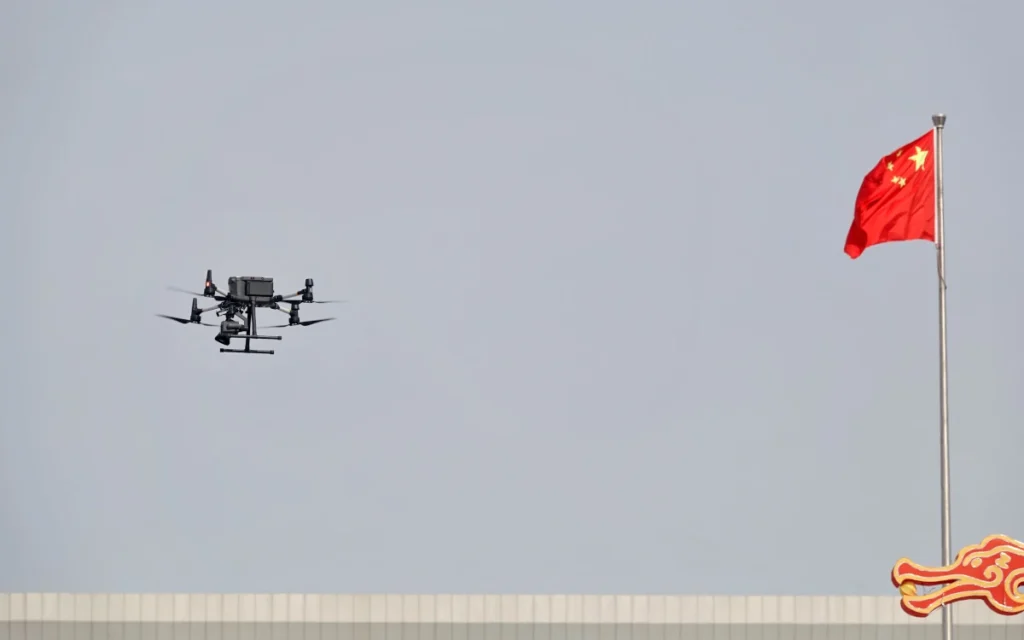
I think the premise of your question is correct. So did we establish sufficient safeguards, a high enough price? Answer: clearly not. Why? Well, the kind of warfare that’s taking place typically uses things like the Shahed drones. And they can be fired from pretty much anywhere. And so, though we would essentially retaliate—particularly when the Houthis were using these drones against commercial shipping in the Red Sea both by obviously trying to protect the shipping itself, but also by going to the launch sites—the reality is that we could take out the specific launch site, which might be a farming hut, essentially. But unless you’re going to get to every inch of every piece of ground, every piece of soil, it’s very easy to simply move that launch to a different piece of desert or a different field.
And, in doing so, it’s almost impossible to get to every launch site unlike, for example, where you might launch a more sophisticated missile, which would require a lot of support equipment, and destroying that support equipment prevents the attack. So I think the simple answer is: although I was personally responsible for carrying out repeated bombing of Houthi positions where Shaheds were fired from, the reality is they could be moved elsewhere. And we’re seeing the same dynamic play out now, and we’re seeing the same dynamic actually play out also in the Strait of Hormuz at this stage.
Jonathan Sherry:
So, who do you think learned more from 2024, the West or the Houthis? What do you think?
Sir Grant Shapps:
That’s an interesting way of putting it, an interesting question. Look, I think you can, to some extent, degrade the capacity of the Houthis or an organization that is really fighting what, in different times and different circumstances we might have referred to as a guerrilla war. You make an attack, you move the equipment and the people, and you attack from somewhere else. And I think what the West should take from that, myself and others, is that conventional warfare, where you go back and you then try and degrade their positions, doesn’t really work under this kind of attack. And what is required is a much, much greater magazine depth. So many more countermeasures available in order to go after what is actually a very simple approach by the Houthis—pretty straightforward for them to launch a lot of these attacks. Not all of them, because the distance ones are increasingly sophisticated, and I think that is the concern, particularly for Saudi at the moment.
Andra Maciuca:
Iran has trained and supported the Houthis for many years. So would you say it was Tehran’s responsibility for the strikes on Saudi Arabia? And did the West make a strategic mistake when it hit the Houthis instead of their Iranian supporters?
Sir Grant Shapps:
So, I absolutely agree with the premise of the question. I think that Iran is fundamentally responsible for the instability in Yemen. The Houthis are quite clearly their people. It wasn’t always that way from the beginning, but it has been for a very long time now. They fund, support, train the organization that is the Houthis. And we saw through a very lengthy war, which I regret that the West was not sufficiently alert to with Saudi previously the extent to which the Houthis will go.
And I think that yes, absolutely, Iran is responsible. And I might be an outlier here, but I actually think it’s right to prevent Iran from destabilizing the region. Now you can get into the rights and wrongs of the way this particular current war is being prosecuted. But the fundamental issue of Iranian destabilization through all of its many proxies, the Houthis being chief amongst them at the moment, I think is beyond any doubt whatsoever and very significant for the world to get on top of.
Andra Maciuca:
And where do you think Britain should draw a line between holding Iran politically responsible and considering taking military action against Iran’s assets?
Sir Grant Shapps:
I think that, first of all, Iran is responsible for the Houthis and having trained them and supplied them. I mean, they are literally firing Shaheds a lot of the time. They come from Iran. So, I mean, there’s a very direct link. Should the West and the UK be more alert to this? Yes. Yes, I think that’s right. I think we should be. Is it the sole answer? In other words, can it be solved through military action alone? No, it can’t. This requires a much broader diplomatic resolution because, as we’ve seen, even with Iran on the back foot under tremendous military assault and pressure, they’re able to still have their proxies cause mayhem in the region. And the Houthis are showing exactly how that is—
Andra Maciuca:
Let me just stop you there. What do you mean by “a broader diplomatic approach”? What should that include?
Sir Grant Shapps:
Wars are not usually just won through military action alone. They usually require the wraparound of a diplomatic approach and making sure that nations are agreed on a sort of broad approach to it—more of a coalition approach—that type of thing. And, you know, obviously, that’s not been the backdrop to this particular conflict. And then it has a lot of messy consequences, including the current attacks by the Houthis on Riyadh.
We had a situation three years ago, where relations were starting to be repaired between Riyadh and Tehran, where the Houthis were not attacking Saudi, although they were attacking shipping, including international shipping in the Red Sea. But all of that now is back up in the air. And I think that’s in part because what you need to do to bring a successful resolution is a much broader diplomatic, political resolution, as well as military pressure.
Jonathan Sherry:
Following the recent deadly attacks on Saudi Arabia, what additional military and security support should Britain provide? Is the existing Western security framework in the Gulf still adequate to address these threats?
Sir Grant Shapps:
I think that it’s very important that the United Kingdom, along with its allies, provide support in every sense to Riyadh. We have a good friend in the region, a close ally who is under attack. And I referred briefly to it a moment ago. I don’t think that when the war was originally taking place, or military operations at least, involving Saudi and the Houthis, that the West got this right. I think the West kind of thought that Saudi was off on some sort of adventure without realizing how dangerous the Houthis are for the stabilization of the region.
So I think now we’re all very clear about that. You know, I’ve been down to the Red Sea, I’ve boarded the HMS Diamond, which is a destroyer, when HMS Diamond was protecting under my orders commercial shipping in the Red Sea from the Houthis. In other words, we’ve experienced this ourselves now. And I believe that we should be giving every support to our friends in the region, the Gulf states. And that means providing all sorts of support in all sorts of ways. That could be diplomatic, but it can also be military equipment to protect itself, intelligence, and the rest of it. So, very important that the United Kingdom does that. And that’s certainly something I’ve been pressing for.
Jonathan Sherry:
So you would actually support a commitment to helping Saudi Arabia by stopping, let’s say, missile attacks and drones directly with British forces?
Sir Grant Shapps:
Yes. And there’s actually a lot of cooperation that takes place already. I don’t want to go into detailed specifics, but when it comes to, for example, helping to provide equipment that can help to defend Saudi, intelligence matters in which we speak all the time, and helping with the wider diplomatic effort, I think the United Kingdom has assets in the region as well. So it can of course be of assistance. And I experienced this firsthand when the United Kingdom was one of, at the time, just two countries to protect shipping in the Red Sea from Houthi attack. Only the United States and the United Kingdom actually were there firing to protect. And I think it’s important that the United Kingdom is there for our friends in the region. And as I say, I think in an earlier wave of this, when Saudi and the Houthis were essentially at war, I don’t think the West was sufficiently on Saudi’s side. And that was a muddied picture.
Andra Maciuca:
You talk about commitment, but would you actually commit British forces fighting in Saudi airspace; yes or no?
Sir Grant Shapps:
I don’t think we would put in place a ground force. So we’ll rule that out for the moment in the region. I personally do think yes, we should put our assets available to Saudi. We already do it in Iraq and over Syria under a very long-running operation. I see no reason not to offer or extend that assistance to Saudi as well in the sky—and that is, at the moment, is either done through jets or through Reapers and other drones. But yeah, I don’t see any reason why that shouldn’t be extended.
Jonathan Sherry:
And of course there’s a connection to the global economy here. You argued that the freedom of navigation was essential to global economic security. With maritime and energy infrastructure under threat again today, should Britain be prepared to strike directly the Houthis again?
Sir Grant Shapps:
See, this is exactly my point. You know, I can sit here in London and pretend to be very distanced from this. But the truth is, for the United Kingdom and other Western countries, we are directly impacted by what’s going on in a manner that matters. It matters because of our economies and because of, as you say, the stability of the world, particularly when it comes to energy. And so my answer is: yes, of course, we should be prepared to assess—
Jonathan Sherry:
But wouldn’t those strikes risk drawing Britain into a wider regional conflict?
Sir Grant Shapps:
I don’t think so. I mean, there’s always the danger, of course, and people always highlight that. And I had that when I made the decision to hit the Houthis back in 2023, 2024. And people were saying the same thing to me. But actually, I found that not only were we able to do that to try and bring some relief in that particular case to shipping—although I’ve talked about the limitations of those actions. I also found it gained wide parliamentary support in London, where I would come and take action and report to the dispatch box in the House of Commons and actually get broad support across all political parties. So I think people do understand that it’s in our interest to create the stability, particularly in the major shipping channels, but also of the supply of that fuel as well. And that we therefore ought to be pretty front footed in doing everything we can to support our friends in Saudi and elsewhere.
Andra Maciuca:
When Britain launched strikes on the Houthis in 2024, your government said that this was a separate conflict to the war in Gaza. But was this a realistic expectation—that there could be lasting stability in the Red Sea without tackling the war in Gaza and the wider causes of regional conflict?
Sir Grant Shapps:
Yeah, I mean, again, you know, the war in Gaza, and everything links back to Iran in the region. And you’ve got, you know, Iran not only sponsoring the Houthis, but also sponsoring Hamas. And we all know what happened on October 7th. So, of course, these things are all interlinked. I think the point I was trying to make at the time is I didn’t want to see that war widen. And the way that that war could widen would have been rather than allies like the United States and the United Kingdom protecting shipping in the Red Sea, if that had to instead be done via Israel or another regional partner or player, then that would, in a very direct way, extend that war. I saw it that we could help to not extend the war by having other nations—the United States and the United Kingdom—look after the shipping in the Red Sea, rather than mudding it in with the closer-to-Gaza conflict itself. But again, same pattern: Iran sponsoring the Houthis, Iran sponsoring Hamas. It’s always Iran behind the problems in the region.
Andra Maciuca:
It is, but would you say the Western approach to the war in Gaza complicated efforts to contain the Houthis and prevent a wider regional conflict?
Sir Grant Shapps:
What Hamas did on October 7th, and then the wider war in Gaza has literally nothing to do with the Houthis. The Houthis are taking it as an opportunistic moment to then go and attack shipping in the Red Sea. So to me, those things were entirely separate, other than the fact that the link was Iran sponsoring Hamas, sponsoring Hezbollah, sponsoring the Houthis. You know, always in the region, when you want to find out who’s behind the problems, all roads lead back to Tehran, unfortunately. And that’s why I think it is important ultimately to tackle the Iranian regime. And I say the regime and not the people, because I feel very badly for the long-suffering people of Iran who are under enormous economic pressure because of their terrible leadership.
Jonathan Sherry:
With Iran threatening the Strait of Hormuz and the Houthis, of course, threatening the Bab al-Mandab Strait, isn’t this a coordinated strategy? What would you say about that?
Sir Grant Shapps:
I think that’s actually true. I think Iran have essentially said to the Houthis, who they pay, sponsor, train, etc., “You go after the Red Sea traffic, we’ll go after the Strait of Hormuz, and then let’s see what the world thinks of this.” And I don’t think this will work, ultimately, because, although we are seeing very high oil prices, and it’s having an impact on economies throughout the world, I don’t think it’s having as much of an impact as they thought it would.
In the United Kingdom, for example, we’ve just had an upgrade by the IMF of our GDP for this current year—unexpected given the high oil prices. And I see countries like Saudi, the UAE, and others are working on alternative ways of shipping oil and gas rather than relying on those particular chokepoints. Now, it’s not necessarily a quick thing. New pipelines take a long time to build and it’s clearly causing massive disruption. But it will happen over a period of time because when you have a high oil price, it starts to become sensible to open up more supply from elsewhere, which might be more expensive to access. So these things have a way of righting themselves over a period of time. And I don’t think, you know, if this is Tehran’s game, and I think it is—have the Houthis deal with the South, have themselves deal with the Strait of Hormuz—I don’t think ultimately that will work for them.
Andra Maciuca:
On October 13, MI5 warned that Iran is outsourcing violence in Britain and is increasingly interested in targeting military sites. There have been over fifty arrests since the beginning of the year related to Iranian threats. So would you say Britain is now a front in the Iran war?
Sir Grant Shapps:
So we’ve seen behavior like this from Iran for a very long time. But there’s no doubt they’ve stepped up their internationalization of their conflict. And they will literally hire people, many of whom have no ideological connection whatsoever, to go and do extremely bad things in Britain, Europe, and even in the U.S. as well. And this is a new model—a relatively new model, a new front really, in the war, where they think they can cause trouble by doing this. Now, undoubtedly, they can and they are.
And we’ve been subject to a very similar approach by Russia in recent years, particularly since the Ukrainian war started, with them trying to interrupt daily life in the UK. Ultimately, thank goodness, the security services have been doing a very good job of catching people out. I think you’re referring to, in particular, a recent RAF Fairford attack, where it seems like there was almost certainly now an Iranian link to what looked like an attack which was going to take place.
So, yeah, this is their modus operandi. This is the way that they now operate by bringing in people just for money, without necessarily any political or other conviction to the cause. And it is extremely dangerous, of course.