
A source familiar with UAE–Iran communications says the two sides have agreed to curb hostile media campaigns to prevent public rhetoric from undermining the de-escalation process or pushing relations toward renewed tensions.
The United Arab Emirates and Iran have reached a series of understandings aimed at de-escalating tensions between them and preventing the war in the region from expanding, at a time when Gulf capitals are increasingly convinced that the prolonged conflict makes opening direct channels of dialogue with Tehran a necessity, according to a source familiar with communications between the two sides.
The source said the understandings have recently expanded to include a halt to hostile media campaigns between the UAE and Iran, in a previously undisclosed step intended to prevent public rhetoric from undermining the de-escalation process or pushing relations to new levels of tension.
According to the source, the decision to include the media issue within the understandings stemmed from an assessment that de-escalation cannot be confined to political contacts behind closed doors while rhetoric in the public sphere continues in a way that could raise the level of confrontation and narrow the room for maneuver available to both sides.
The source said the understandings do not amount to a comprehensive political agreement between Abu Dhabi and Tehran, nor do they mean that the differences between them have been resolved. Rather, at this stage, they are intended to establish safeguards that prevent bilateral relations from deteriorating as the war continues, while preserving channels that allow crises to be addressed before they develop into broader confrontations.
The understandings are intended to establish safeguards that prevent bilateral relations from deteriorating as the war continues, while preserving channels that allow crises to be addressed before they develop into broader confrontations
The understandings come as the war enters its seventh month, amid growing pressure on Gulf states from its security and economic repercussions, including disruptions to shipping, rising energy prices, and the widening scope of confrontations across the region.
The source said the prolonged conflict has reinforced the view among Gulf capitals that dealing with Iran requires more direct bilateral engagement alongside broader regional and international tracks.
The Gulf states’ turn toward bilateral channels reflects a desire to have their own tools for managing risks, rather than tying de-escalation exclusively to a single negotiating track that could be disrupted by disagreements between Iran and the United States or by developments in other arenas. For Abu Dhabi, maintaining a direct line with Tehran provides, according to the source, a means of conveying messages quickly and clarifying positions at moments of tension, without requiring either side to alter its fundamental positions.
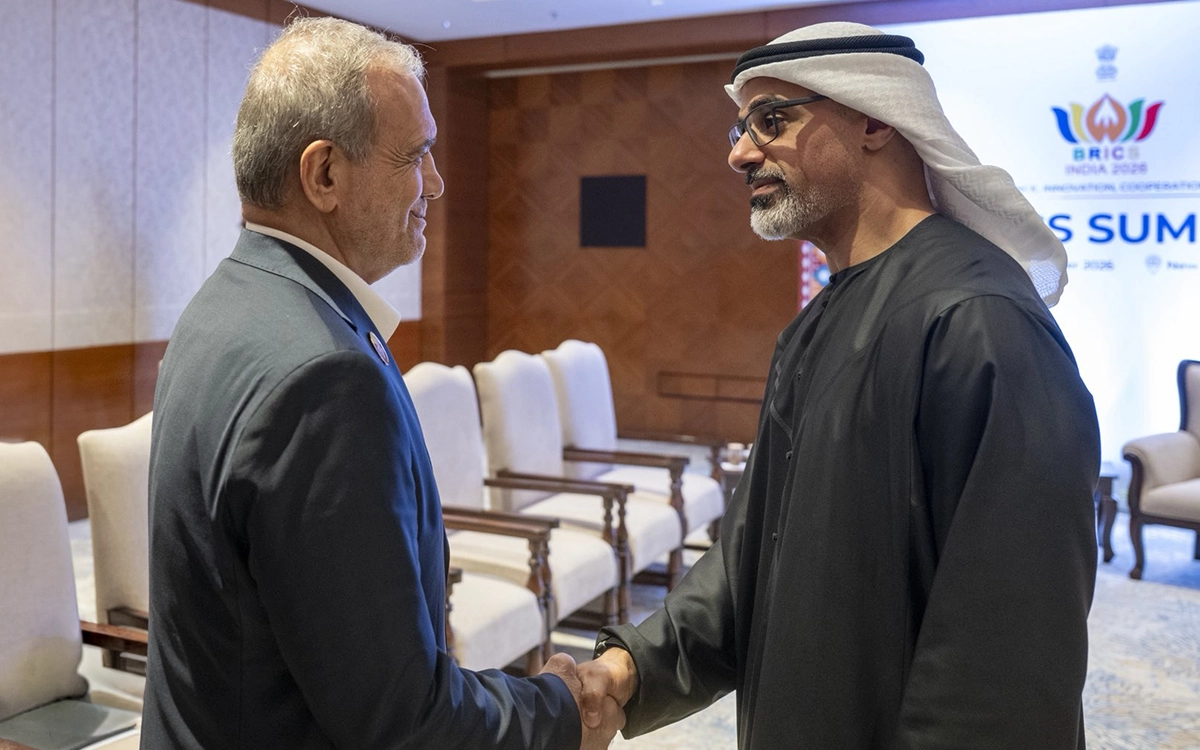
Some signs of this approach have emerged publicly in recent days. On September 12, Abu Dhabi Crown Prince Sheikh Khaled bin Mohamed bin Zayed met Iranian President Masoud Pezeshkian on the sidelines of the BRICS summit in New Delhi, where the two sides discussed, according to the Abu Dhabi Government Media Office, support for efforts to promote calm, reduce tensions, and strengthen regional stability.
The UAE and Iran also endorsed a joint statement by BRICS countries calling for restraint and de-escalation, a public indication that the two countries share some common ground when it comes to preventing the situation from deteriorating further.
Relations, however, have also been marked by sharp tensions. On August 19, the UAE announced the suspension of all activities, trade exchanges, and financial transactions with Iran until further notice. It said the decision was taken in light of the regional escalation, while at the same time reaffirming its commitment to dialogue and regional cooperation as a means of promoting peace and stability.
The UAE–Iran contacts have coincided with broader Gulf moves to explore negotiating channels with Tehran. Oman had been preparing this month to host a meeting between Iran and Gulf states to discuss regional issues, including the Strait of Hormuz, before the meeting was postponed.
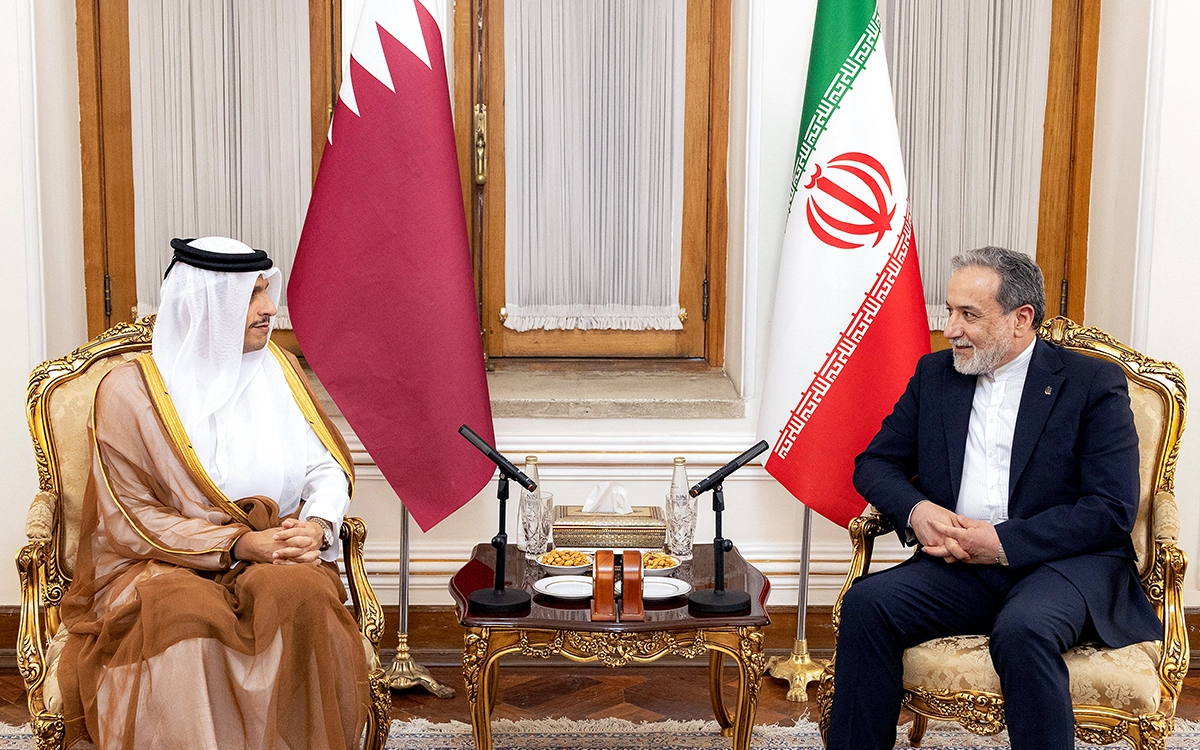
According to the source, such channels are not currently intended to resolve all outstanding disputes with Iran. Rather, they are aimed at preventing miscalculation, containing the direct repercussions of the war, and creating space for dialogue when broader diplomatic tracks stall.
In this context, the halt to hostile media campaigns is seen as an early test of Abu Dhabi and Tehran’s ability to translate their unannounced understandings into observable conduct. If the step succeeds, the source said, it would indicate that the two sides are not merely maintaining channels of communication, but are also seeking to reduce the level of friction in the public sphere.
In this context, the halt to hostile media campaigns is seen as an early test of Abu Dhabi and Tehran’s ability to translate their unannounced understandings into observable conduct
Neither the UAE nor Iran has so far announced any understanding concerning media campaigns, and it remains unclear whether it applies to specific media outlets or is limited to official and semi-official rhetoric.
The source said, however, that the agreed principle is clear: the two countries must prevent hostile media campaigns from becoming a new source of escalation.