
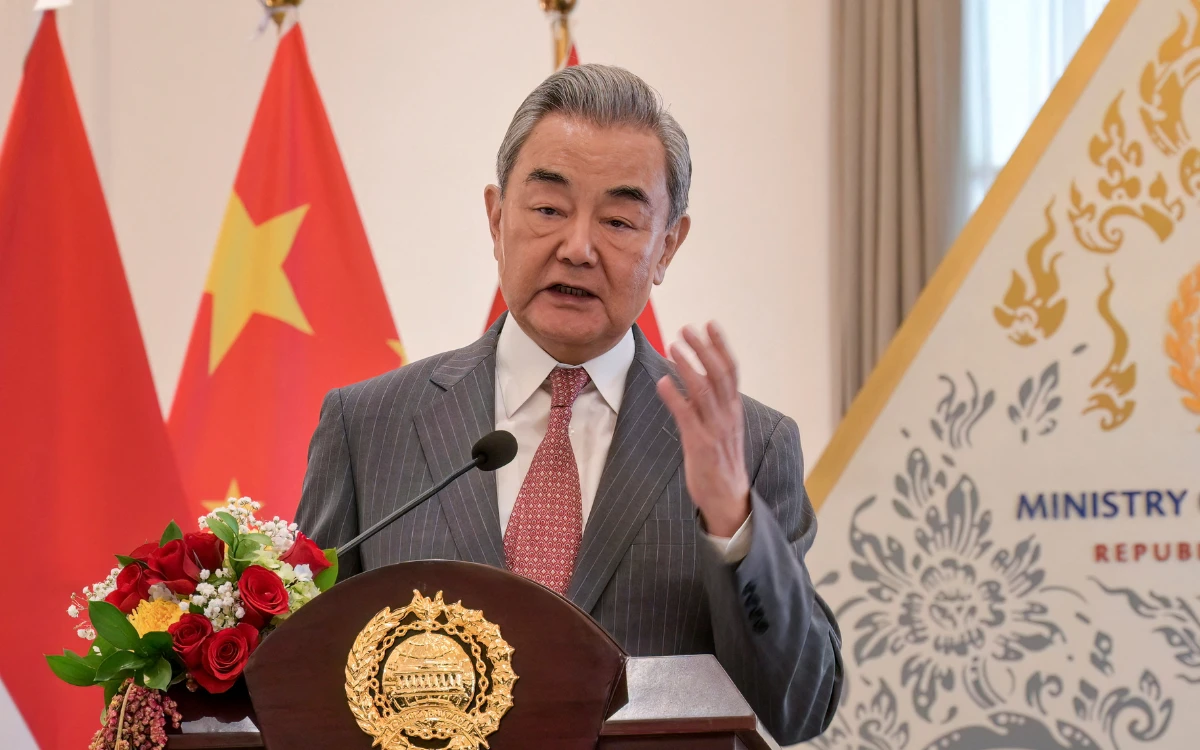
China’s Foreign Minister Wang Yi said Beijing was willing to “safeguard” Tehran’s rights during talks with his Iranian counterpart Abbas Araghchi on Wednesday.
Wang said China was “willing to strengthen dialogue and cooperation with Iran,” and repeated Beijing’s call for Tehran and Washington to resume talks.
“We encourage Iran and the U.S. to stay rational and restrained,” the Chinese foreign minister added. Wang also said China does not want regional tensions “spilling over” into Yemen and the Red Sea, amid worsening fighting between Yemeni government forces and the Iran-backed Houthi rebels.
Iranian media said Araghchi was in Beijing to exchange views with “Chinese officials,” and no meeting with President Xi Jinping has been announced. Those outlets also carried Wang’s position that prolonging the U.S.–Iran war benefits neither side and that Washington and Tehran should return to negotiations based on the Islamabad Memorandum. Before Araghchi arrived, Iranian Foreign Ministry spokesman Esmaeil Baqaei said the talks would cover Iran–China relations and major regional and international developments.
The talks come eight days before Xi is due in Washington to meet U.S. President Donald Trump. Beijing this week rejected U.S. media reports that Chinese entities supplied Tehran with satellite images of a Jordanian base housing U.S. troops. The reports said the transfers came before and after an Iranian strike that killed three American soldiers. Trump has warned Beijing not to sell weapons to Iran, and Washington sanctioned three China-based satellite companies in May for enabling Iran’s military operations.
Araghchi’s visit gives Beijing something to carry into the Trump meeting. China buys Iranian oil and ships much of its crude through Hormuz. A long war raises the cost of both, which is why Beijing keeps calling for talks it is not running. Urging restraint costs nothing and positions China as a capital both sides still speak to. Whether that amounts to mediation depends on what Xi brings to Washington on September 24. (AFP+EIR)