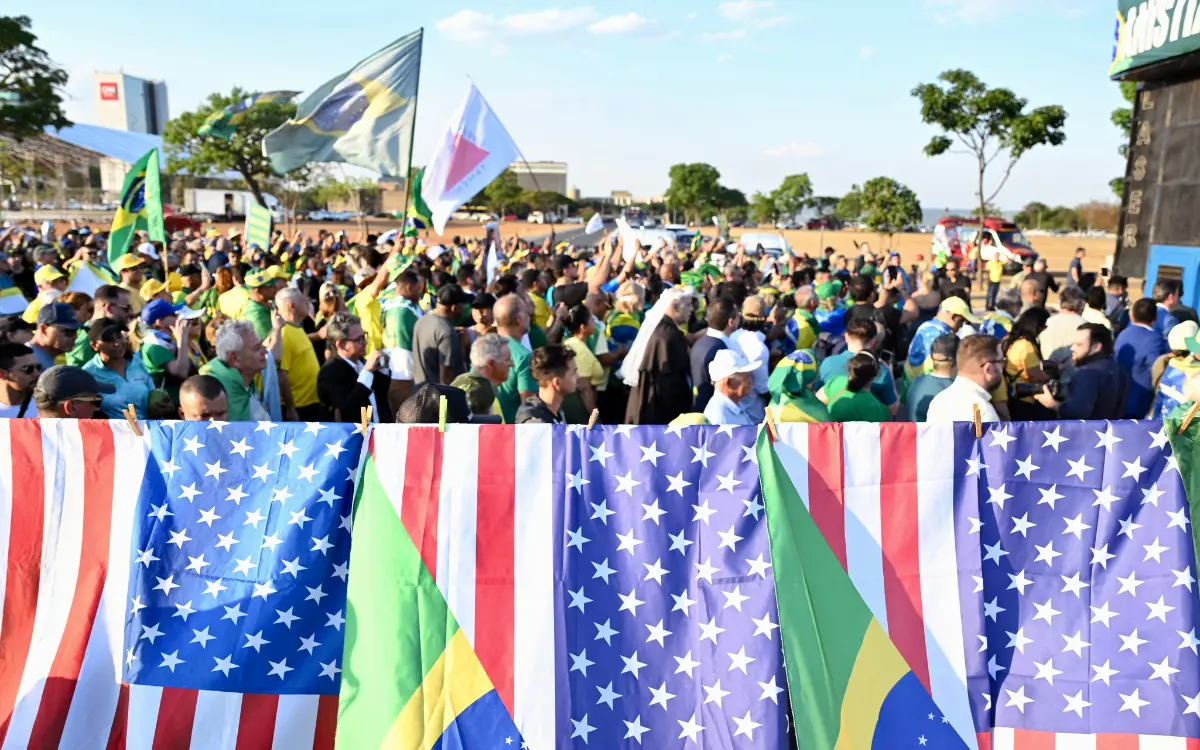
When Brazil goes to the polls in October to choose its president, the top contenders will not only be at different ends of the demographic spectrum. They will also starkly differ on where Brazil ought to anchor itself in a rapidly changing international landscape. Brazilians will decide whether incumbent President Lula da Silva secures a second consecutive term, which would be his fourth overall. Lula’s multi-aligned approach offers Brazil the best route to greater strategic autonomy and influence in the emerging order.
Lula, a metalworker who found politics via labor organizing, turns 81 in October. He has oriented Brazil towards a foreign policy that prioritizes South-South alignment, notably with the BRICS countries, and specifically through deepening economic ties with China. Opposing him is Flávio Bolsonaro, the 45-year-old political heir apparent to the political legacy of his father, former President Jair Bolsonaro. Jair himself remains under house arrest and is barred from running for the presidency again after being convicted of a coup attempt.
In strong contrast to Lula, Flávio Bolsonaro has cultivated close relations with Washington, though he publicly claims his foreign policy would be “pragmatic.” If he wins, he is widely expected to reorient Brazil’s foreign policy more closely towards the United States, potentially even bandwagoning with some of the foreign policies of U.S. President Donald Trump. The risk here is not that Brazil would get dragged into a conflict, but that it may be pulled into trade wars or other kinds of escalation below the threshold of war brought on by a volatile American foreign policy.
The underlying question is whether Brazil can remain generally non-aligned in an emerging multipolar order, or whether the increasing pressures that Trump 2.0 has brought on Brazil—and Latin America more generally—will directly shape Brazil’s immediate future. Trump will only be in office another two years. Still, the smarter bet for Brazil is to invest in its place in the emerging multipolar world rather than cling to the U.S.–dominated world system of the past.
The smarter bet for Brazil is to invest in its place in the emerging multipolar world rather than cling to the U.S.–dominated world system of the past.
Lula’s views on international politics and foreign policy differ sharply from Bolsonaro’s. Lula’s embrace of the Global South carries risk, including the danger that greater economic engagement with China could create new dependencies. But his multi-aligned approach gives Brazil more opportunities to exercise influence—even to actively shape—the emerging multipolar order. His opponent’s plan is a road to nowhere: a return to closer alignment with Washington would narrow those options at precisely the moment Brazil has an opportunity to expand them.
Lula has consistently framed Brazil’s non-alignment as a matter of sovereignty and resistance to external interference. Yet Brazil still remains dependent on Western technology, even as China has been its largest bilateral trading partner and a leading investor in its logistics, energy infrastructure, and telecommunications. The coming election will determine whether Brasília’s multi-aligned trend continues or gives way to closer alignment with Washington—even as the country’s economic ties with Beijing make any decisive realignment increasingly difficult.
Foreign Policy Visions Clash at the Polls
Polling aggregates currently place Lula ahead of Bolsonaro by around 6 points for the election’s first round.
While the election will be fought primarily over domestic issues, their competing foreign policy visions are highly contrasting. Even if Bolsonaro is not as openly anti-China in his messaging as he was several years ago, he remains a BRICS-skeptic. He has argued that Brasília would be unwise to use Chinese trade and investment to increase its autonomy from Washington, since this would merely build dependence on Beijing.
Bolsonaro has developed a close relationship with the Trump administration, and his proximity to Washington has already become a political issue in Brazil. This is particularly the case after his father ruled as a Trump-like strongman during his one term in office between 2019 and 2023. It is likely that a Bolsonaro government would seek to position Brazil as the United States’ principal strategic partner in South America, edging out the favored position that its regional rival Argentina has achieved in Washington under Javier Milei. The comparison is noteworthy since Milei prevented Argentina from joining BRICS. The country was set to join in January 2024 under Milei’s predecessor Alberto Fernández, but Milei took office a month prior and changed course by formally rejecting the invitation.
It is likely that a Bolsonaro government would seek to position Brazil as the United States’ principal strategic partner in South America, edging out the favored position that its regional rival Argentina has achieved in Washington under Javier Milei.
Though there is no evidence yet to suggest that Bolsonaro would attempt to pull Brazil out of the BRICS, it seems very likely his election would de-emphasize Brazil’s Global South connections in favor of rebuilding ties with the North. Bolsonaro would likely be welcome in Washington, given his general ideological compatibilities with MAGA.
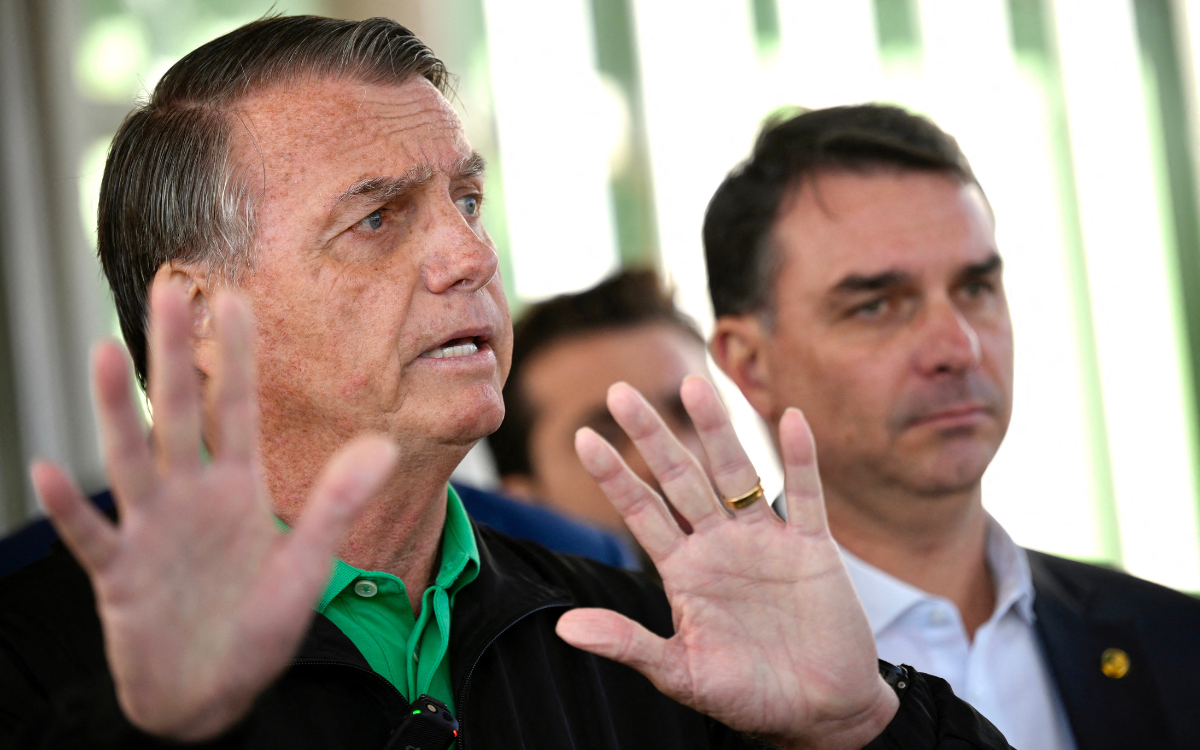
Conversely, the center-left Lula is clearly an ideological mismatch for Trump and tensions between them have grown steadily. Still, Lula has so far managed to avoid any major public diplomatic spats with Trump and managed to meet with the U.S. president in the Oval Office in May without causing controversy. Trump later took to social media, calling Lula “dynamic” and saying the meeting was “very good.” While the two have avoided a major dispute, they have come close. In April 2026, Lula publicly slammed Trump’s announcement that South Africa would not be invited to the G20 summit in Miami, Florida. The previous year, during the BRICS summit held in Rio de Janeiro, Lula bitterly criticized Trump’s tariff policy, stating publicly Trump was not elected to be the “emperor of the world.”
Brazil’s Place in a Multipolar System
Rather than cave in to Trump and bandwagon with the United States, the smarter move for Brazil is to continue on the path of its long-term vision of benefiting from and shaping the multipolar world. The benefits far outweigh the risks.
As an original member of the BRIC grouping, China grew to become Brazil’s single largest bilateral trading partner in 2009 during Lula’s earlier presidency. Brazilian exports such as soybeans have found a vast market in China. Brazil should make more effort to diversify its primary relationships in other directions, and indeed there is already evidence it is taking steps to do this. Diversification can stave off dependency while freeing up Brasília to have more influence internationally and giving it greater diplomatic flexibility and bargaining power with major powers outside Washington and Beijing.
Diversification can stave off dependency while freeing up Brasília to have more influence internationally and giving it greater diplomatic flexibility and bargaining power with major powers outside Washington and Beijing.
Consider the case of India, for example. When Trump brought turmoil to international trade last year by imposing punitive tariffs on New Delhi, both Brazil and India found their relations with the United States deteriorated. This prompted intensified contact between India and Brazil, with productive calls and meetings between Lula and Narendra Modi in 2025 and 2026. Lula described this as “a meeting between the pharmacy of the world and the breadbasket of the world, between a digital superpower and a renewable energy superpower. We are both mega-diverse countries and hubs of cultural industry. We are both defenders of multilateralism and peace.”
By pursuing selective alignments with different world powers, Brazil can further its national interests and become an ever-greater voice in the emergent order, not simply a nation caught between two superpowers. A Bolsonaro-led Brazil would likely accede more to the United States’ current vision for the world, reducing its commitments to global initiatives on climate change and conflict resolution and narrowing its room for maneuver. For a country seeking a larger global role, Lula’s flexible, multi-aligned posture offers the greater opportunity.
Multi-alignment Gives Brasília a Louder Voice
For some time, international audiences have tended to view Brazil primarily as an emerging market rather than a strategic power. There are clear signs this is changing, but only by embracing the emerging multipolar world—rather than cozying up to Trump’s America—can Brasília fully realize its geopolitical potential.
Brazil’s most obvious source of influence is its sheer size. It is the world’s tenth largest economy and seventh-most populous country, while its economy grew by a steady 2.3 percent last year. Under Lula, Brasília has sought to convert that weight into diplomatic influence through a multi-aligned foreign policy that maintains relationships across traditional geopolitical divides. This has helped Brazil to become a strong neutral power that can balance relationships between East and West. It has enabled Brazil to present itself as a credible convening power, hosting a string of major international summits in recent years like the G20 summit in 2024, the BRICS summit in 2025, and COP30 in 2025.
But Brazil’s ambitions extend beyond serving as neutral ground in an increasingly fractured international system. Its greater opportunity is to become a consequential actor within that system: not simply a swing state choosing between Washington and Beijing, but a real stakeholder capable of building and adapting to shifting coalitions according to its own interests.
That opportunity is expanding as a profound transition is taking place in the world order, not only away from the U.S.-dominated unipolar era, but toward the more profound move away from the far longer era of Western dominance that preceded it. Paradoxically, Trump’s use of tariffs, diplomatic pressure, and coercive policies toward both allies and adversaries may accelerate this trend by encouraging other states to diversify their relationships and reduce exposure to Washington’s whims. The sheer levels of intimidation and ineptitude characterizing his policies—from Venezuela to Greenland to Iran—will only hasten the arrival of a less U.S.-dependent world.
The base equation for Brazil is clear. In a fully U.S.-dominated system, its independent voice struggles to find an outlet. Its ability to shape international outcomes is limited. A more multipolar world creates more options—more potential partners, institutions, and coalitions through which Brasília can exercise influence. To date, Brazil has already tried and admittedly failed to deliver joint diplomatic initiatives on major world issues, but there is scope for it to succeed further down the line.
Brazil has long sought more diplomatic agency but lacked systemic leverage to do it. In 2024, for example, Brazil and China jointly proposed a six-point peace plan aimed at ending the war in Ukraine through de-escalation, dialogue, and negotiation. Using the UN General Assembly meeting in New York, Brazil and China gathered diplomats from developing countries to back the plan, though the plan ultimately failed to gain enough traction and did not lead anywhere. An earlier example came in 2010, when Lula’s Brazil co-led an initiative with Turkey to broker a nuclear deal—the Tehran Declaration—with Iran. Under the agreement, Tehran accepted a proposal to transfer low-enriched uranium to Turkey to build confidence for future negotiation.
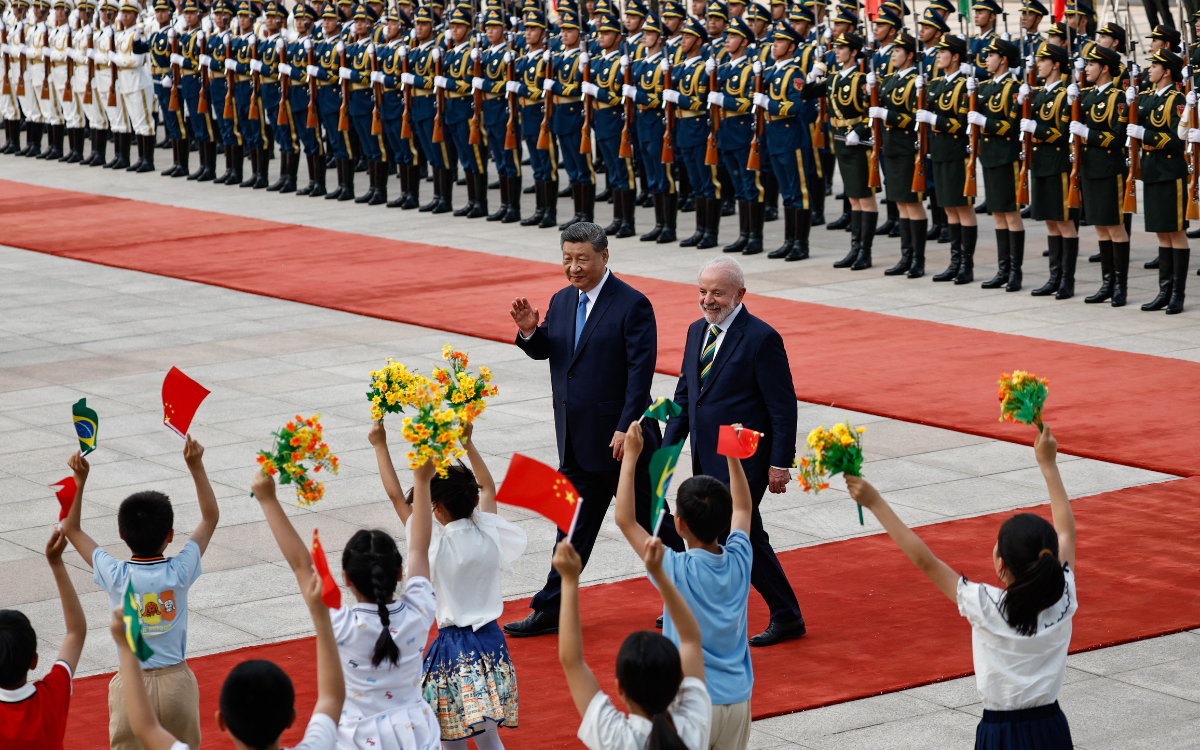
President Barack Obama ultimately rejected the initiative, refusing to accept the deal. But the episode demonstrated Brazil’s ambition to operate as an independent diplomatic actor on issues traditionally dominated by the major powers. And the proposal nevertheless foreshadowed the later JCPOA.
Embracing an explicitly multi-aligned position would bring Brazil the systemic leverage it needs to turn ambitions into reality. Its growth and sheer standing in the global economy demand it. The question is not one of gauging Brazilian relevance on the world stage, but rather of how long it will be before Brazil’s joint diplomatic initiatives with other non-Western countries do start making a global impact.
The question is not one of gauging Brazilian relevance on the world stage, but rather of how long it will be before Brazil’s joint diplomatic initiatives with other non-Western countries do start making a global impact.
Breaking Free from “Brother Sam”
With the United States asserting itself more forcefully across Latin America, Lula’s foreign policy vision preserves room for maneuver. It presents a Brazil that is ready to adapt to multipolarity, to steady itself against an often oppressive U.S. influence across Latin America, and to offer its own voice in solving global problems. Some of these aspects are deeply rooted—hard-wired into Brazil’s national consciousness after the country’s difficult Cold War experience with Washington.
“Brother Sam” was the codename for a U.S. military operation to support the 1964 coup that overthrew Brazilian President João Goulart, ushering in an era of military dictatorship that lasted until 1985. Direct U.S. military intervention proved unnecessary for the coup to succeed, but Washington’s support for it left an enduring legacy on debates about sovereignty and external interference. The dictatorship was an era of anti-communist repression so brutal that it eventually led U.S. President Jimmy Carter to criticize the regime over its human rights record. Brazil did not hold a democratic presidential election for 25 years after the coup.
But U.S. support for Brazil’s anti-communist military regime had another outcome: it kept Brazil out of the Cold War-era Non-Aligned Movement. Brazil attended the founding conference in 1961 in Belgrade but never became a member. Even so, Brazilian foreign policy has often reflected a broader tradition of strategic autonomy: maintaining relations with competing powers while avoiding excessive dependence. Lula’s emphasis on South–South cooperation, BRICS, and diversified partnerships echoes that same non-aligned spirit.
A multipolar world also speaks very directly to various aspects of Brazil’s historical legacy. Its Portuguese colonial legacy connects it to Europe, while its deep demographic, cultural, and historical links to Africa provide a basis for engagement across the Global South. In a less Western-dominated international system, these overlapping identities and global heritages give Brazil more potential partners and more avenues through which to exercise influence.
The trick for Brazil is to encourage the onset of genuine multipolarity carefully, without inviting direct retaliation from the United States—something Lula has so far pulled off. The transition to multipolarity is complex but is ultimately favorable to Brazil. It is important that Brazilians choose Lula to be the steward of that transition. Ultimately, the outcome of the October presidential election will determine what kind of international impact Brazil will have in the lead-up to the 2030s.
If Brazil can continue to pair that freedom of maneuver with economic and diplomatic flexibility, its rise may be a signal of something even larger: that the emerging multipolar order is creating space for Global South countries to actually shape outcomes in the new international order rather than merely adapt to decisions in Washington or Beijing. It is a test case for whether such countries can convert systemic fragmentation into genuine strategic power. In short, it may allow Global South middle powers to become great powers.
The emerging multipolar order may be creating space for Global South countries to actually shape outcomes in the new international order rather than merely adapt to decisions in Washington or Beijing.