
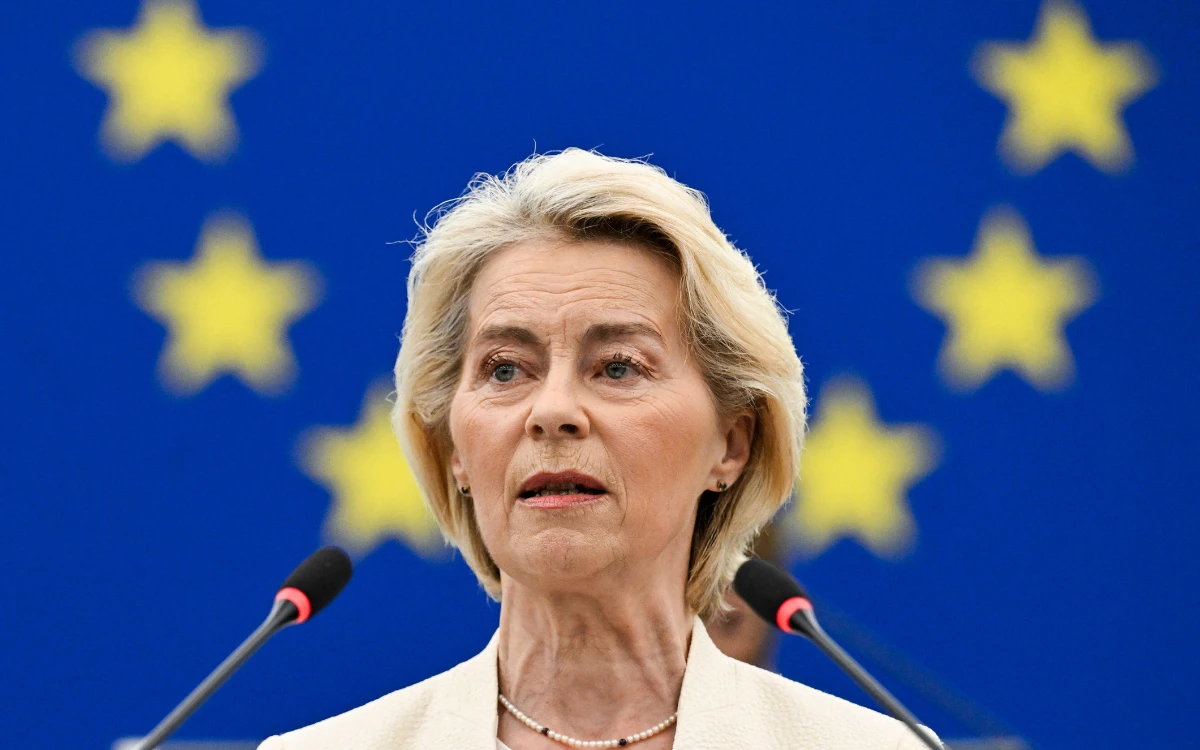
EU chief Ursula von der Leyen on Wednesday proposed creating a “European Security Council” with countries including the UK and Ukraine as part of efforts to strengthen the continent’s security against Russian threats.
An upcoming security strategy will set out details of the new defense framework as Europe grapples with Russian hybrid attacks aimed at undermining support for Ukraine. Von der Leyen also proposed an EU “emergency security protocol” allowing members to convene urgent talks in a crisis.
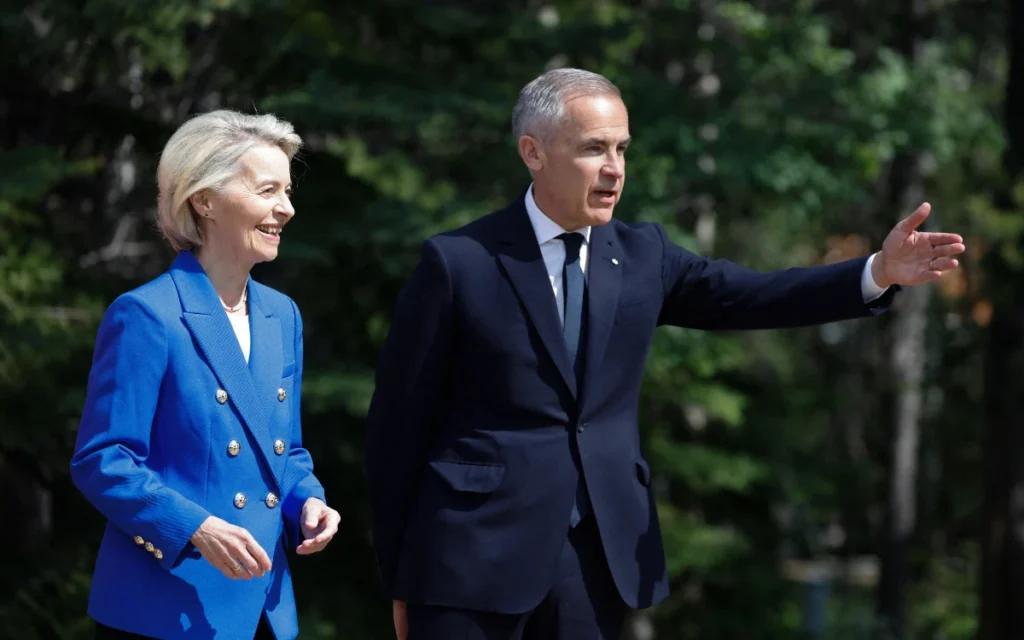
“For a long time, we have discussed a leaders’ format focused on the security of our continent, with partners like Canada, Norway, Ukraine, the United Kingdom and others involved,” von der Leyen said in her annual State of the Union address.
The announcement comes as Europe seeks greater independence from the United States on defense. Von der Leyen also proposed making Canada the EU’s first “associate member,” pitching closer cooperation on technology, defense, and energy as both Canada and the EU face U.S. tariffs and territorial threats, as well as competition from China.
The European Commission president also warned China that the EU would use “all tools” to “rebalance” trade, saying its trade deficit with Beijing was running at about $1.1 billion a day. Last year, the EU’s goods trade deficit with China reached around $415 billion, prompting von der Leyen to warn about “dangerous dependencies” on China for critical raw materials.
Von der Leyen also proposed a European Emergency Response Framework to manage mass migration following the crossing of more than 70,000 migrants from Morocco into the Spanish territory of Ceuta. The mechanism would provide temporary flexibility in standard procedures under strictly defined conditions. She also vowed to strengthen the EU border agency Frontex, accelerate deportations, and improve early-warning systems.
Taken together, the proposals reflect an effort to give Europe greater capacity to act independently as geopolitical and economic pressures converge. A new security architecture would strengthen Europe’s ability to respond to threats without relying exclusively on NATO, while deeper ties with Canada could broaden its network of strategic partners. At the same time, efforts to reduce economic dependencies on China and strengthen control of the EU’s external borders show that Brussels increasingly views defense, trade, and migration as interconnected elements of European security. The challenge will be translating von der Leyen’s proposals into institutions and policies that member states are willing to support. (AFP+EIR)