
Iran retaliated on Monday for a U.S. strike near the Strait of Hormuz by launching ballistic missiles and drones at American military sites in Jordan and the United Arab Emirates. It is the first direct exchange of its kind in a month and restores the military track in the ongoing confrontation between Washington and Tehran after a period in which the United States had emphasized economic pressure.
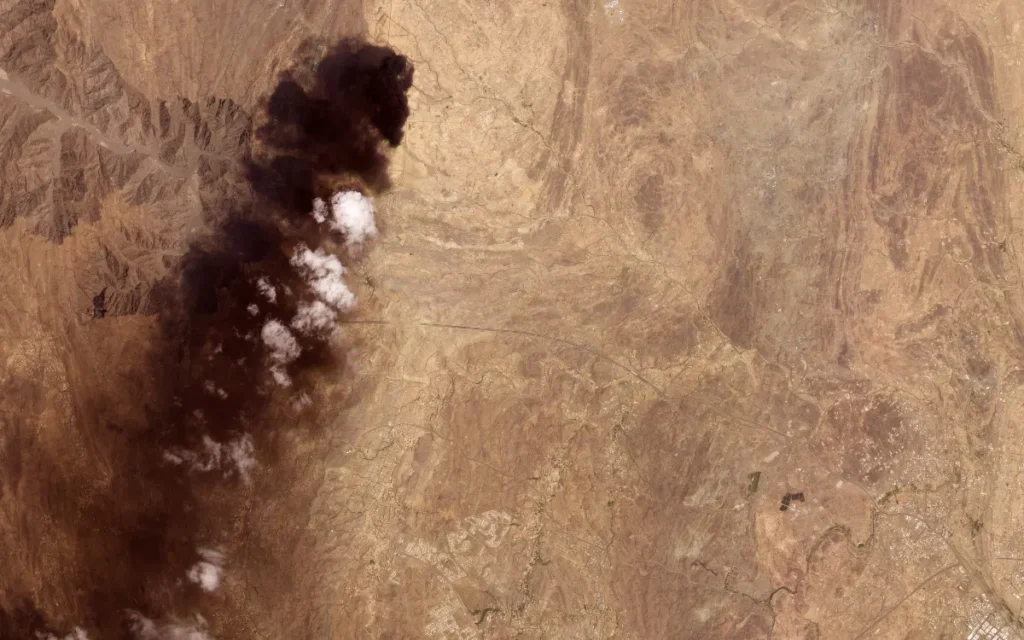
The United States said its strike targeted Iranian rocket launchers and Islamic Revolutionary Guard Corps forces preparing to lay more sea mines near Larak Island, located at the mouth of the Strait, while Tehran described its response as “legitimate defense.”
U.S. Central Command said on Monday that American forces took “limited, precise action against IRGC minelaying forces posing an imminent threat in the Strait of Hormuz,” referring to Iran’s Islamic Revolutionary Guard Corps. The command added: “In essence, Iran created the threat and the U.S. military eliminated it to protect civilian mariners, commercial shipping, and the free flow of global commerce.”
🚫CLAIM: Iran’s Islamic Revolutionary Guard Corps (IRGC) claimed in a recent statement that strikes by U.S. forces to prevent the IRGC from placing mines in the Strait of Hormuz were an “act of aggression.” This claim is absolutely FALSE.
✅FACT: U.S. forces took limited,… pic.twitter.com/XLx8xNTHto
— U.S. Central Command (@CENTCOM) August 31, 2026
Tehran’s Revolutionary Guards said they had responded to Sunday’s attack by striking two U.S. air bases with ballistic missiles in Washington-allied Jordan, causing “heavy damage.” The Iranian Foreign Ministry said the Jordan strikes were “legitimate defense.” Jordan’s army said it had intercepted eight missiles on Monday morning, without stating their origin, according to its state news agency.
Tehran also claimed it targeted U.S. military personnel at an air base in the United Arab Emirates and shot down a U.S. drone over the Strait of Hormuz. The UAE Defense Ministry denied that any bases in the country were targeted, saying its air force responded to a drone detected over its territorial waters, approaching from Iran.
Iranian President Masoud Pezeshkian said his country is not “seeking war” but will “deliver a decisive response to the aggressors.” Pezeshkian is due to attend the Shanghai Cooperation Organization summit in Kyrgyzstan on Monday, alongside Russian President Vladimir Putin and Chinese President Xi Jinping.
The renewed exchange interrupts a period in which Washington had emphasized economic pressure over military action, although it does not yet replace it. The involvement of Jordan and the UAE shows how quickly a U.S.–Iran confrontation exposes Washington’s regional partners to missile and drone threats. Renewed Iranian minelaying would threaten military operations and commercial shipping alike in the corridor that carries most Gulf crude to market.
Larak matters because of where it sits, off Bandar Abbas at the mouth of the strait and within short reach of the shipping lanes. That proximity explains why Central Command treated launcher preparation as an imminent threat rather than as activity to be monitored. The Jordanian interception reflects the same logic in reverse. U.S. forces stationed in the kingdom operate American-supplied Patriot and THAAD batteries configured against this class of incoming fire. The fact that eight missiles were intercepted before reaching their target is testament to that defensive layer, not Iranian restraint. It also sits awkwardly beside the Revolutionary Guards’ claim of heavy damage.
A significant American response remains possible. President Donald Trump has previously answered Iranian fire on U.S. forces anywhere in the region with strikes meant as counter-messages of deterrence, and the means are in theater. The carrier USS George Washington reached the Arabian Sea on August 19, and Central Command reported more than 50,000 American troops across the region in July. For now, though, the stated priority is still economic. Treasury Secretary Scott Bessent said on Sunday that new secondary sanctions would follow weekly, beginning with banks. That pressure appears to register. On Saturday, Pezeshkian put the fall in Iranian trade at 25 to 35 percent, and Supreme Leader Mojtaba Khamenei called in writing for serious action on inflation and unemployment.
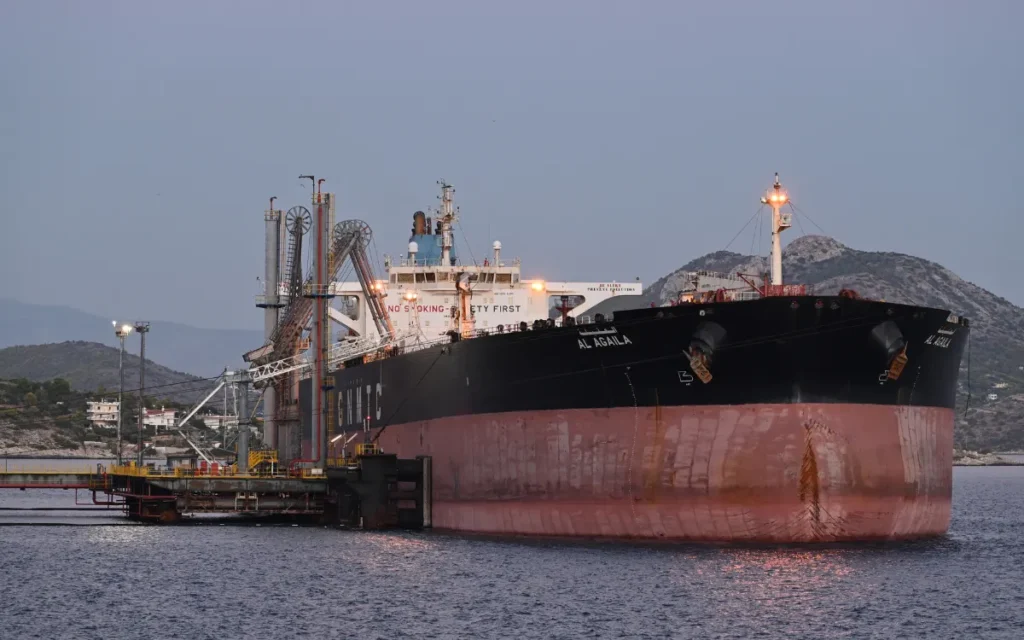
The more likely driver of further escalation is the distance between what Tehran tells its own public and what actually happens on the water. Iranian state media describes the strait as closed. Central Command reports escorting nearly 1,500 vessels through it. Southern-passage tanker traffic runs at 20 to 30 ships a night, and Gulf crude keeps reaching market while Iranian crude cannot leave. That gap, rather than Monday’s exchange itself, gives Tehran a domestic reason to act again. It also signals past this war. A blockade that isolates one state’s exports while keeping a contested waterway open for everyone else has proven workable. Governments whose trade runs through chokepoints they do not control will read that result closely. (EIR)