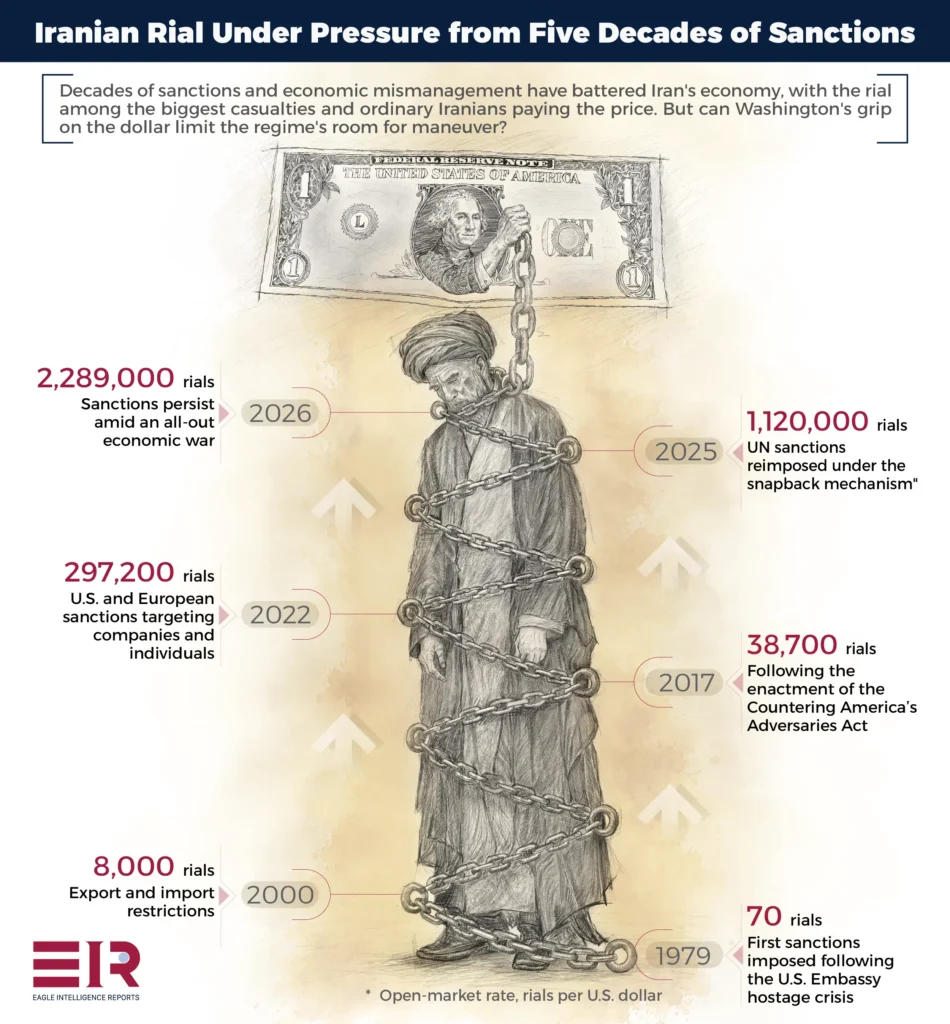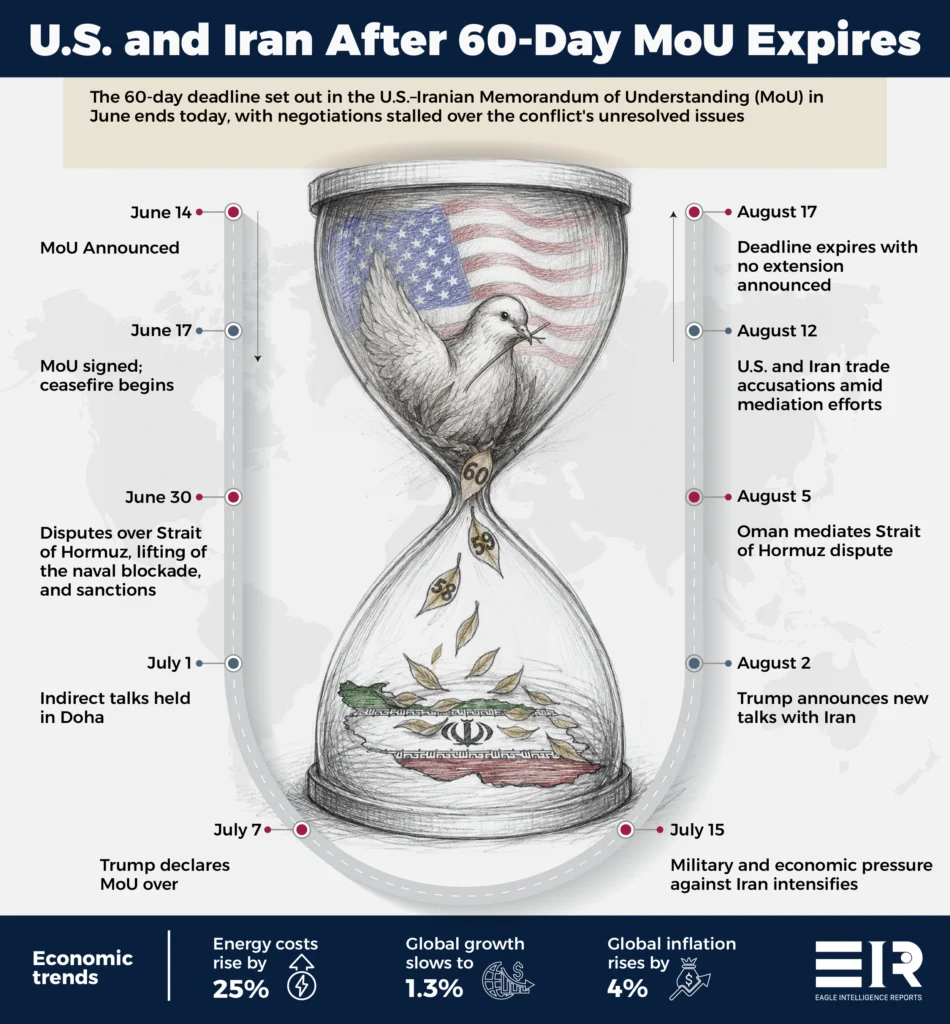

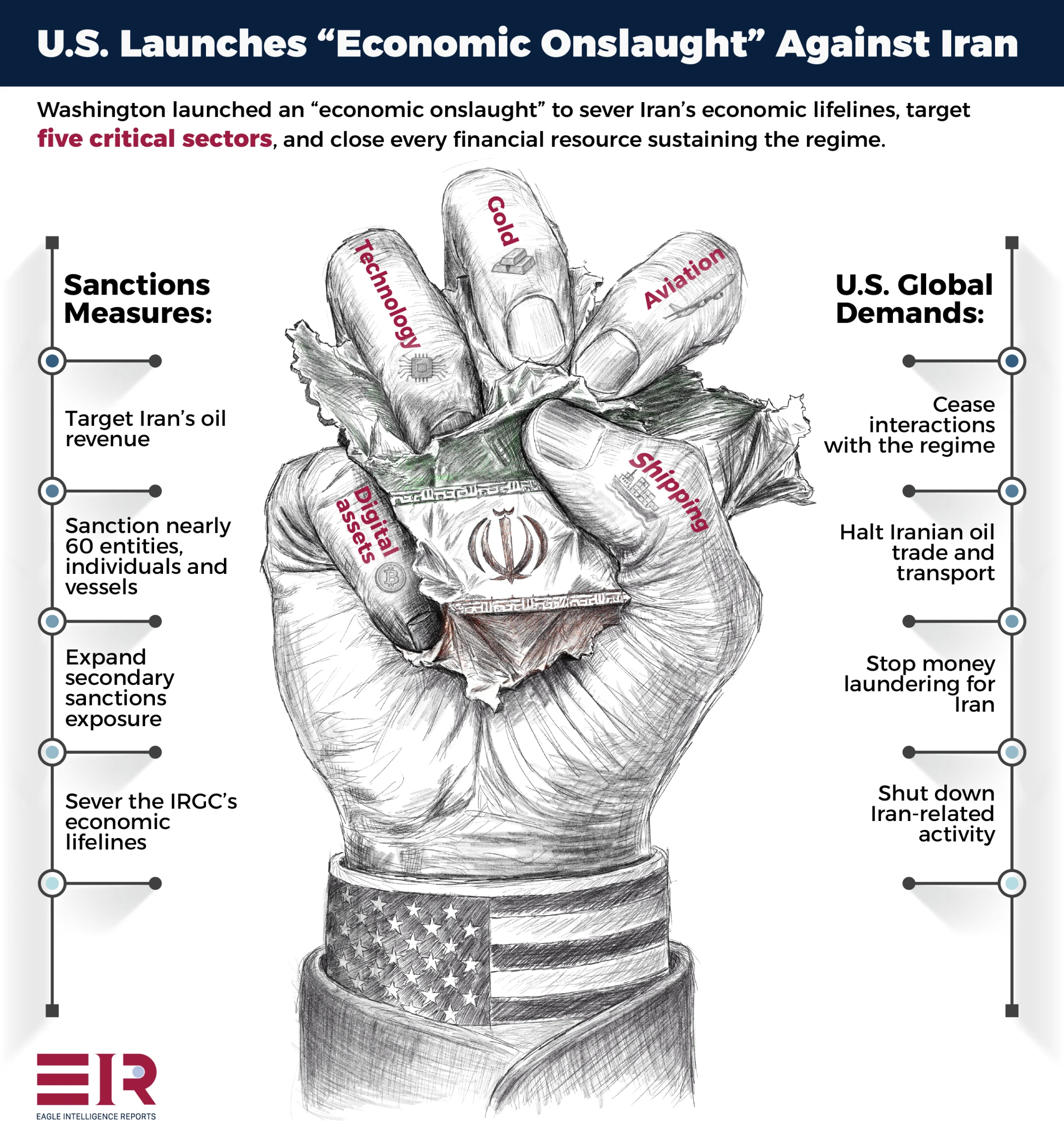
Amid escalating tensions, the United States has announced a significant expansion of sanctions on Iran as part of a campaign aimed at severing the economic lifelines Tehran relies on to generate revenue and evade sanctions.
The new measures cover five critical sectors: digital assets, technology, gold, aviation, and shipping. Washington says Iran uses these sectors to sustain its economy and mitigate the effects of economic pressure.
Alongside the expansion of secondary sanctions, the U.S. Treasury sanctioned nearly 60 entities, individuals, and vessels linked to Iranian activities, including sanctions evasion, oil revenue generation, illicit procurement of sensitive technology for nuclear research and missile development, and malicious cyber operations.
Washington is also broadening its pressure campaign to include foreign parties that continue doing business with Iran. Treasury Secretary Scott Bessent warned that entities facilitating money laundering or sanctions evasion on Iran’s behalf risk being cut off from the U.S. financial system, while those maintaining business ties with the Iranian regime risk increased exposure to secondary sanctions.
The United States also plans to accelerate enforcement of both existing and newly announced sanctions. Countries will be given defined timelines to shut down identified Iran-related activity; failure to act could trigger further Treasury measures.
According to the U.S. administration, the campaign seeks to cut off every source of funding sustaining the Iranian regime, disrupt its external revenue and financing channels, and push it toward severe global isolation. The goal is to force Tehran into a choice: negotiate a deal or face near-total economic and financial isolation. (AFP)