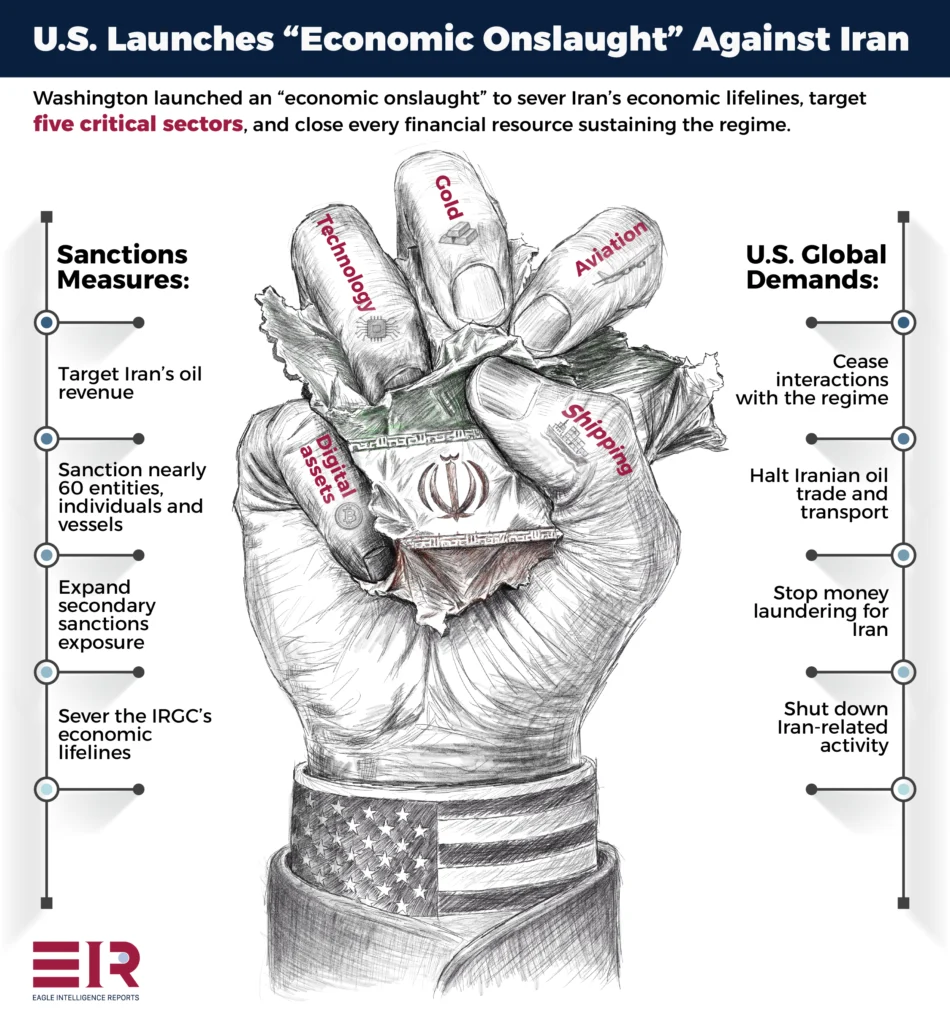

Nearly fifty years after the United States first imposed sanctions on Iran, in response to the 1979 embassy hostage crisis, the status of the Iranian rial has become one of the clearest measures of the country’s mounting economic crisis.
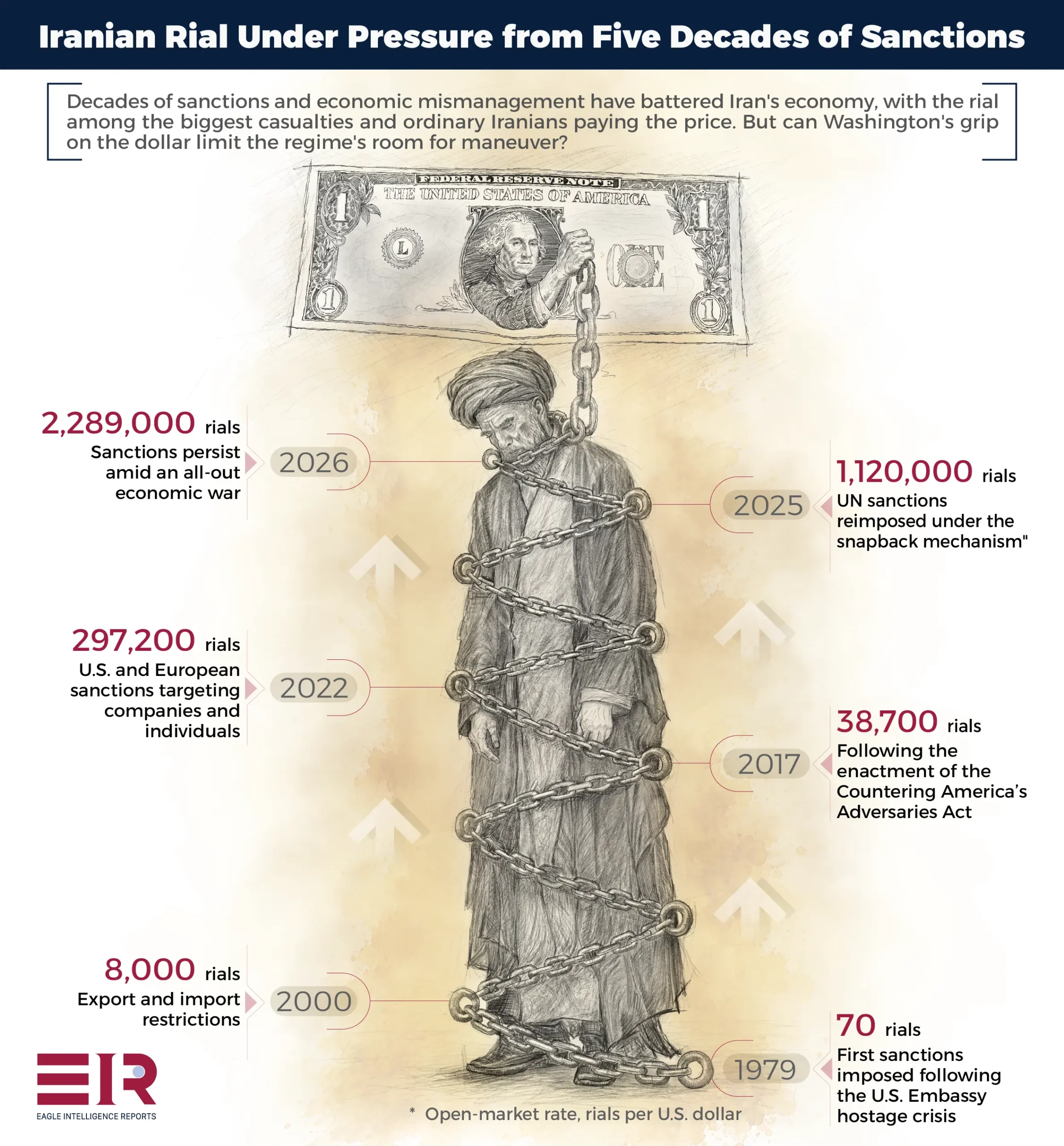
From roughly 70 rials to the U.S. dollar in 1979, the currency weakened to around 8,000 by 2000 and 38,700 by 2017. The decline accelerated sharply after that, as sanctions widened, access to international finance narrowed, and Iran’s economy was increasingly isolated by U.S. financial measures. By 2022, the rial was trading at roughly 297,200 to the dollar.
Pressure intensified again in 2025, when UN sanctions were restored through the JCPOA snapback mechanism. The rial even fell to one million to the dollar, underscoring the extent to which sanctions, inflation, capital flight, and uncertainty had eroded confidence in the currency.
In 2026, amid intensified sanctions and an all-out military confrontation with Washington, the rial has weakened to more than 2.289 million per dollar.
But to be clear, the collapse is not the product of sanctions alone. Chronic inflation, structural economic weaknesses, domestic policy failures, war, and disruption to Iran’s energy trade have all contributed. The currency’s long decline illustrates the cumulative economic cost of sustained international pressure from the world’s financial superpower. Yet the regime remains standing.
The central question now facing Washington is whether further financial pressure can meaningfully constrain Tehran’s strategic choices, or whether Iran can successfully go on operating under such extreme economic stress.