
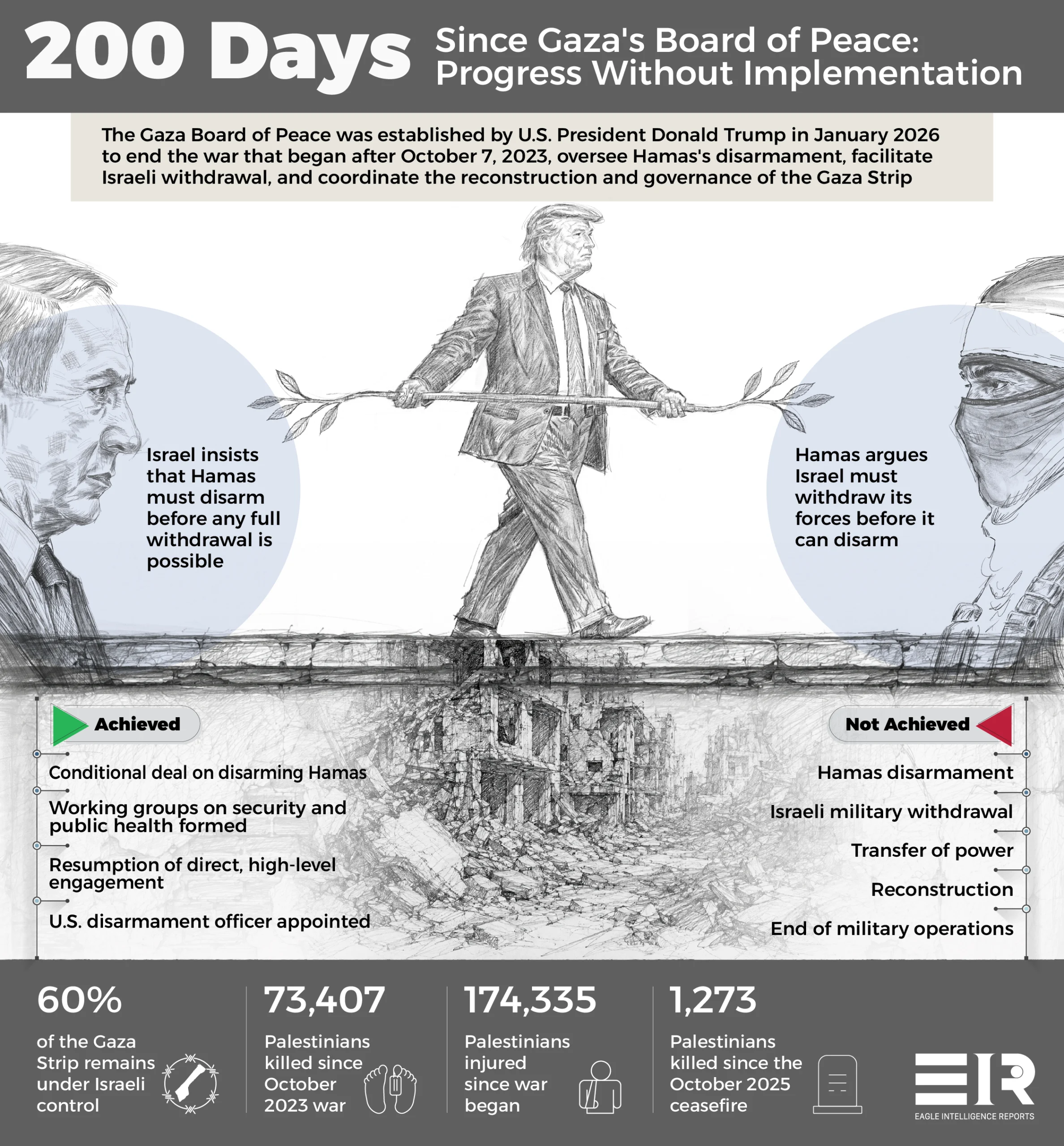
Over two hundred days after the establishment of the Gaza Board of Peace, the initiative has produced diplomatic movement but limited progress on the ground.
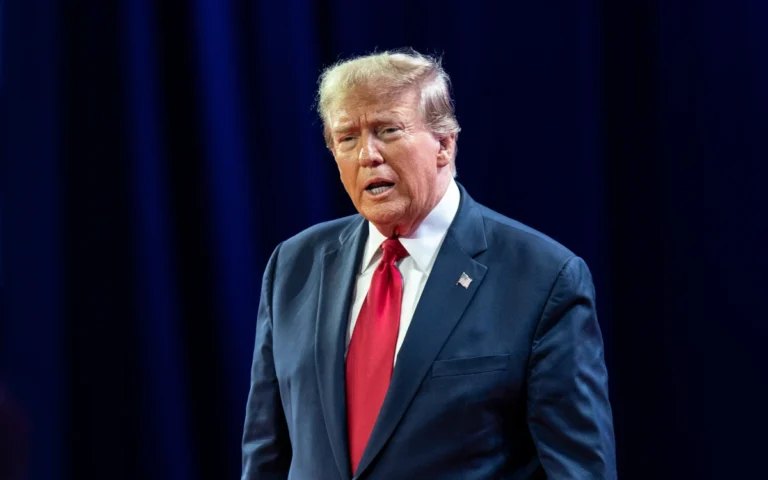
Created by U.S. President Donald Trump in January 2026, the board was tasked with overseeing the next phase of the Gaza conflict: securing Hamas’s disarmament, facilitating an Israeli military withdrawal, and coordinating reconstruction and future governance of the Gaza Strip.
The framework has achieved several preliminary milestones. A conditional agreement on Hamas’s eventual disarmament was reached, working groups on security and public health were formed, direct high-level contacts resumed, and a U.S. disarmament officer was appointed to help oversee implementation.
However, the central objectives of the agreement remain unresolved. Hamas has not surrendered its weapons, Israeli forces have not fully withdrawn, and authority has not transferred to a new governing structure. Reconstruction has yet to begin at scale, while Israeli military operations continue.
The core dispute remains unchanged. Israel argues that Hamas must disarm before any full withdrawal can take place. Hamas maintains that Israeli forces must withdraw before it can begin disarmament. The result is a political deadlock in which each side’s stated precondition prevents the next step from occurring.
The humanitarian and territorial consequences continue to shape the negotiations. Around 60 percent of the Gaza Strip remains under Israeli control, while tens of thousands of Palestinians have been killed or injured since the war began in October 2023.