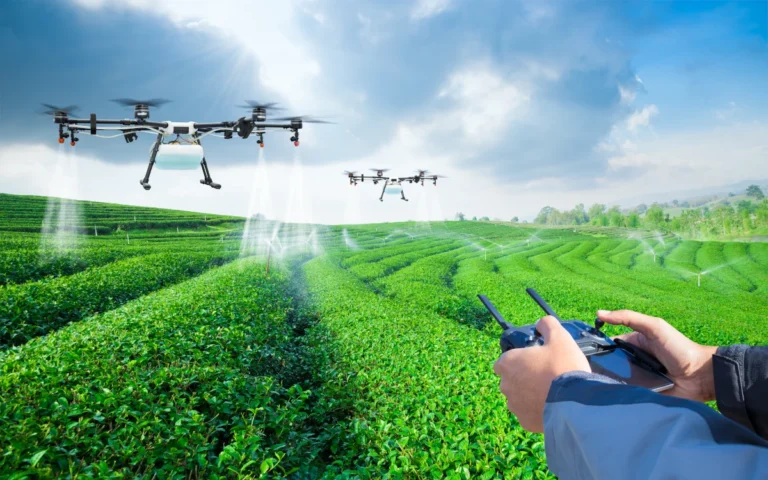

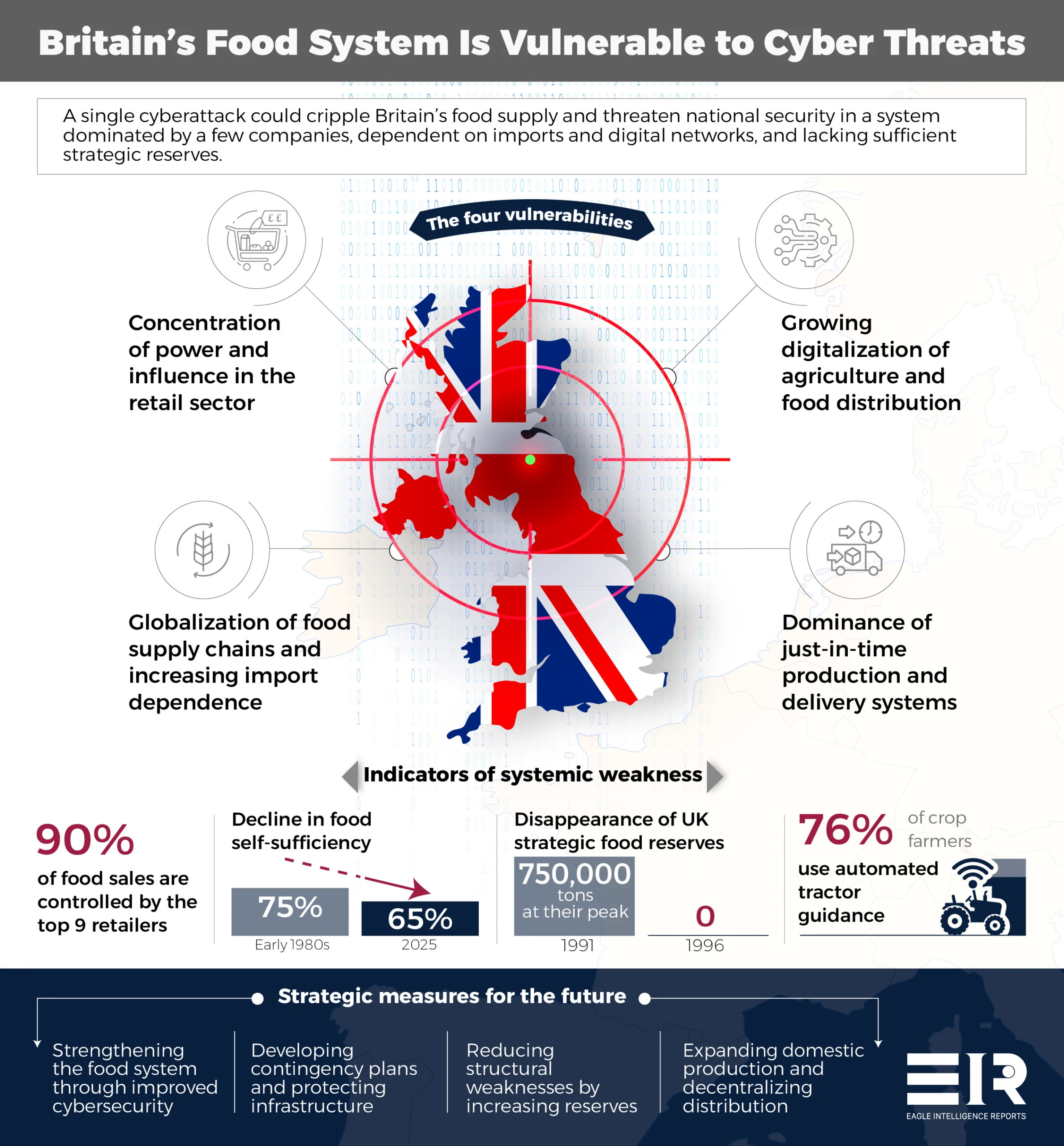
Britain’s food system combines centralized commercial power with import dependence, just-in-time logistics, and increasing digitalization and AI integration. Together, these factors generate efficiency and cost savings, but they also create critical chokepoints where cyber disruption could quickly spread through the broader system. With strategic food reserves depleted and domestic self-sufficiency declining, resilience increasingly depends on stronger cybersecurity, better state planning, greater redundancy in supply, expanded domestic production, and more decentralized distribution networks. But who will foot the bill? To read the full report, Click Here.