
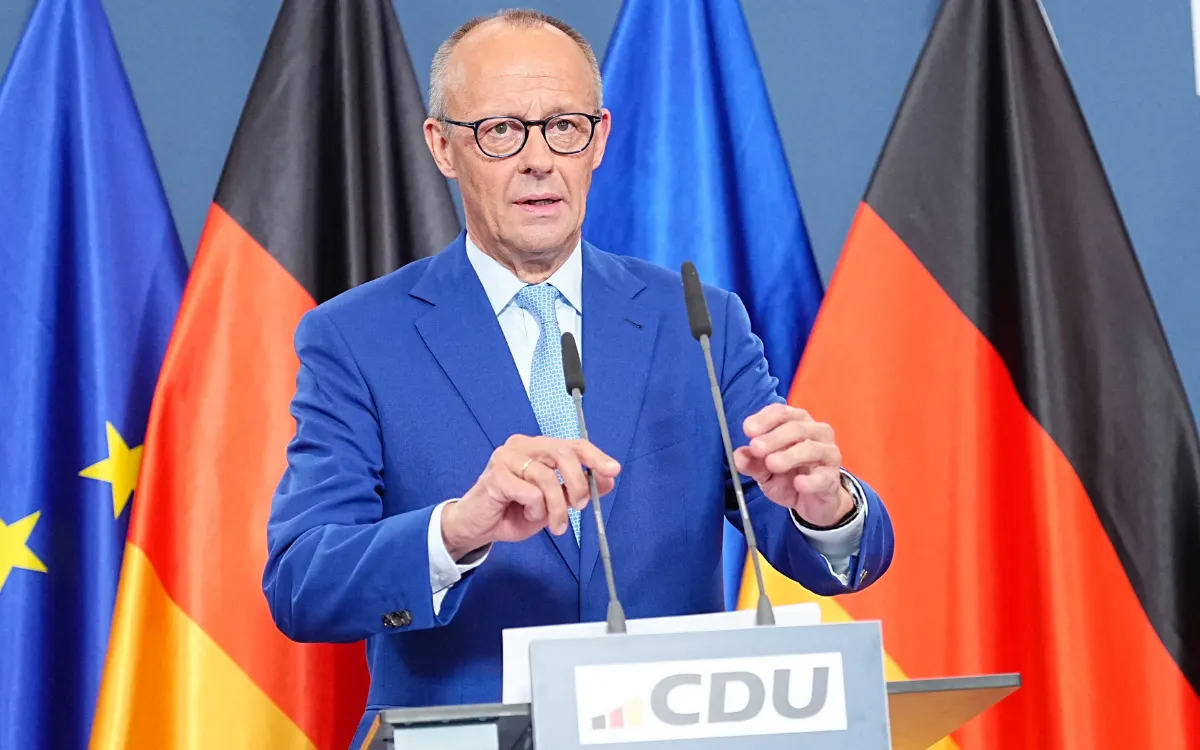
Germany’s leading economic institutes more than doubled their 2026 growth forecast on Thursday, offering Chancellor Friedrich Merz an economic boost after regional election losses increased pressure on his government to reconsider unpopular reforms.
The institutes now expect Europe’s largest economy to expand 1.3 percent this year, up from their 0.6 percent forecast in April, and slightly raised their 2027 projection to 1.1 percent. Growth in the first half of 2026 was stronger than expected, supported by a robust global economy and the worldwide artificial intelligence boom.
“The need for fiscal consolidation is growing,” the institutes said, warning that debt levels will rise sharply as increased government spending on defense and infrastructure helps drive the recovery. Germany continues to face weakening export demand, Chinese competition, U.S. tariffs, and high energy costs.
The improved outlook comes despite mounting wartime energy pressure. Germany’s average diesel price has reached a record €2.46 per liter, while the EU-wide average has risen by approximately 40 percent since late February, reaching a record €2.23 per liter. The Middle East and Ukraine wars have disrupted crude supplies and refinery operations, with the Houthi blockade of Saudi exports in the Red Sea and Ukrainian strikes on Russian refineries adding to pressure. Higher energy costs from the U.S.–Israeli war on Iran have pushed up German fuel costs but have so far shown little sign of spreading more broadly through the economy.
The economic improvement also comes at a politically difficult moment for Merz. His center-right CDU suffered heavy losses in three state elections this month, while the far-right AfD made significant gains, prompting questions about his political future. Coalition figures have since indicated that reforms covering taxes, welfare, and pensions could be reconsidered, including controversial plans to gradually raise the retirement age beyond 67.
Germany’s stronger growth therefore offers Merz some economic relief at a moment of political vulnerability, but it does not remove the structural pressures facing his government. The economy is absorbing the wartime energy shock better than expected, even as record diesel prices demonstrate its continued exposure to external disruptions. At the same time, growth supported by higher public spending is increasing fiscal pressure, while election losses are making politically difficult reforms harder to sustain. The central challenge for Berlin will be maintaining the momentum of the recovery without allowing higher energy costs, rising debt, or political pressure to weaken the longer-term reforms intended to address Germany’s economic stagnation. (AFP+EIR)