

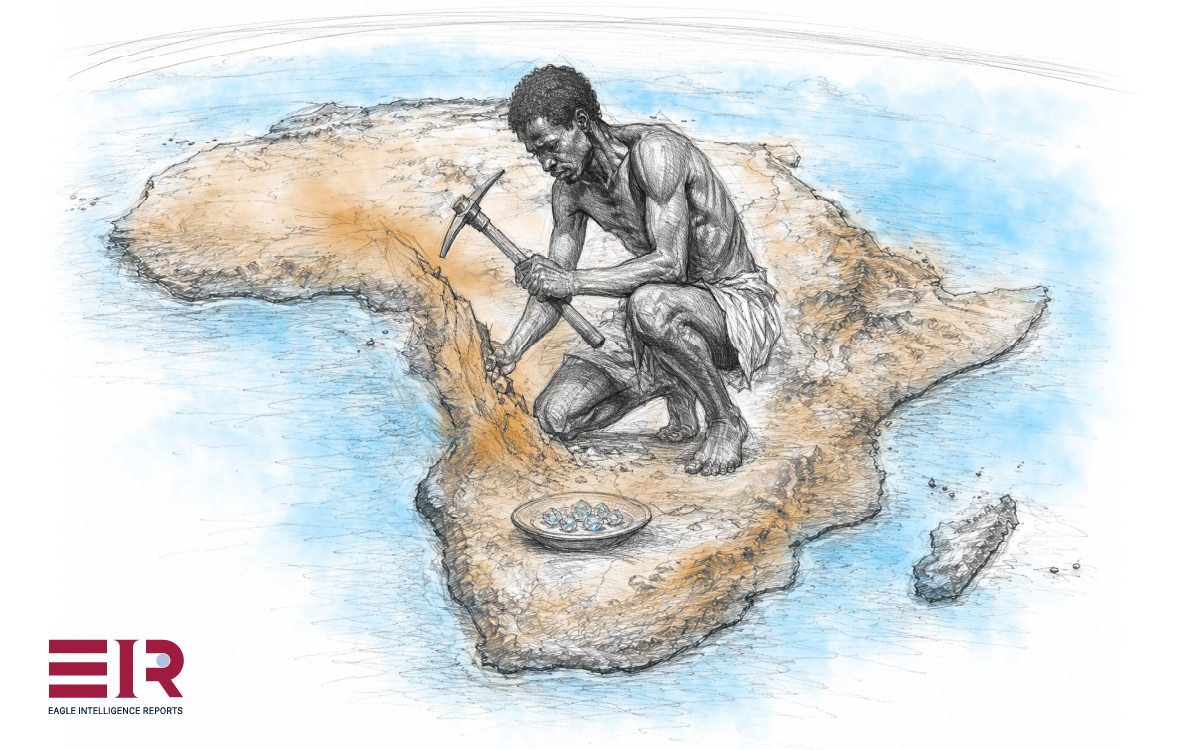
For decades, the term “blood diamonds” has shaped global perceptions of the diamond trade, particularly in countries like Sierra Leone. Emerging from the civil conflicts of the late 20th century, the concept framed the industry around violence, illicit finance, and weak governance. It also catalyzed international action, most notably through the Kimberley Process, which sought to eliminate conflict-linked diamonds from global circulation. Even though those measures are now widely considered a success—conflict diamonds today as a share of global trade has declined significantly—the industry’s challenges have shifted onto new ground.
The central governance challenge today is no longer prevention but the regulation of market access. Modern traceability systems are restructuring the diamond market by shifting governance from policing illegality to controlling access through standards, compliance systems, and technical infrastructure.
A new generation of traceability frameworks, driven by the EU and the Group of Seven, is reshaping the diamond supply chain. These systems are designed to ensure ethical sourcing through continuous verification, digital tracking, and strict documentation requirements. However, their impact extends beyond transparency. They are reorganizing the market itself, determining which actors can participate in high-value trade and which are systematically excluded.
A new generation of traceability frameworks, driven by the EU and the Group of Seven, is reshaping the diamond supply chain. These systems are designed to ensure ethical sourcing
At the center of this transformation is a shift in governance logic: from regulating the origin of diamonds to regulating producers’ capacity to comply.
From Certification to Continuous Compliance
The Kimberley Process established a model based on state-led certification at the point of export. Its scope was deliberately narrow, focusing on diamonds linked to armed conflict. While effective within these parameters, it left broader concerns like labor conditions, environmental standards, and supply chain transparency largely unaddressed. In practice, this meant that human rights abuses not directly linked to armed conflicts remained outside the framework’s scope, leaving significant governance gaps.
Contemporary frameworks expand the scope significantly as compliance is no longer a discrete checkpoint but an ongoing requirement embedded throughout the supply chain. Diamonds must now be traceable from extraction to retail, with verifiable data captured at every stage. This evolution transforms governance into a technical system as participation in global markets becomes contingent not only on legality, but on the ability to meet complex operational standards.

The Structure of Exclusion
The implications of this shift become clear when viewed as a causal chain: traceability systems require continuous data capture, which requires infrastructure, standardization, and oversight. These, in turn, require capital, technical capacity, and organizational control. Only actors with these attributes, primarily large, vertically integrated firms, can reliably comply, limiting the pool of viable participants.
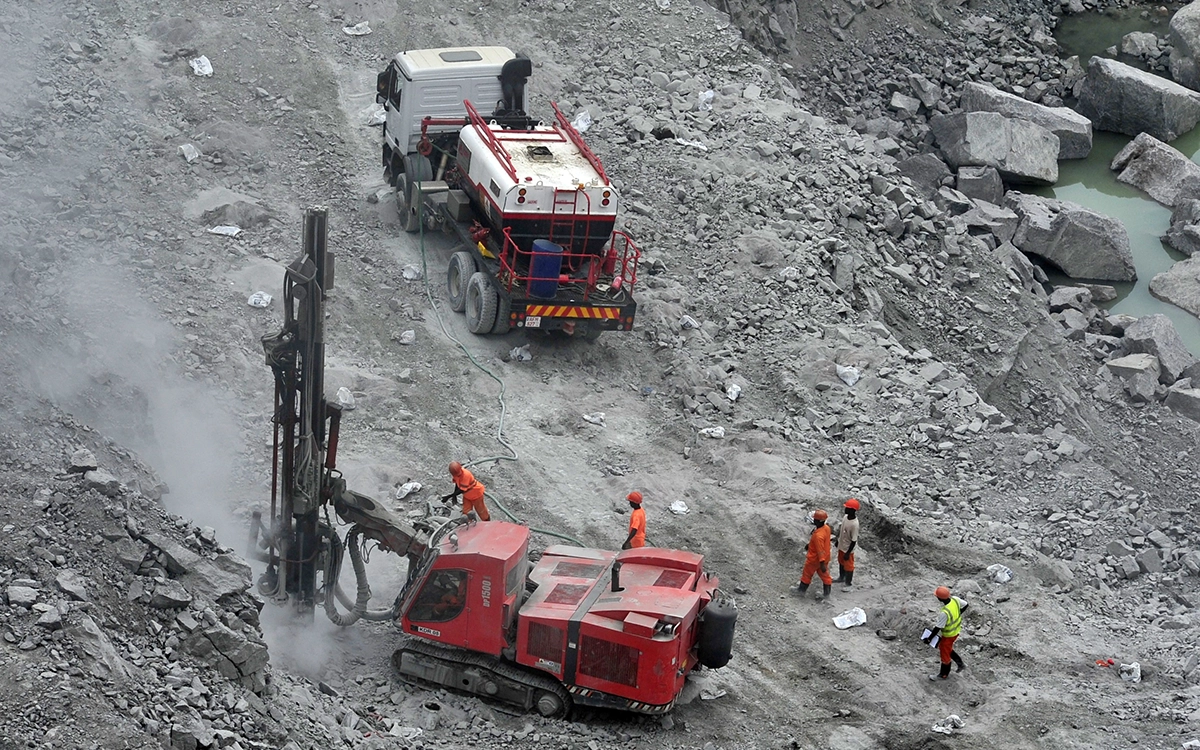
Artisanal and small-scale miners, who account for up to 20 percent of global diamond production, operate effectively outside these conditions. Their production systems are decentralized, transactions are often informal, and record-keeping mechanisms are limited. Traceability framework requirements are therefore structurally misaligned with their operational realities. Exclusion occurs not as an explicit policy outcome, but as a functional consequence of design.
Producers who cannot provide verifiable data at each stage of the supply chain cannot access compliant markets. In effect, compliance becomes a filter through which participation is determined.
Producers who cannot provide verifiable data at each stage of the supply chain cannot access compliant markets. In effect, compliance becomes a filter through which participation is determined
Where Exclusion Takes Place
This filtering process unfolds at multiple points along the supply chain. At the level of extraction, artisanal miners frequently lack the means to formally register their output or attach verifiable identifiers to stones at the point of origin. Without this initial layer of data, diamonds are effectively excluded from traceable pathways from the outset.
During aggregation and trading, traditional intermediary networks, long central to connecting small-scale producers to global markets, are increasingly incompatible with compliance requirements. Documentation must now accompany each transaction, reducing the role of informal actors and weakening established distribution channels.
At the export stage, regulatory thresholds are even more stringent. Exporters must meet detailed certification and audit standards, increasing both costs and administrative complexity. Larger firms can absorb these requirements. Smaller operators often cannot, leading to sector consolidation.
At the retail end of the chain, buyers in regulated markets demand fully traceable products. Stones without complete documentation are discounted, diverted to alternative markets, or excluded entirely.
Taken together, these stages form a cumulative mechanism of exclusion embedded within the supply chain itself.
Market Power and the Limits of Digital Solutions
The consolidation of compliance capacity to larger firms has direct implications for market power. Companies such as De Beers Group have invested heavily in traceability technologies, including blockchain-based tracking platforms, enabling them to align operational capabilities with emerging regulatory standards. This alignment reinforces their position within premium markets. Explaining this constraint in operational terms, Stanley Paul Mathuram, a sustainability expert, told Eagles Intelligence Reports that “they may have a chance of working in highly controlled industrial mining operations… which is not the case.”
For smaller producers, the same systems represent a barrier rather than an opportunity. Compliance imposes costs without providing the infrastructure necessary to meet them. The result is an asymmetry in access that redistributes value along the supply chain.
Digital traceability is often presented as a neutral solution to transparency challenges. In practice, its effectiveness depends on the reliability of initial data inputs. Where production systems are informal and verification mechanisms are weak, this assumption does not hold. Blockchain platforms, on the other hand, can ensure the integrity of recorded data, but they cannot guarantee its accuracy at the point of entry. Thus, the system is only as strong as the reliability of data inputs.
This limitation is particularly evident in regions with limited infrastructure, where the gap between technological design and operational reality remains significant. The challenge is therefore not only technological capability, but also contextual applicability.
Parallel Markets and Strategic Adaptation
As compliance thresholds rise, producers are not withdrawing from the market. Instead, they are adapting by engaging with alternative trade pathways. In this way a dual-market structure is emerging. On one side are high-compliance markets in Europe and other G7 economies, characterized by strict regulatory standards and premium pricing. On the other hand, more accessible markets, including the United Arab Emirates and China, offer lower entry barriers into global trade.
This divergence creates a strategic calculation for producers: comply and incur high costs for premium access, or bypass compliance and accept lower returns. The existence of these parallel pathways reflects a broader reality: global governance frameworks operate within a competitive geopolitical environment, and regulatory alignment often maps onto uneven distributions of power and development. Unlike the post-Cold War environment in which the Kimberley Process emerged, today’s governance frameworks operate within a fragmented and contested geopolitical environment.
The restructuring of the diamond trade also carries broader implications for producing economies. In countries such as Sierra Leone, artisanal mining plays a central role in the livelihoods of many. The United Nations Development Programme estimates that many communities across sub-Saharan Africa depend on small-scale mining activities. Exclusion from premium diamond markets reduces income potential and limits economic mobility within the sector. It also reinforces dependence on informal trade networks, which operate outside formal regulatory frameworks.
The restructuring of the diamond trade also carries broader implications for producing economies. In countries such as Sierra Leone, artisanal mining plays a central role in the livelihoods of many
International compliance requirements shape market participation, yet they are often implemented without corresponding investment in local infrastructure or institutional support. At a systemic level, these dynamics raise questions about the relationship between global standards and domestic capacity.
Toward a More Inclusive Framework
Addressing these imbalances requires a shift in approach. Current models prioritize strict compliance, often at the expense of accessibility. Alternative frameworks emphasize integration, seeking to align transparency objectives with the realities of artisanal production. These include localized verification mechanisms, simplified digital tools adapted to low-infrastructure environments, and partnerships between governments, industry actors, and development institutions.
“Innovation, vertical integration, partnerships with government, democratization of ecosystem… will be the future of legitimizing the artisanal sector,” Mathuram stated, outlining key components of this transition.
Rather than excluding non-compliant producers, such approaches aim to incorporate them into traceable systems through incremental adaptation. The challenge lies in balancing integrity with inclusion.
A Reconfigured Industry
The dominance of sophisticated traceability systems in place of the “blood diamond” framework marks a structural turning point in the diamond industry. Governance is no longer defined solely by the prevention of conflict, but by the regulation of market access through compliance capacity. Yet these systems are not neutral instruments; they shape the distribution of opportunity and value across the supply chain, determining who benefits from global demand and who is left at its margins.
Without deliberate efforts to align compliance frameworks with on-the-ground realities, the next phase of diamond governance risks entrenching new forms of exclusion, less visible than those of the past, but equally consequential.
The story of diamonds, in Sierra Leone and beyond, is therefore no longer only about conflict or reform. It is about the architecture of global trade itself, and the unintended consequences of governing it.
The story of diamonds, in Sierra Leone and beyond, is therefore no longer only about conflict or reform. It is about the architecture of global trade itself, and the unintended consequences of governing it