
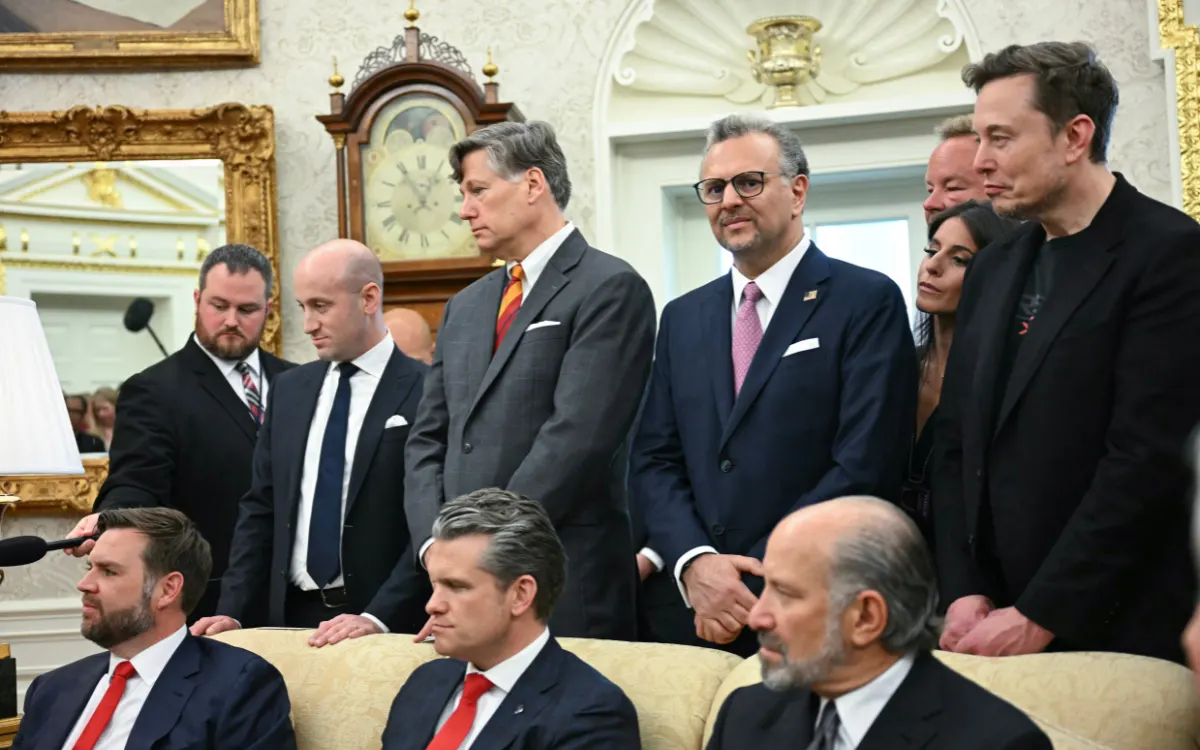
Tech billionaire Elon Musk will return to officially advising U.S. President Donald Trump’s government by co-leading what the Pentagon called a study on the future of warfare.
In a speech at the Quantico military base, Pentagon chief Pete Hegseth said “Project Meridian” will be “an effort led by America’s best minds to study the future of warfare.”
“We are leveraging a unique source of American advantage, one our adversaries do not have: our innovators, our senior leaders, and our technologists,” Hegseth said. The defense secretary added that the purpose of the project is to “identify the domains” the United States “must conquer” and the “capabilities” the U.S. “must master.” The project’s findings will be submitted within the next four months, he said.
Musk will be a co-leader of Project Meridian alongside Palmer Luckey, the 34-year-old co-founder of defense technology company Anduril Industries, and Newt Gingrich, the 83-year-old Republican former House speaker. Musk served as the senior advisor of the Department of Government Efficiency, known as DOGE, before departing in May 2025, having publicly fallen out with Trump. The billionaire threw his support behind Trump and helped his return to the White House, but the two later had a high-profile blow-up over the president’s spending legislation. Musk subsequently resumed giving to Republican causes, including multimillion-dollar donations to individual candidates and conservative political groups.
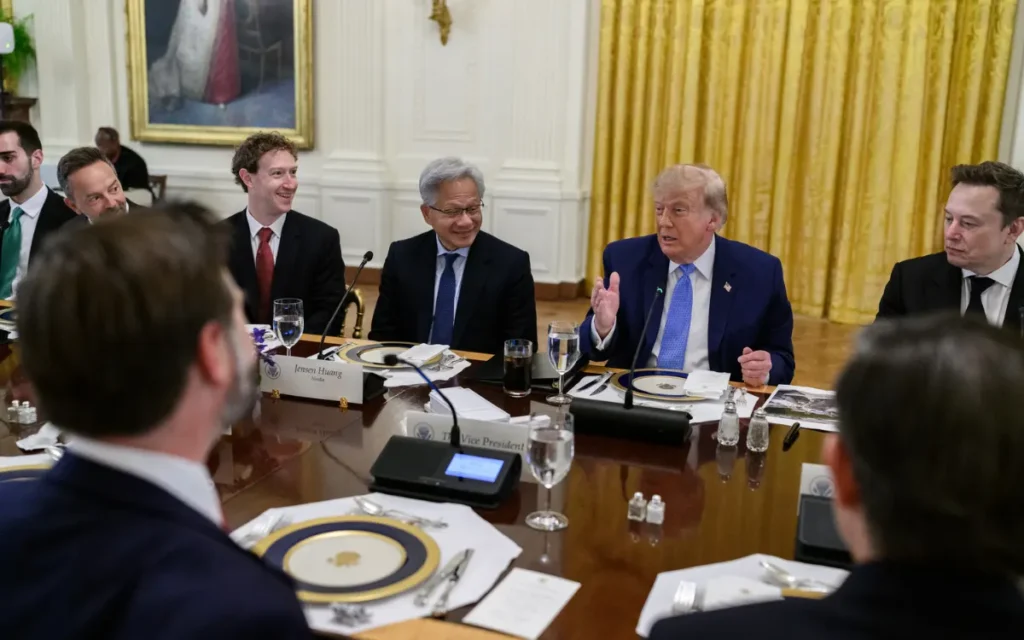
Musk’s appointment highlights the Pentagon’s push to draw Silicon Valley deeper into U.S. military planning as future competition increasingly centers on AI, autonomous systems, robotics, and space. It also strengthens signs of a political rapprochement between Musk and Trump after their 2025 rupture—just a day before the Pentagon announcement, Musk joined Trump and other technology leaders at the White House for talks on AI and appeared alongside the president afterward. Together, the two appearances suggest Musk is again gaining a role at the intersection of Washington, technology, and national security, while Project Meridian raises questions about the growing influence of defense-tech executives whose companies also hold or compete for Pentagon contracts. (AFP+EIR)