
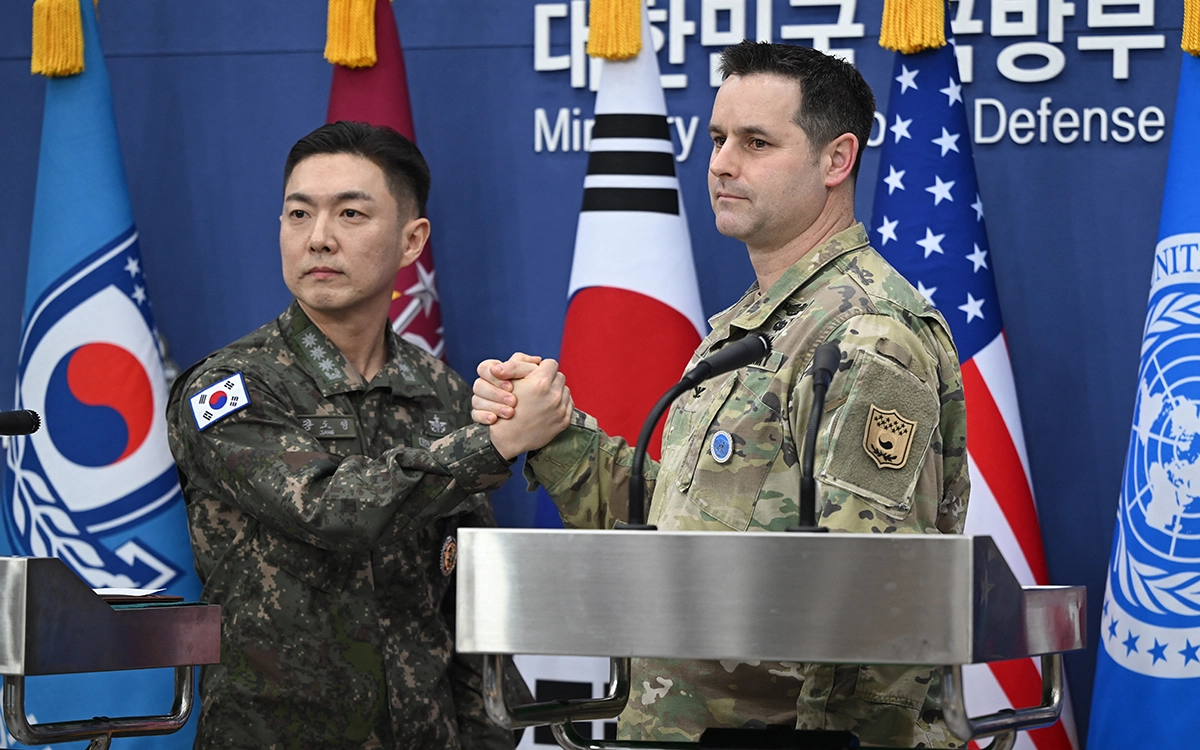
If war broke out tomorrow on the peninsula, South Korean forces would fight under an American general’s command. For 75 years, wartime operational control has rested with Washington, and Seoul has never taken it back. President Lee Jae-myung means to change that. In late May 2026, he made self-reliant defense the core foundation of national strategy and vowed to recover wartime operational control—OPCON—from the United States.
For a country that builds its own fighter jets and fields one of Asia’s most capable militaries, the demand seems overdue. To outside observers, it may look like an ally edging toward the door. Yet Lee’s vow reflects a deeper recalibration in South Korean strategy. The argument over OPCON is not only about wartime command; it is about sovereignty, the cost of dependence, and the durability of American protection in Northeast Asia.
OPCON is not only about wartime command; it is about sovereignty, the cost of dependence, and the durability of American protection in Northeast Asia
The timing is no accident. The demand comes in the wake of the December 2024 political crisis, when President Yoon Suk-yeol briefly imposed martial law, accusing the opposition of consisting of anti-state elements trying to overthrow democracy. The move cost him his office and left behind a legitimacy crisis. The episode deepened South Koreans’ skepticism of inherited dependencies, including military command structures that remain under foreign leadership.
The new posture toward OPCON reflects two growing concerns about American security commitments. The first is a matter of capacity: a United States stretched across too many theaters may reduce force posture on the peninsula. The second is a matter of trust: a Trump administration that treats alliances as transactions may not honor them when the moment arrives. However, neither amounts to a break with Washington. Seoul is hedging, building enough autonomy to defend itself if American commitment fades while preserving the alliance that still protects it.
But the strategy carries a paradox: the pursuit of self-reliance may weaken the deterrence it is meant to secure at a time when North Korea’s arsenal is expanding and its geopolitical position is strengthening.
Alliance Assumptions Under Revision
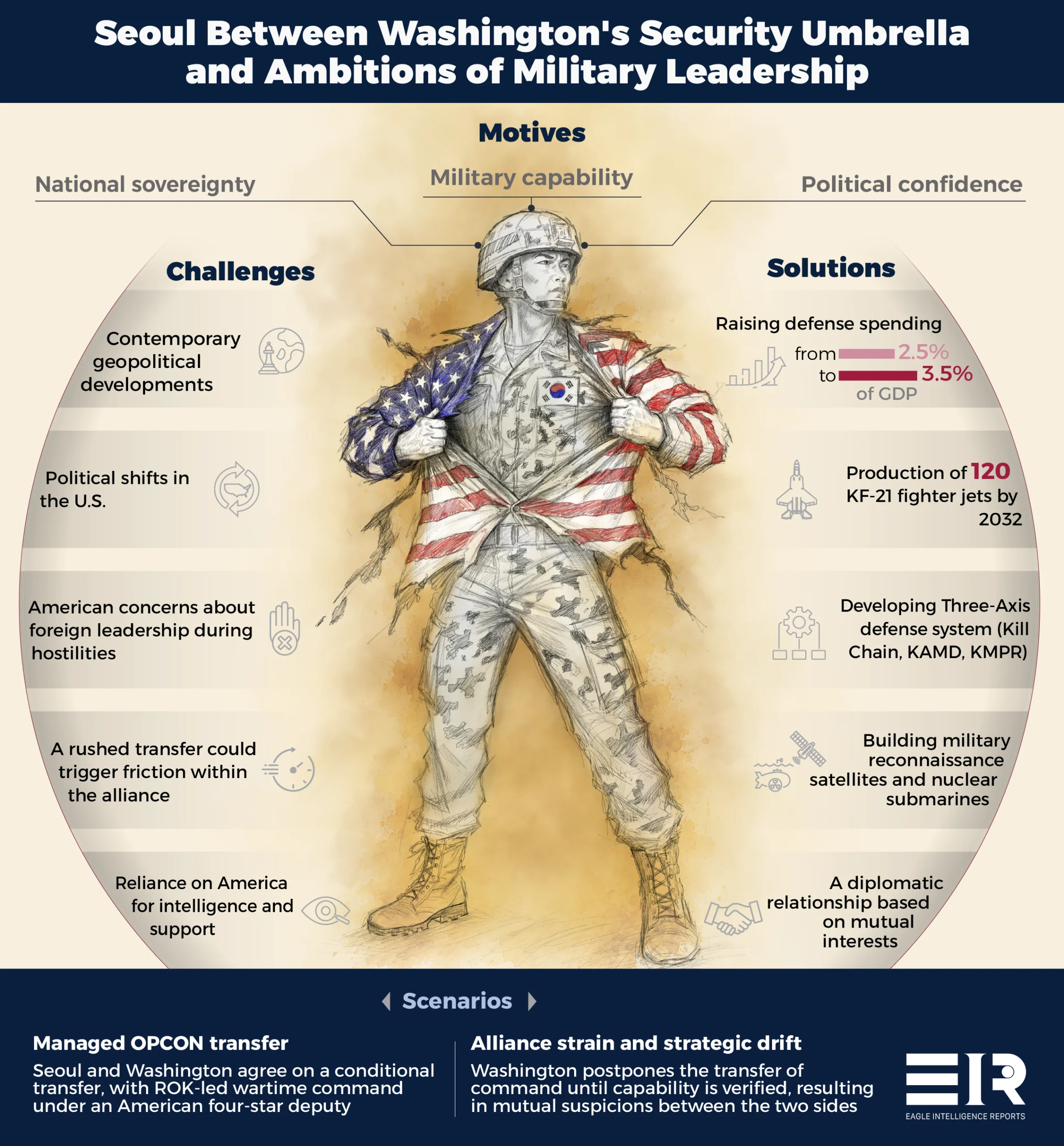
The strategic reassessment in Seoul reflects an evolving struggle within South Korea’s political elite over the longevity and reliability of the U.S. security umbrella. For decades, the bilateral alliance framework rested on the assumption of automatic, massive, and highly integrated American military intervention in the event of a contingency on the peninsula. Contemporary geopolitical developments and domestic American political shifts have eroded these assumptions. The South Korean security establishment now recognizes that, while American military assets remain substantial, their strategic deployment is conditional. It is contingent on domestic political dynamics in Washington and increasingly constrained by competing commitments in other global theaters. Trump’s 2025 return to the White House sharpened these anxieties. His administration floated overseas troop reductions, including United States Forces Korea (USFK), while pressing Seoul for larger burden-sharing arrangements, signaling a possible move away from open-ended forward deployments.
However, the deeper catalyst for OPCON’s political salience emerged from South Korea’s domestic crisis. Yoon Suk-yeol’s December 2024 martial law declaration, which lasted only hours before parliamentary reversal, exposed institutional fragilities that reverberated through security debates. The crisis raised fundamental questions about civilian control of the military and governmental legitimacy. For progressive forces that subsequently returned to power under Lee Jae-myung, the episode underscored dangers of concentrated executive authority over security matters.
The deeper catalyst for OPCON’s political salience emerged from South Korea’s domestic crisis
This domestic trauma intersects with external alliance anxieties. If domestic institutions prove unstable while American commitment appears conditional, then relying on foreign command in wartime compounds the danger. The OPCON debate has thus become a vehicle for addressing both sovereignty concerns and institutional resilience. It has transformed from a matter of technical military planning into a politically charged question about national autonomy.
This realization has sharpened traditional partisan lines in South Korean defense politics, triggering domestic debate over strategic risk management. Historically, the progressive camp advocated for swift OPCON transfer as a tenet of national self-determination. The conservative camp viewed retention of OPCON by the commander of the ROK–U.S. Combined Forces Command (CFC) as a mechanism to maintain the alliance and guarantee American involvement. While Lee intends to finalize the full transfer of capabilities by 2028, opposition factions condemn the target as a politically motivated gamble with national security.
Critics raise concerns about the potential weakening of the ROK–U.S. alliance, citing contradictions in Seoul’s defense policy. While successive governments have pursued strategic independence through OPCON transfer, South Korea has focused investments on conventional, heavy-firepower capabilities rather than specialized strategic assets required for military self-reliance. Despite a defense budget exceeding 2.5 percent of GDP, Seoul remains dependent on American capabilities. These include strategic surveillance (ISR) architecture, biochemical defense systems, and the nuclear umbrella that counters North Korea’s maturing nuclear arsenal.
The American security establishment has concerns about any command structures that place American personnel under foreign leadership during active hostilities. This is reflected in the U.S. military’s insistence on a strict, three-phase capability verification process: Initial Operational Capability (IOC), Full Operational Capability (FOC), and Full Mission Capability (FMC). According to the roadmap that USFK Commander Gen. Xavier Brunson submitted to the Pentagon and Congress, those conditions will not be met until early 2029, rather than 2028. While South Korean Defense Minister Ahn Gyu-back has stated that 94 percent of the requirements have been met, attempting a rushed transfer without complete technical verification could trigger friction within the alliance.
While South Korean Defense Minister stated that 94 percent of the requirements have been met, attempting a rushed transfer without complete technical verification could trigger friction within the alliance
On the other hand, Washington views Seoul’s timeline with logistical skepticism. While the U.S. military officially supports allied burden-sharing, Brunson warned that “political expediency” must not bypass the rigorous, conditions-based metrics that ensure Seoul’s capacity to manage high-intensity conflict.
Capability Development and Strategic Ambiguity
The Lee government maintains that internalizing command authority does not signal alliance retreat but rather optimizes leverage and secures operational autonomy within the mutual defense framework. This trajectory is supported by substantial capital investments in indigenous, high-technology hardware designed to function alongside American extended deterrence assets—or independently of them if necessary.
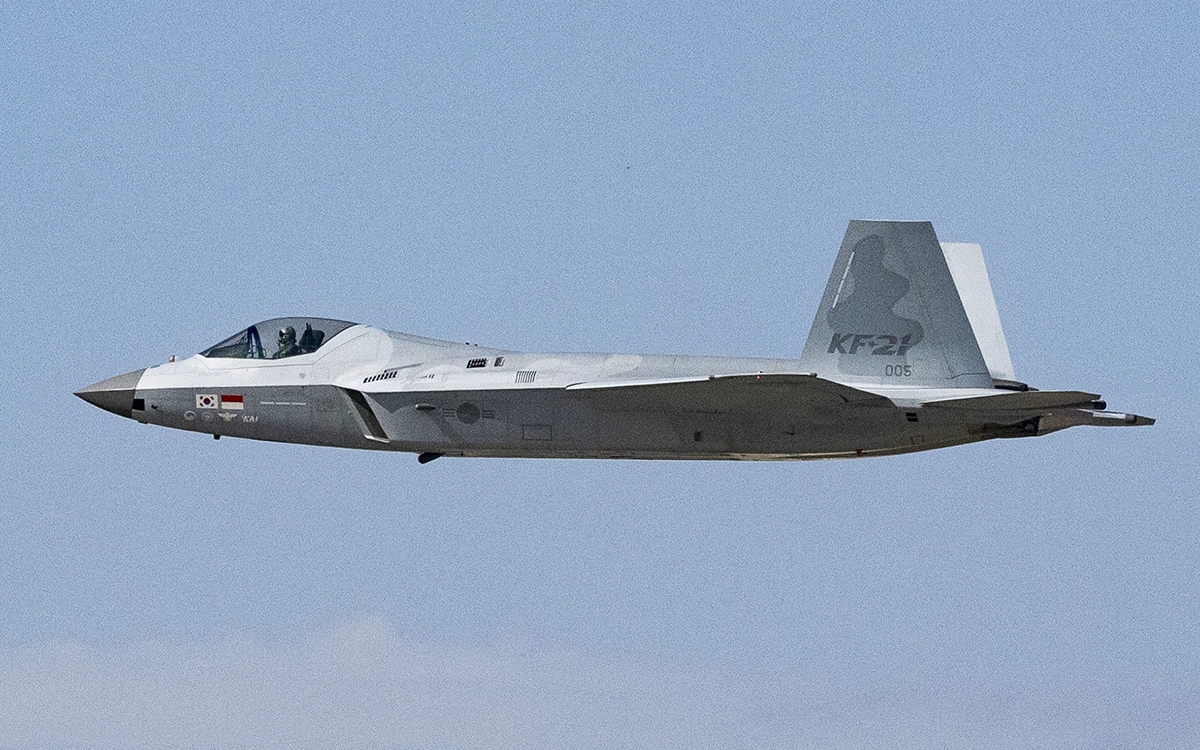
The institutionalization of the Three-Axis defense system is central to this approach. It integrates the Kill Chain platform for preemptive strikes, Korea Air and Missile Defense for multi-layered interception, and the Korea Massive Punishment and Retaliation plan. To support these capabilities, the Lee government has committed to raising defense expenditure to 3.5 percent of GDP, according to the Ministry of Defense’s mid-term strategic plans. This would fund procurement programs including indigenous military reconnaissance satellites, the production of 120 KF-21 fighter aircraft by 2032, and advanced conventional submarine capabilities. Seoul has also engaged in talks with Washington regarding nuclear-powered submarine acquisition.
Critics argue South Korea remains structurally reliant on American strategic intelligence, logistics, and high-tier command architecture. This reliance sits in tension with Seoul’s pursuit of defense self-reliance in combined warfare. A significant operational concern involves potential command structure bifurcation, violating the military principle of unity of command. The Ministry of National Defense maintains that CFC will be reorganized into a Future CFC led by a four-star South Korean general upon OPCON transfer. Analysts caution that accelerated transfer, before agreed conditions are met, could prompt Washington to seek separate national commands on the U.S. Forces Japan model. In modern high-tempo warfare, divided command structures introduce operational delays and degrade combat efficiency.
Hedging, Not Decoupling
The labels matter because hedging, decoupling, and political positioning point to very different futures. Evidence supporting strategic hedging remains substantial. Seoul continues expanding institutional integration with American military structures while developing autonomous capabilities.
Seoul continues expanding institutional integration with American military structures while developing autonomous capabilities
The March 2026 Freedom Shield exercise maintained critical institutional continuity with 18,000 South Korean personnel participating in complex multi-domain simulations. The trilateral real-time missile-warning mechanism with the United States and Japan, operational since December 2023, still channels North Korean launch data through a shared platform, deepening coordination. South Korea has also sought no reduction in the American troop presence, focusing instead on negotiations over its financial contribution to USFK. These patterns suggest Seoul views autonomous capabilities as complementing rather than replacing alliance structures, using defense self-reliance as a hedge against strategic uncertainty while preserving core combined architecture.
Defense officials have framed capability development as alliance-strengthening measures. According to the Ministry of National Defense’s updated strategic roadmap, Seoul explicitly maintains CFC structures rather than advocating for their dissolution. However, other indicators suggest potential long-term trajectories toward greater independence. South Korea’s indigenous weapons programs substitute American dependencies with technical self-reliance. The Hyunmoo ballistic missile series, accelerated by the 2021 termination of bilateral missile guidelines, gives Seoul independent, high-precision strike options that duplicate rather than complement allied assets. Seoul’s state-led R&D into naval nuclear propulsion reveals ambitions for autonomous blue-water capabilities. These systems, while currently interoperable, provide infrastructure for independent defense posture outside existing combined frameworks.
Political rhetoric reinforces this trajectory. Progressive Democratic Party politicians have employed autonomy-oriented framing, arguing that indefinite OPCON delay reduces the nation to a military protectorate and calling for restoration of complete military sovereignty. Lee has said in cabinet meetings that “a nation must defend itself; why rely on others? Why do you harbor anxiety as if self-defense is difficult without foreign troops?” Such rhetoric presents a dual challenge: it risks friction with Washington, where some members of Congress have labelled the Lee government “pro-China,” while also signaling a long-term desire to restructure integrated command arrangements.
The Trump Administration and Competing Priorities
The acceleration of the OPCON debate reflects institutional adjustments within the U.S. security apparatus, particularly Trump’s transactionalist approach. The Trump administration’s National Defense Strategy shifts from a “hub-and-spoke” model to collective defense along the first island chain. Under this framework, allies are expected to maintain primary conventional responsibility for their immediate perimeters, while the United States provides strategic enablers, nuclear deterrence, and power projection.
This manifests in defense burden-sharing disputes. Seoul and Washington signed the 12th Special Measures Agreement (SMA) for 2026–2030 during the Biden administration, setting South Korea’s initial 2026 contribution at 1.519 trillion won, an 8.3 percent increase. The Trump administration has since signaled its intention to reopen negotiations. This reflects a deeper American reassessment of USFK’s mission, viewing these assets as a flexible frontline counterweight against Beijing. Brunson’s remarks describing South Korea as “the dagger in the heart of Asia” against China underscore this shift. Trump’s calculus aligns with early OPCON transfer: if South Korea takes the operational lead, Washington can justify reducing its conventional footprint, scaling back joint exercises, and shifting peninsular defense costs onto Seoul.
This carries implications for U.S.–ROK relations and U.S.–DPRK dynamics. The insistence on cost increases, coupled with OPCON acceleration support, alters alliance power dynamics, forcing Seoul to view the relationship through a transactional lens. For U.S.–DPRK relations, potential reduction of American conventional presence and command structure alteration could embolden Pyongyang. North Korean leadership has long sought CFC dissolution and American troop withdrawal. Seeing Washington accelerate these processes for financial concessions could signal fractured American commitment, potentially increasing the risk of brinkmanship.
Potential reduction of American conventional presence and command structure alteration could embolden Pyongyang
However, Congress has initiated countermeasures, passing restrictive provisions within the National Defense Authorization Act that prohibit federal funds for downsizing USFK or facilitating OPCON transition without congressional review and approval. This legislative firewall highlights the institutional divide within Washington. The executive branch favors using OPCON as leverage for defense contributions or military retrenchment. The legislative branch seeks to maintain current military posture for strategic stability and to prevent vacuums regional adversaries could exploit.
This friction reflects a broader transition in global geopolitical architecture. The U.S. military faces material, logistical, and diplomatic constraints supporting operations in the Middle East. Simultaneously, critical resources are allocated to deterring contingencies across the Taiwan Strait, where China’s rapid military modernization poses challenges to U.S. hegemony in the Western Pacific. In this landscape, the Korean Peninsula has declined in Washington’s resource allocation priorities.
From Dependence to Hedged Partnership
Stripped to its core, the OPCON debate marks a fundamental shift in how Seoul understands the long-term sustainability of the alliance. The premise that American intervention would be automatic and decisive no longer enjoys the same degree of confidence within South Korean planning. In its place sits a colder calculation, built on conditional commitment and finite resources. Against that backdrop, Seoul hedges two distinct risks: a United States stretched too thin to deploy forward, and an ally whose commitment varies with volatile electoral cycles. Capability investment answers the first; reclaiming OPCON answers the second. That is why the Lee government deepens trilateral cooperation and builds its own strike forces at once.
Scenario I: Managed OPCON Transfer
Seoul and Washington agree on a conditioned transfer, setting a 2028 target tied to completion of FMC verification. Both governments ratify revised CFC terms establishing ROK-led wartime command under an American four-star deputy, and Congress eases limits on USFK force structure. Seoul accelerates ISR procurement, completes L-SAM deployment, and reaches KF-21 initial operational capability through 2029 while shifting from operational command to strategic enablement that is subject to annual certification. North Korean provocations or congressional demands for higher payments could still slow the timeline.
Scenario II: Alliance Strain and Strategic Drift
Negotiations stall over verification timelines and cost-sharing, with Seoul refusing further SMA increases and Washington withholding transfer without full FMC certification. Each side begins to question the other’s reliability in public. The United States opens force-posture reviews that include possible USFK cuts, and Seoul presses for parallel national commands on the U.S.–Japan model. Both keep the treaty intact but allow integration to erode, as Washington trims joint exercises and starts gradual withdrawals under the banner of global force optimization. Fear of signaling weakness to Pyongyang and Beijing slows the retrenchment, while South Korean opinion still favoring the alliance raises the domestic cost of drift.
OPCON transfer represents an attempt to transform the alliance from asymmetric dependence into a burden-sharing partnership, making it sustainable by redistributing responsibilities. But the result will turn on execution, not intention. If it is built on verified capability and continued integration, the transfer could leave the alliance more balanced and durable. If it is rushed for political effect, before Seoul can lead combined forces and counter the North’s nuclear arsenal on its own, it could offer Pyongyang the opportunity it has long sought.
The outcome will shape more than the future of the U.S.–ROK alliance. If successful, OPCON transfer may offer a model for how American allies can respond to growing uncertainty over U.S. security commitments without severing longstanding strategic ties. Ultimately, it may determine whether greater middle-power autonomy becomes a source of resilience within the American alliance system or the first step toward its gradual fragmentation.
If successful, OPCON transfer may offer a model for how American allies can respond to growing uncertainty over U.S. security commitments without severing longstanding strategic ties